Paying Italian Property Tax Bills From Abroad: F24 Forms and Transfer Routes
Oh, the joys of owning property in Italy as an expat! You’ve found your dream villa, apartment, or rustic farmhouse, perhaps a place to escape to, or a new permanent home. But then comes the often-dreaded annual ritual: paying property taxes. If you’re living abroad, or even just trying to manage your Italian finances from outside the local banking system, you’ve likely discovered that paying these essential bills – particularly the infamous F24 forms – can feel like navigating a labyrinth designed by ancient bureaucrats. This guide is here to cut through the confusion and show you how to pay your Italian property tax bills from afar, focusing on the most efficient and least headache-inducing transfer routes available, with a special emphasis on a solution that truly simplifies the process.
Disclosure: This post may contain affiliate links. We may earn a commission at no extra cost to you if you make a purchase through these links. Read full disclosure.
The Italian Property Tax Landscape: A Quick Reality Check
Let's be real, Italy's tax system can be a head-scratcher even for locals, let alone for us expats trying to get our heads around it from a different time zone. When you own property here, you're primarily dealing with a few key taxes, the most prominent being IMU and TARI, sometimes TASI, all collected via the notorious F24 form. The bureaucracy around these payments can make you want to throw your hands up in exasperation, but understanding the basics is the first step to conquering this beast.
Understanding IMU: The Big One
The "Imposta Municipale Unica," or IMU, is perhaps the biggest and most well-known property tax for owners in Italy. In essence, it's a municipal tax on property ownership, payable on all properties except for your primary residence (and even then, luxury homes in cadastral categories A/1, A/8 and A/9 are still taxed). IMU rates are set by individual communes (municipalities), so what you pay in Florence might be different from what you pay in Puglia or a tiny mountain village.
IMU is typically paid in two installments:
- First installment (acconto): Due by June 16th each year. This is usually 50% of the previous year's IMU.
- Second installment (saldo): Due by December 16th each year. This is where the commune's new rates (if any) are applied, and you pay the remaining balance.
If you purchase a property mid-year, you're only liable for IMU from the month you became the owner. It’s absolutely crucial to stay on top of these deadlines because Italian tax authorities are, shall we say, very particular about prompt payments.
TARI and TASI: Garbage and Services
Beyond IMU, you'll also encounter TARI and, less commonly now, TASI.
- TARI (Tassa sui Rifiuti): This is the municipal waste tax. It covers the cost of waste collection and disposal services in your commune. Unlike IMU, which is based on property value, TARI is usually calculated based on the property's size and the number of occupants, reflecting the amount of waste generated. TARI payment schedules vary significantly by commune; some might have a single annual payment, others two or three. You'll receive a bill directly from your commune or the waste management company they contract.
- TASI (Tassa sui Servizi Indivisibili): This tax, if still applicable in your commune, was for "undivided services" like street lighting, road maintenance, and public parks. However, for residential properties, TASI was largely abolished from 2020, with its costs often absorbed into IMU. Some communes might still apply it for certain non-residential categories, but for most residential property owners, it's a thing of the past. Always check with your local commune or a trusted commercialista (accountant) to confirm what applies to your specific situation.
Why F24 Forms Are Such a Headache
The F24 form is the standard unified payment form used in Italy for a vast array of taxes, including IMU, TARI, income tax (IRPEF), VAT (IVA), and social security contributions (INPS). It’s designed to simplify payments for Italian residents by allowing them to pay multiple taxes with a single transaction through an Italian bank or Poste Italiane.
The problem for those of us living abroad or without a fully-fledged Italian bank account (more on that in a moment) is that the F24 system isn't really set up for international payments. You can't just walk into a bank in your home country and say, "Here's my F24, please pay it for me." It requires specific banking channels and often a valid Italian bank account or a financial intermediary. This is where the real frustration sets in. You have this form, you know you need to pay, but the practical "how" seems shrouded in mystery and bureaucratic red tape. For comprehensive guidance on Understanding Italy's Tax System: A Guide for Foreigners, you'll find more details on these and other tax obligations.
Traditional (Frustrating) Methods for Paying Italian Property Taxes from Abroad
Before we dive into the easier path, let's acknowledge the common routes people attempt and why they often lead to headaches, hidden costs, and delays. I've been there, my friends, wrestling with bank transfers and trying to explain Italian tax codes to an unsympathetic bank teller back home. It's not a fun ride.
The Italian Bank Account Hurdle for Non-Residents
The most straightforward way for an Italian resident to pay an F24 is through their Italian bank's online banking portal or directly at a branch. However, for non-residents or new expats still grappling with setting things up, opening a full Italian bank account can be a bureaucratic saga in itself. Many Italian banks are hesitant to open accounts for individuals without established residency (a residenza) and a Codice Fiscale (Italian tax code) already in hand. Even if you manage to open a non-resident account, it might come with higher fees, fewer online functionalities, or restrictions on international transfers.
If you don't have a stable address in Italy, or if your primary income source is from abroad, some traditional banks may see you as too much of a hassle. It’s a classic chicken-and-egg situation: you need an Italian bank account to easily pay taxes, but you need to be somewhat settled to open one. For a deeper dive into this, check out our guide on How to Open a Bank Account in Italy.
Wire Transfers: Hidden Costs and Bureaucracy
You might think, "Okay, I'll just do a regular international wire transfer from my bank abroad." This can work in very limited circumstances, primarily for TARI bills where you receive a pre-filled bank transfer slip (a bollettino postale or MAV/RAV) with an IBAN. However, for F24 forms, it's a whole different ballgame.
F24 payments require specific information to be transmitted to the Agenzia delle Entrate (Italian Revenue Agency), including:
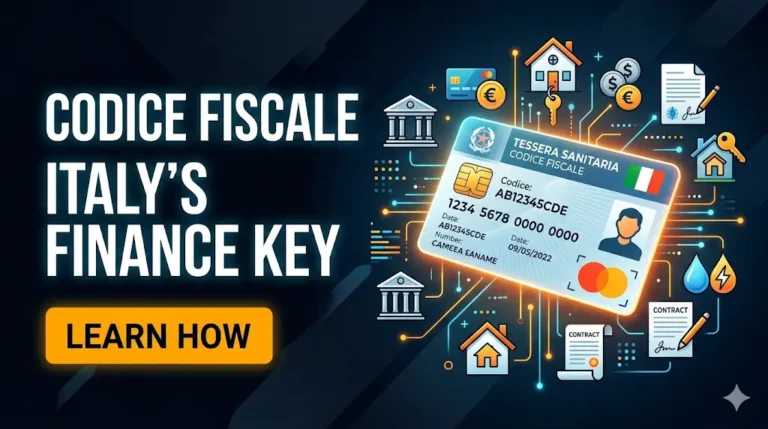
- Your Codice Fiscale.
- Specific tax codes (e.g., "3918" for IMU on other properties).
- The reference year.
- The installment number.
- The exact amount for each tax line.
A standard international wire transfer simply doesn't have the designated fields to include all this crucial F24 information. If you try to force it, the payment will likely be rejected or, worse, sit in a limbo state, leading to missed deadlines and potential penalties. And let's not forget the exchange rate markups and transfer fees traditional banks often tack on, silently eating into your hard-earned money. It’s like trying to fit a square peg into a round hole, only the hole is guarded by a very strict, tax-collecting dragon.
Relying on a Commercialista or Third Party
Many expats eventually resort to hiring a commercialista or a specialized agency to handle their Italian tax obligations. This is a perfectly legitimate and often necessary route, especially for complex tax situations or if you're renting out your property. Your commercialista can calculate your taxes, fill out the F24 forms, and then pay them on your behalf from their Italian bank account.
While this solves the immediate payment problem, it comes at a cost. You'll be paying for their services, which can add up, especially if it's just for a simple IMU payment. You'll also need to ensure you transfer the funds to them in advance, which then brings you back to the international transfer problem, albeit to a person instead of directly to the tax agency. It's a layer of insulation, but not necessarily a direct solution for the transfer headache itself. For tips on finding good support, you might want to look at Hiring an Accountant in Italy: Costs and Benefits.
Streamlining Your Payments: The Modern Solution for Expats
Alright, enough with the frustrations! Let's talk about how to make this whole process significantly less painful. In recent years, a true hero has emerged for expats dealing with international payments and especially F24 forms: Wise. This service has been a game-changer for countless foreigners navigating the tricky financial landscape of Italy.
Why Wise is a Game-Changer for F24 Payments
Wise (formerly TransferWise) isn't just another money transfer service; it’s built to make international money management transparent, fast, and, crucially for us, accessible. For paying Italian property taxes, Wise stands out because it allows you to send money directly to Italian IBANs with minimal fees and at the real mid-market exchange rate. This means no hidden markups, what you see is what you get.
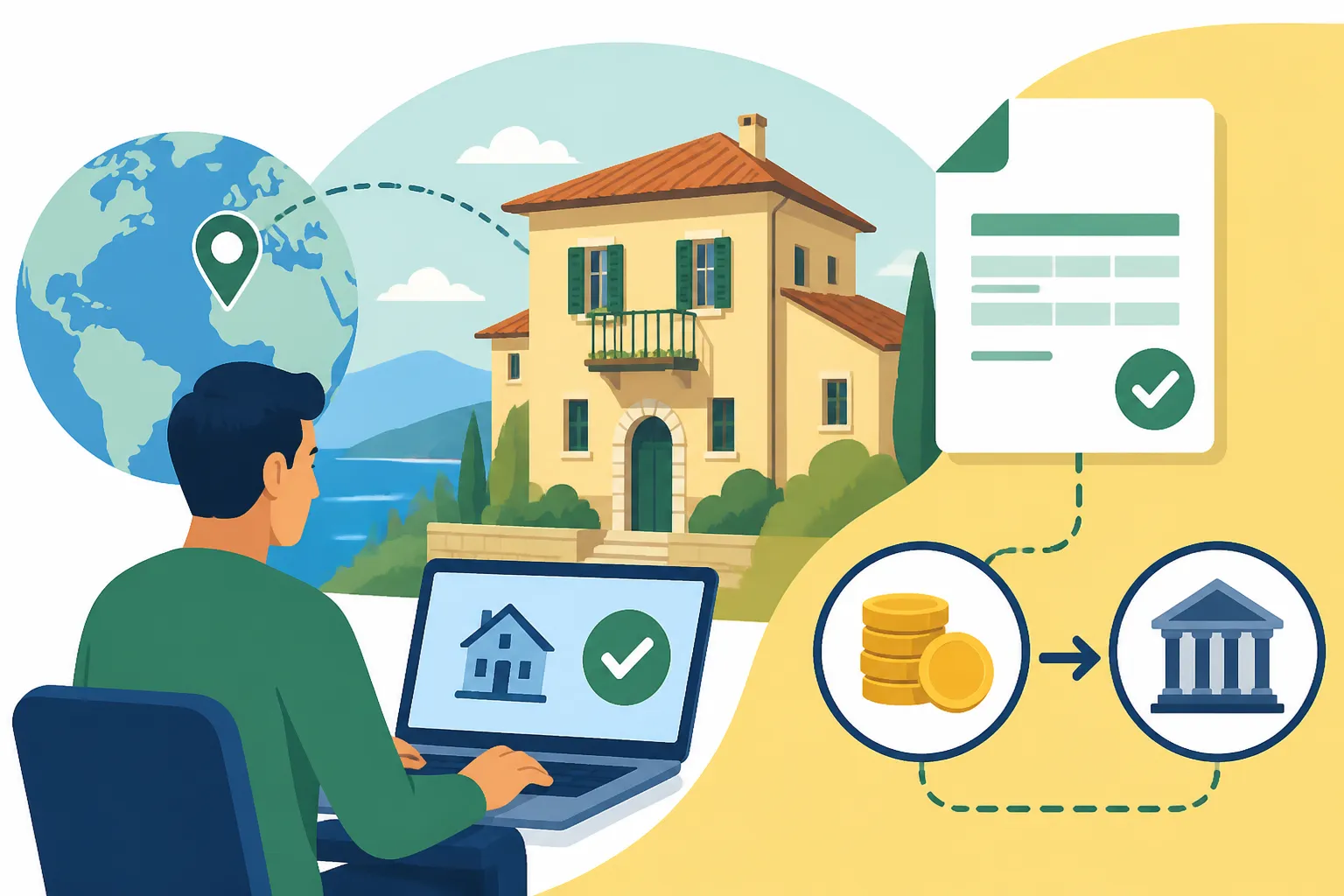
But the real magic for F24 payments lies in Wise's ability to facilitate these specific government payments. While traditional banks struggle with the F24 format, Wise has a dedicated feature for it, allowing you to pay F24 forms from abroad directly. This means you don't need a local Italian bank account, you don't need to struggle with complex wire transfer fields, and you don't need to overpay in fees.
Here's why Wise simplifies things:
- Direct F24 Payment Feature: Wise offers a specific option to pay F24 forms in Italy. This is a life-saver, as it takes care of all the complex coding and routing that would stump a regular bank transfer.
- Real Exchange Rates: You get the actual mid-market exchange rate, just like you see on Google. No sneaky bank markups.
- Low, Transparent Fees: Fees are clearly stated upfront and are significantly lower than traditional banks.
- Speed: Transfers are generally very fast, often arriving within hours or a day, which is crucial when dealing with tax deadlines.
- User-Friendly Platform: The Wise website and app are incredibly intuitive, making it easy to set up payments even if you're not a tech wizard.
- No Italian Bank Account Needed: This is perhaps the biggest win for many non-resident property owners. You can initiate the payment from your bank account in your home country and Wise handles the conversion and the F24 specifics, ensuring it arrives correctly at the Italian treasury.
In short, Wise takes the stress out of figuring out how to funnel your money into the Italian tax system when you're not physically in Italy or don't have a fully functional local bank account. It's the practical, efficient answer to a very specific expat problem. For general money transfers to Italy, Wise is also excellent, as detailed in our guide on Money Transfer Services: Sending Money to Italy.
Step-by-Step: Paying Your F24 with Wise
Ready to finally pay your IMU or TARI without wanting to pull your hair out? Here's how you do it using Wise:
- Gather Your F24 Form: Ensure you have the completed F24 form from your commercialista or generated through an online service (if you’re savvy enough to do it yourself). This form will have all the necessary tax codes, amounts, and reference periods.
- Create a Wise Account (if you don't have one): Head over to the Wise website or download their app. The sign-up process is straightforward, requiring identity verification, which is standard for financial services.
- Start a Transfer:
- Log in to your Wise account.
- Click on "Send money" or "Get started."
- Enter the amount you need to pay in your home currency.
- Select EUR as the recipient currency. You'll immediately see the exchange rate and the exact fee.
- Choose Recipient: This is the critical part for F24.
- When asked who you're sending money to, look for an option like "Government agency" or specifically "Italian F24 payment."
- You'll then be prompted to input the Codice Fiscale of the property owner (that's you!) and possibly other relevant details.
- Input F24 Details: Wise's dedicated F24 payment feature will walk you through entering the specific information from your F24 form. This typically includes:
- The type of tax (e.g., IMU, TARI).
- The tax code (e.g., 3918 for IMU).
- The reference year.
- The installment number (e.g., 01 for the first installment, 02 for the second, 00 for a single payment).
- The amount for each line item.
- The "Codice Ente" which is the code for your specific municipality (Comune). This is critical and usually found on the F24 form itself.
- Review and Pay: Double-check all the details you've entered. Any mistake on an F24 payment can lead to complications and penalties. Once everything looks correct, proceed to pay for the transfer using your preferred method (bank transfer from your local account, debit card, etc.).
- Confirmation: Wise will send you a confirmation once the payment is initiated and another when it's completed. Keep these records for your files.
It really is that simple. This method bypasses the convoluted traditional banking routes and ensures your payment reaches the Agenzia delle Entrate correctly and on time.
Other Reliable Transfer Routes (and Why Wise is Still King)
While Wise is my top recommendation for F24 payments, it's worth briefly mentioning other reliable international money transfer services that can be used for general bill payments or sending money to your commercialista in Italy, should you still need to:
- Revolut: Good for fast transfers and competitive exchange rates, especially within their ecosystem. You can send money to an Italian IBAN, but it does not have a dedicated F24 payment feature like Wise.
- OFX: Offers competitive exchange rates and excellent customer service, often preferred for larger transfers. Again, it’s for standard bank-to-bank transfers, not direct F24 processing.
- Traditional Banks (for bollettini and MAV/RAV): If your TARI bill comes with a pre-printed bollettino postale or MAV/RAV that has an Italian IBAN for payment, a standard international bank transfer might work, but you'll still contend with poorer exchange rates and higher fees compared to Wise. Always confirm if the receiving bank can process this type of payment from an international wire.
The key takeaway here is that while other services are great for general transfers, for the highly specific and bureaucratically sensitive F24 forms, Wise currently offers the most tailored and reliable solution for expats paying from abroad.
Navigating Due Dates and Penalties
Missing a tax deadline in Italy is something you really want to avoid. The Italian tax authorities have little patience for late payments, and the penalties can add up quickly.
Key Deadlines for IMU and TARI
As mentioned earlier, IMU has two main deadlines:
- June 16th: First installment (acconto).
- December 16th: Second installment (saldo).
TARI deadlines are more varied, as they are set by individual communes. You'll typically receive a payment notice from your local commune or their designated service provider well in advance, detailing the amounts and due dates. Some communes might send a single annual bill, others might split it into two or three installments throughout the year (e.g., April, July, October). It's your responsibility to keep an eye out for these notices. If you don't receive one, contact your commune's tax office (ufficio tributi) or your commercialista – "I didn't get the bill" is rarely an acceptable excuse to avoid penalties. For an overall look at important financial dates, you can check Important Tax Deadlines in Italy: Calendar 2026.
Avoiding Penalties: Timeliness is Everything
The best way to avoid penalties is, quite simply, to pay on time. But if you realize you're going to be a little late, Italy does have a mechanism called ravvedimento operoso (active repentance). This allows taxpayers to voluntarily correct omissions or pay late, with reduced penalties, provided it's done before the tax authorities discover the irregularity. The penalty increases the longer you delay, but if you correct it within a year of the original deadline, the penalties are significantly lower than if you wait for an official assessment.
For example, if you pay IMU just a few days late, the penalty might be a mere 0.1% for each day of delay, plus statutory interest. If it's within 30 days, it might rise to 1.5% of the original tax. Beyond that, it increases further. Always consult with a commercialista if you anticipate or have already missed a deadline, as they can help you calculate the correct amount including the reduced penalties and interest for ravvedimento operoso.
What Happens if You Miss a Payment?
If you miss a payment and don't take advantage of ravvedimento operoso, the commune or tax agency will eventually send you a notice of assessment (avviso di accertamento). This notice will demand payment of the original tax, plus significant penalties (which can be 30% or more of the unpaid tax) and interest. If you ignore this, the next step could be a tax collection order (cartella di pagamento) from Equitalia (or its successor, Agenzia delle Entrate-Riscossione), which can lead to more severe collection actions, including liens on property or bank accounts.
Trust me, you do not want to go down this road. It's far better to be proactive, use a service like Wise to ensure timely and correct payments, or get professional help from a commercialista to keep everything in order. The peace of mind alone is worth it.
Here's a quick summary table for your property tax obligations:
| Tax Type | What It Covers | Who Pays | Typical Due Dates | Best Payment Method from Abroad |
|---|---|---|---|---|
| IMU | Municipal property tax (excluding main home, usually) | Property owners | June 16th (acconto) & December 16th (saldo) | Wise (dedicated F24 feature) |
| TARI | Waste collection and disposal | Property occupants/owners | Varies by commune (check local notice) | Wise (dedicated F24 feature) or international bank transfer to specified IBAN if available |
| TASI | Indivisible municipal services | Mostly abolished for residential properties, check local rules for others | Varies by commune (if still applicable) | If applicable, Wise (dedicated F24 feature) |
Don't let the Italian tax system intimidate you into making costly mistakes. With the right tools and a bit of foresight, you can manage your property tax obligations from anywhere in the world. Wise truly stands out as the most expat-friendly solution for those complex F24 forms, making what was once a bureaucratic nightmare into a manageable task. Take charge of your Italian property, and enjoy the beauty of this country without the stress of missed payments!
Disclaimer
The information provided in this guide is for general informational purposes only and does not constitute professional tax, legal, or financial advice. While we strive to keep the information up-to-date and accurate, Italian tax laws and regulations can change frequently and vary by commune. It is highly recommended that you consult with a qualified Italian commercialista (tax accountant) or legal professional for advice tailored to your specific situation. Reliance on any information in this guide is solely at your own risk.