Rome to Florence: Every Operator and Fare Class Priced Side by Side
Oh, the classic Rome to Florence train journey! It sounds simple enough on paper, doesn't it? Just two major cities, a quick hop. But if you’ve spent any time navigating Italian bureaucracy or its transportation systems, you know that "simple" often means "layers of complexity disguised as charm." This guide is here to cut through all that noise, providing you with a side-by-side comparison of every operator and fare class, complete with real-world prices and the ultimate tool to make your trip effortless.
Disclosure: This post may contain affiliate links. We may earn a commission at no extra cost to you if you make a purchase through these links. Read full disclosure.
Why Rome to Florence is the Quintessential Italian Journey
If you're an expat living here or a seasoned tourist returning for more, you know that the journey between Rome and Florence isn't just about getting from point A to point B. It's an integral part of the Italian experience, connecting the Eternal City's ancient grandeur with the Renaissance cradle's artistic heart. For many, it's the highlight of their Italian adventure, a chance to soak in two dramatically different, yet equally captivating, facets of this beautiful country.
The Allure of These Iconic Cities
Rome, with its crumbling Colosseum, bustling piazzas, and vibrant street life, offers a chaotic yet utterly enchanting experience. It's a city that assaults your senses in the best possible way, a living museum where history breathes on every corner. Then you journey north, and in what feels like the blink of an eye, you arrive in Florence. Here, the pace slows, the light softens, and art takes center stage. You're surrounded by masterpieces, from Michelangelo's David to Brunelleschi's Dome, and the city itself feels like a perfectly crafted Renaissance painting. The contrast is part of the magic, and making this transition smoothly is key to enjoying both experiences fully.
Common Traveler Dilemmas: Speed vs. Cost vs. Comfort
Deciding how to make this journey, however, can quickly turn exciting anticipation into a headache. You're probably weighing a few things:
- Speed: Do you want to get there as fast as humanly possible to maximize your time in Florence?
- Cost: Are you on a tight budget, looking for the absolute cheapest ticket, even if it means a slightly less comfortable ride or an inconvenient departure time?
- Comfort: Is a spacious seat, a quiet carriage, and maybe even a little snack service important to you, especially if you're traveling with family or a lot of luggage?
These aren't easy questions, especially when you're faced with a dizzying array of train types, fare classes, and booking options. The prices can swing wildly depending on how far in advance you book, the time of day, and even the specific train you choose. It's enough to make you want to just toss a coin, but don't worry, we're going to break it all down for you, making sense of the madness.
Navigating Italy's Rail Operators: Trenitalia vs. Italo
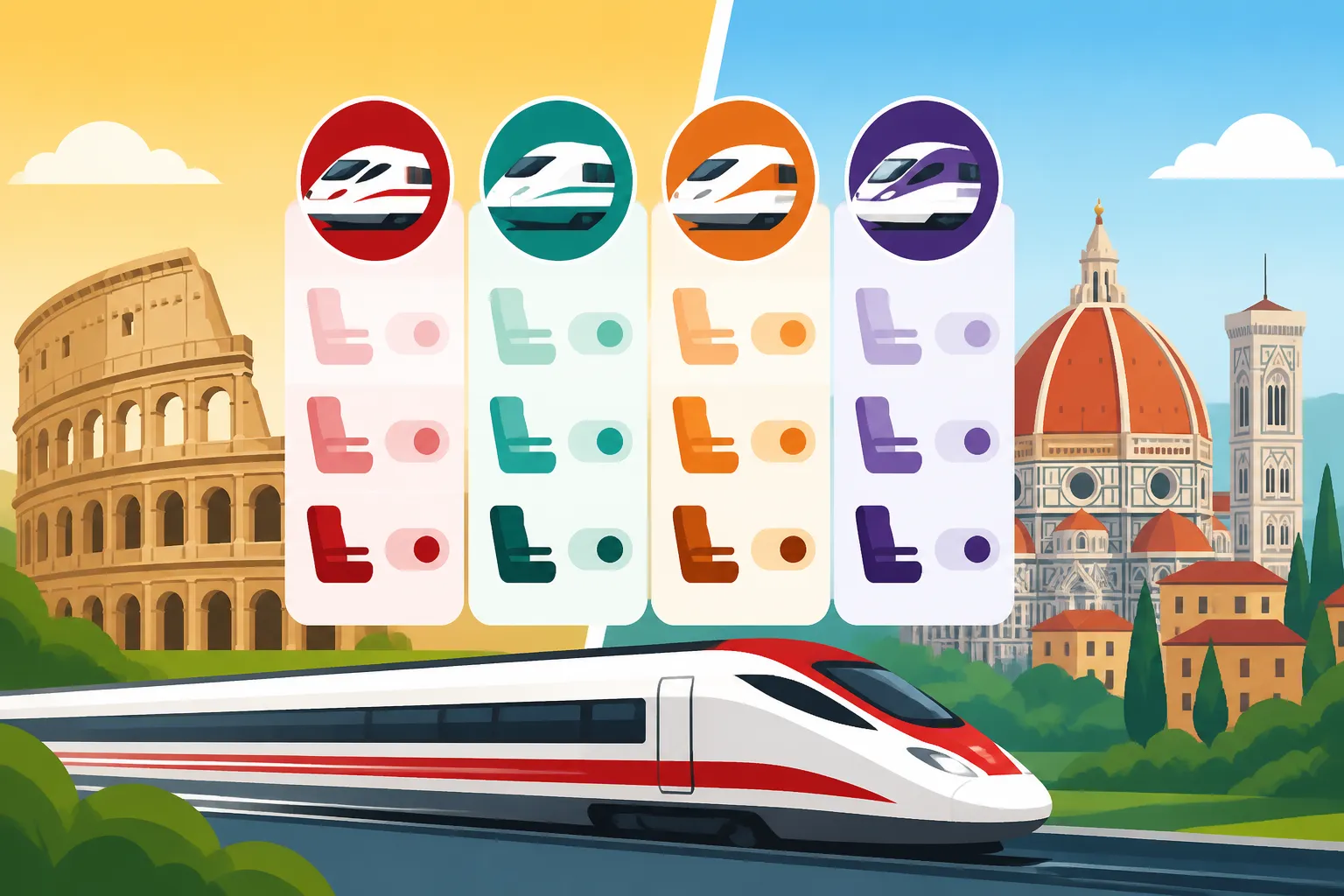
When it comes to high-speed rail travel between Rome and Florence, you essentially have two main players: Trenitalia and Italo. Think of it like choosing between competing airlines on a popular route – both offer excellent service, but they have distinct personalities, pricing structures, and fare options. Understanding these differences is the first step to making an informed choice.
Trenitalia: The National Backbone
Trenitalia is Italy's national railway company, meaning it operates everything from local regional trains (the trenini that chug through small towns) to the sleek, super-fast Frecce trains that zip between major cities. For the Rome to Florence route, you'll primarily be looking at their high-speed Frecciarossa service. These trains are modern, comfortable, and frequent, connecting Rome Termini and Florence Santa Maria Novella (or Campo di Marte) in about 1 hour and 30 minutes.
Trenitalia offers a comprehensive network, reaching virtually every corner of the country. This can be an advantage if your travel plans extend beyond just Florence, as you might find a more seamless connection using the same operator. Their Frecciarossa trains are the pride of the fleet, known for their speed and efficiency. They are the workhorse of Italy's high-speed network and generally offer a reliable and punctual service. Beyond the Frecciarossa, they also operate Frecciargento and Frecciabianca trains, which are also high-speed but typically connect slightly smaller cities or cover routes with more stops, and Intercity trains, which are slower but often cheaper. If you’re looking for a broad overview of the different express services, you might find our guide on High-Speed Trains in Italy: Trenitalia, Italo, Routes, and Savings particularly helpful.
Italo: The Private Competitor
Italo – officially NTV (Nuovo Trasporto Viaggiatori) – burst onto the scene in 2012 as Italy's first private high-speed rail operator, challenging Trenitalia's long-standing monopoly. They run a fleet of distinctive, bright red trains that are known for their modern design, emphasis on customer experience, and competitive pricing. Italo focuses exclusively on high-speed routes between major Italian cities, making them a direct competitor for your Rome to Florence journey.
Italo trains offer a slightly different vibe, often perceived as more boutique or stylish. They have a reputation for being very clean and providing a consistent, high-quality experience. Their core offering is a direct, efficient service that gets you where you need to go quickly. They aim to attract passengers with competitive pricing, especially when booked in advance, and a streamlined booking process. While their network isn't as extensive as Trenitalia's, they cover all the key destinations that matter to most tourists and expats, including Rome and Florence.
Decoding Fare Classes and Tickets: A Practical Breakdown
Now, here's where things can get a little confusing, but also where you can find significant savings and tailor your travel experience. Both Trenitalia and Italo offer a range of fare classes, each with different levels of flexibility, comfort, and amenities. Understanding these is crucial because the difference between the cheapest and most expensive ticket can be hundreds of euros, even for the same seat on the same train.
Trenitalia Fare Classes: From Super Economy to Executive
Trenitalia's high-speed Frecciarossa services come with a structured set of fare classes designed to cater to various traveler needs and budgets. It's worth remembering that prices are highly dynamic and fluctuate based on demand, so early booking is almost always rewarded.
- Super Economy: This is usually the cheapest option, but it comes with strings attached. It's non-refundable and non-changeable. If your plans shift, you're out of luck and money. This fare is best for those whose travel dates are absolutely set in stone.
- Economy: A step up from Super Economy, this fare is also budget-friendly but offers slightly more flexibility. You might be able to change your ticket once, usually for a fee and often only to a higher-priced Base fare. Still, it's non-refundable. Good for those with fairly firm plans but who want a small buffer.
- Base: This is Trenitalia's standard full-price ticket. It's fully flexible, meaning you can change your travel date, time, or even destination multiple times (though you'll pay any difference in fare). It's also fully refundable before departure, usually with a small deduction. This is the "peace of mind" option, but you'll pay a premium for it.
- Premium: Moving into comfort, this class offers a larger seat and more legroom than Standard, often in a dedicated carriage. You get a welcome drink and a snack. The tickets typically align with Base flexibility. A nice upgrade if you want a bit more space without breaking the bank.
- Business: This is a significant upgrade in comfort. You'll find wider, reclining seats, more personal space, a dedicated quiet area (Salottino), and often a meal or substantial snack service. This is ideal for business travelers or anyone who prioritizes comfort and tranquility. Flexibility is generally similar to Base.
- Executive: The top tier. Expect luxurious, fully reclining leather seats, a full gourmet meal service at your seat, access to Trenitalia lounges, and a dedicated attendant. This is a first-class experience, with prices to match, offering maximum comfort and privacy.
Italo Fare Classes: Smart, Prima, and Club Executive
Italo also provides a tiered system, often seen as slightly more streamlined than Trenitalia's, with an emphasis on modern design and service throughout.
- Smart: This is Italo's entry-level fare, comparable to Trenitalia's Standard. You get comfortable seating, often with power outlets, and access to a snack area. Like Super Economy, Smart tickets are usually the cheapest when booked far in advance but come with limited flexibility (non-refundable, often no changes or changes with significant fees). Perfect for budget-conscious travelers with fixed plans.
- Prima: A step up in comfort, Prima offers wider, more spacious leather seats, a welcome service with a drink and a choice of sweet or savory snack, and faster boarding. It offers a good balance of comfort and value. Tickets generally have more flexibility than Smart, allowing some changes for a fee, but are still typically non-refundable.
- Club Executive: Italo's premium offering, Club Executive is designed for ultimate comfort and privacy. You'll find fewer seats per carriage, offering more personal space, and often individual screens for entertainment. Service includes a gourmet meal, complimentary drinks, and access to Italo Lounges. It's a true premium experience, with the highest price point and maximum flexibility (changes and refunds usually allowed with minimal or no fees).
The Art of Booking: When and Where to Buy Tickets (and why Omio is your best friend)
Understanding the fare classes is one thing, but actually securing your ticket at a good price is another challenge. The golden rule in Italy, especially for high-speed trains, is to book in advance. Prices for both Trenitalia and Italo operate on a dynamic pricing model, meaning they start low for the "Super Economy" or "Smart" fares and steadily increase as the train fills up or as the departure date approaches. If you wait until the last minute, you'll be left with only the most expensive "Base" or "Club Executive" tickets, or potentially no seats at all.
You can, of course, book directly through Trenitalia's official website or Italo's official website. These are perfectly viable options. However, here's a secret that many expats, myself included, have come to rely on: using an aggregated platform like Omio. Why Omio? Because it pulls up all available options from both Trenitalia and Italo for your desired route and dates, presenting them side-by-side in one easy-to-read format. No more juggling two different websites, comparing schedules and prices manually. Omio streamlines the entire process, showing you the fastest, cheapest, and most convenient options with all the relevant fare details clearly laid out. It takes the guesswork out of booking, which, let's be honest, is a huge relief when dealing with Italian logistics! Whether you're planning months ahead or need to check options for a spontaneous trip, Omio is an invaluable tool for finding the best deals across all operators. If you're looking for more general tips on securing the best fares, our guide on How to Buy Trenitalia and Italo Tickets and Save Money has a lot of useful insights that complement using a platform like Omio.
Side-by-Side Comparison: Rome to Florence Journey Details
Alright, let's get down to the nitty-gritty of what your actual journey from Rome to Florence will look like. While both major operators offer fantastic service, knowing the specifics of routes, stations, and common travel times will help you choose wisely. This is where Omio really shines, as it presents all this data in one glance, allowing you to quickly compare and make the best decision for your travel style.
Journey Times and Frequencies
One of the most appealing aspects of traveling from Rome to Florence by high-speed train is the incredible efficiency. Both Trenitalia's Frecciarossa and Italo's trains complete the journey in approximately 1 hour and 36 minutes to 1 hour and 45 minutes on average. Some services might be slightly faster or slower depending on the specific stops. This makes it an incredibly convenient option, often faster than flying when you factor in airport transfers and security.
The frequency of trains on this route is also excellent. During peak hours, you can expect a train roughly every 15-20 minutes, giving you a huge amount of flexibility. Even during off-peak times, departures are frequent enough that you won't feel stranded. This high frequency is a major advantage, as it means you can often arrive at the station and find a train departing soon if you have a flexible ticket, or easily reschedule if plans change, particularly if you've used a service like Omio to quickly check alternative timings.
Rome's Stations: Termini and Tiburtina
In Rome, the primary departure point for high-speed trains to Florence is Roma Termini Station. This is Rome's main transportation hub, right in the city center. It's a bustling, sometimes overwhelming, place, but it's incredibly well-connected to the rest of the city via metro (Lines A and B), buses, and trams. Arriving at Termini means you're already in the heart of Rome, making connections to hotels or other areas straightforward. Just be mindful of your belongings, as with any busy station. Navigating this vast station can be a bit of a challenge for first-timers, but once you get your bearings, it's efficient. If you're flying into Fiumicino, getting from the airport to Termini is usually your first step, and our guide on How to Get From Rome Fiumicino Airport to the City Center can help with those connections.
While most high-speed trains depart from Termini, some Italo services and occasionally Trenitalia trains might also use Roma Tiburtina Station. Tiburtina is a more modern station located slightly outside the historical center but still well-connected by Metro Line B. If you find a cheaper fare from Tiburtina and it works with your origin in Rome, it’s a perfectly viable option. Just double-check your departure station when booking, especially if you're comparing options on a platform like Omio.
Florence's Stations: Santa Maria Novella (SMN)
Upon arrival in Florence, your train will almost certainly pull into Firenze Santa Maria Novella (SMN). This is Florence's main train station and it's incredibly central, located just a short walk from the Duomo, the Uffizi Gallery, and most of the city's major attractions. This central location is a huge boon, as you can often walk to your hotel or take a very short taxi or bus ride. The compact nature of Florence means that once you arrive at SMN, the city is literally at your fingertips. Some Trenitalia Frecciarossa trains may also stop at Firenze Campo di Marte, but SMN is the primary and most convenient arrival point for tourists. Again, Omio will clearly display the arrival station, eliminating any surprises.
Here's a quick overview of what you might expect, priced side-by-side, which is exactly the kind of direct comparison Omio excels at providing:
| Operator | Fare Class | Est. Price Range (Early Booking) | Travel Time (Avg.) | Flexibility | Key Features |
|---|---|---|---|---|---|
| Trenitalia | Super Economy | €14 – €30 | 1h 36m – 1h 45m | None (non-refundable/changeable) | Basic seating, cheapest option, no amenities. |
| Economy | €20 – €45 | 1h 36m – 1h 45m | Limited (change for a fee) | Standard seating, slightly more flexible. | |
| Base | €40 – €70+ | 1h 36m – 1h 45m | Full (refundable/changeable) | Standard seating, maximum flexibility, full price. | |
| Premium | €30 – €60+ | 1h 36m – 1h 45m | Full (refundable/changeable) | Wider seats, welcome drink/snack, electrical outlets. | |
| Business | €50 – €90+ | 1h 36m – 1h 45m | Full (refundable/changeable) | Reclining leather seats, quiet zone, meal service. | |
| Executive | €80 – €150+ | 1h 36m – 1h 45m | Full (refundable/changeable) | Gourmet meal, lounge access, dedicated attendant. | |
| Italo | Smart | €12 – €28 | 1h 36m – 1h 45m | None (non-refundable/changeable) | Basic seating, cheapest option, free WiFi. |
| Prima | €25 – €55+ | 1h 36m – 1h 45m | Limited (change for a fee) | Spacious leather seats, welcome service, free WiFi. | |
| Club Executive | €75 – €130+ | 1h 36m – 1h 45m | Full (refundable/changeable) | Executive lounge, gourmet meal, personal screens. |
Note: Prices are approximate and highly subject to change based on demand and booking time. Always use Omio for the most up-to-date real-time pricing.
Pricing Strategies and How to Save Money (The Omio Advantage)
Navigating the pricing landscape for Italian trains can feel like trying to catch smoke – it's always shifting! But once you understand the underlying strategies, you can significantly reduce your travel costs. This is precisely where a tool like Omio becomes not just convenient, but genuinely indispensable, allowing you to see all the moving parts in one simple interface.
Booking in Advance: The Golden Rule
I cannot stress this enough: book your high-speed train tickets in advance! This isn't like hopping on a local bus. Both Trenitalia and Italo employ dynamic pricing, much like airlines. Tickets for the cheapest fare classes (Super Economy for Trenitalia, Smart for Italo) are released several months before the travel date. These are limited in number and will be snatched up quickly, especially for popular routes like Rome to Florence, and during peak seasons or holidays.
If you know your travel dates, even if it's three or four months out, make it a priority to book. I've seen tickets for this route start as low as €9.90 one-way if booked far enough in advance. Waiting until a week before your trip, or worse, the day of, will likely leave you paying the full "Base" fare (potentially €50-€80 or more one-way) or even finding the train sold out. The early bird truly catches the worm, or in this case, the Frecciarossa for a bargain!
Off-Peak vs. Peak Travel
Another critical factor influencing prices is whether you're traveling during peak or off-peak times. Think about it:
- Time of Day: Early morning commutes (7 AM – 9 AM), late afternoon/early evening departures (5 PM – 7 PM), and lunch-hour rushes (12 PM – 2 PM) tend to be more expensive as they cater to business travelers and weekend getaways. Mid-morning (10 AM – 11 AM) or mid-afternoon (2 PM – 4 PM) trains often offer better value.
- Day of Week: Fridays, Sundays, and Mondays are typically more expensive as people travel for weekend trips or start/end their work week. Mid-week travel (Tuesday, Wednesday, Thursday) often presents better deals.
- Seasonal Impact: Holidays (like Easter, Ferragosto in August, Christmas), long weekends (ponti), and the peak tourist season (June-September) will inevitably drive prices up across the board. If you have flexibility, traveling in the shoulder seasons (April-May, October) can provide a sweet spot of good weather and lower fares.
When planning your journey, keep these patterns in mind. Even shifting your departure by an hour or a day can sometimes unlock significantly cheaper tickets.
Utilizing Platforms like Omio for Best Deals
This brings us back to our hero: Omio. While understanding these pricing strategies is great, actually executing them by checking multiple dates and times across two different operators (Trenitalia and Italo) can be a time-consuming chore. This is where Omio becomes an absolute game-changer.
Instead of navigating separate websites, constantly refreshing pages, and trying to remember which operator had that slightly better deal for Tuesday afternoon, Omio does all the heavy lifting for you. You simply input your departure and arrival cities, and your desired date, and Omio will instantly display all available train, bus, and even flight options from all relevant operators. It then sorts them by price, duration, and convenience, clearly showing you:
- The cheapest tickets across both Trenitalia and Italo for that date.
- The fastest routes.
- All the different fare classes available for each departure.
- Direct links to book immediately, often with multilingual support.
This means you can easily see if leaving at 10:30 AM with Italo's Smart fare is cheaper than 11:00 AM with Trenitalia's Economy, all on one screen. Omio empowers you to apply those pricing strategies effectively, ensuring you get the best possible value for your Rome to Florence journey without the usual stress and endless clicking. It’s an invaluable tool for any expat or traveler looking to save money and time, offering a comprehensive view that individual operator sites simply cannot.
Practical Tips for a Smooth Rome to Florence Train Trip
Having chosen your operator and fare class, and likely booked through Omio for the best comparison, you're almost ready to roll. But Italy is Italy, and a few practical tips can make all the difference between a smooth journey and a "character-building" experience.
Validating Tickets (When It Applies)
This is a crucial point for anyone not accustomed to the Italian train system. For high-speed trains (Frecciarossa, Italo, Frecciargento, Frecciabianca), if you have an e-ticket (digital ticket on your phone or a printed PDF) with a specific seat assignment, you generally do NOT need to validate it. The ticket has a unique code and is tied to your name and specific train, date, and time.
However, if you're ever using a regional train ticket purchased at a physical counter or machine, or one of the older, non-assigned paper tickets, you must validate it before boarding. This is done using the small green and white (or yellow) machines usually found on the platform or near the track entrance. Insert your ticket until you hear a stamp, then retrieve it. Failure to validate a regional ticket can result in a hefty fine, as it's considered equivalent to traveling without a ticket. It's a classic expat mistake, so be warned! If you want to dive deeper into this, our post on How to Validate a Regional Train Ticket in Italy offers specific examples and guidance.
Baggage Allowances and Storage
Good news here! Unlike airlines, Italian trains generally have very generous baggage policies. Both Trenitalia and Italo typically allow you to bring a reasonable amount of luggage without extra fees, as long as you can carry it yourself and it fits in the designated storage areas.
On high-speed trains, you'll find:
- Overhead racks: Suitable for smaller bags, backpacks, and light carry-ons.
- Larger racks at the ends of carriages: These are for bigger suitcases. Arrive a little early to secure a spot for your luggage, especially if you're traveling during peak times or with very large bags.
- Space between seats: For medium-sized bags, if you're in an aisle seat.
While there isn't a strict weight limit, remember that you'll need to lift your bags onto the train and store them. If you have exceptionally large or numerous pieces, consider how you'll manage them. Also, keep your valuables with you, even if your larger luggage is stored at the end of the carriage. For temporary storage in Florence, Santa Maria Novella station does offer a left-luggage service (deposito bagagli), perfect if you arrive early or have a late departure and want to explore unencumbered.
Onboard Amenities and Services
High-speed trains in Italy are generally very well-equipped, offering a comfortable and productive journey.
- WiFi: Both Trenitalia Frecciarossa and Italo trains offer free WiFi. Connectivity can sometimes be spotty, especially in tunnels or rural areas, but it's usually sufficient for basic browsing and email.
- Power Outlets: Most seats in all classes (even Smart/Standard) will have individual power outlets, so you can charge your phone, laptop, or tablet.
- Food and Drink:
- Trenitalia: Features a dining car (FrecciaBistrò) where you can purchase snacks, sandwiches, coffee, and drinks. In Premium and Business classes, a welcome drink and snack are included, with additional meal service in Business and Executive.
- Italo: Offers a snack area (Italo Café) and vending machines. In Prima, you get a welcome service with a drink and snack. Club Executive provides a full meal service at your seat.
- Restrooms: Clean and well-maintained restrooms are available on all trains.
- Comfort: Seats are generally comfortable, even in the lowest classes, and air conditioning is standard. The higher classes offer significantly more legroom and wider, often reclining, seats.
Remember that Omio allows you to see the types of trains operating on your chosen route, and implicitly, the general level of amenities you can expect based on the operator and fare class you select. This foresight allows for a much more relaxed and enjoyable trip.
Beyond the Train Ticket: Enhancing Your Italian Experience
Your train journey from Rome to Florence is just one part of a larger adventure. Thinking about how you’ll get around once you arrive, and what you’ll do, can help integrate your travel plans into a truly memorable experience. This holistic approach is something Omio helps facilitate, by simplifying the travel planning so you can focus on the fun stuff.
Local Transport in Rome and Florence
Once you step off the train in Florence, you’ll find yourself at Santa Maria Novella (SMN), perfectly situated for exploring the city. Florence is highly walkable, and many of its main attractions are just a short stroll from the station. For longer distances or when your feet are tired, Florence has an efficient bus system and a growing tram network. Tickets can usually be purchased at tabacchi (tobacco shops) or newsstands, and sometimes directly on board (though often at a higher price). Always remember to validate your bus/tram ticket after boarding!
In Rome, the system is more extensive due to its size. From Termini, you have access to both Metro A and Metro B, a vast bus network, and several tram lines. The Metro is often the quickest way to navigate between major tourist sites, avoiding Rome's infamous traffic. Day passes or multi-day passes (BIT, CIS) are usually available and can be a good value if you plan on using public transport extensively. For more detailed insights into navigating public transportation in Italy's larger cities, our guide on Getting Around Italian Cities: Metro, Tram, and Buses is an excellent resource.
Exploring Both Cities (and beyond)
With your transport sorted, the real magic begins. In Florence, immerse yourself in Renaissance art, wander the Oltrarno district for artisan workshops, or climb to Piazzale Michelangelo for breathtaking views. Don't forget to indulge in the local cuisine – from bistecca alla fiorentina to lampredotto.
If you’re feeling ambitious, Florence also serves as an excellent base for day trips into Tuscany. You could explore the charming hill towns like Siena or San Gimignano, or visit a vineyard for some wine tasting. Our article on Best Day Trips From Florence Without a Car offers some fantastic ideas if you're looking to extend your adventures.
Similarly, if you have more time in Rome before or after your Florence trip, there are countless hidden gems beyond the Colosseum and Vatican. Consider a stroll through Trastevere, exploring the ancient Appian Way, or simply enjoying an espresso in a quiet piazza. For those who love historical sites and smaller towns, Rome also has fantastic options for excursions, and our guide to Best Day Trips From Rome by Train can spark some inspiration.
Why Your Trip Planning Partner Matters
The truth is, planning travel in a foreign country can be genuinely daunting. There are language barriers, cultural differences, and simply too many options. This is why having a reliable trip planning partner is so invaluable. Omio doesn't just show you train tickets; it simplifies the complex decision-making process. By presenting all your options from Rome to Florence—and indeed, anywhere else you want to go in Italy and beyond—in a clear, comparative way, it removes a huge layer of stress.
Whether you're a first-time visitor trying to figure out which train ticket to buy, or a seasoned expat who just wants to save time and money, Omio acts as your personal travel assistant. It ensures you’re making informed choices, getting the best value, and ultimately, frees up your mental energy to focus on what truly matters: enjoying the unparalleled beauty and culture of Italy. It’s about more than just a ticket; it’s about a smoother, more enjoyable travel experience, from the moment you start planning to the moment you step off the train in Florence.
Disclaimer
Please note that travel information, including prices, schedules, and specific regulations, can change rapidly. While we strive to provide the most accurate and up-to-date advice, it's always recommended to double-check details with official sources or reputable booking platforms like Omio directly before making travel arrangements. This guide is for informational purposes only and should not be considered legal or professional advice.