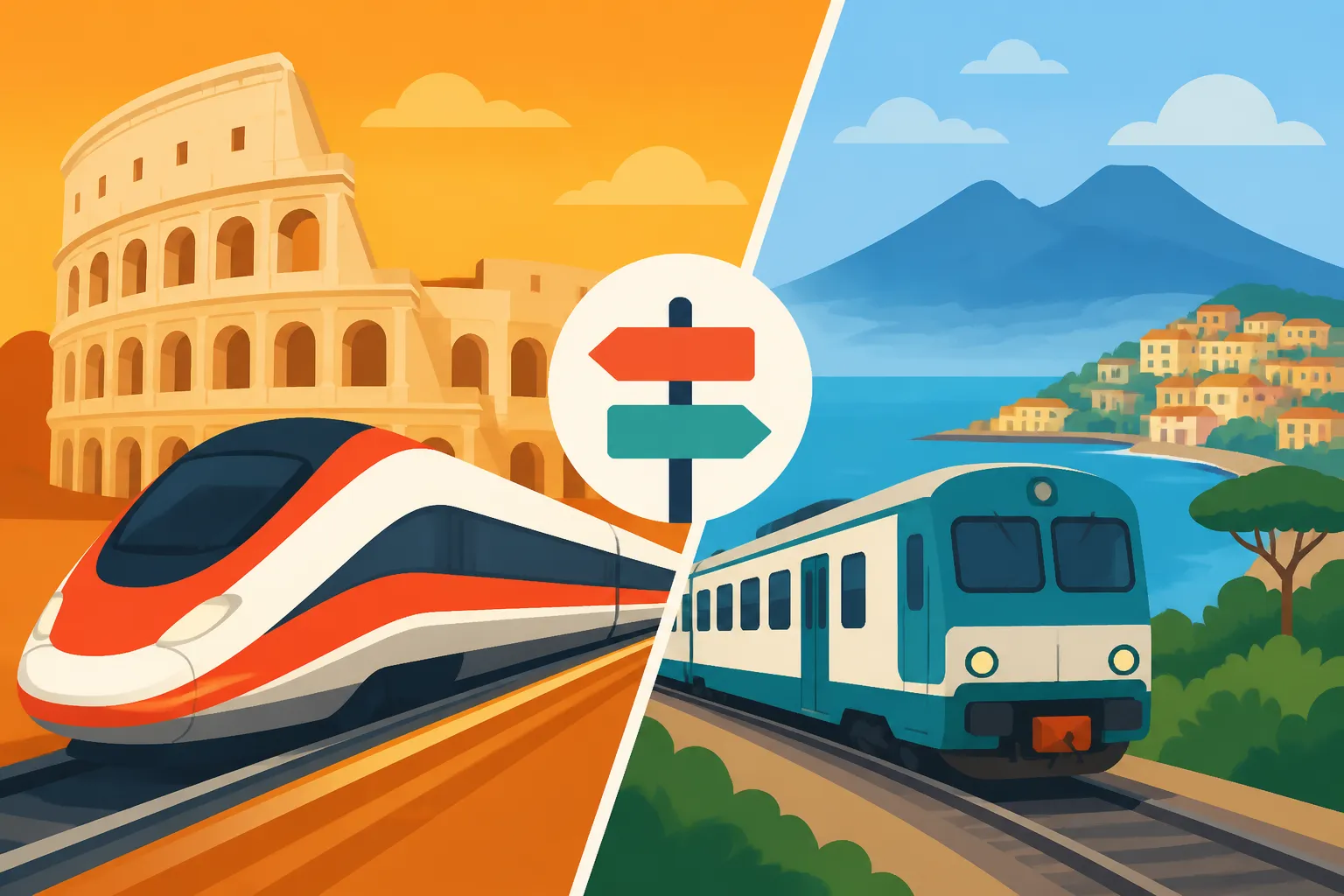
Rome to Naples: High-Speed Options and When the Regionale Is Enough
Ah, the journey from Rome to Naples! It's a classic, isn't it? Whether you're an expat living here, looking to explore more of our adopted country, or a visitor eager to see the real Italy, figuring out the best way to travel between these two vibrant cities can feel like navigating a maze. This guide will cut through the confusion, helping you choose the right train, understand your booking options, and make your trip as smooth as a fresh Neapolitan pizza.
Disclosure: This post may contain affiliate links. We may earn a commission at no extra cost to you if you make a purchase through these links. Read full disclosure.
Why the Rome to Naples Route is a Must-Do
For many of us who've made Italy home, or those just passing through, the journey from the Eternal City to the heart of the South is more than just getting from point A to point B. It's a cultural shift, a culinary pilgrimage, and an essential part of understanding Italy's diverse soul. But let's be honest, getting there can sometimes feel like a hurdle race.
The Irresistible Allure of Naples
Naples, ah, Napoli! It’s a city that grabs you by the collar, shakes you a little, and then feeds you the best pizza of your life. While Rome offers ancient grandeur and a bustling capital vibe, Naples is raw, vibrant, and utterly authentic. For expats, it's a window into a different pace of life, a different dialect, and a different way of being. Imagine leaving the polished streets of Rome Termini and stepping into the chaotic, beautiful energy of Naples Centrale. It's a sensory explosion, from the aroma of frying pizza fritta to the cacophony of street vendors and Vespas.
The city is a gateway to so much more as well. From here, you can easily reach the historical sites of Pompeii and Herculaneum, or catch a ferry to the stunning islands of Capri, Ischia, and Procida. It's truly a launchpad for southern Italian adventures. This distinct contrast between Rome and Naples is precisely why so many people make this trip, and why it's worth understanding the best travel methods. If you're planning on really diving deep into the city, our comprehensive guide, "Naples City Guide: Food, History, and the Bay", offers even more insights.
Bridging North and South: Cultural and Logistical Differences
When you travel from Rome to Naples, you're not just covering kilometers; you're traversing a subtle yet significant cultural divide. Northern Italy, generally speaking, tends to be more organized, industrial, and financially robust. Southern Italy, on the other hand, is often characterized by a warmer, more spontaneous culture, deeply rooted in tradition, and sometimes, yes, a bit more… unpredictable when it comes to schedules and bureaucracy.
Logistically, this means that while train travel is generally reliable, understanding the nuances between high-speed and regional services becomes even more critical. High-speed trains, operated by Trenitalia (Frecciarossa) and Italo, offer a consistent, predictable, and comfortable experience, mirroring what you might expect in many other Western European countries. Regional trains, however, can be a different beast, often slower, less comfortable, and prone to delays. But they also offer a charm and flexibility that high-speed options sometimes lack, especially if you're venturing off the beaten path. For a deeper understanding of navigating Italian customs, our article on "Italian Customs, Etiquette, and Social Life" is a helpful read.
The High-Speed Powerhouses: Frecciarossa and Italo
When speed and comfort are your top priorities for the Rome to Naples journey, the high-speed trains are your undisputed champions. These aren't just trains; they're sleek, efficient machines designed to whisk you between major cities in record time, making the approximately 200 km (124 miles) journey feel like a breeze.
Diving into Frecciarossa: Trenitalia's Flagship
Trenitalia's Frecciarossa, literally "Red Arrow," is Italy's premier high-speed service. These trains are renowned for their punctuality, comfort, and the sheer speed at which they glide across the Italian landscape. From Rome Termini to Naples Centrale, a Frecciarossa can get you there in just over an hour, typically around 1 hour and 10-15 minutes. It's truly impressive and makes day trips or quick weekend getaways incredibly feasible.
Onboard, you'll find various classes of service:
- Standard: Comfortable seats, air conditioning, and usually a snack cart passing through. It's perfectly adequate for most travelers.
- Business: Offers more spacious seating, a welcome drink and snack, and sometimes a dedicated quiet area. Ideal if you need to get some work done or just prefer a bit more space.
- Premium: A mid-range option with larger seats and often a snack.
- Executive: The top tier, featuring ultra-comfortable, reclining leather armchairs, at-seat meal service, and access to a private meeting area. It's a splurge, but for some, the luxury and privacy are worth it.
Frecciarossa trains also typically offer Wi-Fi, power outlets at every seat, and ample luggage space. The journey itself is mostly through tunnels and open countryside, so don't expect breathtaking views, but rather a smooth, efficient ride. Booking well in advance, especially using a platform like Omio, can secure you significant discounts, particularly on Super Economy or Economy tickets, which are non-refundable and non-changeable but offer great value. For more details on these services, check out "High-Speed Trains in Italy: Trenitalia, Italo, Routes, and Savings".
Exploring Italo: The Private Competitor
Not to be outdone, Italo, a private high-speed train operator, offers a fantastic alternative to Trenitalia. Italo trains are equally modern, fast, and comfortable, often boasting a slightly more contemporary design aesthetic. The travel time from Rome to Naples is comparable to Frecciarossa, generally also around 1 hour and 10-15 minutes.
Italo's service levels are also clearly defined:
- Smart: Similar to Standard, offering comfortable seating and Wi-Fi.
- Prima: More spacious seats, a welcome service with a drink and a choice of sweet or savory snack, and faster Wi-Fi.
- Club Executive: Italo's premium offering, with large, leather recliners, at-seat service, and dedicated lounge access at major stations.
One of the great things about Italo is its competitive pricing, especially if you book early. They frequently offer promotions, so comparing prices between Italo and Frecciarossa is always a good idea. This is where a tool like Omio truly shines, as it allows you to see all available high-speed options from both operators side-by-side, without having to navigate multiple Italian-only websites. Italo prides itself on its customer service and modern amenities, making it a very strong contender for this route.
The Workhorse: When the Regionale Train is Enough
While the high-speed options are fantastic for pure speed, sometimes they're just not necessary, or even the best fit. Enter the Regionale train. This is Trenitalia's regional service, and it's the humble workhorse of the Italian railway system, connecting smaller towns and offering a different kind of travel experience.
Cost Savings and Flexibility
The most obvious advantage of the Regionale train is the price. Tickets are significantly cheaper than high-speed services, often costing less than half the price. For budget-conscious travelers, or those on a student budget, this is a massive win. A typical Regionale ticket from Rome to Naples might set you back around €13-€15, whereas a last-minute Frecciarossa ticket could easily be €40-€50 or more.
Another key benefit is flexibility. Regionale tickets typically don't require a seat reservation. This means you can often buy a ticket and hop on the next available train, giving you spontaneous travel options. This is particularly useful if your plans are fluid, or if you're dealing with unexpected delays on your way to the station. Just remember that these tickets do need to be validated before boarding at the green or yellow machines found on platforms, or through the Trenitalia app, to avoid a fine. If you bought an e-ticket with a specific time, it's already validated.
The downside? Regionale trains are significantly slower. The journey from Rome to Naples can take anywhere from 2 hours and 30 minutes to 3 hours or more, as they make numerous stops along the way. The trains themselves are older, less comfortable, and don't offer the same amenities (like Wi-Fi or extensive catering) as their high-speed counterparts. They can also get very crowded, especially during peak commuter hours.
Specific Destinations and Side Trips
Despite the slower pace and fewer creature comforts, the Regionale train can be the ideal choice for certain journeys. If your final destination isn't Naples Centrale itself, but a smaller town along the route, a Regionale might be your only direct option, saving you the hassle and cost of transferring from a high-speed train.
Crucially, the Regionale is often your best friend for day trips from Naples to places like Pompeii, Herculaneum, or the coastal towns of the Sorrento Peninsula. The Circumvesuviana line, for example, is a regional train network operating out of Naples Garibaldi (below Naples Centrale) that is the primary way to reach these archaeological sites and coastal gems. While the Circumvesuviana itself isn't part of the direct Rome-Naples route, understanding that regional trains are integral to local exploration is key. If you’re planning on exploring the area around Naples, knowing that cheaper, slower trains are available and often necessary will be a huge benefit to your budget and itinerary.
Ultimately, the choice comes down to weighing speed and comfort against cost and flexibility. If you're not in a rush, prefer saving your euros for a delicious pizza in Naples, and don't mind a more local, albeit less glamorous, travel experience, the Regionale train is perfectly enough.
| Feature | High-Speed (Frecciarossa/Italo) | Regionale (Trenitalia) |
|---|---|---|
| Journey Time | ~1h 10m – 1h 20m | ~2h 30m – 3h+ |
| Comfort | Excellent (modern, spacious seats) | Basic (older trains, less space) |
| Amenities | Wi-Fi, power outlets, dining car/cart | Limited or none |
| Cost | High (can be reduced with advance booking) | Low (fixed price) |
| Flexibility | Specific departure times, reserved seats | Flexible (unreserved, frequent departures) |
| Booking | Recommended in advance | Can buy just before departure |
| Luggage Space | Ample, overhead racks, dedicated areas | Overhead racks, less dedicated space |
| Punctuality | Generally high | Can be prone to delays |
| Main Stations | Rome Termini, Naples Centrale | Rome Termini, Naples Centrale, local stops |
Booking Your Tickets: The Smart Way to Travel
Navigating the Italian train system, with its different operators and sometimes clunky websites, can be a source of frustration for even seasoned travelers. This is where choosing the right booking platform makes all the difference. For ease, convenience, and comprehensive comparison, a robust platform is truly a lifesaver.
Why Omio is Your Best Friend for Italian Train Travel
Let me tell you, as someone who’s battled Italian bureaucracy and multi-lingual websites more times than I care to count, having one single platform that pulls together all your options is pure gold. This is exactly why I recommend Omio so highly for booking your Rome to Naples journey. It’s designed to simplify the complex European travel landscape, and it does it brilliantly for Italy.
With Omio, you can effortlessly compare prices and schedules for both Frecciarossa (Trenitalia) and Italo high-speed trains, as well as the slower, more budget-friendly Regionale options, all on one screen. No more juggling between Trenitalia.it and ItaloTreno.it, trying to figure out which one is cheaper or has a better departure time. Omio lays it all out for you, clear as day, in English (or your preferred language!), allowing you to filter by price, speed, and time.
This isn't just about convenience; it's about making informed decisions and saving money. Omio often highlights cheaper tickets you might miss on individual operator sites, especially those non-refundable Super Economy fares that vanish quickly. Plus, their mobile app makes managing your tickets a breeze – no need to print anything, just show your e-ticket on your phone. It cuts through the noise, handles the currency conversions, and presents you with the best way to get from Rome to Naples, period.
Direct Operator Websites vs. Aggregators
Of course, you can book directly through Trenitalia's website (www.trenitalia.com) or Italo's website (www.italotreno.it). These sites are improving, and for very specific needs or if you're comfortable with Italian, they can work. However, there are a few drawbacks:
- Language Barriers: While English options exist, sometimes navigating specific terms or conditions can be confusing.
- Limited Comparison: You can only see options for that specific operator, meaning you have to manually check the other one to compare.
- Payment Issues: Some foreign credit cards can occasionally have issues on Italian-based sites.
This is precisely where aggregators like Omio offer a huge advantage. They act as a central hub, simplifying the entire process. Beyond Omio, other aggregators exist, but based on my experience, Omio provides one of the most user-friendly interfaces and comprehensive search results for Italian rail. It really takes the guesswork and stress out of trying to find the best deal, especially for this popular route where competition between Frecciarossa and Italo means prices can fluctuate wildly. For those looking to be savvy about their bookings, our guide on "How to Buy Trenitalia and Italo Tickets and Save Money" also offers valuable insights.
Last-Minute Booking and Flex Fares
While booking in advance, especially with Omio, is almost always recommended for high-speed trains to secure the best prices, sometimes life happens. If you find yourself needing a last-minute ticket, be prepared for higher fares, particularly for Frecciarossa and Italo. The cheapest "Economy" and "Super Economy" tickets usually sell out first.
At this point, you'll likely be looking at "Base" fares (Trenitalia) or "Flex" fares (Italo), which offer more flexibility for changes or cancellations but come at a premium price. In these scenarios, it’s still worth checking Omio, as it will instantly show you the best available last-minute prices across both operators. Sometimes, one operator might still have a slightly cheaper flexible ticket than the other.
For Regionale trains, last-minute booking is rarely an issue for availability or price. Their fares are fixed, so whether you buy your ticket a month in advance or 10 minutes before departure, the price will be the same. The main concern might be finding an available seat if you're traveling during a very busy period.
Navigating Rome and Naples Train Stations
Arriving at or departing from major Italian train stations can be quite an experience. They are bustling hubs, often sprawling and filled with a mix of travelers, commuters, and locals. Knowing what to expect at Rome Termini and Naples Centrale can significantly reduce stress and help you navigate like a seasoned pro.
Rome Termini: The Gateway to the South
Rome Termini is a colossal beast, the largest railway station in Rome and a major transport hub for all of Italy. It's not just a train station; it's a small city in itself, with multiple levels of shops, restaurants, and services. For many expats and tourists, it's the starting point for countless adventures, and often the first glimpse of Italian train travel.
When you arrive at Termini for your train to Naples, here are a few tips:
- Arrive Early: Especially if it's your first time or if you're traveling during peak hours. Give yourself at least 20-30 minutes to find your platform ( binario ), grab a coffee, and get settled.
- Locate Your Platform: The platform numbers are usually displayed on large electronic boards ( partenze for departures) about 15-20 minutes before the train is due to leave. Don't rely on smaller screens for too long, as platform changes can occur.
- Ticket Barriers: For high-speed trains, there are typically ticket barriers at the entrance to the platforms. You'll need to scan your ticket (either printed or on your phone via the Omio app). Have it ready!
- Food and Services: There are numerous eateries, from quick grab-and-go panini to sit-down restaurants. It's a good place to stock up on snacks and drinks for your journey. There are also luggage storage facilities ( deposito bagagli ) if you're making a quick stopover.
- Safety: Like any major transport hub, be aware of your surroundings and keep an eye on your belongings. Pickpocketing can be an issue in crowded areas. For general safety tips, refer to "Staying Safe in Italy: Common-Sense Tips for Travelers".
Termini is well-connected to Rome's public transport network, with two Metro lines (A and B) intersecting directly below the station, as well as numerous bus and tram lines. Getting to and from the station is generally quite straightforward, although during rush hour, the Metro can be packed! To plan your local travels, consult our guide "Getting Around Italian Cities: Metro, Tram, and Buses".
Naples Centrale: Entering the Heart of the South
Naples Centrale, often referred to locally as Stazione Garibaldi (as it sits atop the Garibaldi Metro station and has a connection to the Piazza Garibaldi), is the main railway station in Naples. While not as sprawling as Termini, it's still a busy and vibrant hub, serving as a vital connection point for Southern Italy.
Upon arrival, here's what to expect:
- Connections: Naples Centrale is seamlessly integrated with the Naples Metro Line 1 (Garibaldi station) and Line 2 (Piazza Garibaldi station), making it easy to reach different parts of the city. The Circumvesuviana local train line (for Pompeii, Herculaneum, Sorrento) is located underneath the main station, also accessible from the lower level.
- Initial Impression: Prepare for a bit more hustle and bustle than Rome. Naples has a unique energy, and the station reflects that. It can feel a little more chaotic, but it's part of the city's charm.
- Finding Your Way Out: Follow the signs carefully for Uscita (Exit) and for the Metro or bus connections you need. If you've booked accommodation, check which Metro line or bus route is best.
- Food and Amenities: Similar to Termini, Centrale has several food options, from quick cafes to larger restaurants. There are also shops and services, including luggage storage.
- Be Aware: Again, be mindful of your belongings, particularly around the exits and Metro entrances. While Naples is generally safe, opportunists exist in crowded tourist areas.
One common point of confusion is the distinction between Naples Centrale and Piazza Garibaldi. Essentially, they are the same complex. When you arrive by high-speed train at Naples Centrale, you'll be on the upper level. To access the Metro or Circumvesuviana, you'll head downstairs to the Piazza Garibaldi station area. It's all very well-signposted, but knowing this beforehand helps mentally prepare you for the transition.
Other Ways to Travel Between Rome and Naples
While trains are often the preferred method for the Rome-Naples route due to speed and convenience, they aren't the only options. Sometimes, an alternative might better suit your budget, itinerary, or simply your personal travel style.
Buses: The Budget-Friendly Option
For those really looking to save money, taking a bus is usually the cheapest way to travel between Rome and Naples. Companies like FlixBus offer multiple daily departures, with journey times typically ranging from 2 hours 30 minutes to 3 hours 30 minutes, depending on traffic and specific routes.
Pros of bus travel:
- Cost: Significantly cheaper than trains, especially if booked in advance. You can often find tickets for as low as €5-€10.
- Luggage Allowance: Often more generous than budget airlines, allowing for a couple of suitcases without extra fees.
- Comfort: Modern buses usually have comfortable seats, Wi-Fi, and power outlets.
Cons of bus travel:
- Traffic: This is the biggest variable. Italy's highways, especially around major cities, can experience heavy traffic, leading to unpredictable delays. What looks like a 2.5-hour journey on paper can easily become 4 hours.
- Departure/Arrival Points: Bus stations are sometimes less centrally located than train stations, requiring extra travel time and cost to get to your final destination in either city. In Rome, buses often depart from Tiburtina station (a short metro ride from Termini), and in Naples, they might use Metropark or other peripheral points.
- Less Scenic: You're mostly on the highway, so views aren't a highlight.
If you have ample time, a tight budget, and aren't bothered by the potential for delays, bus travel can be a perfectly viable option. Omio also allows you to compare bus options alongside trains, so you can easily see if the savings are worth the extra time.
Driving: Flexibility with Hidden Costs
Renting a car and driving from Rome to Naples offers unparalleled flexibility, allowing you to stop wherever you please, explore the countryside, or visit attractions off the main train lines. The drive itself takes roughly 2 to 2.5 hours without stops, primarily along the A1 Autostrada.
Pros of driving:
- Freedom: Explore at your own pace, make detours, and access remote villages.
- Group Travel: Can be cost-effective for families or groups splitting the rental car cost.
- Door-to-Door: If your accommodation has parking, it can be very convenient.
Cons of driving:
- Cost: Beyond the rental fee, you'll incur petrol costs (which are high in Italy), tolls on the A1, and parking fees in both cities.
- ZTLs: Italy's Zone a Traffico Limitato (Limited Traffic Zones) are notorious. These restricted areas in city centers are monitored by cameras, and unauthorized entry results in hefty fines. Naples, like Rome, has strict ZTLs. If you’re not careful, your savings from a cheap rental can quickly evaporate. Our article on "Renting a Car in Italy: ZTLs, Insurance, and Driving Tips" is essential reading for this.
- Parking: Finding affordable and safe parking in Rome and Naples is a challenge, especially in the city center.
- Traffic: As with buses, traffic can significantly extend your journey time, particularly on weekends or during holiday periods.
For most travelers simply trying to get from Rome city center to Naples city center, driving adds more hassle than it's worth. It only really makes sense if you plan extensive detours outside the main cities.
Flights: Usually Not Worth It
While both Rome (Fiumicino – FCO) and Naples (Capodichino – NAP) have international airports, flying between the two cities is almost never a practical or efficient option.
- Time: The actual flight time is very short (around 45-60 minutes), but you need to factor in travel to and from airports, security checks, and boarding times. By the time you do all that, a 1-hour train ride suddenly looks much faster.
- Cost: While budget airlines occasionally offer cheap flights, once you add luggage fees and airport transfers, the cost often outweighs the benefits.
- Environmental Impact: For such a short distance, flying has a disproportionately high carbon footprint compared to trains.
In almost all scenarios, the high-speed train will be faster, more convenient, and more environmentally friendly for the Rome to Naples route. This is why when you check Omio, you'll see trains and buses highlighted, but rarely flights for this specific internal route.
The Rome to Naples Journey: A Veteran Expat's Perspective
Having navigated the ins and outs of Italian life for years, I've seen firsthand how crucial good transport information is. The Rome to Naples route is iconic, and choosing wisely can really shape your experience. From my perspective, it really boils down to balancing speed, cost, and comfort, and thankfully, Italy offers excellent options for all.
The high-speed trains, whether you opt for Trenitalia’s Frecciarossa or Italo, are simply unmatched for efficiency. They cut through the landscape, making the journey feel impossibly short, allowing you to go from the grandeur of the Colosseum to the vibrant chaos of Spaccanapoli in just over an hour. For tourists on a tight schedule or expats maximizing their weekend trips, these are the clear winners. The comfort, the amenities, and the sheer speed make them worth every euro, especially when you consider the value of your time. And let’s not forget, when booking through a platform like Omio, you can often snag fantastic deals that make high-speed travel surprisingly affordable.
However, I’m also a big advocate for the regional trains, especially if you’re not in a hurry or are looking to save some cash for that extra slice of pizza margherita (which, let’s be honest, is a priority in Naples!). The slower pace, the absence of seat reservations, and the fixed, budget-friendly price make the Regionale a solid choice. It might be less glamorous, a bit more crowded, and prone to the occasional delay, but it offers a genuine taste of local travel and opens up opportunities for exploring smaller towns along the way that the high-speed options simply whiz past.
Ultimately, the best choice for you depends entirely on your priorities. Are you rushing to catch a ferry to Capri? High-speed all the way, and book it on Omio to save yourself the stress. Are you on a backpacking adventure, happy to take your time and soak in the scenery? The Regionale will serve you well, freeing up funds for more culinary delights. Remember, Italy's train system is generally fantastic, and while the bureaucracy can sometimes be a puzzle, the actual travel experience is usually a highlight. Enjoy your trip from Rome to Naples, and may your journey be filled with good food, good views, and good company!
Disclaimer
Please remember that travel information, schedules, and pricing can change. While this guide aims to provide the most current and accurate advice, it's always wise to double-check official sources or use a reliable booking platform like Omio for the very latest details before you travel. This content is for informational purposes only and does not constitute professional advice.