The Dichiarazione di Presenza for Short Stays in Italy
Navigating the invisible borders of Europe can lead to a sudden, stressful realization: you’ve legally entered Italy, but the government has no official record of your arrival. I remember the panic I felt during my first month in Rome, realizing my passport hadn't been stamped because I flew in from Munich. This guide breaks down exactly how to file your declaration of presence to ensure your short stay remains legal and stress-free.
Disclosure: This post may contain affiliate links. We may earn a commission at no extra cost to you if you make a purchase through these links. Read full disclosure.
Understanding the Legal Concept of the Dichiarazione di Presenza
When you travel within the Schengen Area, the absence of internal border controls is a blessing for your itinerary but a potential nightmare for your legal status. The Dichiarazione di Presenza, or Declaration of Presence, is the formal way you tell the Italian state, "I am here, and I arrived on this specific date." Without this, if you are stopped by the Carabinieri or Polizia di Stato, you have no way to prove you haven't overstayed the 90-day visa-free limit allowed for most non-EU tourists.
The core issue stems from the uniform Schengen rules. If you fly directly from New York to Rome, an Italian immigration officer stamps your passport. That stamp serves as your official declaration. However, if you fly from New York to Paris and then take a train or a connecting flight to Milan, your entry stamp is French. Italy requires an additional step to acknowledge your presence on their soil within a very tight timeframe.
Italian authorities view this document as a fundamental security and immigration requirement. It is not a mere "suggestion." It is the primary evidence used to calculate your legal duration of stay. If you eventually decide to pivot your life and look into Italian Residence Permit (Permesso di Soggiorno) Explained, the absence of a declaration of presence for your initial entry can create a gap in your record that is difficult to explain to the Questura.
Who Must File a Declaration of Presence
Identifying whether you fall into the category of people who need this document is the first step in avoiding unnecessary bureaucracy. The rule is generally applied to non-European Union citizens who are visiting Italy for "short stays," which typically refers to tourism, business, study, or medical treatment lasting less than 90 days.
Arrivals from Schengen vs Non-Schengen Countries
If you entered Italy directly from a country outside the Schengen Area (like the US, UK, Canada, or Japan), the entry stamp in your passport acts as the declaration. You do not need to do anything else. However, if your journey involved a layover in another Schengen country—say, you landed in Frankfurt or Madrid before heading to Italy—your passport was stamped at that first point of entry. In the eyes of the Italian law, you effectively "snuck in" through an internal border. In this scenario, you are legally obligated to file the declaration.
Staying in Private Homes vs Commercial Accommodations
The rules change significantly based on where you lay your head at night. If you are staying in a hotel, a licensed bed and breakfast, or a registered Airbnb, the law actually shifts the burden of reporting to the host. When they take a scan of your passport upon check-in, they are transmitting your data to the "Alloggiati Web" portal, which satisfies the requirement. You should, however, ask for a copy of the receipt of this transmission just to be safe.
If you are staying with a friend, a family member, or in a private rental that isn't officially registered for tourism, the responsibility falls entirely on you. You must visit the local Questura to file the paperwork yourself. Many expats find themselves in this position when they first arrive and crash on a friend's couch while searching for their own place or looking for Finding Rental Apartments in Italy: Websites and Tips.
Exclusions for EU Citizens and Family Members
Citizens of the European Union do not need to file a Dichiarazione di Presenza. Their right to free movement allows them to be in Italy for up to three months without any formal declaration. After three months, the process changes entirely to residency registration. For non-EU family members of EU citizens, the rules can be slightly more nuanced, but generally, if the stay is under 90 days, the declaration is still a smart move if no entry stamp is present.
The Eight Day Rule and Deadlines
In the world of Italian bureaucracy, timing is everything. You have exactly eight days, including the day of your arrival, to submit your declaration. This is often where travelers get tripped up. They spend their first week sightseeing and eating pasta, only to realize on day nine that they are technically in violation of immigration law.
The eight-day window is rigid. If you miss it, the Questura might still accept your application, but you run the risk of a fine or, in extreme cases, a formal "invitation" to leave the country. I’ve seen people try to argue that they didn't know the rule, but the Italian legal system operates on the principle of ignorantia legis non excusat—ignorance of the law is no excuse.
When calculating your eight days, count from the moment you crossed the Italian border. If you took a train from Nice to Sanremo on a Monday, your deadline is the following Monday. Do not wait until the last minute. Questura hours are notoriously erratic, and you may find the office closed for a local saint's day or a strike. Planning ahead is essential.
| Condition of Entry | Action Required | Responsibility |
|---|---|---|
| Direct from non-Schengen country | None (Passport Stamp suffices) | Immigration Officer |
| From Schengen via Hotel/B&B | Check-in at accommodation | Hotel Management |
| From Schengen via Private Home | File at Questura within 8 days | The Traveler |
| EU Citizen (any entry) | None for stays under 90 days | N/A |
Necessary Documentation and the Filing Process
Before you head to the Questura, you need to be armed with a specific set of documents. Walking in unprepared is a surefire way to spend four hours in a waiting room only to be sent away. The goal is to make the officer's job as easy as possible so they stamp your form and let you go.
The Identity Document and Photocopies
You must bring your original passport. However, the officer will not keep it; they need to see it to verify the entry stamp from the first Schengen country you visited. You should also bring clear photocopies of the main data page of your passport and the page containing the entry stamp. If your documents are in a language other than Italian or English, you might consider using a service like Translayte or RushTranslate to provide a certified translation, though for a simple passport, this is rarely necessary unless your name uses a non-Latin script.
Proof of Accommodation and Health Coverage
You need to show where you are staying. If you are in a private home, bring a written statement from your host (known as a Dichiarazione di Ospitalità) and a copy of their ID. Additionally, short-stay visitors are often asked to show proof of health insurance that covers at least €30,000 for emergency medical expenses. This is a standard Schengen requirement. If you don't have coverage, looking into providers like Cigna Global can ensure you meet the criteria for legal stay and provide peace of mind in case of an accident.
The Form: Modello 210
At the Questura, you will be asked to fill out a specific form, often referred to as the "Modulo per la dichiarazione di presenza." It asks for basic information: your name, date of birth, passport number, the date you entered Italy, and your address in Italy. Use black ink and write in block capitals. Mistakes on these forms can lead to delays, as the officers are often looking for any reason to reject a messy application.
Navigating the Questura Experience
The Questura (Police Headquarters) is the heart of Italian immigration bureaucracy. For many foreigners, it is a place of high anxiety. The atmosphere can be chaotic, with long lines of people from all over the world waiting for various permits. To survive this, you need a healthy dose of patience and a clear strategy.
Finding the Right Office
Every province in Italy has a central Questura, but many also have smaller "Commissariati" (police stations) that can handle declarations of presence. It is often much faster to go to a smaller station in a less crowded neighborhood than the main headquarters in the city center. For example, if you are in Rome, the central office near Termini is usually overwhelmed, while a peripheral station might have you in and out in thirty minutes.
Language Barriers and Communication
Do not expect the officers to speak fluent English. While many do, the official language of the transaction is Italian. If you don't speak the language, bring a friend who does, or have a translation app ready on your phone. Being polite, using basic greetings like "Buongiorno," and showing that you are trying to follow the rules will go a long way. This is a cultural nuance that applies to everything from immigration to Getting Health Insurance in Italy: Public and Private Options.
The Stamp of Approval
Once the officer processes your paperwork, they will give you a stamped copy of the declaration. This piece of paper is now as valuable as your passport. Do not lose it. Take a photo of it and store it in the cloud. You may need to show it to the police during a random check, or when you are Registering With Your Local ASL in Italy: A Practical Guide if you end up staying longer for work or study.
Common Pitfalls and How to Avoid Them
Even with the best intentions, things can go wrong. The Italian system is famous for its "catch-22" scenarios where you need one document to get another, but can't get the first without the second.
The "Hotel Loophole" Confusion
Sometimes, a hotel receptionist might not know they are responsible for your declaration. They might just check your ID and hand you the key. If you are coming from another Schengen country, you must insist that they record your arrival correctly. If they seem confused, ask for a "ricevuta della segnalazione all'autorità di pubblica sicurezza." This receipt is your proof that the declaration was made. If you can't get this, you are better off going to the Questura yourself.
Documentation Translation Errors
If you are carrying supporting documents—like a birth certificate for a minor or a marriage license for a spouse—ensure they are properly translated. Using a professional service like RushTranslate or Translayte is highly recommended because the Questura often rejects "DIY" translations. They want to see a stamp that says the translation is faithful to the original. This is a small investment to avoid a major bureaucratic headache.
Forgetfulness and the Questura Appointment
In some large cities, you can't just walk into the Questura; you might need an appointment. However, for a simple Dichiarazione di Presenza, most offices allow walk-ins during specific morning hours. Check the local Questura website before you go. If you wait until day seven to check, and find out they only take walk-ins on Tuesdays and Thursdays, you might miss your window.
Legal Consequences of Non-Compliance
It is tempting to think that because there are no physical borders, no one will ever know you didn't file the declaration. For many travelers, this is true—they visit, leave, and nothing happens. However, the risks of non-compliance are significant, especially if you have any intention of returning to Italy or applying for a different visa later.
Fines and Immediate Repercussions
If you are caught without a valid declaration of presence or a passport stamp, you are technically an illegal immigrant. The police have the authority to issue an administrative fine, which can range from a few hundred to a few thousand euros. More importantly, they can issue an "Espulsione" (deportation order), which usually carries a ban from the entire Schengen Area for three to five years.
Impact on Future Residency
If you fall in love with Italy and decide to stay, perhaps by Applying to Italian Universities: A Step-by-Step Guide, the immigration office will look at your history. They will check the date you first arrived to see if you have always been in a "regular" status. A missing declaration of presence is a red flag that suggests you were living in the country illegally before your student visa or work permit was processed.
Traveling to Other Schengen Countries
Your legal status in Italy affects your ability to travel to neighboring countries. If you take a train to France or a flight to Greece and your papers are checked, the lack of an Italian declaration of presence makes your stay in the entire Schengen zone suspect. It is always better to have the paper and not need it than to need it and be stuck in a detention center at an airport.
Practical Tips for a Smooth Process
After years of helping people navigate this, I’ve developed a shortlist of "pro tips" that make the process significantly less painful.
- Go Early: Arrive at the Questura at least 30 minutes before they open. The lines form early, and they often stop giving out numbers once they reach a certain daily limit.
- Bring a Pen: It sounds simple, but there are never enough pens in Italian government offices. Having your own saves you from having to beg a stranger for one.
- Keep Your Cool: The officers are often stressed and overworked. If you remain calm and respectful, they are much more likely to help you.
- Check Your Stamp: Before you leave the window, look at the stamped copy they gave you. Ensure the date is correct and the stamp is legible. If it's a faint smudge, ask them to stamp it again.
- Digital Backup: Scan the document immediately. Italian paper has a way of disappearing or getting ruined by a spilled espresso.
If you are planning to stay long-term, you might also want to look into How to Get a Codice Fiscale in Italy (and Why You Need One) early on, as it is required for almost everything else, from getting a SIM card to signing a lease.
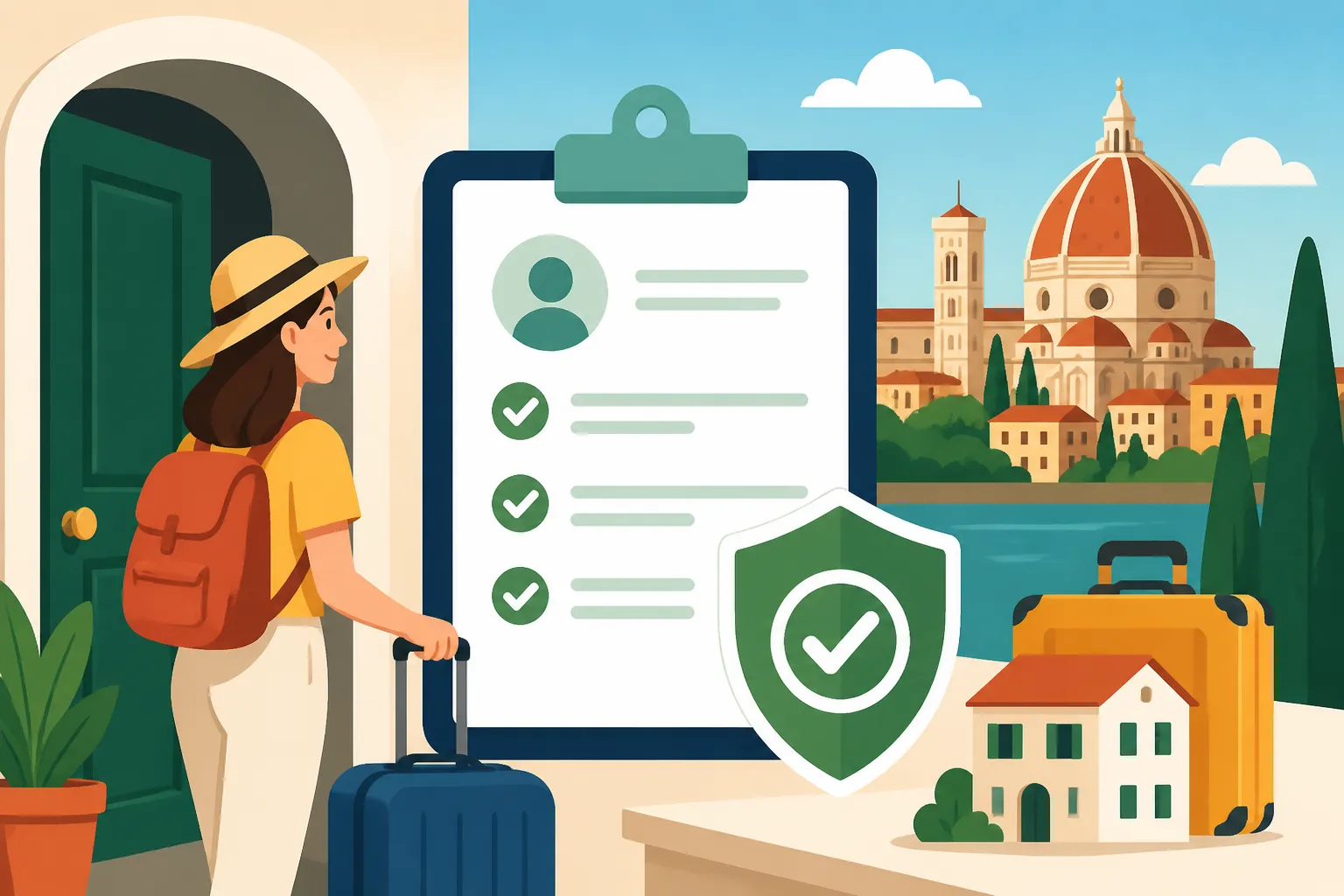
Summary Checklist for Short-Stay Travelers
Before you set out to the police station, run through this final checklist to ensure you have everything covered:
- Passport (Original and Photocopy)
- Entry Stamp from first Schengen country (Photocopy)
- Proof of health insurance (e.g., policy from Cigna Global)
- Host's ID and Declaration of Hospitality (if staying in a private home)
- Modello 210 (usually provided at the station)
- Evidence of your travel into Italy (train ticket, boarding pass)
Filing the Dichiarazione di Presenza is your first real test of "living like an Italian." It requires patience, attention to detail, and a bit of administrative grit. Once it’s done, you can get back to what really matters: enjoying the beauty, history, and culture of this incredible country without a legal cloud hanging over your head.
Disclaimer
This guide is for informational purposes only and does not constitute legal advice. Immigration laws and Questura procedures in Italy are subject to change without notice. Always verify current requirements with the official website of the Polizia di Stato or consult with a qualified immigration professional before making travel or residency plans.