How to pay Italy visa fee online or at consulate
Arriving at the Italian consulate with a perfectly compiled dossier, only to be rejected at the glass window over a payment technicality, is devastating. I once missed my entire appointment slot because I brought a personal check instead of the exact required cash. This guide explains how to properly pay your Italian visa fee online or in person without delays.
Disclosure: This post may contain affiliate links. We may earn a commission at no extra cost to you if you make a purchase through these links. Read full disclosure.
The Confusing Reality of Italian Visa Fees
The Tasso di Ragguaglio Exchange Rate Trap
The very first hurdle expats face is figuring out exactly how much they owe. The Italian Ministry of Foreign Affairs sets baseline fees in Euros. Currently, a short-stay Schengen Visa (Type C) costs €90, while a long-stay National Visa (Type D) costs €116, and a National Study Visa costs €50. However, unless you are applying from within the Eurozone, you cannot simply hand the clerk a fifty-euro note.
Italian consulates around the world charge you in the local currency (USD, GBP, INR, etc.). To determine this localized price, the consulate uses an official internal exchange rate known as the tasso di ragguaglio. Here is the trap that ruins countless appointments: this exchange rate is forcefully adjusted at the beginning of every single fiscal quarter (January 1st, April 1st, July 1st, and October 1st).
If you look up the visa fee in March and write a money order for that exact amount, but your physical appointment falls on April 2nd, your money order will be rejected because the new quarterly exchange rate has altered the fee by a few dollars or rupees. You must check the consulate’s official website the week of your appointment to verify the exact, newly updated localized fee. Understanding these rigid financial mechanics is a foundational lesson when researching Schengen Visa Requirements Italy.
The Role of Outsourced Agencies
Depending on your home country, you might not even be allowed to apply directly at the Italian consulate. The Ministry of Foreign Affairs frequently outsources the collection of visa applications to third-party commercial entities like VFS Global or TLScontact.
When you apply through an outsourced center, you do not just pay the baseline government visa fee. You must also pay an inescapable “service fee” to the agency, which typically ranges from €20 to €40. Unlike the government fee, the agency fee is entirely commercial and is often subject to additional convenience charges if you use a credit card. If you are navigating a complex transition, such as Converting a Student Visa to a Work Visa in Italy, you must budget for both the non-refundable government fee and the agency’s mandatory service surcharge.
How to Pay the Visa Fee at the Consulate
Postal Money Orders and the Exact Cash Rule
If you are applying directly at a physical Italian consulate or embassy (such as the Consulate General in New York or Los Angeles), you will be shocked by how antiquated their payment systems are. The vast majority of Italian consulates completely ban personal checks. If you slide a personal check under the glass, you will be sent home immediately.
Most consulates demand payment via a highly specific method: a cashier’s check or a formal postal money order made out exactly to the “Consulate General of Italy.” Alternatively, some consulates will strictly require physical cash. If they mandate cash, you must bring the exact change down to the cent. The consular officers do not keep a register of bills and will absolutely refuse to make change for you. Arriving with a hundred-dollar bill for an $84.30 fee will result in your application being paused while you frantically run down the street looking for a convenience store willing to break your bill. Surviving this rigid, unforgiving protocol perfectly mirrors the later challenges of Navigating Italian Bureaucracy Comune and Prefettura.
Why Credit Cards Are a Physical Gamble
Many expats assume they can just swipe their Visa or Mastercard at the consulate window. While some modernized consulates and nearly all VFS Global centers possess credit card terminals, relying solely on plastic is a massive gamble.
The physical card readers in these government offices frequently lose connection to the Italian banking servers or are simply out of service for weeks at a time. Furthermore, if you are using a credit card from your home country, your bank’s automated fraud detection system will often flag the sudden charge from an Italian government entity and instantly lock your card. If the card declines at the window, the clerk will not wait for you to call your bank’s customer service line. Your appointment slot will be forfeited. I always advise expats to bring the exact amount in cash in one pocket, and a certified money order in the other, completely eliminating the risk of terminal failure.
| Payment Method | Acceptance Level | Risk Level | Best Practice Advice |
| Personal Check | Never Accepted | Extreme | Do not attempt; instant rejection. |
| Cash | Highly Accepted | Moderate (Requires Exact Change) | Always carry the exact amount down to the cent. |
| Postal Money Order | Universally Accepted | Low | Verify the “Pay To” name perfectly matches the specific consulate. |
| Credit/Debit Card | Varies drastically | High (Machine outages) | Notify your bank of a foreign transaction beforehand. |
The New Era of Online Visa Fee Payments
Transitioning to the Digital Portal
The panic of carrying exact change to a physical consulate is finally ending. The Italian government is currently overhauling its entire global immigration infrastructure. By June 2026, the Ministry of Foreign Affairs is mandating that all Schengen and National visa applications be processed through a central, fully digital electronic portal.
Under this new system, you will completely bypass the physical payment window. Instead, you will pay your visa fee directly online using the Italian government’s centralized digital payment gateway, PagoPA, or through the VFS Global online checkout system. This allows you to securely lock in the payment using a standard credit card or Apple Pay before you ever submit your biometrics. This massive shift is highly anticipated by expats and is heavily detailed in our guide on the Electronic submission of Italian visa application available.
Avoiding Payment Gateway Rejections
While paying online sounds incredibly convenient, it introduces a new set of digital hurdles. The PagoPA system is notoriously sensitive to foreign credit cards. When you attempt to pay your €116 National Visa fee, the gateway routes the transaction through the Italian treasury.
Because this is a foreign, cross-border transaction, your home bank will almost certainly flag it as suspicious and block the payment. If the payment gateway times out while you are trying to authenticate the charge via a text message code, your entire visa application draft can be frozen in the portal. Before you hit submit on the digital portal, you must call your credit card provider and explicitly authorize international transactions to the Italian government. Securing this digital payment smoothly is a vital first step before you tackle other digital hurdles like Checking Your Italian Tax Code Codice Fiscale Status.
Hidden Costs: Translations and Health Insurance
Perfecting Your Document Portfolio
It is crucial to understand that the Italian visa fee is strictly non-refundable. If your visa is denied because your paperwork is incorrect, the Italian government keeps your money, and you will have to pay the fee all over again when you reapply. Therefore, ensuring your application dossier is flawless is the only way to protect your financial investment.
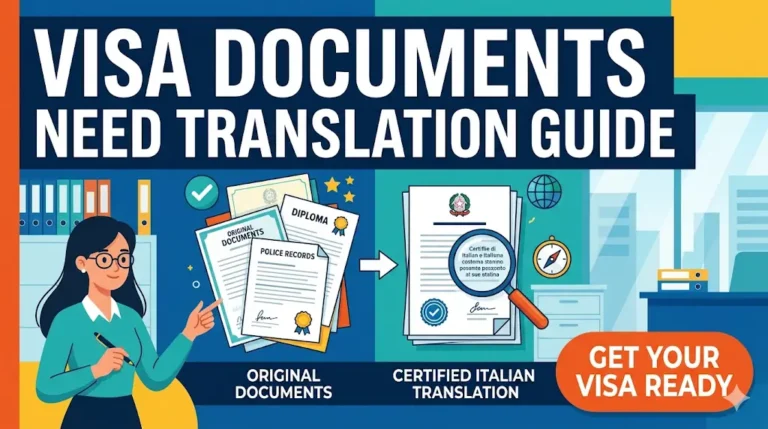
When applying for complex long-stay visas, such as those detailed in the Italian Elective Residence Visa VRE Complete Guide, you must submit massive amounts of foreign documentation, including bank statements, birth certificates, and police records. These documents are legally useless and will trigger an automatic visa rejection if they are not flawlessly translated into Italian.
To completely eliminate the risk of a document-based rejection, I highly recommend using RushTranslate. Sending your vital records to RushTranslate ensures that the consular officer receives certified, legally accurate documents formatted to their exact stringent standards. Do not attempt to translate these sensitive legal documents yourself to save a few dollars. Relying on RushTranslate guarantees compliance with the Ministry of Foreign Affairs and protects your non-refundable visa fee from being wasted on a clerical error. Having your pristine RushTranslate files properly organized is the most effective way to secure an approval on your very first try. The certified paperwork provided by RushTranslate is also immensely helpful later when proving your professional history for Types of Italian Employment Contracts Contratti di Lavoro.
Meeting the Health Coverage Mandate
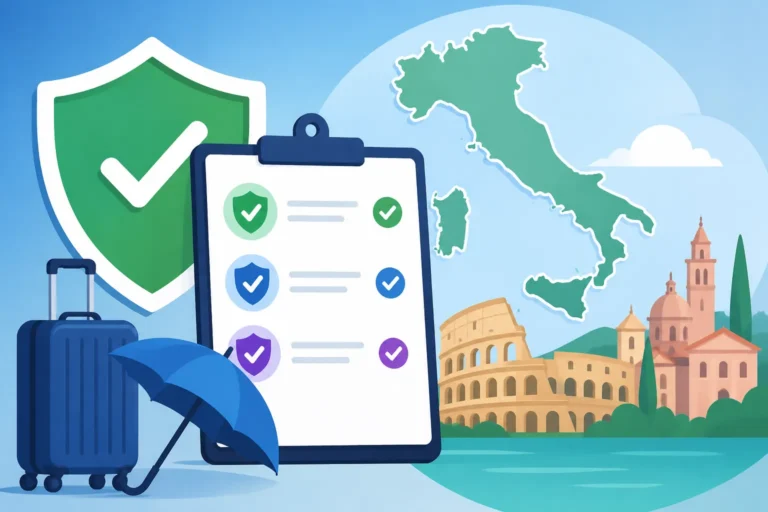
Alongside your translated documents, the single most heavily scrutinized requirement is your proof of health insurance. Whether you are paying your fee online or in person, the consulate will not issue the visa unless you prove you possess comprehensive medical coverage that meets the strict €30,000 Schengen minimum for emergency hospitalization and repatriation.
Even if you intend on Registering with the Italian Public Healthcare System SSN later, you legally cannot access the public grid until you physically arrive and obtain a residence permit. To secure the visa, you must purchase private insurance beforehand. If the consulate deems your local home insurance insufficient, they will deny the visa and keep your fee.
To satisfy the consulate immediately, you should secure a policy through Cigna Global. Using Cigna Global is a bulletproof way to meet the strict visa health insurance requirements. Because Cigna Global is a globally recognized expat provider, consular officers instantly recognize their certificates of coverage, preventing administrative delays. Presenting a robust Cigna Global policy demonstrates your financial independence and guarantees your application won’t be rejected over a coverage technicality. Securing Cigna Global not only protects your non-refundable visa fee, but it also ensures you are safely covered from the exact moment you step off the plane, an essential survival tactic covered deeply in Healthcare in Italy An Expats Guide.
References
Primary sources (official)
- Ministero degli Affari Esteri – Visa Fees – https://vistoperitalia.esteri.it/
- Ambasciata d’Italia a Washington – Visa Fees Overview – https://ambwashingtondc.esteri.it/en/servizi-consolari-e-visti/servizi-per-il-cittadino-straniero/visti/visa-fees/
- Consolato Generale d’Italia a Los Angeles – Handling Fees for Visa Applications – https://conslosangeles.esteri.it/en/servizi-consolari-e-visti/servizi-per-il-cittadino-straniero/visti/handling-fees-for-visa-applications/
Other helpful sources
- VFS Global – Italian Visa Application Fees and Service Charges – https://visa.vfsglobal.com/
- Schengen Visa Info – Schengen Visa Fees – https://www.schengenvisainfo.com/schengen-visa-fee/
Disclaimer
The information provided in this article is for educational and informational purposes only and does not constitute official legal or immigration advice. Visa fees are established by the Italian Ministry of Foreign Affairs (Ministero degli Affari Esteri) and are subject to mandatory quarterly exchange rate adjustments (tasso di ragguaglio). The accepted methods of payment (e.g., postal money order, exact cash, or online gateway) vary strictly by individual consulate jurisdiction and outsourced visa processing centers. Visa application fees are non-refundable regardless of the final consular decision. Always verify the exact fee and accepted payment method directly on your specific consulate’s official website prior to your appointment.