How to Book a Specialist Visit Through CUP in Italy
Navigating the Italian healthcare system can feel like trying to solve a Rubik's cube while someone shouts at you in a dialect you don't yet understand. I remember my first attempt at booking a simple ultrasound; I spent forty minutes on hold only to realize I didn't have the specific "codice" required to even start the process. This guide simplifies the labyrinthine CUP system so you can secure your specialist visit without the typical bureaucratic meltdown.
Disclosure: This post may contain affiliate links. We may earn a commission at no extra cost to you if you make a purchase through these links. Read full disclosure.
Understanding the CUP System and the Mandatory Referral
In Italy, the gateway to any specialist—be it a cardiologist, a neurologist, or a dermatologist—is a system known as the CUP, or Centro Unico di Prenotazione. Think of it as a centralized switchboard that manages the calendars of every public clinic and hospital in your specific region. However, you cannot simply call the CUP and ask for an appointment because you have a persistent cough or a weird mole. The system is strictly gatekept by a document called the "impegnativa."
The Magic Paper: Your Specialist Referral
The impegnativa, often referred to as a "ricetta," is the golden ticket issued by your primary care physician. Before you even think about the CUP, you must visit your doctor. I've learned the hard way that showing up at a specialist's office with just your health card and a smile will get you exactly nowhere. Your doctor will input your symptoms into their system and produce a document—nowadays usually a digital version known as a "ricetta dematerializzata"—which contains a unique barcode (NRE) and your Codice Fiscale: Why It’s Essential for Finance in Italy.
This referral is valid across the public system, but it is region-specific. If you live in Tuscany, your referral is generally for Tuscan facilities. While there are ways to use it out-of-network, it is a logistical nightmare I wouldn't wish on anyone. Once you have this paper, you'll see a series of codes that determine how fast you actually get seen.
Cracking the Priority Codes
One of the most vital things to check on your referral is the priority code. The Italian system triages patients based on urgency to manage its notoriously long waiting lists. There are four main codes you need to recognize:
- U (Urgente): Extremely urgent. You must book this within 48 to 72 hours.
- B (Breve): Brief wait. The visit should happen within 10 days.
- D (Differibile): Deferred. These are for non-urgent issues, usually aimed at 30 days for visits and 60 days for diagnostic tests.
- P (Programmata): Planned. These are routine follow-ups or screenings that can take up to 180 days.
If your doctor marks your visit as "P" and you are in significant pain, do not be afraid to advocate for yourself during the initial consultation. If you are a digital nomad or traveler just passing through, using a service like SafetyWing can provide a safety net while you navigate these timelines, especially if you haven't yet mastered the Enrolling in Italy’s National Health System (SSN) process.
The Three Main Ways to Book Your Appointment
Once you have your referral barcode in hand, you have several paths to actually securing a date and time. Each has its own set of pros and cons, largely depending on your level of Italian and your patience for standing in line.
Booking via the CUP Call Center
Every region has its own dedicated CUP phone number. In theory, this is the most convenient method. In practice, it can be a test of your mental fortitude. You will likely face long wait times and a series of automated prompts in Italian. When you finally reach a human, they will ask for your "Numero Ricetta Elettronica" (the long number near the barcode).
The advantage here is that the operator can see the entire regional database. If the hospital next door is full, they might find an opening in a town twenty minutes away. If you are still working on your language skills, check our tips on Finding and Using Pharmacies in Italy because, surprisingly, pharmacies offer a much easier alternative to the phone.
The Pharmacy Alternative: A Local Secret
For most expats, the easiest way to book a CUP visit is to walk into any local pharmacy that displays the "CUP" logo in the window. Most "farmacie" in Italy are equipped with the same software as the hospital booking centers. You simply hand the pharmacist your health card and your referral.
They will scan the barcode, tell you the available dates and locations, and print out your booking confirmation. There is usually a small fee (often around 2 euros) for this service, but it is the best money you will ever spend to avoid the phone queues. This is also a great time to ask questions about Italian Pharmacies: Prescription, Over-the-Counter, and Supplies if you need immediate relief while waiting for your specialist date.
Online Portals and Smartphone Apps
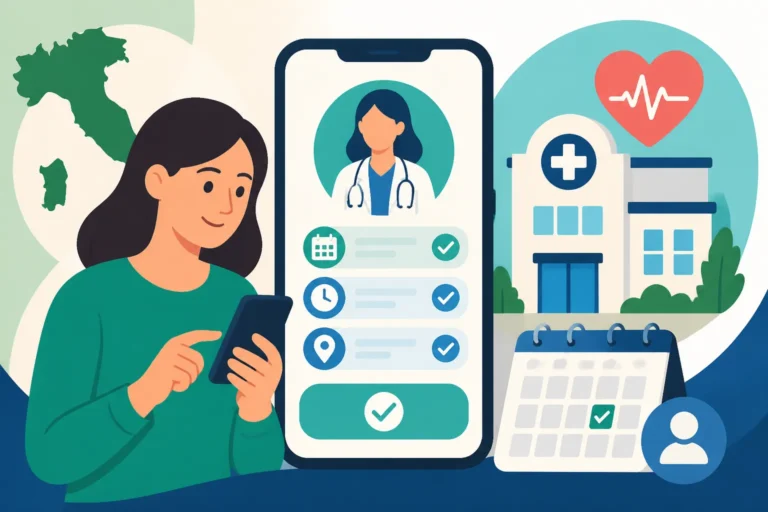
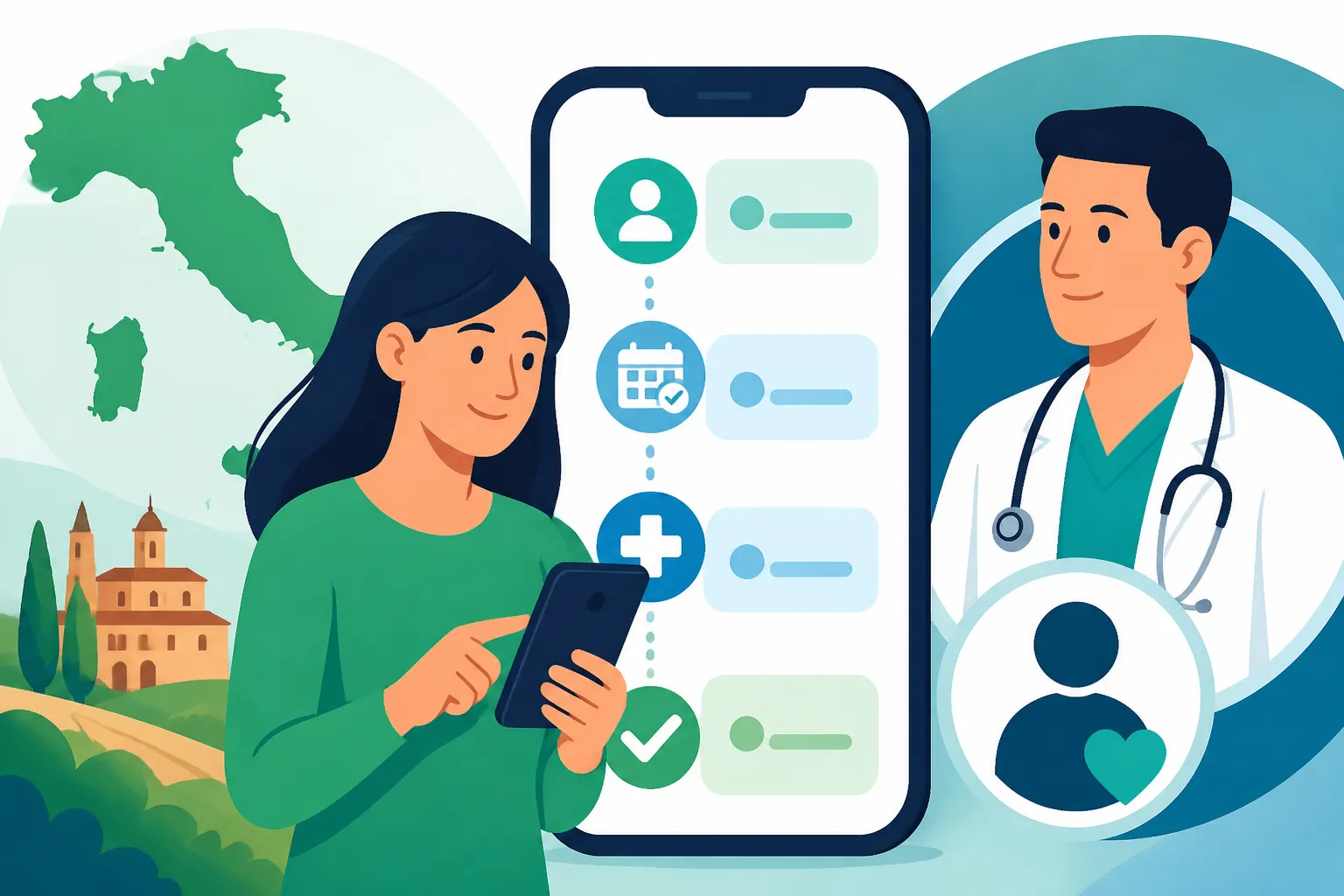
Most regions, like Lombardia (with the "Salute Ucina" app) or Lazio (with "SaluteLazio"), have developed surprisingly functional online portals. To use these, you will typically need a SPID (Sistema Pubblico di Identità Digitale). Once logged in, you enter your referral number, and the system shows you a map of available appointments.
This is the most transparent way to book because you can see all the options yourself. However, the system is rigid. If the algorithm says there are no appointments for a "B" priority visit within 10 days, it won't let you book. In these cases, a phone call is sometimes necessary to force the system to find a "protected slot." Understanding Regional Healthcare Differences in Italy: North vs South is key here, as Northern regions tend to have much more robust digital infrastructures than the South.
| Booking Method | Best For | Language Barrier Difficulty |
|---|---|---|
| Call Center | Finding slots in neighboring towns | High |
| Pharmacy | Convenience and face-to-face help | Low to Medium |
| Online Portal | Tech-savvy users with SPID | Medium |
| Hospital Desk | Immediate booking after an ER visit | High |
Paying the "Ticket" and Preparing for the Visit
In Italy, the public healthcare system is not entirely free; most people pay a co-payment known as the "Ticket." Unless you have a specific Health Exemption Codes in Italy (Esenzione): Who Qualifies, you will need to pay this fee before your appointment.
How and Where to Pay the Ticket
The cost of the Ticket varies but is generally capped around 36 to 50 euros per specialist visit or group of tests. You cannot usually pay the doctor directly. Instead, you pay at:
- CUP Points: Machines or desks located inside the hospital.
- Punto Giallo: Automatic yellow kiosks found in hospital lobbies. They accept cash or cards.
- Tabacchi: Many local tobacco shops connected to the "PuntoLis" or "Mooney" networks allow you to pay your healthcare ticket.
- Online: Via the PagoPA system, which is the national electronic payment platform.
Make sure to keep your receipt! You will need to show it to the specialist's nurse before you enter the examination room. Without that receipt, they are legally barred from seeing you. For those used to the streamlined billing of private international care like Cigna Global, this multi-step payment process can feel archaic, but it is a non-negotiable part of the public experience.
What to Bring to Your Appointment
On the day of your visit, do not travel light. You need to bring your The Italian Health Card (Tessera Sanitaria): Uses and How to Get One, your printed referral, and your proof of payment. But more importantly, bring your medical history. Italian specialists highly value continuity of care. If you have previous blood tests, X-rays, or reports from your home country, have them translated.
I’ve found that doctors are much more thorough when they can see the trajectory of your health. If you are struggling to find the right words, you might look into Using Medical Translation and Interpretation Services to ensure nothing is lost in translation. If you are in Italy on a shorter stay and don't yet have an SSN, SafetyWing can be an excellent stopgap for emergency specialist needs that fall outside the standard CUP timeline.
Navigating Long Wait Times and the Private Alternative
The biggest frustration with the CUP system is the waiting list. For non-urgent "D" or "P" visits, it is not uncommon to be told the first available slot is eight months away in a city two hours from your house. This is where many expats choose to "go private."
The "Libera Professione" Option
Many doctors who work in public hospitals also have a private practice, often within the same hospital building. This is called "Intramoenia" or "Libera Professione." When you book through the CUP, you can ask for a private appointment. You will pay more—usually between 80 and 150 euros—but you can often get an appointment within a week.
The beauty of this is that you are seeing the same high-quality public hospital doctor, but you are paying for the privilege of skipping the line. If you have Public vs Private Health Insurance in Italy, these costs are often reimbursable. For those who prioritize speed and have comprehensive coverage through providers like Cigna Global, bypassing the CUP entirely for private clinics is often the most stress-free route.
When to Escalate: The "List of Wait"
Italy has laws regarding maximum wait times. If the CUP cannot offer you an appointment within the timeframe dictated by your priority code (U, B, D, or P), you have the right to request a "prestazione in regime di attività libero-professionale intramuraria" at the cost of the standard Ticket.
This requires writing a formal letter to the Director of the local health authority (ASL). It’s a bit of a "pro move" and requires some assertive Italian, but it works. It’s a reminder that while the bureaucracy is heavy, there are protections in place for residents. If you are still in the process of Registering with an Italian Family Doctor (Medico di Base), getting this sorted should be your first priority, as they are your only ticket into the system.
Navigating the CUP requires a mix of patience, a little bit of Italian, and a lot of preparation. Whether you choose to stand in line at the pharmacy or battle the online portals, remember that the quality of care in Italy is world-class once you actually get through the door.
Disclaimer
This guide is for informational purposes only and does not constitute legal or medical advice. Healthcare regulations and booking procedures in Italy are subject to regional variations and frequent legislative changes. Always verify current procedures with your local ASL (Azienda Sanitaria Locale) or your primary care physician. If you are experiencing a medical emergency, dial 112 immediately rather than attempting to book a specialist visit through the CUP.