Outdoor Adventures and Nature in Italy
Moving to or traveling through Italy often leaves outdoor lovers overwhelmed by conflicting information, obscure regional trail markings, and packed city itineraries. Finding true wilderness in a country known primarily for museums and pasta can feel surprisingly tricky. This practical guide walks you through navigating Italy’s extraordinary natural landscapes, from high Alpine passes to coastal sea caves, with realistic advice on logistics, safety, and gear.
Disclosure: This post may contain affiliate links. We may earn a commission at no extra cost to you if you make a purchase through these links. Read full disclosure.
Trekking through Italy’s Mountain Monarchs
Navigating the Majestic Dolomites and Alpine Trails
The northern arc of Italy houses some of the most striking mountain topography on earth. When you first set eyes on the sheer limestone spires of the Dolomites, rising abruptly above emerald pastures, it is easy to see why hikers travel from every corner of the globe to explore them. The region is crisscrossed by an extensive network of trails, ranging from gentle day walks through the Val Gardena to multi-day alpine traverses like the famous Alta Via 1.
If you are planning your first excursion into this terrain, understanding the local trail classification system is essential. Paths labeled with a red and white stripe are managed by the Club Alpino Italiano (CAI). A single number indicates a standard hiking path, while routes designated as Via Ferrata (iron paths) require specialized safety gear including a harness, helmet, and lanyard set to negotiate steep, exposed rock faces equipped with fixed steel cables. For detailed insights on region-specific geography, review The Dolomites: A Traveler’s Introduction before packing your boots.
Navigating the Dolomites during peak summer requires a clear strategy. Popular spots like the Tre Cime di Lavaredo or Lake Braies see heavy traffic between July and August. To experience these locations in relative solitude, set your alarm early, aim to arrive at trailheads before sunrise, or plan late-afternoon hikes when day-trippers have returned to their base hotels. Alternatively, steer toward lesser-known valleys like the Val di Zoldo or the Friulian Dolomites, where you can hike for hours without encountering large crowds.
Exploring the Apennines: Italy’s Underrated Spine
While the northern Alps command international attention, the Apennine mountain range forms the physical backbone of the Italian peninsula, stretching all the way from Liguria down to Calabria. The Apennines offer a vastly different hiking experience: wilder, quieter, and deeply tied to rural agricultural traditions. Here, the landscape transitions from dense beech forests to sweeping high-altitude karst plateaus.
In Abruzzo, the Gran Sasso massif contains the highest peak in the Apennines, Corno Grande. The climb to its summit rewards trekkers with views that stretch from the Adriatic Sea across to the Tyrrhenian Coast on clear days. Nearby, the Monti Sibillini range straddling Umbria and Le Marche offers rolling ridgelines and spectacular spring wildflower blooms across the Piano Grande plateau.
Trekking in the Apennines demands greater self-reliance than hiking in the Alps. Trail markers can be faded or missing, cell phone reception is frequently spotty, and small mountain villages may not have open shops or English-speaking services. Carrying updated topographical offline maps, carrying ample water, and learning basic Italian navigation phrases will make your journey through these rustic highlands far more enjoyable.
Essential Safety, Gear, and Rifugio Etiquette
One of the greatest pleasures of mountain trekking in Italy is the network of high-altitude huts known as rifugi. These shelters range from basic bivouacs to fully serviced alpine inns offering warm meals, hot showers, and dormitory beds. Staying at a rifugio allows you to complete multi-day treks without carrying heavy camping gear, but you must respect the unique social etiquette of these mountain havens.
When arriving at a mountain hut, immediately remove your muddy hiking boots in the entrance hallway and slip into the provided indoor clogs or your own camp shoes. Dormitory spaces require a lightweight sleeping bag liner (sacco lenzuolo), as full bedding is rarely washed between daily guests. Dinner is served family-style at a set time, typically around seven o’clock, featuring hearty mountain staples like polenta, melted alpine cheese, and wild berry tarts. Cash remains essential for settling your bill in remote locations where credit card terminals lose signal.
Safety in Italian mountains should never be taken lightly. Alpine weather changes rapidly; mid-afternoon thunderstorms are a daily hazard during summer months. Always check localized weather forecasts provided by regional meteorological agencies rather than generic phone apps. Download the official Italian mountain rescue app, GeoResQ, which uses GPS tracking to dispatch assistance in an emergency. For a deeper dive into preparation and equipment checklists, consult Hiking in Italy: Popular Trails and How to Prepare.
Coastal Hikes and Island Trail Network
Tackling the Iconic Trails of Cinque Terre and Amalfi
Where the mountains plunge directly into the Mediterranean Sea, Italy presents some of the world’s most dramatic coastal hiking. The Ligurian coast and the Sorrentine Peninsula are home to historic mule tracks that for centuries served as the only overland connections between isolated fishing villages. Today, these trails offer breathtaking sea views framed by terraced vineyards and lemon groves.
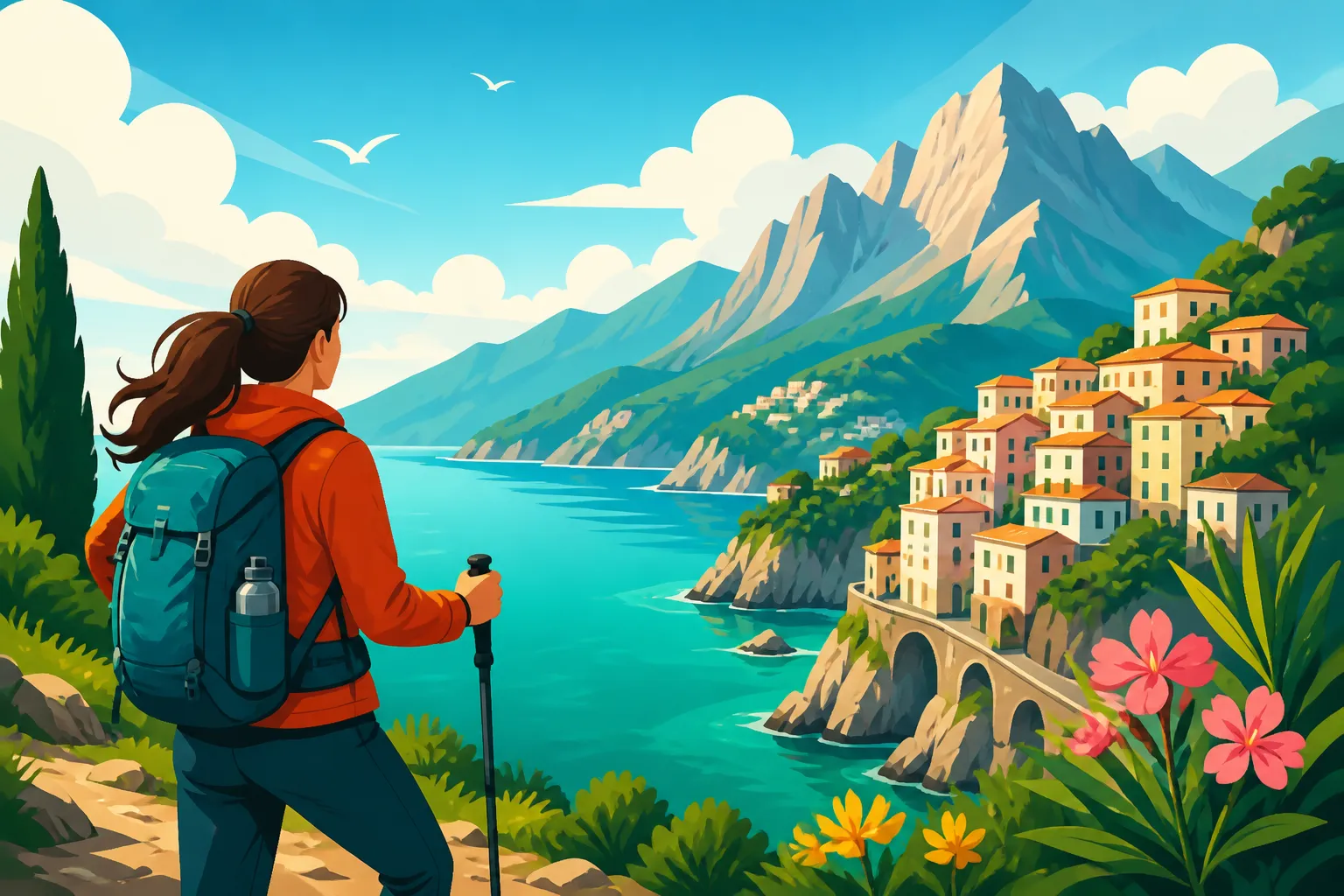
In Liguria, the Sentiero Azzurro (Blue Trail) connects the five famous villages of the Cinque Terre. While the lower coastal sections between Monterosso, Vernazza, Corniglia, Manarola, and Riomaggiore are heavily frequented, climbing into the higher ridge trails like the High Path (Alta Via dei Monti Liguri) reveals peaceful forests and historic sanctuaries far above the tourist bustle. Be aware that local park authorities enforce strict footwear regulations on these coastal paths; hiking in flip-flops or smooth-soled street shoes is strictly prohibited and carries significant fines.
Further south, the Sentiero degli Dei (Path of the Gods) skirts the high cliffs of the Amalfi Coast, connecting Bomerano to Nocelle above Positano. This trail offers unobstructed panoramas of the Tyrrhenian Sea and the Isle of Capri. The path involves hundreds of uneven stone steps and exposed cliffside sections, so trekking poles and sturdy shoes with aggressive tread are strongly recommended.
Island Trekking: Wild Trails of Sardinia and Sicily
Italy’s major Mediterranean islands present rugged wilderness environments that contrast sharply with mainland coastal paths. Sardinia’s eastern coastline hides the infamous Selvaggio Blu, often described as one of Western Europe’s most challenging multi-day treks. This route involves technical abseiling, scrambling along limestone ledges, and navigating without marked paths, requiring specialized guides or advanced wilderness skills.
For hikers seeking less technical adventures in Sardinia, the Gennargentu National Park provides vast, empty expanses where wild horses graze on wind-swept plateaus. Coastal walks around the Capo Caccia peninsula near Alghero lead past limestone sea cliffs and hidden coves flanked by aromatic Mediterranean scrub (macchia mediterranea).
In Sicily, trekking centers around active volcanic landscapes. Climbing Mount Etna, Europe’s highest active volcano, exposes you to surreal lunar landscapes, lava tubes, and steaming craters. Further north, the Aeolian Islands offer active volcano hikes on Stromboli and Vulcano, where you can watch natural geothermic activity against the backdrop of the deep blue sea. Joining organized group tours via GetYourGuide can ensure you secure certified volcano guides, which are legally required to access high-altitude summit zones on active peaks.
Coastal Logistics, Permits, and Seasonal Conditions
Hiking along the Italian coast requires careful seasonal planning. July and August bring intense heat, high humidity, and intense sun exposure, making long daytime treks uncomfortable and potentially dangerous due to heat exhaustion. The ideal windows for coastal hiking are spring (April to June) when wildflowers bloom, and autumn (September to October) when the sea remains warm enough for mid-hike swims.
Logistics on coastal routes often depend on regional access controls. Certain heavily visited trails, such as specific sections of the Sentiero Azzurro, require a daily pass or park entrance fee. These passes can be purchased online or at local train stations within the park boundaries. Always verify trail open status before departing, as winter rains frequently trigger landslides that temporarily close coastal paths.
To combine coastal walks with sea transportation, take advantage of local ferry networks that connect coastal hamlets. Hiking out in the morning and returning by boat offers a unique perspective of the cliffs you just traversed. To learn more about combining water activities with your hiking itineraries, check out Italy’s Beaches, Lakes, and Coastal Escapes.
Exploring National Parks and Nature Reserves
Abruzzo, Lazio, and Molise: Searching for Wild Wildlife
Covering vast tracts of the central Apennines, the Parco Nazionale d’Abruzzo, Lazio e Molise (PNALM) stands as a monument to European conservation. Established over a century ago, this park protects ancient beech forests—now recognized as UNESCO World Heritage sites—and serves as a primary sanctuary for endangered endemic species, including the Marsican brown bear and the Apennine chamois.
Visiting PNALM offers a rare chance to experience genuine European rewilding. The park’s eco-system supports healthy populations of wolves, red deer, wild boars, and golden eagles. Base yourself in charming stone villages such as Pescasseroli, Opi, or Civitella Alfedena. Early morning and late evening are the best times to join quiet wildlife watch excursions along the Valle del Giovenco or the Bisegna ridge.
When exploring these reserves, strictly adhere to marked trails to avoid disturbing fragile habitats. Keep dogs on a leash at all times, pack out all trash, and maintain a respectful distance from any wildlife encountered. Detailed park guidelines and map resources can be explored through National Parks in Italy Worth Visiting.
Gran Paradiso: Alpine Sanctuaries and High Peaks
Located in northwestern Italy across the Aosta Valley and Piedmont regions, Gran Paradiso National Park is Italy’s oldest national park. Originally created as a royal hunting reserve to protect the Alpine ibex from extinction, the park remains a stronghold for these magnificent curved-horn ungulates, alongside thriving populations of chamois, marmots, and ptarmigans.
Gran Paradiso centers around its namesake peak, which reaches over four thousand meters above sea level. The park features broad glacial valleys, cascading waterfalls, and high alpine lakes such as the Lakes of Nivolet. The Nivolet Plateau, accessible via a winding mountain road from Ceresole Reale, offers one of the most accessible high-altitude walking environments in the Alps, surrounded by towering glaciers.
Gran Paradiso provides trails suited to all ability levels, from flat valley strolls along the Orco River to demanding ascents toward glacier-side huts like Rifugio Vittorio Emanuele II. The park is exceptionally well-maintained, featuring informative visitor centers in villages like Cogne and Rhêmes-Notre-Dame that offer educational exhibits on alpine ecology.
Pollino and Cilento: Deep Southern Wilderness
In the deep south of Italy, national parks take on a distinctly ancient and grand scale. Pollino National Park, the largest national park in Italy, spans the border between Basilicata and Calabria. Its symbol is the rare Pino Loricato (Bosnian pine), a prehistoric tree species that clings to high, rocky crags and can live for well over a thousand years.
Trekking in the Pollino range takes you through deep river canyons, dense fir forests, and high limestone summits like Monte Pollino and Serra Dolcedorme. Nearby, the Cilento and Vallo di Diano National Park in Campania combines archaeological treasures, such as the ancient Greek temples of Paestum, with mountainous hinterlands, olive groves, and untouched coastal cliffs.
Finding comfortable basecamps in these southern park regions is straightforward if you book local family-run bed and breakfasts or rural farmstays (agriturismi). Utilizing platforms like Booking.com allows you to locate authentic stone cottages nestled directly inside national park boundaries, offering convenient access to remote trailheads.
Cycling, Bikepacking, and Rail-Trails
Famous Road Cycling Passes and Gravel Routes
Italy is hallowed ground for road cyclists. The country’s passionate cycling culture, driven by the historic Giro d’Italia race, means that bicyclists are a common sight on roads from the northern Alps down to the Sicilian coast. For ambitious road cyclists, tackling famous mountain passes like the Passo dello Stelvio, Passo del Pordoi, or the brutal Mortirolo represents a lifelong dream.
Beyond paved mountain hairpins, Italy has emerged as a premier destination for gravel riding and bikepacking. The Strade Bianche (white roads) of Tuscany—unpaved dirt and gravel agricultural tracks winding through cypress-lined hills—host iconic amateur races and provide route networks for multi-day bikepacking trips. Routes like the L’Eroica trail allow riders to experience classic Tuscan landscapes away from heavy motor vehicle traffic.
Safety and road etiquette are vital when cycling in Italy. While Italian drivers are generally accustomed to cyclists, narrow roads and blind corners require vigilance. Equipping your bike with daytime running lights, wearing bright clothing, and using a helmet are essential standard practices. For additional tips on bike preparation and iconic routes, see Cycling in Italy: Routes and Bike-Friendly Areas.
Greenways and Converted Rail Trails for Casual Riders
If climbing high alpine passes sounds too intense, Italy offers thousands of kilometers of flat, traffic-free greenways built along disused railway lines, canal towpaths, and riverbanks. These routes provide safe, relaxing environments for families, casual cyclists, and touring cyclists carrying light panniers.
- Ciclovia Alpe Adria: This outstanding cross-border rail-trail follows an old railway line from the Austrian border down to the Adriatic coast at Grado, passing through mountain tunnels and over historic viaducts in Friuli-Venezia Giulia.
- Ciclopista del Mincio: A completely flat paved path connecting Lake Garda (Peschiera del Garda) to the Renaissance city of Mantua, following the scenic banks of the Mincio River.
- Pista Ciclabile del Ponente Ligure: Built along a decommissioned coastal railway line in western Liguria, this trail offers over twenty kilometers of continuous, flat cycling directly beside the Mediterranean Sea.
- Ciclovia del Po: A long-distance path following the course of Italy’s longest river through the vast plains of Lombardy, Emilia-Romagna, and Veneto.
These greenways feature frequent bike service stations, cafes, and rest areas housed in former train station buildings. They offer an ideal way to explore Italian countryside towns at a relaxed, eco-friendly pace.
Bike Rentals, Guided Tours, and Transport Logistics
Renting a high-quality bicycle in Italy has become seamless, thanks to the widespread availability of modern road bikes, gravel rigs, and electric-assist mountain bikes (e-MTBs). E-bikes have revolutionized cycling in hilly regions like Umbria and Tuscany, allowing riders of varying fitness levels to conquer steep hill-town climbs together.
Transporting bicycles across Italy is simple once you master the railway rules. Regional trains (Treni Regionali) generally permit fully assembled bicycles on board, provided you purchase a supplementary bike ticket or board a carriage marked with a green bicycle symbol. High-speed trains (Frecciarossa and Italo) require bicycles to be disassembled and packed into a protective bike bag.
| Outdoor Activity Region | Primary Activity | Best Season | Difficulty Level |
|---|---|---|---|
| The Dolomites (Veneto) | Trekking / Ferrata | June to September | Moderate to Advanced |
| Gran Sasso (Abruzzo) | Mountain Hiking | May to October | Moderate to Hard |
| Lake Garda (Trentino) | Windsurfing / MTB | May to October | Beginner to Advanced |
| Cinque Terre (Liguria) | Coastal Walking | April to June | Easy to Moderate |
| Pollino (Calabria) | Wilderness Trekking | May to October | Moderate to Hard |
| Gran Paradiso (Aosta) | Alpine Wildlife | June to September | Moderate to Advanced |
Planning regional train connections that carry bicycles across multiple provincial transit networks can be simplified by using route comparison tools like Omio to search schedules and verify train bike carriage options before heading out.
Water Sports Across Lakes, Rivers, and Seas
Windsurfing, Sailing, and Kayaking on Northern Lakes
Italy’s northern lakes—Como, Garda, Maggiore, and Iseo—are inland aquatic playgrounds framed by towering mountain peaks. Lake Garda, the largest of the lakes, is world-famous for its reliable thermal wind patterns, making its northern shores around Riva del Garda and Torbole a major international hub for windsurfing, kitesurfing, and dinghy sailing.
The lake experiences two main winds daily: the Pelér, which blows from the north in the early morning, offering strong conditions for experienced sailors, and the Ora, which sweeps in from the south in the early afternoon, creating ideal conditions for intermediate windsurfers and kayakers. Modern sailing schools and equipment rental stations line the waterfronts, offering certified instruction in multiple languages.
For calmer water sports, Lake Como and Lake Maggiore feature secluded bays, historic lakeside villas, and quiet islands ideal for stand-up paddleboarding (SUP) and sea kayaking. Paddling along the shoreline near Bellagio or exploring the Borromean Islands from the water provides a fresh perspective on these historic destinations. Read our comprehensive guide on The Italian Lakes: Como, Garda, and Maggiore Compared to choose the right water sports base for your trip.
Sea Kayaking and Marine Reserves along Coastal Cliffs
With over seven thousand kilometers of coastline, Italy offers endless opportunities for sea kayaking and snorkeling. Marine Protected Areas (Aree Marine Protette or AMP) safeguard delicate underwater ecosystems, rocky reefs, and sea caves, creating exceptional conditions for non-motorized water sports.
Key coastal kayaking locations include:
- Portofino Marine Reserve (Liguria): Paddle beneath steep limestone cliffs covered in pine forests, exploring hidden coves like San Fruttuoso, accessible only by sea or on foot.
- Capo Caccia and Porto Conte (Sardinia): Kayak beneath towering white sea cliffs and enter sea caves containing crystal-clear blue waters.
- Tropea and the Costa degli Dei (Calabria): Discover sandy coves, natural rock arches, and clear snorkeling reefs along Calabria’s Tyrrhenian coast.
- Ischia and Procida (Campania): Circumnavigate volcanic islands in the Bay of Naples, paddling past medieval castles and thermal sea springs.
Guided sea kayak excursions often include gear, safety briefings, and snorkeling stops over submerged Roman ruins or thriving seagrass beds. Detailed information on coastal access and water safety regulations can be found in Water Sports in Italy: Where to Swim, Sail, and Dive.
Whitewater Rafting and Canyon Exploration
For adrenaline seekers, Italy’s alpine rivers and mountain gorges deliver thrilling whitewater rafting, hydrospeeding, and canyoning experiences. Feed by melting glaciers and spring rains, mountain rivers in the far north offer world-class rapids from May through July.
The Dora Baltea river in the Aosta Valley, fed by Mont Blanc’s glaciers, is widely considered the most powerful whitewater river in Europe. Further east, the Noce River in Trentino’s Val di Sole features continuous Class III to V rapids that wind through scenic granite gorges. In the south, the Lao River Canyon in Calabria offers spectacular rafting trips through deep limestone ravines submerged in lush subtropical greenery.
Canyoning—descending narrow mountain gorges by walking, scrambling, jumping into deep pools, and sliding down natural rock chutes—is popular across the Friuli, Trentino, and Abruzzo regions. Professional outdoor centers supply specialized thick neoprene wetsuits, helmets, and harnesses. Booking these technical excursions through trusted platforms like GetYourGuide connects you directly with certified river guides who prioritize safety and supply top-grade equipment.
Winter Sports and Mountain Escapes
Alpine Skiing and Snowshoeing in the Italian Alps
When winter arrives, Italy’s mountain regions transform into expansive snow sports destinations. The Italian ski experience stands out for its vast interconnected ski carousels, meticulously groomed pistes, and legendary slope-side dining where gourmet lunches take precedence over rushing through laps.
The premier ski destination in Italy is the Dolomiti SuperSki arena, a single ski pass network covering twelve ski regions and over twelve hundred kilometers of groomed runs. The famous Sellaronda circuit allows skiers to complete a full circular loop around the massive Sella Massif in a single day without taking off their skis. Further west, resorts like Cortina d’Ampezzo, Courmayeur, and Breuil-Cervinia offer high-altitude skiing directly beneath iconic peaks like Mont Blanc and the Matterhorn.
For non-skiers, snowshoeing (ciaspolate) offers a peaceful way to explore winter landscapes. Marked snowshoe trails lead through silent, snow-draped pine forests to cozy mountain huts where warm bowls of soup and hot spiced wine (vin brulè) await. Local tourism boards regularly organize guided nighttime snowshoe walks under full moons, ending with traditional dinners in mountain shelters.
Off-the-Beaten-Path Winter Treks in Central Italy
Winter outdoor adventures are not restricted to the northern Alps. Central Italy’s high Apennine plateaus receive heavy winter snowfall, creating fantastic opportunities for ski touring, cross-country skiing, and snowshoeing away from high-end resort prices.
In Abruzzo, the high plateau of Campo Imperatore—often called Italy’s “Little Tibet”—offers vast snow-bound plains framed by the rugged peaks of the Gran Sasso. The ski resort of Roccaraso provides extensive downhill skiing facilities that rival many mid-sized Alpine resorts, catering primarily to central Italian snow enthusiasts.
When planning winter mountain excursions in central Italy, stay aware of mandatory winter driving regulations. Between mid-November and mid-April, all vehicles traveling through mountain zones must either be equipped with winter tires or carry fitted snow chains in the trunk. Local traffic police actively enforce these rules on mountain access roads.
Mountain Village Basecamps and Cold Weather Preparation
Choosing the right mountain village as your winter base camp can make or break your trip. Charming towns like Moena in Val di Fassa, Livigno in Lombardy, or Bormio offer ideal combinations of access to ski lifts, thermal hot springs, gear rental shops, and authentic regional dining.
When preparing for winter mountain trips in Italy, keep these practical points in mind:
- Mandatory Slope Insurance: Italian law requires all downhill skiers and snowboarders to carry third-party liability insurance. You can purchase this coverage online alongside your daily ski pass or present proof of existing international coverage.
- Avalanche Safety Gear: Anyone undertaking off-piste skiing, ski touring, or backcountry snowshoeing must carry a transceiver, probe, and shovel by law when moving through avalanche-prone terrain.
- Winter Equipment Hire: Mountain villages feature excellent ski rental shops (noleggio sci) where you can rent top-tier current season equipment, avoiding expensive baggage fees when flying.
Finding quiet winter lodging, from ski-in/ski-out chalets to historic town center apartments, can be handled smoothly through Booking.com, which lists hundreds of local family-run options across alpine valleys. For a broader overview of northern mountain geography, check out Northern Italy: Alps, Lakes, and Cities.
Practical Logistics for Outdoor Travelers in Italy
Transporting Equipment and Reaching Remote Trailheads
Reaching Italy’s best outdoor destinations often involves combining major rail networks with local bus systems or rental cars. Major cities like Milan, Verona, Venice, and Rome serve as primary entry gateways, from which regional transportation networks extend toward mountain valleys and coastal regions.
- Train Travel: High-speed trains quickly connect major urban hubs to gateway towns like Trento, Bolzano, Pescara, or Salerno. From these hub stations, local regional trains connect smaller mountain valleys.
- Regional Buses: Local bus companies (such as SAD in South Tyrol or TUA in Abruzzo) handle transit into small mountain hamlets. Note that bus schedules shrink significantly on Sundays and public holidays.
- Rental Cars: To reach remote trailheads in national parks or mountain passes where public transit is sparse, renting a car is often the most practical choice.
- Luggage Storage: If you plan multi-day treks between mountain huts, left-luggage facilities (deposito bagagli) at major train stations offer secure storage for your urban luggage while you carry only hiking packs into the mountains.
For comprehensive planning advice regarding regional transport options and car hire logistics, read Getting Around Italy: Trains, Buses, Flights, and Car Hire alongside Renting a Car in Italy: ZTLs, Insurance, and Driving Tips.
Booking Mountain Huts, Guides, and Adventure Packages
Securing accommodation in popular mountain huts (rifugi) requires early action. High-demand alpine huts along major routes like the Alta Via 1 open their booking windows months in advance for the summer season. Most rifugi accept booking requests through direct email or online forms hosted on their websites. Joining an accredited alpine club, such as the CAI, often grants member discounts on overnight stays and meals across public alpine huts.
If you are undertaking technical ascents, glacier walks, or high-level via ferrata routes, hiring a licensed Italian Mountain Guide (Guida Alpina) is strongly recommended. These certified professionals possess deep local knowledge of mountain safety, weather patterns, and technical route conditions, ensuring a safe experience.
Planning multi-leg transfers across trains, regional coaches, and local ferries to reach distant trailheads can be managed smoothly by using platforms like Omio to compare travel times, route connections, and ticket options across different operators.
Weather Patterns, Seasonal Packing, and Environmental Stewardship
Italy’s complex geography generates varied microclimates. While coastal areas enjoy mild winters and hot summers, high mountain environments can experience freezing temperatures and severe snowfall well into June. Packing versatile, layered clothing is essential regardless of when or where you visit.
Essential items for your Italian outdoor packing list include:
- A sturdy, well-broken-in pair of waterproof hiking boots with Vibram or similar high-traction soles.
- A lightweight, breathable waterproof jacket and pants for sudden rainstorms.
- Moisture-wicking base layers, avoiding cotton which retains dampness and chills the body.
- Sun protection: high-SPF sunscreen, polarising sunglasses, and a wide-brimmed hat for high-altitude UV exposure.
- A reusable water bottle or hydration bladder to refill at mountain springs and town fountains (fontanelle).
- Topographical paper maps (such as Tabacco 1:25,000 maps for northern regions) alongside GPS navigation apps.
Practicing environmental stewardship ensures Italy’s wild spaces remain pristine for generations to come. Follow Leave No Trace principles: carry out all trash, stay on established paths to prevent soil erosion, never light open fires in non-designated areas, and respect protected wildlife habitats across all national parks and marine reserves.
Disclaimer
This article is for general informational purposes only and does not constitute professional advice. Laws, prices and regulations vary by location and change over time. Consult a qualified professional for guidance on your specific situation.