Italian Slang and Everyday Expressions for Visitors
Ah, Italy! You've booked your flights, practiced "prego" and "grazie," maybe even attempted a "buongiorno," and you feel ready to dive into the vibrant Italian life. But then you arrive, step into a bustling piazza or a lively bar, and suddenly, the Italian you learned from an app or textbook seems to evaporate. People are chatting, laughing, and using words you've never heard, often accompanied by a whirlwind of hand gestures. It can be incredibly frustrating to feel lost in translation, even when you think you've got the basics down. This guide is here to shed light on those real, everyday Italian slang words and expressions that don't always make it into the phrasebooks, helping you understand and even participate in authentic Italian conversations.
Disclosure: This post may contain affiliate links. We may earn a commission at no extra cost to you if you make a purchase through these links. Read full disclosure.
Beyond "Ciao" and "Grazie": Why Slang Matters in Italy
When you first arrive in Italy, it’s easy to feel like you’ve mastered the language with a few key phrases. You can order a coffee, thank the barista, and greet people politely. But soon enough, you’ll realize there’s a whole other layer to Italian communication, a rich tapestry of slang and informal expressions that are crucial for truly connecting with the locals and understanding the pulse of daily life. This isn't about being rude or casual, but about appreciating the nuances that make Italian conversation so lively and expressive.
The Cultural Dive: More Than Just Words
Think of slang not just as "bad" or "informal" language, but as a direct window into the local culture and current social trends. Every country has it, and Italy, with its deep regional identities and passionate communication style, is no exception. These expressions often reflect shared experiences, humor, and a certain irreverence that textbook Italian simply can't capture. When you start to pick up on these phrases, it's like being let in on a secret handshake – suddenly, you're not just a tourist passing through, but someone who's making an effort to engage on a deeper level. This small gesture can open doors to warmer interactions, genuine smiles, and even better service. It's about showing respect for the local way of speaking and being open to the cultural richness that extends beyond the pristine grammar.
Moreover, these expressions are intrinsically linked to the famous Italian hand gestures. A simple phrase like "Che palle!" (which we'll get to later) takes on a whole new dimension when paired with the exasperated flick of the wrist. Understanding these verbal and non-verbal cues together is key to grasping the full meaning of a conversation. It's part of the charming chaos of daily Italian life, and once you start to recognize these pairings, you'll feel much more at home. Embrace the opportunity to learn something beyond the classroom, because it’s in these informal moments that true cultural understanding often blossoms.
Common Misunderstandings and How to Avoid Them
It’s easy to get things wrong, and believe me, most expats have a treasure trove of embarrassing stories related to misusing or misunderstanding Italian slang. The biggest pitfall is often the literal translation. Many slang terms, when translated word-for-word, make absolutely no sense or, worse, can be offensive. For instance, if someone tells you something is "una figata," your brain might be tempted to break it down, but the actual meaning is far from the literal. This is where patience and context become your best friends. Don't be afraid to ask for clarification, or if you're feeling adventurous, try to infer meaning from the situation.
Another common misunderstanding arises from the sheer speed and fluidity of spoken Italian, especially when slang is interwoven. Locals often speak quickly, dropping words and blending sounds, which can make it hard to catch individual expressions. This can lead to moments where you nod politely, pretending to understand, only to realize later you've agreed to something completely unexpected. My advice? Don't stress! Italians are generally very forgiving and appreciative of foreigners attempting their language. If you're unsure, a simple "Non ho capito bene, potresti ripetere?" (I didn't quite understand, could you repeat?) goes a long way. Remember, learning to navigate these linguistic quirks is part of the adventure of Italian Language and Everyday Communication for Visitors.
Essential Italian Slang Phrases You'll Hear (and Use!)
Alright, let's get down to the nitty-gritty! These are some of the fantastic, versatile, and often hilarious slang terms you're bound to encounter. Mastering even a few of these will instantly upgrade your conversational game and help you feel a lot more connected to the local vibe.
Greetings, Exclamations, and Fillers
Beyond the standard "Ciao" or "Salve," Italians have a repertoire of casual expressions that are used all the time.
-
Allora: Oh, Allora. This word is a chameleon! Literally meaning "then" or "so," it's used as a conversational filler, an exclamation of impatience, a way to start a sentence, or even a casual greeting (especially when answering the phone). You'll hear it constantly. Imagine you're trying to decide what to order at a gelato shop, and the person behind the counter might say, "Allora?" to gently prod you. Or your friend might start a story with, "Allora, ieri sono andato al mercato…" (So, yesterday I went to the market…). It's the ultimate linguistic Swiss Army knife.
-
Boh: This is the sound of indifference or "I don't know." It's incredibly common and wonderfully concise. If someone asks, "Dove andiamo a cena stasera?" (Where are we going for dinner tonight?) and you have no idea, a simple "Boh!" with a shrug is perfectly acceptable. It's the equivalent of "Meh" or "Who knows?" and it's far more natural than always saying "Non lo so."
-
Mamma Mia!: You know this one, right? But it's not just for dramatic movie scenes. Italians use it for everything from surprise ("Mamma mia, che bello!") to exasperation ("Mamma mia, ancora traffico!") or even joy. It's a versatile expression of emotion, akin to "Oh my goodness!" or "Wow!" Its prevalence underscores the emotional intensity often found in Italian communication, a key aspect of Italian Social Customs: Greetings, Gestures, and Personal Space.
-
Dai: This word literally means "give," but in slang, it's used to mean "come on!" It can be an encouragement ("Dai, ce la fai!" – Come on, you can do it!), an expression of impatience ("Dai, sbrigati!" – Come on, hurry up!), or even a way to console someone ("Dai, non ti preoccupare" – Come on, don't worry). It's got a lovely, friendly urgency to it.
Expressing Approval and Disapproval
Italians are passionate, and they have no shortage of ways to express how they feel about something, both positive and negative, without resorting to formal language.
-
Che figata! / Una figata: This is a fantastic one for expressing approval. "Che figata!" means "How cool!" or "That's awesome!" And "una figata" refers to something cool or awesome. So if you see a beautiful view, or hear about a fun plan, you can enthusiastically exclaim "Che figata!" It’s quite informal but widely used among friends and even in casual public settings. Don’t be put off by the word 'figa' being a vulgar term for female genitalia; the expression itself is very common and not considered rude in this context. Just avoid using 'figa' on its own.
-
Che palle!: Ah, the classic! Literally "What balls!" this expression conveys extreme annoyance, boredom, or frustration. It’s like saying "What a pain!" or "How annoying!" or "This sucks!" If you're stuck in traffic, waiting in a long line, or dealing with bureaucracy, a quiet "Che palle!" under your breath is perfectly understood. It’s a wonderfully cathartic phrase that many expats quickly adopt to articulate their frustrations with Italian bureaucracy or slow service. It's certainly more expressive than a simple "è noioso."
-
Stare al verde: This means to be "in the green," but it actually refers to being broke or having no money. Imagine you’ve splurged a bit much on a beautiful leather bag or too many delicious plates of pasta (easy to do, trust me, I've been there!). If a friend asks if you want to go out, you might reply, "No, stasera sto al verde" (No, tonight I'm broke). It's a common, relatable expression that gives you a glimpse into the financial realities of daily life for many.
-
Fare schifo: This one means "to make disgust" or, more simply, "to suck" or "to be disgusting." It can be used for anything from a bad meal ("Questo caffè fa schifo!" – This coffee sucks!) to a terrible situation ("Questa situazione fa schifo" – This situation sucks). It's a strong expression of disapproval, so use it judiciously. It’s a good one to have in your vocabulary for those inevitable moments when something just isn't up to par.
Everyday Situations: From Bars to Markets
Now let's apply these linguistic tools to some common scenarios you'll encounter as a visitor.
At the Bar: Ordering and Socializing
When you step into an Italian bar, whether for a quick espresso or an Aperitivo in Italy: The Pre-Dinner Ritual Explained, the atmosphere is typically buzzing. Beyond the standard "un caffè, per favore," you'll hear and want to use more casual phrases. For instance, after a long day of sightseeing, you might head to a bar with friends and someone suggests "Andiamo a prendere un caffè al volo?" (Let's grab a coffee on the fly/quickly?). "Al volo" literally means "on the flight" but is used to denote doing something quickly. It's perfect for those express coffee breaks. When you're standing at the counter and it's your turn, the barista might simply make eye contact and say "Prego!" which, in this context, means "What can I get for you?" or "Go ahead!" This is one of the many delightful uses of "prego" beyond "you're welcome."
If you’re out with friends, and someone suggests "Facciamo un giro?" they might not literally mean "Let's do a lap." Depending on the context, it could mean "Let's take a stroll," "Let's go for a walk around," or even "Let's check out a few places." It’s a versatile way to suggest moving on or exploring. And if someone pays for your drink, you might hear "Offro io!" (I'm offering!) which means "It's on me!" or "I'll get this round." Knowing these expressions enriches your experience and makes you feel more like a local, especially when trying to Order Coffee in Italy Like a Local or engage in general conversation.
At the Market: Shopping and Haggling (Lightly!)
Italian markets are sensory delights, full of fresh produce, shouting vendors, and lively chatter. While aggressive haggling isn't common, playful banter certainly is. When you're looking at some beautiful peaches, a vendor might try to entice you with "Queste sono una bomba!" (These are a bomb!). Don't worry, they're not trying to sell you explosives; "una bomba" in this context means "fantastic," "amazing," or "the best!" It’s a hyperbolic way of praising their goods. You might respond with "Sembrano una figata!" if you're feeling adventurous and want to use some of your newly acquired slang.
If you’re interested in something but want to subtly ask for a better price, you could try "C'è uno sconto?" (Is there a discount?) or playfully suggest "Mi fai un prezzaccio?" (Will you give me a great price? – lit. a bad price, ironically meaning a very good one). Even if you don't get a discount, the attempt and the good humor will be appreciated. And if you buy a large quantity, the vendor might throw in an extra something "per darti una mano" (to give you a hand) or "in omaggio" (as a gift). These small interactions are where the real charm of Italian Food Culture: Eating Well as a Visitor truly shines. Websites like Booking.com or GetYourGuide might help you find tours, but the market is where you truly experience local life.
Understanding Regional Slang: A Taste of Local Flavor
Just like different regions in any large country have their own quirks and ways of speaking, Italy is a mosaic of linguistic diversity. Traveling from Milan to Naples, you'll notice not just architectural differences but also distinct accents, gestures, and, yes, a whole new layer of slang. It's part of the beautiful complexity of Italy, stemming from its history of independent city-states.
North vs. South: Key Differences
The divide between Northern and Southern Italian slang is quite pronounced, often reflecting historical and cultural differences. Generally speaking, Northern Italian slang, particularly in cities like Milan and Turin, can sometimes lean towards more concise, almost clipped expressions, influenced by more Germanic or French linguistic structures in some regions. You might hear expressions like "Che sbatti!" in the North, particularly among younger people, to mean "What a hassle!" or "How tiring!" It comes from the verb "sbattersi," meaning to flap or struggle. Or "una botta di culo" (a hit of ass) which means a stroke of luck, often used without the vulgar connotation it might imply literally.
Move further south, to places like Rome, Naples, or Sicily, and the language often becomes more expressive, colorful, and perhaps more overtly emotional. Romanesco, the dialect of Rome, is famously rich in its own slang, with phrases like "Daje!" (similar to "Dai!" but with a more emphatic, Roman twist, meaning "Come on!" or "Let's go!") or "Mortacci tua!" (a highly vulgar, but sometimes used in exasperation or mock anger, curse about one's ancestors, which you should definitely not use unless you hear it extensively among close friends and truly understand the context). In Naples, you'll encounter Neapolitan slang, which is almost a language unto itself. Expressions like "Stai fresco!" (You are fresh!) actually mean "You're in trouble!" or "You're dreaming!" in a sarcastic way. The vibrant and often dramatic nature of Southern Italian communication is certainly a highlight when exploring Italy's Regions: A Traveler's Overview. The key is to listen and observe, and often, what someone doesn't say, combined with their gestures, will speak volumes.
Dialects vs. Slang: What's the Nuance?
It’s important to understand the distinction between dialect and slang, although they often intertwine. Dialects in Italy are full-fledged linguistic systems, often mutually unintelligible from standard Italian, with their own grammar, vocabulary, and phonetic rules, historically derived from Latin independently. They were the primary spoken languages in many regions until relatively recently, and many older generations still speak them at home. Think of Neapolitan, Sicilian, or Venetian as distinct languages rather than mere variations of Italian. While you might hear snippets of dialect, especially in smaller towns, it's unlikely you'll need to learn them as a visitor.
Slang, on the other hand, consists of informal words and phrases that are part of the standard Italian language, but used in specific social contexts or by particular groups, usually among younger generations or close friends. These are the words that enrich standard Italian, adding flavor and immediacy. For example, "incazzato" (pissed off) is slang in standard Italian, whereas a Neapolitan dialect speaker might use a completely different word. While some slang terms might originate from dialects and then permeate standard Italian (especially regional Italian), for the most part, visitors should focus on understanding common slang within standard Italian, rather than trying to decipher an entire regional dialect. The fluidity between formal and informal, and the vibrant use of both gestures and colorful language, really defines Italian Customs, Etiquette, and Social Life.
Navigating Conversational Italian: Tips for Visitors
Understanding the specific words is one thing, but knowing how to use them, and crucially, when not to use them, is another challenge entirely. Conversational Italian is an art, and mastering it requires more than just vocabulary.
When to Use Slang (and When Not To!)
This is perhaps the most important piece of advice: use slang judiciously. Think of it like a spice – a little can enhance the flavor, but too much can ruin the dish. When you're interacting with service staff in formal settings, like a bank, a government office, or even a fancy restaurant, stick to polite, standard Italian. Using "Che figata!" with a bank teller might get you a raised eyebrow, not a knowing smile. For these situations, phrases like "Mi scusi," "Per favore," and "Grazie" are your best friends.
However, when you're with friends, at a casual bar, chatting with a friendly shopkeeper, or engaging with people your own age, a well-placed slang term can make you sound more natural and approachable. It signals that you're making an effort to connect on their level. Observe first: listen to how locals around you are speaking. If they're using informal language and slang, you can cautiously try a few phrases. Start with milder terms like "Dai!" or "Boh" before moving on to more expressive ones like "Che palle!" The key is genuine interaction, not just showing off your new vocabulary. Remember, people appreciate the effort to speak their language, and a little slang shows you're truly getting into the spirit of things.
Decoding Non-Verbal Cues and Gestures
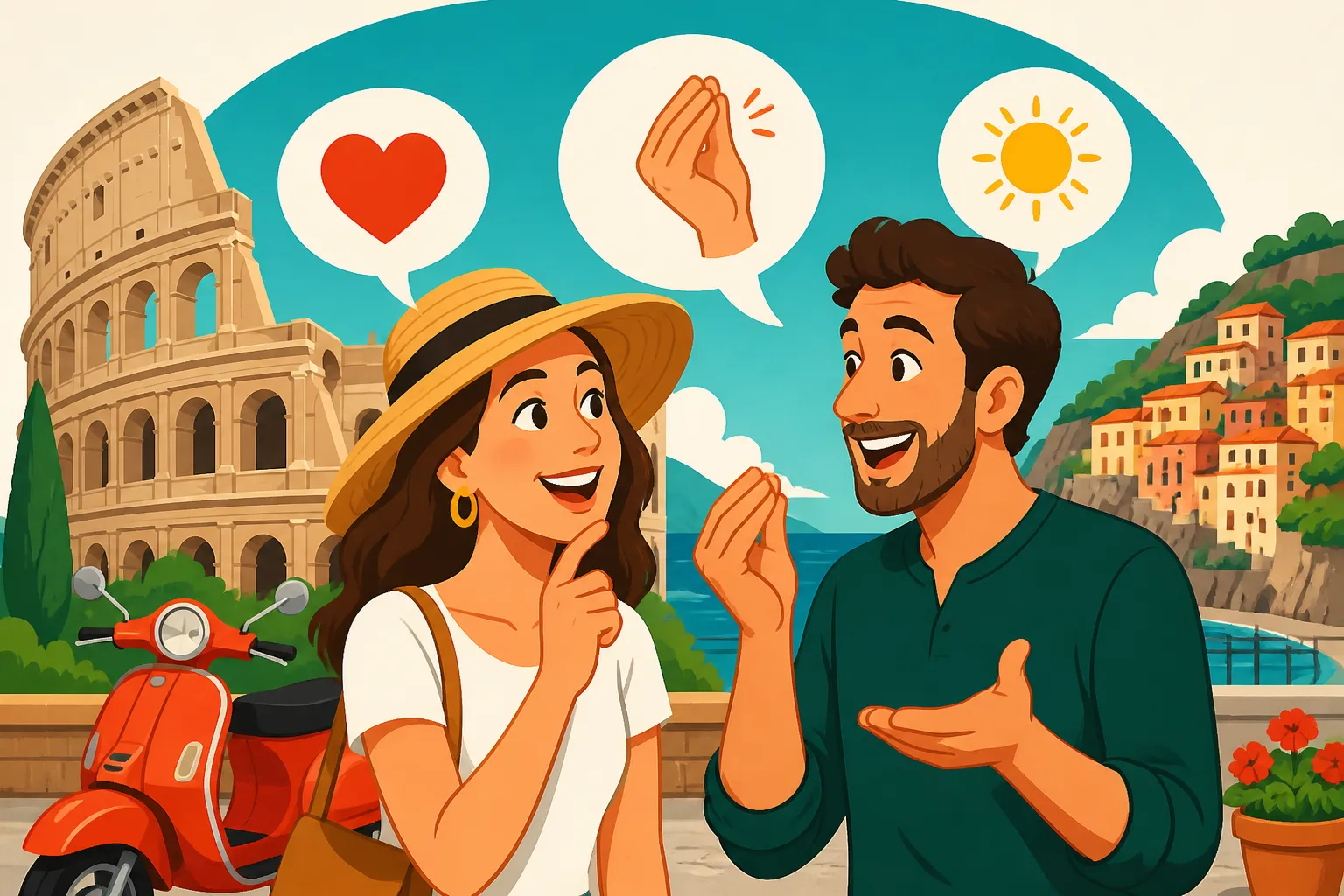
Learning Italian slang without understanding the country's iconic non-verbal communication is like trying to drive a Ferrari without gas – you're missing a crucial component! Italian gestures are not mere embellishments; they are an integral part of the language, often conveying as much meaning, if not more, than the words themselves. The classic "finger purse" gesture (all fingers brought together, pointing upwards) can mean "What do you want?" "What are you saying?" or "What's up?" depending on the context and intensity. An upward flick of the chin signifies "no" or "I don't care." A swift brush of the fingers under the chin can mean "I couldn't care less."
Understanding these gestures will fill in so many gaps when you're trying to decipher a rapid-fire Italian conversation, especially when slang is involved. Often, a slang word or phrase is always accompanied by a specific gesture, and ignoring it means missing half the message. Pay attention to how people use their hands, their facial expressions, and their body language. It's not just about what they say, but how they say it with their entire being. This expressive nature is a huge part of Italian Social Customs: Greetings, Gestures, and Personal Space, and observing it will deepen your understanding of communication in Italy immensely. Websites like Omio can help you book trains to different regions, where you can then observe these regional nuances firsthand.
Resources for Learning More
Feeling a bit overwhelmed? Don't be! There are plenty of fantastic resources out there to help you further your Italian language journey, beyond just slang. For more structured learning, consider looking into Learning Italian: Language Courses and Tests for Expats. These courses often provide a solid foundation in grammar and vocabulary, which then makes it easier to layer on informal expressions.
Beyond formal classes, immerse yourself in Italian media. Watching Italian movies and TV shows (with subtitles first, then without) is a brilliant way to pick up natural conversational rhythms and slang in context. Music is another great tool; listening to popular Italian artists exposes you to contemporary language. Podcasts designed for Italian learners, or even native Italian podcasts on topics you enjoy, can also be incredibly helpful. Don't forget online language exchange platforms where you can chat with native speakers. The more you expose yourself to spoken, informal Italian, the quicker you'll start recognizing and understanding these everyday expressions.
Practice Makes Perfect (or at Least, Better!): Immersion Strategies
You can read all the guides in the world, but nothing beats real-world practice. Italy is a fantastic place for immersion, and the more you put yourself out there, the faster you'll pick up on the nuances of slang and conversational flow.
Engaging with Locals
One of the best ways to learn slang is simply by talking to people. Strike up conversations wherever you go – at the local bar when you're getting your morning espresso, with the vendor at the market, or with fellow travelers you meet. Don't be afraid to make mistakes; Italians are generally very encouraging and appreciate the effort. When you hear a phrase you don't understand, don't hesitate to ask, "Cosa significa 'boh'?" (What does 'boh' mean?). They'll be happy to explain, and these explanations often come with cultural context that makes the meaning stick.
Join expat groups or language exchange meetups in your city. These environments are often supportive and can provide a safe space to practice. You might even find yourself naturally picking up local phrases from your new Italian friends. Remember that building genuine connections means listening carefully, observing their communication style, and being open to the cultural exchange. This approach not only enhances your language skills but also enriches your entire experience of living in or visiting Italy.
Media and Entertainment for Learning
As mentioned before, consuming Italian media is a goldmine for learning natural Italian. When you watch movies, try to pay attention not just to the words, but to the gestures and tone of voice that accompany them. Notice how different characters, depending on their age, social status, or region, use different types of slang. For instance, a teenage drama will likely be full of contemporary youth slang, while a historical film will be much more formal. Services like Netflix often have Italian shows and movies with Italian subtitles, which is a fantastic way to match the spoken word with the written word.
Italian music, especially pop and hip-hop, is another excellent source. The lyrics often contain current slang and colloquialisms, and because music is repetitive, these phrases tend to stick in your head. Try finding the lyrics online and translating them to understand the deeper meaning. And don't shy away from podcasts. There are many Italian podcasts available on a wide range of topics. Choose something you’re genuinely interested in, and listen actively. Even if you don't understand every word, the exposure to natural speech patterns and inflections will significantly improve your comprehension. This kind of passive (and active) immersion is key to moving beyond basic Survival Italian for Travelers: Key Phrases to Learn First and into more fluent, confident communication.
Here's a quick summary table of some essential Italian slang:
| Italian Slang Term | Literal Translation | Actual Meaning/Usage | Context/Notes |
|---|---|---|---|
| Allora | Then, so | Conversational filler, "So…", "Well…", "Come on?" | Extremely versatile, use to start sentences, show impatience, or as a phone greeting. |
| Boh | (No direct translation) | I don't know, Meh, Who knows? | Casual expression of indifference or uncertainty. |
| Mamma Mia! | My Mom! | Oh my goodness! Wow! Good heavens! | Expresses surprise, joy, exasperation, or relief. Very common. |
| Dai | Give | Come on! Hurry up! Give me a break! | Encouragement, impatience, or even consolation. |
| Che figata! | What a fig! | How cool! That's awesome! | Expresses strong positive approval. Informal. |
| Che palle! | What balls! | What a pain! How annoying! This sucks! | Expresses frustration, boredom, or irritation. Informal, but widely used. |
| Stare al verde | To be in the green | To be broke, to have no money | Common idiom for financial status. |
| Fare schifo | To make disgust | To suck, to be disgusting, to be terrible | Strong expression of disapproval. Use with caution. |
| Al volo | On the flight | Quickly, on the fly | Used for doing something in a hurry, e.g., "un caffè al volo." |
| Un casino | A casino | A mess, a lot of something, a big problem | Can mean a chaotic situation ("che casino!"), or "a lot" ("un casino di gente"). |
| In bocca al lupo! | In the wolf's mouth! | Good luck! Break a leg! | Traditional good luck wish. Respond with "Crepi!" (May it die!) |
| Figurati! | Imagine yourself! | Don't mention it! No problem! Of course! | Very common response to "Grazie" or for offering help/permission. |
This journey into Italian slang is a truly rewarding one, promising not just linguistic improvement but a deeper, more authentic connection with this incredible country. So, go forth, listen, learn, and "in bocca al lupo!"
Disclaimer
The information provided in this guide is intended for general informational purposes only and does not constitute professional advice. While we strive to provide accurate and up-to-date content, Italy's laws, regulations, and cultural norms can change. Always consult official sources or local experts for specific legal, financial, or immigration advice. We also recommend exercising caution and cultural sensitivity when using slang, as its appropriateness can vary widely by context and region.