When Is the Best Time for a Beach Holiday in Italy?
Most travelers dream of an Italian summer filled with Aperol Spritzes and turquoise waters, but showing up in Positano or Rimini in mid-August without a strategy is a recipe for high prices and claustrophobic crowds. This guide solves the timing puzzle by breaking down when the Mediterranean is actually swimmable, when the locals take over the sand, and how to find that perfect balance of sun and serenity.
Disclosure: This post may contain affiliate links. We may earn a commission at no extra cost to you if you make a purchase through these links. Read full disclosure.
The Seasonal Dilemma: Avoiding the August Trap
If you ask any veteran expat about the best time to visit the coast, they will likely start by telling you when not to go. In Italy, the month of August—and specifically the week surrounding the 15th—is a cultural phenomenon that can overwhelm the unprepared visitor. This is when the entire country seemingly shuts down its offices and migrates to the shoreline. While the atmosphere is festive, the logistical hurdles are significant. Prices for umbrellas at private beach clubs skyrocket, and the traffic on coastal roads becomes a standstill nightmare.
Why Ferragosto Changes Everything
To understand the timing of your beach holiday, you must understand What Happens in Italy on Ferragosto (August 15)?. This national holiday marks the peak of the summer season. For many Italians, a beach holiday isn't just a vacation; it is a mandatory ritual. Consequently, from late July through the third week of August, the most popular coastal towns in regions like Liguria and Campania are at 100% capacity. Finding a last-minute room on Booking.com during this window is nearly impossible, and those that are available often come with a massive "August premium."
Beyond the cost, there is the issue of personal space. Italian beaches are often divided into "lidi"—private clubs where you pay for a sunbed and umbrella. During the peak of August, these beds are often booked months in advance by local families who have held the same spot for generations. If you are looking for Quiet Beaches in Italy: Where to Escape the Crowds, August is the one month where they simply do not exist. You will be sharing your slice of paradise with thousands of others, which can detract from the relaxing experience you likely envisioned.
The Magic of the Shoulder Season
If you have the flexibility, the "shoulder" months of June and September offer a drastically different experience. In June, the days are at their longest, the coastal flora is still lush and green from the spring rains, and the "lidi" are just beginning to open their shutters. The water can be a bit bracing in early June, especially in the north, but the trade-off is a sense of calm and lower prices across the board. It is the ideal time for Visiting Italy in Summer: Heat, Crowds, and Coastal Escapes because you get the warmth without the suffocating humidity that often settles in by late July.
September, however, is arguably the "goldilocks" month for many of us who live here. The Mediterranean has been baking under the sun all summer, meaning the water temperature is at its most inviting. The frantic energy of August has dissipated as children head back to school, leaving the beaches to a more relaxed demographic of couples and retirees. You can often find great deals on boat tours via GetYourGuide during this period, as operators look to fill their remaining slots before the winter hibernation.
Regional Realities: North, South, and the Islands
Italy is a long, narrow peninsula with a climate that varies significantly from the top of the "boot" to the toe. When planning your beach holiday, you cannot treat the timing of a trip to the Venetian Riviera the same as a trip to Lampedusa. The southern regions and the islands enjoy a much longer "swimmable" window, often extending from May well into October, whereas the northern Adriatic can see a sharp drop in temperature by mid-September.
Sicily and Puglia: The Longest Seasons
In the deep south, particularly in Sicily and the Salento peninsula of Puglia, the beach season is an extended affair. It is not uncommon to see locals swimming in late October or even early November on a sunny day. If you are looking for Italy's Best Beaches by Region, the south offers incredible diversity, from the white sands of San Vito Lo Capo to the rocky grottos of Polignano a Mare. Because these areas are further south, the heat in July and August can be intense, often exceeding 35 degrees Celsius.
For those sensitive to heat, May and October are actually fantastic times for a southern beach holiday. While you might not spend eight hours a day in the water, the air temperature is perfect for exploring coastal towns without the risk of heatstroke. During these months, it is essential to consider Acclimating to Italian Climate: Heat, Humidity, and Health because the southern sun is significantly stronger than what you might find in Northern Europe or the UK. A southern trip in May also allows you to see the wildflowers in bloom, adding a layer of natural beauty to your coastal walks.
The Northern Adriatic and Liguria: A Shorter Window
In the north, the season is tighter. Regions like Liguria, home to the Italian Riviera, and the northern Adriatic coast near Venice and Trieste, really only come alive for beachgoers from late May to early September. The water in the Ligurian Sea is deep and can take longer to warm up, meaning a June swim might be a bit of a shock to the system. However, the dramatic cliffs and pastel-colored villages make it a top destination regardless of the water temperature.
When deciding How to Choose Between the Amalfi Coast and Cinque Terre, consider that the Cinque Terre (in Liguria) has very limited beach space. Most "beaches" here are rocky outcrops or small pebbled areas. Timing is even more critical here because when it is crowded, there is literally nowhere to stand. In contrast, the Adriatic side has wide, sandy beaches that can accommodate larger volumes of people, but they lack the dramatic scenery of the west coast. If you are traveling through the north, using Omio to book regional trains is a great way to skip the coastal traffic jams that plague these areas during the summer months.
Practical Planning for the Italian Seaside
A beach holiday in Italy is different from the "all-inclusive" resort experience found in other parts of the world. It requires an understanding of local customs, from how to secure a sunbed to how to navigate the complicated transportation networks that link the cities to the sea.
Understanding the Lido System
One of the first things foreigners notice is that much of the Italian coastline is covered in colorful umbrellas arranged in perfect rows. These are "stabilimenti balneari" or "lidi." For a daily fee, you get access to a sunbed (lettino), an umbrella (ombrellone), changing rooms, and usually a bar or restaurant. The question of Are Italy's Beaches Free, or Do You Pay for a Lido? is a common one. While there are "spiaggia libera" (free beaches) interspersed between the private clubs, they are often smaller, less maintained, and can get incredibly packed.
If you are visiting during the peak season, I highly recommend budgeting for a lido. It provides a home base for the day and usually includes essential amenities like showers. However, if you want a front-row spot near the water, you must book weeks in advance. Many lidi now have websites, but many still operate on a "call the owner" basis. If you are staying at a hotel booked through Booking.com, ask the concierge if they have a partnership with a nearby lido, as this can often save you money and guarantee you a spot.
Logistics and Transport
Getting to the beach is often the most stressful part of an Italian holiday. Coastal parking is notoriously difficult and expensive. In places like the Amalfi Coast, the roads are narrow and winding, making driving a hair-raising experience for those not used to the local style. I always tell my friends to look into Getting Around Italy: Trains, Buses, Flights, and Car Hire before they commit to a rental car. For many coastal destinations, the train is actually the superior option.
For example, the train line that runs along the Ligurian coast stops in almost every town, allowing you to "beach hop" with ease. On the Adriatic side, the tracks often run parallel to the sand. Using Omio to map out your journey can show you just how close the stations are to the water. If you are staying in a major city like Rome or Florence and just want a day trip to the sea, look for the "Treni del Mare" (Sea Trains) which are specifically designed to whisk city dwellers to the coast on weekends.
Month-by-Month Guide to Italy's Coastline
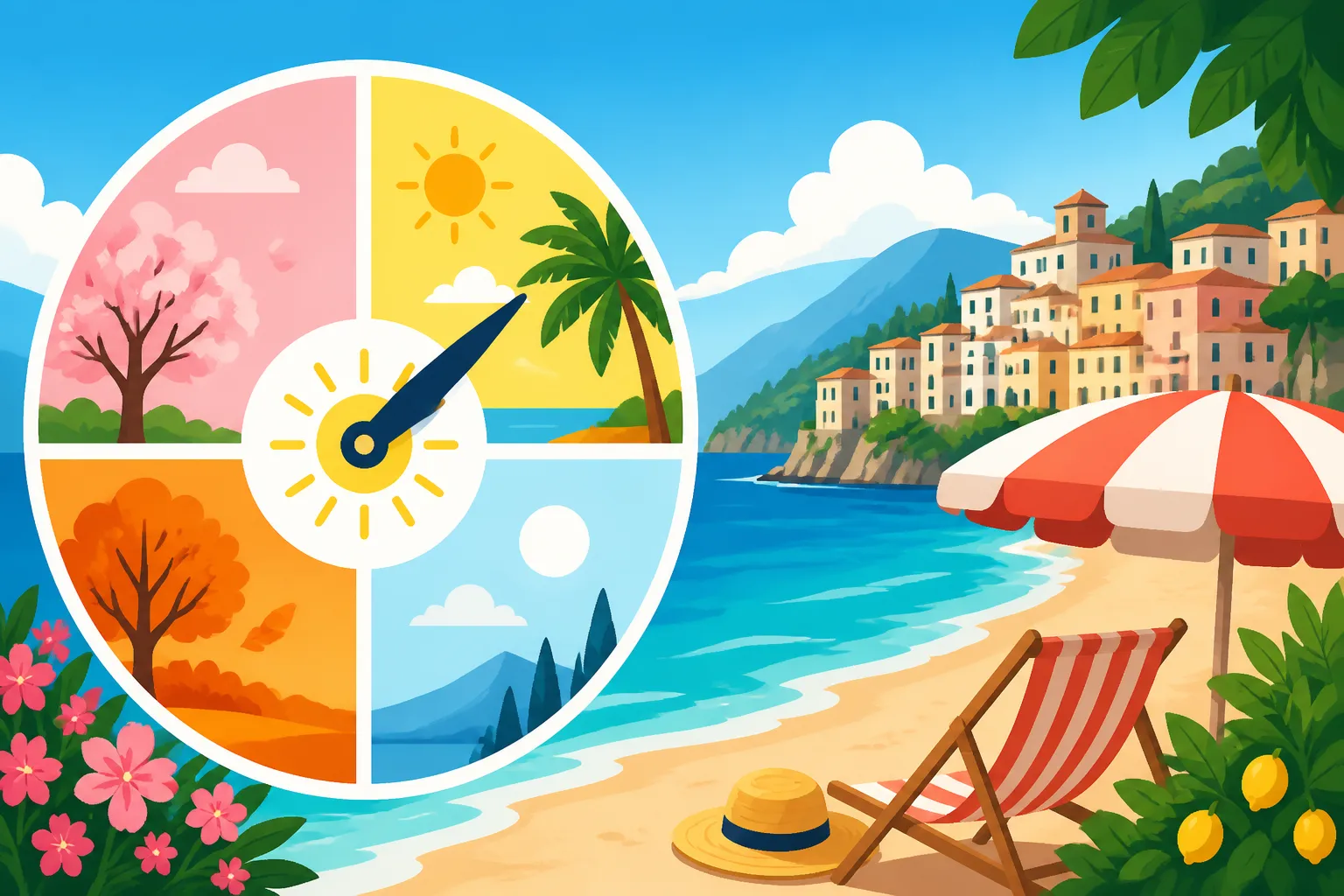
To help you visualize the year, I have created a breakdown of what to expect during the primary beach-going months. Remember that weather is unpredictable, but these are the historical norms we live by.
| Month | Water Temp | Crowd Level | Atmosphere |
|---|---|---|---|
| May | Refreshing (18-20°C) | Low | Tranquil; flowers in bloom; lidi start to open. |
| June | Pleasant (21-23°C) | Moderate | Fresh; long days; perfect for families before schools close. |
| July | Warm (24-26°C) | High | Vibrant; hot; long nights and many coastal festivals (sagre). |
| August | Very Warm (26-28°C) | Very High | Peak madness; Ferragosto celebrations; high prices. |
| September | Perfect (24-25°C) | Moderate | Relaxed; the "locals' favorite"; great for foodies. |
| October | Cooling (20-22°C) | Very Low | Quiet; southern regions are still very pleasant. |
Early Season: May and June
May is the month for the adventurer. While the water might be too cold for a long soak, it is the best time for coastal hiking. The trails of the Cinque Terre or the Sentiero degli Dei (Path of the Gods) on the Amalfi Coast are manageable because the heat hasn't yet become oppressive. You can often find great boat tour deals on GetYourGuide this early in the year because the season is just kicking off and operators are eager for business.
June is when the "real" summer starts. The schools usually break up in mid-June, so the first half of the month is the sweet spot for travelers who want the summer vibe without the full summer crowd. The sun is high, the evenings are warm enough for outdoor dining, and the coastal towns are full of anticipation for the season ahead.
Late Season: September and October
As mentioned before, September is the expat’s secret. The light changes in September—it becomes more golden and less harsh—making it the best time for photography. Most of the "sagre" (local food festivals) happen in late summer and early autumn, so you can combine your beach days with incredible local culinary experiences. You might find a fish fry festival in a small Ligurian village or a wine celebration in a Tuscan coastal town.
October is the final frontier. In Sicily, Sardinia, and Puglia, you can still have a legitimate beach day in early October. The crowds are gone, and you can often have a "spiaggia libera" almost entirely to yourself. Just be aware that by mid-October, many of the private lidi begin to pack up their umbrellas for the winter, so you'll need to be more self-sufficient, bringing your own towels and snacks.
Healthcare and Safety at the Beach
While the Italian coast is generally very safe, there are some administrative and health-related things to keep in mind. If you are spending a lot of time in the sun, dehydration and heatstroke are real risks. Make sure you know where the local "farmacia" is; Italian pharmacists are highly trained and can help with minor issues like jellyfish stings or sunburn without you needing to see a doctor.
If something more serious happens, it is vital to understand the local system. For example, knowing Emergency Medical Numbers in Italy (112, 118, 1500) can save precious time. Most major beaches will have a lifeguard ("bagnino") on duty during the day at the private lidi, but free beaches may not. Always look for the flags: a red flag means no swimming due to rough seas or dangerous currents.
Summary of the Veteran Expat's Advice
To sum it up: if you want the quintessential, high-energy Italian beach experience and don't mind the crowds, July is your month. If you are on a budget or want peace and quiet, aim for late May or late September. And unless you have a high tolerance for logistics and crowds, try to avoid the two weeks surrounding Ferragosto. By choosing your window wisely, you ensure that your time on the Italian coast is spent enjoying the "dolce vita" rather than fighting for a square inch of sand.
Disclaimer
This guide is intended for informational purposes only. Travel conditions, weather patterns, and local regulations in Italy can change without notice. Always check official government websites and local weather forecasts before finalizing your travel plans. The author is an expat sharing personal experiences and observations, which may not reflect the experience of every traveler. No commercial relationship exists with the brands mentioned unless otherwise stated.