How to Use the Rome Metro as a First-Time Visitor
You have just landed in Rome, your hotel is “near Termini,” and the Metro map shows only three lines. Then you hit a turnstile that rejects your card, a stairway with no lift, and a carriage packed tighter than a Saturday market. This guide explains how the Rome Metro works in practice: lines, tickets, tapping in, stations near the big sights, and the mistakes almost every newcomer makes.
Disclosure: This post may contain affiliate links. We may earn a commission at no extra cost to you if you make a purchase through these links. Read full disclosure.
Understanding the Rome Metro Before You Ride
The first time I took the Rome Metro, I expected a London Underground or a Paris Métro. Rome’s network is very different. It is small and in places a little worn, and it was clearly built around archaeology rather than tourist convenience. Every time Rome digs a tunnel, it hits a Roman villa, a necropolis or a medieval foundation. That is why so much of the historic centre has no Metro station at all. Once you accept this, the system stops feeling frustrating and becomes a very useful tool.
The Three Lines and What Each One Is For
Rome has three lines: A, B and C. Line B splits into a branch called B1 heading north-east. Rome’s city transport company, ATAC, runs the network, along with the buses and trams. Lines A and B cross at Termini, the main railway station. Lines A and C meet at San Giovanni, and Lines B and C connect at Colosseo.
| Line | Colour on Maps | Key Visitor Stops | Best For |
|---|---|---|---|
| A | Orange | Ottaviano, Spagna, Barberini, Repubblica, Termini, San Giovanni | Vatican, Spanish Steps, Trevi area, Via Veneto |
| B and B1 | Blue | Termini, Cavour, Colosseo, Circo Massimo, Piramide | Colosseum, Roman Forum, Testaccio, Ostia train link |
| C | Green | San Giovanni, Colosseo, plus outer residential districts | Connecting south-eastern neighbourhoods to the centre |
On a first trip you will mostly use Lines A and B. Line C mainly serves residents of the eastern suburbs. It only matters to visitors if your accommodation is out that way.
What the Metro Does Not Reach
This is the part that catches people out. Several famous spots have no station: the Pantheon, Piazza Navona, Campo de’ Fiori, Trastevere and most of the Centro Storico. For those you walk, take a bus or use the tram. My general advice is to treat the Metro as a fast way to jump between zones of the city. Do the final stretch on foot. For a wider picture of how the Metro fits with buses and trams, see Getting Around Italian Cities: Metro, Tram, and Buses.
Choosing a Base That Works With the Metro
Where you sleep decides how useful the Metro will be. Staying near a Line A stop such as Spagna, Barberini or Ottaviano puts the Vatican and the Spanish Steps within a few minutes. Staying near Termini gives you both lines and the airport trains, though the area feels busier and rougher around the edges. When I help friends plan, I tell them to filter listings on Booking.com by distance to a specific station rather than to “the centre,” because the centre is a vague idea in Rome. For neighbourhood-by-neighbourhood detail, read What’s the Best Area to Stay in Rome?. If money is tight, see Where to Stay in Rome on a Budget: Cheapest Well-Connected Areas.
Tickets, Contactless and Getting Through the Gates
Paying for the Metro is where most first-timers stumble. I once watched a family of four stand at a Termini turnstile for ten minutes. Each of them kept tapping the same phone. Here is how to avoid being that family.
Your Main Payment Options
There are essentially three ways to pay:
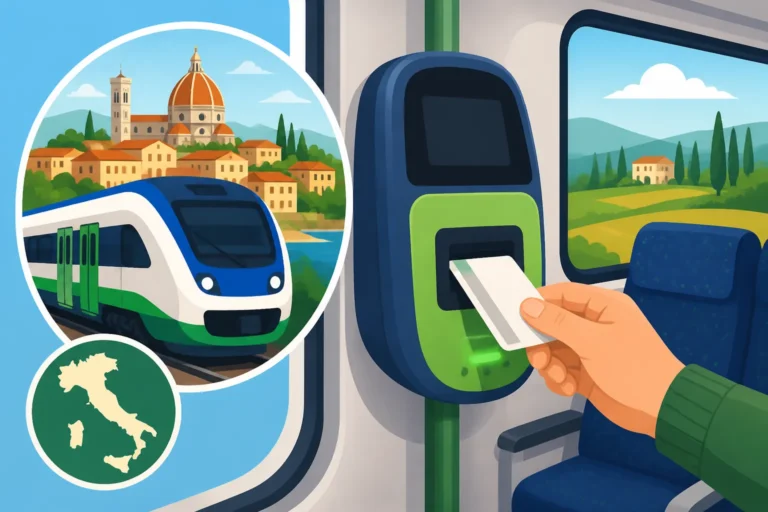
- Contactless bank card or phone wallet. Most Metro gates accept tap-in with a contactless card or a phone payment app. You simply tap at the yellow-marked reader on the turnstile. This is usually the easiest option for visitors.
- Single paper or electronic tickets. The standard single ticket is called the BIT. It is valid for a set period after first validation, and the window is printed on the ticket. Within that window you can usually change between buses and trams, but you can enter the Metro only once.
- Multi-day tourist passes. These cover unlimited travel for one or several days. They make sense if you plan to hop around a lot, particularly by bus.
Ticket prices and pass types change from time to time. Always check the current options on ATAC’s own website or app, or at a station machine, before you buy.
Where to Buy Tickets
If you are not using contactless, buy tickets from the machines inside stations. Most offer an English menu. You can also buy them at a tabaccheria, the small tobacco shops marked with a white “T” on a dark sign, and at some newsstands. Machines sometimes run out of change or refuse foreign cards. A newsagent with a stack of tickets is a lifesaver at those moments. I always keep a couple of spare paper tickets in my wallet for exactly this reason.
Tapping In Correctly, Step by Step
- Choose one card or phone per person and keep it for the whole day. Each traveller needs their own payment method, because one card cannot pay for two people at the gate.
- Tap firmly on the reader and wait for the green light or the gate to open.
- If you switch between your physical card and your phone wallet, the system treats them as two separate cards. Stick with one.
- Keep your ticket or card until you leave the station. Inspectors do check, and fines for travelling without a validated ticket are issued on the spot.
- Paper tickets must be stamped or scanned at the gate. On buses and trams, validate in the small machine on board straight after boarding.
Riding the Metro Like a Local
Once you are through the gates, the experience is fairly simple, but a few habits make it far less stressful.
Finding the Right Platform
Platforms are labelled by the final station of the line, not by direction. On Line A you will see “Battistini” at one end and “Anagnina” at the other. If you are heading from Termini to the Vatican, you want the platform signed towards Battistini. Before you descend, look at the station list on the wall beside the stairs. It shows every stop in order, and I still check it after years of living here. On Line B, read the destination screen carefully, because some trains run on the B1 branch towards Jonio instead of continuing to Rebibbia.
Rush Hour, Crowds and Pickpockets
Between roughly the morning commute and early evening, Line A between Termini and Ottaviano can be extremely crowded. Tourists, students and office workers all share the same carriages. That is also where pickpockets work, often in small groups who crowd around you at the door. Wear your bag on your front and keep your phone in an inside pocket. If someone pushes unusually close as the doors open, step back and let the train go. Another will arrive shortly. For the full set of tricks to watch for, read How to Avoid Pickpockets on Rome’s Metro and Buses.
Accessibility and Luggage
Rome’s Metro is improving, but accessibility is uneven. Some stations have working lifts and others rely on long staircases or escalators that are out of service for weeks. If you travel with a wheelchair, a pram or heavy suitcases, check station status on ATAC’s site before setting out, and allow time for a detour. Avoid rush hour with large luggage, since you will struggle to board. For broader planning, see Accessible Travel in Italy: Mobility and Planning Tips.
Strikes and Service Interruptions
Italy has scheduled transport strikes, known as scioperi, and the Rome Metro is regularly affected. Strikes are usually announced in advance. Guaranteed service bands often run at the start and end of the day. If your trip falls on a strike day, plan to walk or use taxis in the middle hours. To understand how these days work, read Strikes in Italy: How Sciopero Days Work and How to Rebook.
Using the Metro to Reach Rome’s Big Sights
This is where the Metro really earns its keep. Here is how I would route a first-time visitor around the classic highlights.
The Vatican and St. Peter’s
Take Line A to Ottaviano, which is the stop signed for San Pietro. From the exit, walk south for roughly ten to fifteen minutes to reach either St. Peter’s Square or the Vatican Museums entrance on Viale Vaticano. Cipro is the stop that sits closer to the Museums entrance, so use it if you have a timed ticket. Queues at the Vatican can be brutal. Many visitors book a timed slot or guided entry through the official site or a platform like GetYourGuide before arriving. For queue-beating strategies, see How to Skip the Lines at the Colosseum and Vatican.
The Colosseum and Roman Forum
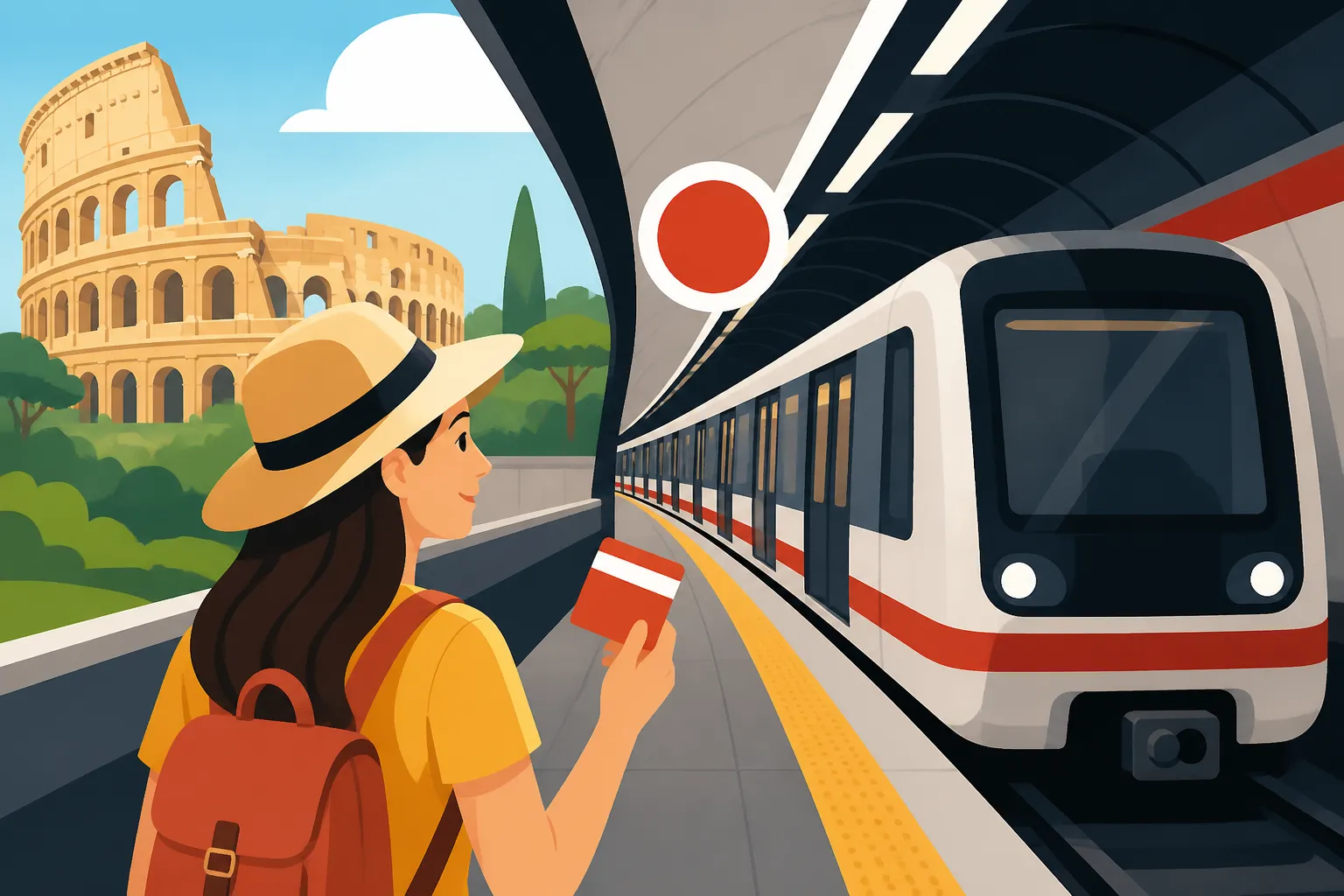
Line B to Colosseo is one of the most dramatic station exits anywhere. You walk up the steps and the amphitheatre fills your view. The Forum and Palatine are right next to it. Circo Massimo, one stop further, puts you at the southern end of the Palatine and the old chariot-racing ground. If you plan to cover all three sites in one push, read How to Visit the Colosseum, Forum, and Palatine in One Day.
Spanish Steps, Trevi and the Historic Centre
Line A to Spagna drops you right beside the Spanish Steps. From there the Trevi Fountain is a short walk downhill, and you can continue to the Pantheon and Piazza Navona on foot. Barberini is the other good choice for Trevi. This walking loop, started from a Metro stop, is the simplest way to see the core of the old city without fighting buses. If you only have a weekend, How to See Rome’s Main Sights in Two Days shows how to string these together efficiently.
Arriving From the Airport and Leaving the City
Most visitors arrive at Fiumicino and take a train into Termini, then switch to the Metro. Note that the Fiumicino airport trains are not covered by a standard Metro ticket. They need their own fare. For a full breakdown of transfer options, see How to Get From Rome Fiumicino Airport to the City Center. If you are moving on to Florence, Naples or Venice afterwards, comparing train and coach times on an aggregator like Omio before you leave the hotel saves a lot of guesswork. You can then ride the Metro back to Termini or Tiburtina with your bags at a quieter hour.
A Sample First Day Using the Metro
Here is the kind of day I suggest to friends visiting for the first time:
- Start early with Line A to Ottaviano and visit the Vatican Museums and St. Peter’s.
- Ride Line A back to Spagna in the early afternoon and walk via the Spanish Steps to Trevi and the Pantheon.
- Have a late lunch near Piazza Navona and wander back towards Barberini.
- Take Line A to Termini, change to Line B and get off at Colosseo for golden-hour views of the amphitheatre.
- Walk a few minutes to Monti for dinner, or take Line B one stop to Cavour.
It is a full day, but it shows how the Metro helps most when you use it to cross distances and leave the detailed exploring to your feet.
The Rome Metro will never win a prize for elegance, and it does not reach every postcard spot. Still, once you understand its three lines, tap in properly and plan around crowds and strikes, it becomes one of the fastest ways to get around the Eternal City. Give yourself a little patience on the first ride. By the third, you will be the one explaining the platforms to confused newcomers.
Disclaimer
This article is for general informational purposes only and does not constitute professional advice. Laws, prices and regulations vary by location and change over time. Consult a qualified professional for guidance on your specific situation.