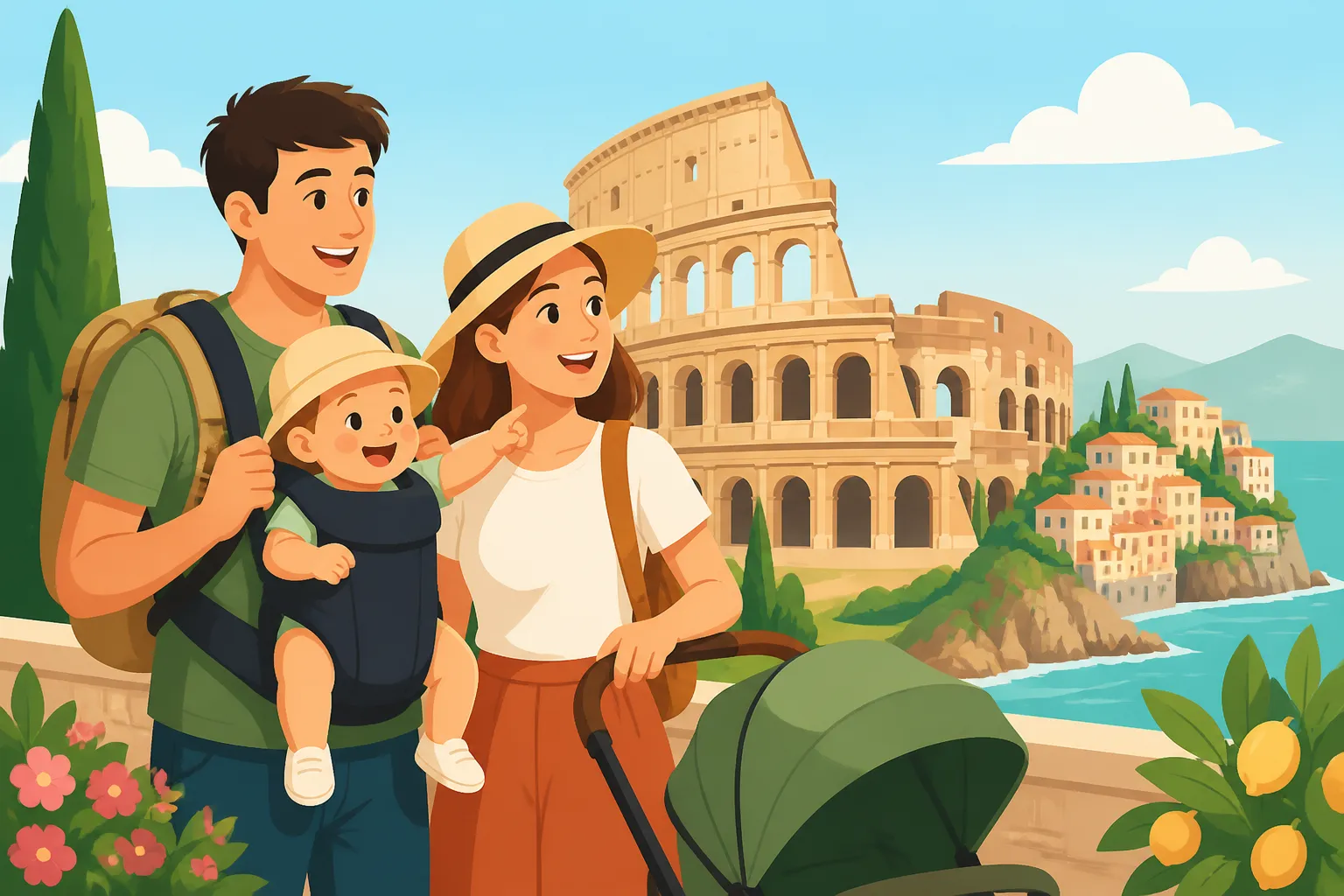
How to Travel Italy With a Baby or Toddler
Traveling through Italy with a baby or a toddler might sound like an overwhelming endeavor, a blend of romantic cobblestone streets and the harsh reality of stroller-unfriendly terrain, coupled with the inevitable meltdowns. Trust me, I’ve been there, juggling tiny shoes, half-eaten pane rolls, and navigating bureaucratic queues, all while trying to soak in the bellezza of this incredible country. This guide is here to walk you through the real-world challenges and triumphs of exploring Italy with your little ones, offering practical advice from someone who’s lived it.
Disclosure: This post may contain affiliate links. We may earn a commission at no extra cost to you if you make a purchase through these links. Read full disclosure.
Planning Your Italian Adventure with a Baby or Toddler
Embarking on a journey to Italy with a baby or toddler requires a different kind of planning than your solo backpacking days. You’re no longer just thinking about yourself; every decision, from where you stay to how you travel, has to factor in the needs of a small, demanding human. It’s not impossible, but it demands foresight and a healthy dose of flexibility.
Choosing Your Destination and Accommodation Wisely
Italy is vast and varied, from bustling metropolises to serene countryside villages, and not all are equally baby-friendly. While the allure of Venice is undeniable, navigating its endless bridges and vaporetti with a stroller can be a Herculean task. Likewise, the steep, winding paths of Cinque Terre, though picturesque, are not ideal for tired little legs or bulky baby gear. Instead, consider cities with more pedestrian zones and ample parks, or regions known for agriturismi that cater to families. Think about places like Bologna with its extensive porticoes providing natural shade, or cities like Florence which are charming but compact enough to manage without constant public transport.
When it comes to accommodation, forget the tiny boutique hotels unless they explicitly state they are family-oriented. You’ll want space – a separate bedroom for the baby to sleep while you unwind, a small kitchen for preparing snacks or sterilizing bottles, and perhaps even a washing machine. Look for apartments or aparthotels that offer these amenities. Websites like Booking.com often have filters for "family-friendly" or "apartments," which can be a lifesaver. Always double-check reviews for comments on noise levels, elevator access, and the availability of cribs or high chairs. Sometimes, a quiet agriturismo in Tuscany or Umbria, surrounded by nature and with a pool, can be a far more relaxing experience than wrestling with city crowds. Remember, a happy child often means happy parents, and space and comfort are paramount.
Packing Smart for Italy's Unique Needs
Oh, the packing! It’s an art form when traveling with children. You want to be prepared but not overburdened. My biggest advice? Less is more, but don't skimp on the essentials. Italy is generally well-equipped, but certain items can be surprisingly hard to find, or prohibitively expensive. This includes specific brands of formula, certain baby food purees, or particular diaper sizes. Bring a supply of these from home if your child is particular. Over-the-counter children’s medications, like infant pain relievers or fever reducers, are also a must, as Italian pharmacies might require a prescription for things readily available elsewhere, or not carry your preferred brand.
Consider a lightweight, compact stroller that can easily fold and navigate narrow sidewalks or crowded spaces. Alternatively, a comfortable baby carrier or sling can be invaluable, especially in places like ancient ruins or hilly towns. For nighttime, a portable white noise machine or travel black-out blinds can help maintain familiar sleep routines. Don't forget a small first-aid kit, complete with plasters, antiseptic wipes, and any allergy medications. And honestly, a few small, familiar toys from home can be a godsend during travel delays or restaurant waits. It's about creating a little bubble of familiarity in an exciting, new environment.
Timing Your Trip and Managing Expectations
The timing of your trip to Italy can significantly impact the experience with a baby or toddler. High season (summer, especially July and August) brings scorching heat, massive crowds, and higher prices. Imagine trying to keep a toddler hydrated and happy in 35°C (95°F) heat in a packed Roman square. It’s not fun. Spring (April-June) and early autumn (September-October) are generally much more pleasant, with milder weather and fewer tourists. However, even during these times, popular spots can be crowded, so aim for early mornings or late afternoons for sightseeing.
Managing your expectations is perhaps the most crucial part of traveling with little ones. This isn't the romantic, whirlwind tour you might have envisioned pre-children. You’ll see less, move slower, and inevitably spend more time at playgrounds or cafes than museums. Embrace the change of pace. If your toddler decides the Piazza Navona fountain is more interesting than the Pantheon, roll with it. The goal is to create shared memories, not to tick off every item on a bucket list. Build in plenty of downtime for naps and unstructured play. Remember, even sitting at a cafe, sipping an espresso while your baby observes the world, is an authentic Italian experience. This slower rhythm actually helps you absorb the local atmosphere more deeply.
Navigating Italy with Little Ones in Tow
Once you're on the ground, the real adventure begins. Italy is a country of contrasts, beautiful and chaotic, efficient and frustrating. Traveling with a baby or toddler means encountering these contrasts head-on, from the joy of a nonna pinching your baby’s cheek to the exasperation of a broken elevator at a train station.
Getting Around Italy: Strollers, Car Seats, and Public Transport
Navigating Italy's transport system with children requires a strategic approach. If you plan on covering long distances between cities, Italy’s high-speed trains, like those offered by Trenitalia or Italo, are generally an excellent option. They are comfortable, often have family areas, and allow children to move around more than on a plane. You can book tickets easily online, sometimes even via platforms like Omio which aggregates different transport options. For regional travel, trains can be a bit older, but still quite manageable. Remember that some train stations, especially older ones, may not have elevators, forcing you to carry strollers up and down stairs.
For shorter distances within cities, public transport can be hit or miss. Buses can be crowded, and subways (where available) might involve stairs. A lightweight, umbrella stroller or baby carrier will be your best friend. In terms of car travel, if you're planning on Renting a Car in Italy: ZTLs, Insurance, and Driving Tips, remember that car seats are mandatory for children up to 150 cm (approximately 4 ft 11 in) tall or 36 kg (around 79 lbs) in weight, and usually up to 12 years old. Rental companies offer car seats, but it’s often best to bring your own if you have a specific, comfortable model, as rental options can be bulky, uncomfortable, or sometimes unavailable. Also, be aware of ZTLs (Limited Traffic Zones) in many city centers, which can result in hefty fines if you enter without a permit. Parking can also be a nightmare. In many ways, relying on Public Transportation in Italian Cities: A Guide or walking might be less stressful.
Eating Out and Meal Times with Toddlers
Ah, Italian food! It’s often one of the main draws for visitors, and thankfully, Italian culture is incredibly welcoming to children. Families are at the heart of Italian society, so you'll find most restaurants accommodating. However, meal times can be later than you’re used to, with dinner often starting at 7:30 PM or 8:00 PM. This can be tricky with early eaters. Consider having an aperitivo with some snacks around 6 PM, or opting for a more casual pizzeria or tavola calda (hot table) where you can eat earlier. Many restaurants will happily prepare a simple pasta dish like pasta al pomodoro (pasta with tomato sauce) or pasta in bianco (plain pasta) for children, even if it’s not on the menu.
High chairs might be available, but don't expect them at every single establishment, especially smaller, traditional ones. Bringing a portable booster seat that straps to a chair can be helpful. Don't be shy about asking for things like unflavored plain yogurt (yogurt naturale), fresh fruit, or simple bread (pane) for your little one. Italians love seeing children enjoy their food. And remember, the concept of a dedicated "kid's menu" as understood in some other countries isn't always prevalent, but flexibility and custom orders are common. If your child has dietary restrictions, look for places that can accommodate or check out guides like How to Eat Gluten-Free in Italy (Senza Glutine Tips) for general advice on navigating specific diets.
Dealing with Diapers, Naps, and Unexpected Hurdles
The daily rhythm of life with a baby or toddler doesn't magically disappear when you cross borders; it simply adapts to a new beat. Diaper changes can be a challenge. While larger museums or shopping centers might have changing facilities, many smaller restaurants or public restrooms won't. Be prepared to change diapers in your stroller, on a park bench, or in a quiet corner. Always carry a portable changing mat. Diapers and wipes are readily available in supermarkets and pharmacies, but prices and brands can vary, so stock up on your preferred kind when you find it.
Naps are non-negotiable for many little ones, and forcing them to skip one will lead to a grumpy travel companion. Incorporate nap times into your daily itinerary. This might mean returning to your accommodation for a mid-day rest, or finding a quiet park bench or cafe where the baby can snooze in their stroller or carrier. This downtime is also a perfect opportunity for parents to relax, read a book, or simply enjoy the moment. Unexpected hurdles, like a sudden fever, lost pacifier, or an unforeseen travel delay, will happen. Approach them with a sense of humor and resilience. The warmth and helpfulness of local Italians, especially towards children, can often turn a stressful situation into a memorable anecdote. For medical concerns, knowing about Italian Pharmacies: Prescription, Over-the-Counter, and Supplies or Finding Doctors and Hospitals in Italy can provide peace of mind.
Keeping Everyone Happy: Activities and Well-being
Making sure everyone is enjoying the trip is paramount. It’s not just about seeing famous sights; it’s about creating an experience that caters to all ages, even the tiniest travelers. Italy has a surprising amount to offer families beyond the obvious historical landmarks.
Kid-Friendly Activities and Attractions
While your toddler might not appreciate the nuances of Renaissance art, many of Italy's iconic sites offer surprising fun for little ones. Open spaces like the Borghese Gardens in Rome, the Boboli Gardens in Florence, or the public parks in Milan (like Parco Sempione) are perfect for running around, chasing pigeons, and burning off energy. Many cities also have fantastic playgrounds (parchi giochi) which are great spots to let loose and observe local families. Take a page from local families on sites like GetYourGuide and look for outdoor activities, puppet shows, or even simpler excursions.
Don't underestimate the magic of simple pleasures: a gelato break, a ride on a vaporetta in Venice (which feels like a boat ride adventure), or simply watching street performers. Many museums, particularly larger ones, are becoming more family-friendly, offering interactive exhibits or dedicated children's programs. However, for most historical sites, a quick visit or a casual walk-through might be more realistic. Focus on one or two major attractions a day, interspersing them with plenty of playtime and snack breaks. For more ideas, explore resources on Family Travel in Italy: Kid-Friendly Cities and Activities.
Health and Safety Considerations
Your child’s health and safety are always top priority. Before you leave, consult your pediatrician about any necessary vaccinations and carry a copy of your child’s medical records, including their vaccination history. It’s also wise to check your health insurance coverage; while EU citizens can use their EHIC, non-EU citizens will need private insurance. Understanding Healthcare in Italy: An Expats' Guide and Getting Health Insurance in Italy: Public and Private Options is crucial. Always have a supply of any prescription medications your child takes, with a doctor's note explaining their use.
In terms of safety, common sense prevails. Keep a close eye on your child in crowds, especially in popular tourist areas where pickpocketing can occur. Use a secure stroller or carrier, and consider a child-leash or harness if your toddler is a runner. Be aware of traffic, particularly in older city centers where sidewalks can be narrow or non-existent. When dining out, be mindful of hot plates, sharp utensils, and any potential choking hazards. Sun protection is vital, especially during warmer months: hats, sunscreen, and staying in the shade during peak hours (12 PM – 3 PM) are essential. When you get to your chosen hotel or apartment via sites like Booking.com, do a quick "baby-proofing" scan – look for accessible outlets, loose cords, or open windows.
Embracing the Italian Pace of Life
One of the most valuable lessons I learned traveling in Italy with my own kids is to truly embrace the Italian pace of life, the dolce vita. Things might not always run on time, queues can be long, and systems might seem convoluted. But the beauty is in the slowing down. Don't rush. Take long lunches, enjoy the afternoon passeggiata (stroll), and linger over an aperitivo. Italians are generally incredibly kind and patient with children, and you'll often find strangers offering a smile, a kind word, or even a helping hand with your stroller up a flight of stairs.
Let your child lead sometimes. If they want to spend an hour watching construction workers or chasing pigeons in a piazza, let them. These unplanned moments often become the most cherished memories. Focus on sensory experiences: the smell of fresh bread, the taste of a real Italian gelato, the sound of church bells, the texture of ancient stones. These are things that babies and toddlers can truly appreciate, making the trip special for them too. It’s a chance to see Italy through their fresh, curious eyes, and rediscover the wonder in the everyday.
| Category | Essential Items | Tips for Italy Travel |
|---|---|---|
| Feeding | Formula/Breastfeeding supplies, bottles, bibs | Bring favorite brands. Supermarkets have baby food, but options might differ. |
| Portable high chair/booster, baby spoons | Not all restaurants have high chairs. Italians are flexible with simple food requests. | |
| Diapering | Diapers, wipes, changing mat | Available in supermarkets/pharmacies, but specific brands/sizes might be limited. |
| Diaper cream, small plastic bags | Changing facilities can be scarce outside large attractions or malls. | |
| Sleeping | Portable crib/pack-n-play (if not provided) | Confirm accommodation has a crib. White noise machine, blackout blinds can help with routine. |
| Sleep sacks/pajamas | Rooms might not have central AC or heating; dress appropriately. | |
| Getting Around | Lightweight stroller or baby carrier | Cobblestones, stairs (train stations, ancient sites) are common. Public transport can be crowded. |
| Car seat (if renting a car) | Mandatory up to 12 years/150cm. Consider bringing your own for comfort/familiarity. | |
| Health & Safety | First-aid kit (incl. infant pain reliever) | Essential medications might require prescriptions. Consult your pediatrician beforehand. |
| Sunscreen, hat, insect repellent | Sun protection is crucial, especially in summer. | |
| Copy of medical records | Have important documents accessible for emergencies. | |
| Comfort/Play | Favorite comfort toy/blanket, a few small toys | Familiar items help during travel and downtime. |
| Snacks, sippy cup/water bottle | Always have snacks on hand for hungry moments. |
Disclaimer
The information provided in this guide is intended for general informational purposes only and does not constitute professional advice. While we strive to provide accurate and up-to-date information, rules, regulations, and availability of services in Italy can change. Always verify current requirements with official Italian government sources, your local embassy or consulate, and relevant service providers before making travel decisions. Medical advice should always be sought from a qualified healthcare professional.