Cross-Border Commuting From Italy: Regular Trips to Switzerland and France
Waking up in Italy and heading off to work in Switzerland or France sounds incredibly romantic, doesn't it? Like something out of a European film, with scenic train rides and charming border towns. But for those of us who actually live this reality, it’s far less a movie montage and much more a meticulous daily navigation of logistics, differing regulations, and often, sheer bureaucratic will. As a veteran expat, I've seen firsthand the unique challenges cross-border commuters face, and trust me, you are not alone in finding it a complete headache at times. This comprehensive guide is here to untangle that knot, offering practical advice and introducing you to smart tools that can transform your commute from a daily chore into a manageable part of your Italian life.
Disclosure: This post may contain affiliate links. We may earn a commission at no extra cost to you if you make a purchase through these links. Read full disclosure.
The Daily Grind: Understanding Cross-Border Commuting from Italy
Let's be real: choosing to live in Italy but work in a neighboring country like Switzerland or France is a lifestyle choice born of necessity, opportunity, or a desire for a particular quality of life. Whether it’s the higher salaries in Swiss cantons or specific job opportunities just over the French border, the motivations are strong. However, this choice comes with its own unique set of complexities that extend far beyond simply owning a passport. You're not just a commuter; you're a frontaliere, a cross-border worker, and that comes with a whole rulebook.
Why Commute Across Borders? The Expat Perspective
Many of us move to Italy for its unparalleled lifestyle, culture, and often, a more relaxed pace of life. However, sometimes the local job market, especially for specialized skills or higher earning potential, might not align with our career aspirations or financial needs. This is where neighboring countries like Switzerland and France step in. Switzerland, in particular, offers some of the highest salaries in Europe, making cities like Lugano, Geneva, or Basel attractive for those willing to commute from nearby Italian regions. For France, job opportunities might be found in areas close to the border, like Nice or Lyon, for residents living in Liguria or Piedmont. It’s a delicate balance, sacrificing a chunk of your day to travel in exchange for career growth or financial stability, all while maintaining that beautiful Italian address. It's a pragmatic decision, and often, a necessary one.
Key Commuting Hubs and Routes
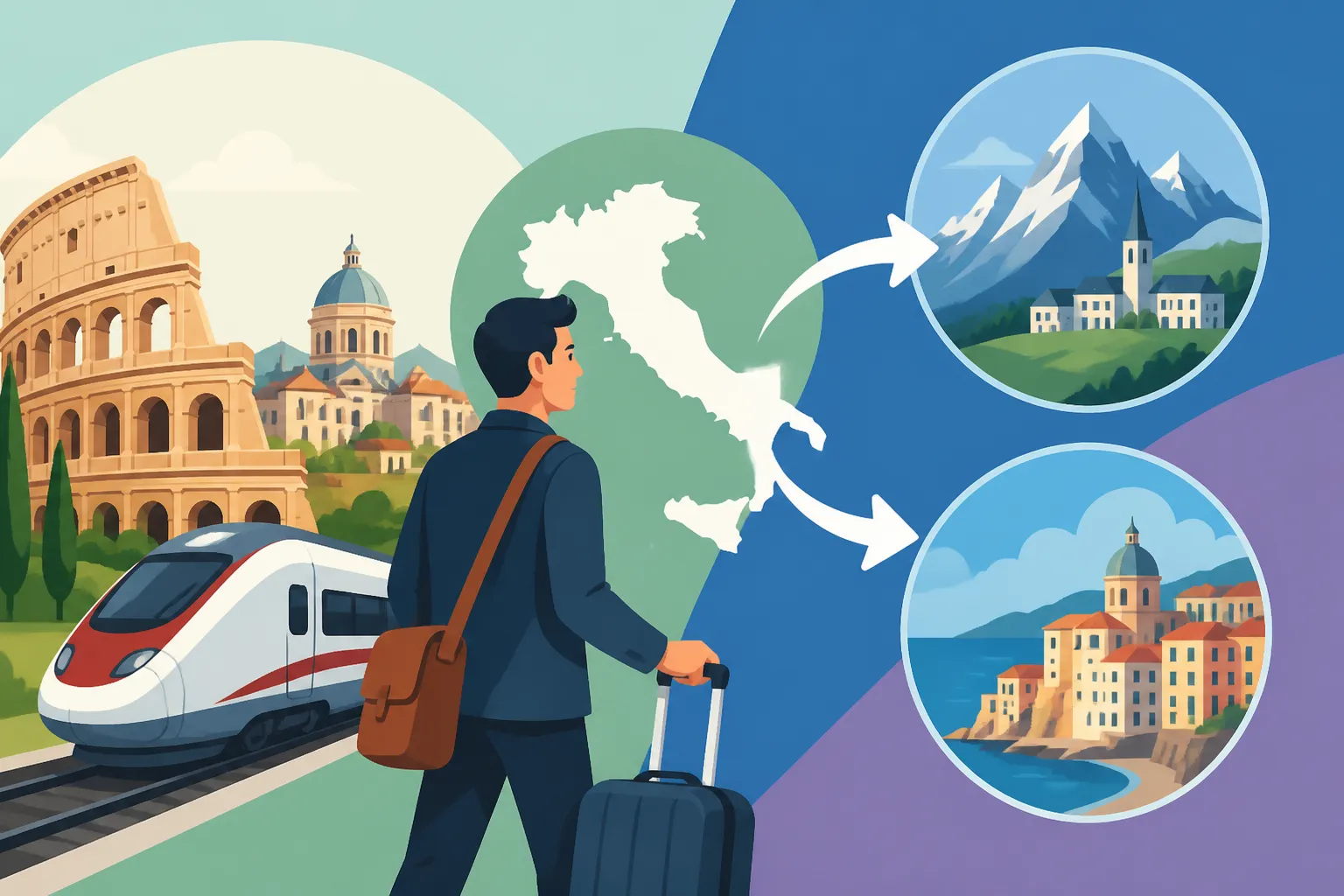
The most common cross-border commuting corridors from Italy into Switzerland and France are well-established, but each comes with its own quirks regarding transport infrastructure and border procedures.
- Italy to Switzerland:
- Lombardy to Ticino (e.g., Como/Varese to Lugano/Chiasso/Mendrisio): This is arguably the busiest route. Many live in the picturesque Italian lakes region and commute into the Swiss canton of Ticino. Trains, run by operators like Trenord and the Swiss Federal Railways (SBB CFF FFS), are frequent, connecting places like Como San Giovanni, Varese, and Milan directly to Chiasso, Lugano, and beyond. The drive through the border can be notorious for traffic jams, especially at peak hours, turning a short distance into a lengthy ordeal.
- Piedmont/Valle d'Aosta to Valais/Geneva: From areas like Domodossola, you can catch trains into Brig, linking you to the broader Swiss rail network. For those near Turin, commuting to Geneva can involve a combination of train services, often requiring changes in France, or a drive through the Mont Blanc Tunnel.
- Italy to France:
- Liguria to Alpes-Maritimes (e.g., Ventimiglia to Nice/Monaco): This is a critical artery for Italian residents working on the French Riviera. Regional trains run frequently between Ventimiglia and Nice, a relatively short but busy route. Driving is also popular, though French motorways (autostrade) have tolls, and city traffic can be dense.
- Piedmont to Auvergne-Rhône-Alpes (e.g., Turin to Lyon/Grenoble): This route typically involves longer travel times. High-speed TGV trains connect Turin to Lyon and Paris, while regional services run through border towns like Modane. Driving via tunnels like Fréjus is another option, but again, tolls and distances add up.
The Bureaucratic Maze for Border Workers
Beyond the daily journey, there's a specific legal status for frontaliers that impacts everything from taxation to social security. In Italy, a lavoratore frontaliero is generally defined as someone residing in an Italian border municipality and working in a neighboring country, returning home daily or at least weekly. This status often entails specific tax agreements between Italy and its neighbors to avoid double taxation – for example, with Switzerland, there's a bilateral agreement that dictates where income tax is paid. For non-EU citizens, obtaining the necessary work permits for both Italy (as a resident) and the target country (as a worker) adds further layers of complexity. While this guide focuses on the travel logistics, it’s crucial to understand that your status as a frontaliere is the foundation upon which your commuting life is built, affecting your documents, taxes, and rights. You can always delve deeper into topics like Understanding Italy's Tax System: A Guide for Foreigners or Ultimate Guide to Visas and Immigration in Italy to ensure you're fully compliant with all legal requirements on both sides of the border.
Mastering the Journey: Transport Options and Booking
Once the legalities are sorted, the daily reality boils down to how you get from point A to point B. This isn't just about choosing a mode of transport; it's about strategizing your entire day to maximize efficiency and minimize stress.
Trains: The Lifeline of Cross-Border Commuting
For many, trains are the preferred choice for cross-border commutes, offering a relatively stress-free way to travel, especially for longer distances. In Italy, you’ll primarily be dealing with Trenitalia, while in Switzerland, it's SBB CFF FFS, and in France, SNCF, including its high-speed TGV services.
- Italian-Swiss Routes: The railway lines connecting Lombardy to Ticino are frequently served. You might take a Trenord train from Milan Cadorna or Como Lago, or a Trenitalia service from Milan Centrale or Como San Giovanni. These seamlessly transition into SBB services once over the border in Chiasso or Lugano. The EuroCity trains also provide excellent direct connections from major Italian cities like Milan, Genoa, and Venice to destinations deep into Switzerland like Zurich, Bern, and Geneva.
- Italian-French Routes: For the Ligurian coast, regional trains from Ventimiglia (Italy) cross directly into Menton and Nice (France). These are often TER (Transport Express Régional) services operated by SNCF. For longer routes from Piedmont, TGV high-speed trains are the fastest option, cutting travel time significantly between cities like Turin and Lyon or Paris. However, they come at a higher price, especially if not booked in advance.
Booking these cross-border journeys can be a bit of a puzzle. Do you buy separate tickets from each operator? Do you hunt for international tickets on each national website? This is where a platform like Omio truly shines, becoming an indispensable tool for simplifying what would otherwise be a multi-website, multi-currency headache.
Buses: A Budget-Friendly Alternative
Buses often get overlooked, but they can be a fantastic, budget-friendly option, especially if train fares are steep or routes are indirect. Operators like FlixBus run international routes connecting major Italian cities to destinations in Switzerland and France. For instance, you can find direct buses from Milan to Geneva or from Turin to Lyon.
While generally slower than trains, buses often serve different stations or more localized areas, which might be convenient depending on your exact destination. They are also usually more forgiving on the wallet, making them attractive for those looking to save money. Just be mindful of border crossings, as bus journeys might involve more direct interactions with customs officials, especially if carrying luggage. For more general advice on getting around the peninsula, check out Getting Around Italy: Trains, Buses, Flights, and Car Hire.
Driving: Freedom with Caveats
Driving offers unparalleled flexibility, especially if your workplace is not directly accessible by public transport or if you live in a more rural Italian area. However, it comes with a long list of considerations:
- International Driving Permits: While your Italian license is valid in both Switzerland and France, for non-EU citizens, it’s always wise to carry an International Driving Permit (IDP) alongside your national license. You can find more details in Driving in Italy: Obtaining an Italian Driver’s License.
- Vignettes and Tolls: Switzerland requires an annual vignette (motorway tax sticker) for all vehicles using its national motorways. It’s a flat fee, regardless of how often you use it. French motorways operate on a toll system, which can add up significantly over a daily or weekly commute.
- Fuel Costs: Petrol and diesel prices vary between countries and can fluctuate wildly. Comparing prices and filling up where it's cheapest can save you a fair bit over time.
- ZTLs (Limited Traffic Zones): Italian cities are famous (or infamous) for their ZTLs, but be aware that many French and Swiss cities also have similar restrictions or clean air zones that require specific stickers (e.g., Crit'Air in France). Driving into these without proper permits will result in hefty fines.
- Insurance: Ensure your car insurance policy covers cross-border travel to both Switzerland and France, including any necessary green card documentation.
- Border Queues: Driving through major border crossings like Chiasso-Brogeda (Italy-Switzerland) or Menton (Italy-France) can lead to significant delays, particularly during rush hour, holidays, or if there are unexpected security checks. Always factor in extra time.
Seamless Booking with Omio: Your Travel Companion
Given the multi-country, multi-operator complexity of cross-border commuting, having a single, intuitive platform to manage your travel is a game-changer. This is precisely where Omio becomes your best friend. Instead of jumping between Trenitalia, SBB, SNCF, and FlixBus websites, Omio aggregates all these options in one place.
Imagine this scenario: you need to travel from Como San Giovanni to Lugano. With Omio, you simply input your origin and destination. It then displays all available train options from Trenord and SBB, along with any bus alternatives like FlixBus, clearly showing departure times, travel durations, and prices side-by-side. This allows you to easily compare and choose the fastest or cheapest route that fits your schedule, making your commuting life infinitely simpler.
The benefits of using Omio don't stop there. You can book tickets directly through the platform, often receiving mobile tickets that you can keep on your phone, eliminating the need for paper tickets or struggling with foreign ticket machines. It supports multiple currencies, so you can see prices in Euros and confidently purchase, knowing exactly what you're paying. For regular commuters, this streamlining is invaluable. Omio helps you navigate the intricacies of different national transport systems by presenting a unified view, making cross-border travel as straightforward as possible.
Essential Preparations and Ongoing Logistics
Beyond the actual journey, there are several practical elements that demand attention for a smooth cross-border commuting life. Overlooking these can lead to anything from minor frustrations to significant financial penalties.
Documentation and Border Controls
Your passport or national ID card will be your most frequently used item. Always carry it. For non-EU citizens, your permesso di soggiorno (Italian residence permit) is equally vital, proving your legal right to reside in Italy and often allowing easier passage within the Schengen Area. Switzerland, while part of Schengen, is not part of the EU, so specific rules might apply for long-term stays or work permits depending on your nationality.
- Permit G for Switzerland: If you're a non-Swiss citizen living in Italy but working in Switzerland, you'll need a Permit G (Permesso G in Italian, Frontalier Permit in English). This permit is specific to cross-border workers and is issued by the Swiss canton where you work. It’s critical to understand its requirements and renewal process, as your right to work depends on it.
- Customs and Goods: Be mindful of customs regulations. Both Switzerland and France have limits on what you can bring across the border duty-free, especially for alcohol, tobacco, and certain food products. Regular commuters might be exempt from some daily allowances if declared as such, but always double-check to avoid fines. Random checks at the border are not uncommon, so don't get caught out.
Financial Considerations for the Frontaliere
Money management is another beast when you're dealing with two economies.
- Currency Exchange: Switzerland uses the Swiss Franc (CHF), while Italy and France use the Euro (EUR). You’ll inevitably be dealing with both. Consider opening a bank account in your country of work (e.g., Switzerland) for your salary and possibly a dedicated multi-currency account. Many Italian banks have branches in border areas that cater specifically to frontaliers. For broader financial advice, see Money Matters in Italy: Banking and Finance for Expats.
- Taxation: As mentioned, tax agreements are in place. For instance, under the Italian-Swiss agreement, a portion of your Swiss income tax might be withheld at source, and the rest declared and potentially taxed in Italy, or vice-versa, depending on the specifics and your daily return status. Always consult a commercialista (Italian tax accountant) specializing in international taxation to avoid any nasty surprises. This is not an area to guess.
- Social Security: Contributions to social security and pension schemes will typically be made in your country of employment. Understanding how these benefits accrue and how they might be transferred or recognized if you move or retire is crucial.
Daily Life Adjustments and Connectivity
Living in one country and working in another means you’re constantly shifting cultural and practical gears.
- Language Barriers: While your workplace might be English-speaking, your daily interactions at the train station, bus stop, or even buying a quick coffee will likely require some local language skills. Italian, French, and perhaps even German (for Swiss commuters) will be beneficial. Even a few key phrases can make a big difference in reducing stress. If you're struggling, consider looking into Italian Language and Everyday Communication for Visitors.
- Mobile Plans: A dual-SIM phone or an eSIM is highly recommended. You’ll want an Italian SIM card for your life in Italy and potentially a Swiss or French plan for your work country to avoid roaming charges, especially for data. Many telecom providers offer cross-border plans, but compare them carefully.
- Time Zones: Most of Italy, France, and Switzerland are in the same Central European Time (CET) zone, which simplifies things. However, seasonal daylight saving changes happen simultaneously, so no worries there.
Maximizing Your Cross-Border Commuting Experience
Commuting across borders can be draining, but with the right mindset and tools, you can significantly improve your daily experience. It’s about building resilience and smart strategies into your routine.
Time Management and Flexibility
The golden rule of cross-border commuting is to expect the unexpected and build in buffer time. Train delays, road accidents, and increased border checks can throw a wrench into even the best-laid plans.
- Monitor Traffic and Public Transport Apps: Use real-time apps for road traffic (e.g., Google Maps, Waze) and public transport (e.g., Trenitalia, SBB Mobile, SNCF Connect). This intelligence allows you to anticipate issues and adjust your departure or route.
- Strike Days: Be aware of scioperi (strikes) in Italy, France, and Switzerland. These can cripple public transport and are often announced in advance. Having a backup plan, whether it's carpooling or working remotely, is essential.
- Peak Hours: If possible, try to adjust your work hours to avoid the absolute peak of rush hour. Even shifting your commute by 30 minutes can make a world of difference.
- Work-from-Home Days: Negotiating a few work-from-home days a week can drastically reduce your commuting burden and save you money and stress.
Building a Support Network
Connecting with other cross-border commuters can be incredibly helpful. They are a trove of practical tips, up-to-date information on border queues, and shared commiseration.
- Expat Groups and Forums: Look for local expat groups on social media platforms or dedicated forums focused on frontaliers in your specific region. These communities often share real-time updates on transport issues, bureaucratic changes, and even carpooling opportunities.
- Work Colleagues: Your colleagues who also commute are a fantastic resource. They can provide insights into company policies, local transport peculiarities, and sometimes, moral support.
The Omio Advantage: Your Ultimate Travel Companion
Let's circle back to Omio, because it really does streamline so much of the planning that can otherwise feel overwhelming. Imagine needing to go from Florence to Geneva – not a common daily commute, but perhaps a weekly one. Omio can show you high-speed train options with connections, compare them with bus services like FlixBus, and even suggest flights for longer distances, all within one search.
| Commute Type | Mode of Transport | Pros | Cons | Best For | How Omio Helps |
|---|---|---|---|---|---|
| Italy-Swiss (e.g., Como-Lugano) | Train | Reliable, frequent, scenic | Can be costly, especially last-minute | Regular, predictable commutes | Comparing Trenord/SBB times & prices, mobile tickets |
| Italy-French (e.g., Ventimiglia-Nice) | Train | Direct, frequent regional services | Can be crowded, subject to delays | Short, coastal routes | Displaying TER/regional train schedules & fares, booking in EUR |
| Italy-French (e.g., Turin-Lyon) | High-Speed Train | Fastest option, comfortable | Expensive, limited frequency | Occasional or time-sensitive trips | Finding TGV connections, comparing with buses |
| Any Major Cross-Border | Bus | Cost-effective, sometimes direct routes | Slower, less comfortable, potential border delays | Budget-conscious or specific route needs | Comparing FlixBus & other bus operators, booking integrated with other transport options |
| Any Major Cross-Border | Car | Maximum flexibility, door-to-door | Tolls/vignettes, fuel, ZTLs, traffic, parking | Rural areas, specific work needs, carpooling | (Indirectly) Helps you confirm public transport isn't feasible, prompting driving option |
Whether you're looking for the quickest way to get to work or the most economical route, Omio empowers you with choices, all laid out clearly. It's not just a booking platform; it's a vital part of your cross-border commuting strategy, helping you save time, reduce stress, and potentially even money. Don't let the multi-national transport puzzle get the better of you. Give Omio a try to streamline your travel bookings and reclaim some peace of mind.
Disclaimer
Please note that while this guide provides comprehensive information, regulations and services in Italy, Switzerland, and France can change. It is always advisable to consult official government websites, transportation providers, and professional advisors (such as tax consultants or immigration lawyers) for the most current and personalized advice relevant to your specific situation as a cross-border commuter.