Regional Festivals in Italy: Where to Base Yourself and When to Book
Ah, Italy. Just thinking about it, I can almost smell the roasting chestnuts at a village sagra or hear the distant drums of a historical parade. There's truly nothing quite like an Italian festival to make you feel like you've truly landed in the heart of this incredible country. But let's be real, the sheer thought of navigating those crowds, finding a place to lay your head, and dealing with the chaos can quickly turn that romantic vision into a bureaucratic nightmare. This guide is here to cut through the stress, helping you pick the perfect base and time your accommodation bookings so you can soak up the magic of Italy's regional celebrations without a hitch. And this is exactly where a reliable platform like Booking.com becomes your best friend.
Disclosure: This post may contain affiliate links. We may earn a commission at no extra cost to you if you make a purchase through these links. Read full disclosure.
Unveiling Italy's Vibrant Festival Calendar
Italy isn't just a country; it's a tapestry woven with centuries of traditions, deeply rooted in local communities. Every village, town, and city has its own unique celebrations, ranging from ancient pagan rituals to fervent religious processions, from medieval jousts to culinary feasts dedicated to a single mushroom. These regional festivals, or sagre and feste patronali, are the lifeblood of Italy, offering an authentic glimpse into its diverse culture that goes far beyond the usual tourist sights.
Types of Italian Festivals and Their Charm
You might think of a festival as just one thing, but in Italy, they come in a dazzling array of forms, each with its own special allure. Understanding these categories can really help you choose which ones resonate most with your travel style and what kind of experience you're hoping for.
First up, you have the ubiquitous sagre, which are essentially food festivals. Oh, my goodness, these are a treat! Imagine entire villages coming alive to celebrate local produce: the truffle sagra, the chestnut sagra, the wild boar sagra, or even something as simple and delicious as a pasta sagra. These aren't just about eating (though that's a huge part of it); they’re about community, tradition, and showcasing the gastronomic heart of a region. You’ll find long communal tables, local wine flowing, and a genuine warmth from the people who are so proud of their culinary heritage. It's truly one of the best ways to experience Italian Regional Cuisine: How Food Changes Across Italy.
Then there are the feste patronali, religious festivals dedicated to the patron saint of a town. These can be incredibly moving and visually spectacular, often involving elaborate processions with statues of saints, brass bands, fireworks, and a palpable sense of devotion. While they are religious in origin, they’re also huge social events, bringing families and friends together for feasting, music, and general merriment. Don't be surprised to see vendors selling anything from toys to local delicacies lining the streets during these celebrations.
Beyond these, Italy boasts a rich calendar of historical reenactments, like the famous Palio di Siena, which transports you straight back to the Middle Ages with its bareback horse race, or the various medieval pageants found in towns across Umbria and Tuscany. These events often involve elaborate costumes, flag-throwing displays (sbandieratori), and intense competition that can make your heart pound. There are also vibrant cultural festivals, from jazz festivals in Umbria to film festivals in Venice, catering to every artistic taste. For a general overview, check out Festivals, Holidays, and Traditions in Italy.
Regional Flavors: How Festivals Differ Across Italy
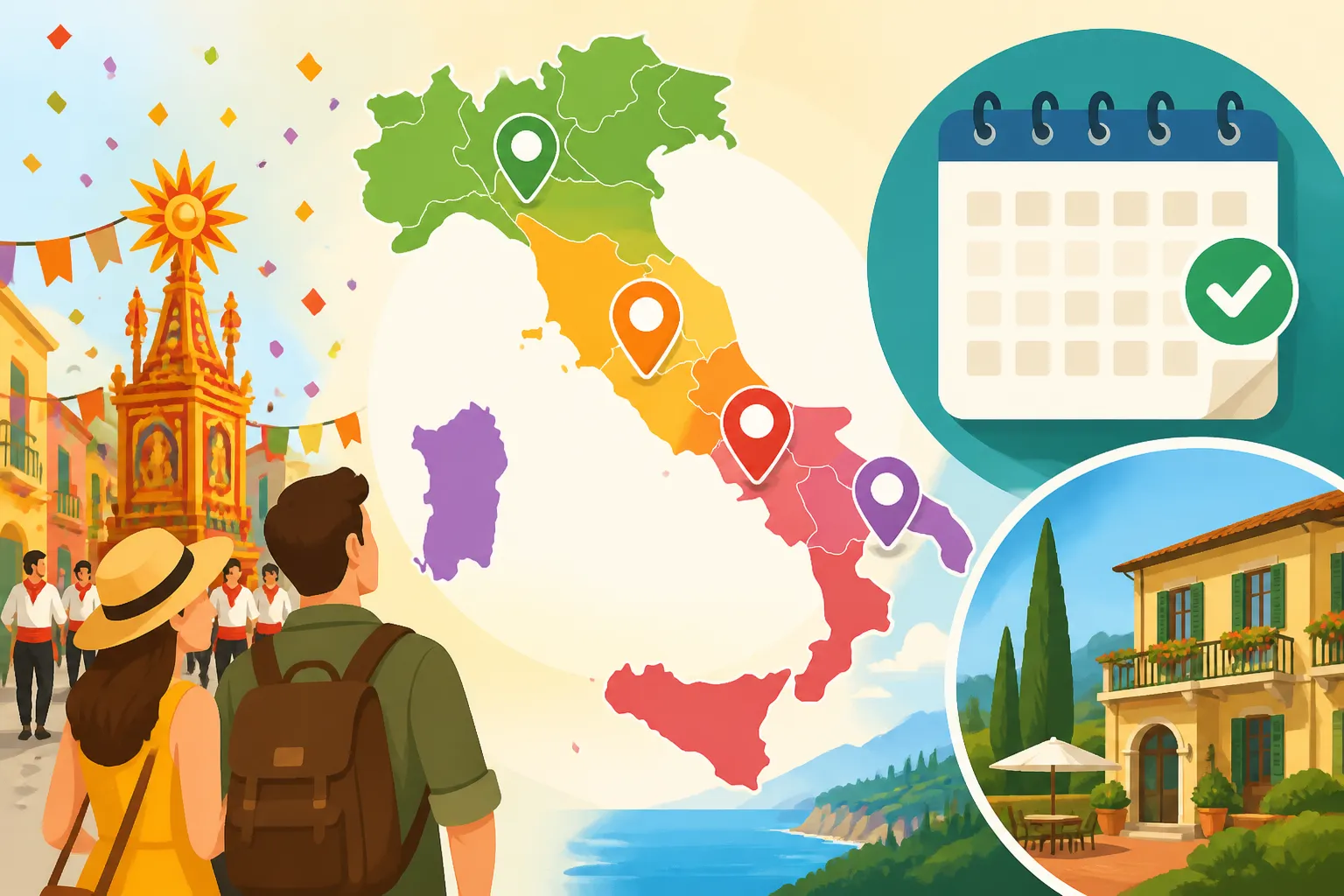
Just as Italy's landscapes shift dramatically from the snowy Alps to the sun-baked Sicilian coast, so do its festivals. Each region imbues its celebrations with its own unique flavor, reflecting local history, dialect, and traditions. What you experience in the north might be a world away from the south.
In the cooler, more industrial north, particularly regions like Piedmont and Lombardy, you might find more sophisticated wine and truffle festivals, often with a focus on high-quality produce and gourmet experiences. Venice, of course, stands alone with its world-renowned Carnival, a spectacle of masks, intricate costumes, and ancient masquerade balls that draw visitors from across the globe. The cities of Emilia-Romagna, known as Italy’s food valley, host countless sagre celebrating everything from Parmigiano Reggiano to balsamic vinegar, often with a strong emphasis on tradition and quality.
Moving south into Tuscany and Umbria, the festivals often lean into historical reenactments and religious processions, alongside fantastic olive oil and wine sagre. Think rolling hills, charming hilltop towns, and events steeped in centuries of history. The Infiorata in towns like Spello, where streets are carpeted with elaborate floral designs, is a breathtaking example of artistic devotion.
Further south, in regions like Campania, Puglia, and Sicily, the festivals tend to be even more fervent and vibrant. The feste patronali here are often grander, louder, and more deeply ingrained in daily life, with fireworks lighting up the night sky and passionate parades weaving through ancient streets. The food sagre embrace the fresh seafood and Mediterranean produce, offering a truly sensory explosion. Don't be surprised by the incredible energy and warmth you'll encounter – the hospitality is legendary.
Strategic Basing: Choosing Your Festival Hub
Okay, so you've picked a festival (or a few!). Now comes the crucial step: where are you going to stay? This decision can make or break your festival experience. You need a base that offers both convenience and comfort, a place to recharge after a day of revelry, and easy access to the action.
Proximity vs. Budget: Finding the Sweet Spot
The golden rule of festival accommodation is a classic dilemma: do you pay a premium to be right in the heart of the action, or do you save some euros by staying a bit further out and commuting? For most Italian festivals, especially the really popular ones, staying directly in the host town or village is going to be pricier, and rooms will book up incredibly fast. However, the convenience is unparalleled. You can stroll back to your hotel after a late-night procession, avoid struggling with crowded public transport, and truly feel immersed in the atmosphere.
If you're on a tighter budget or if the main town is simply fully booked (which happens!), staying in a nearby town or city and commuting is a perfectly viable option. This is where a little research into public transportation links becomes invaluable. For example, if you're attending a small village sagra, a charming agriturismo in the surrounding countryside could offer a more peaceful, authentic experience at a better price, though you’ll likely need a car. For larger city festivals, nearby towns often have excellent train or bus connections. Platforms like Booking.com offer incredible filtering options, allowing you to search by distance from a specific landmark or city, as well as by budget, helping you find that sweet spot.
Consider the practicalities:
- Parking: If you're driving, parking in a festival town can be a nightmare, especially with ZTLs (limited traffic zones) that can lead to hefty fines. Factor in parking availability at your accommodation or nearby, or consider parking further out and walking/taking a shuttle. Renting a Car in Italy: ZTLs, Insurance, and Driving Tips can shed more light on driving challenges.
- Public Transport: Research bus and train schedules. Many smaller towns have limited evening services, which could mean an early night if you don't have your own wheels or a taxi budget. For larger cities, Getting Around Italian Cities: Metro, Tram, and Buses is a good resource.
- Your Energy Levels: Festival days can be long and tiring. Do you really want an hour-long commute after dancing and eating all day? Be honest with yourself about your priorities!
Case Studies: Top Festivals and Ideal Base Locations
Let's look at a few examples to illustrate this decision-making process for some of Italy's most famous regional festivals:
Venice Carnival (Carnevale di Venezia)
- The Festival: A world-famous spectacle of masks, elaborate costumes, and public events, typically held in February/March.
- Ideal Base: Venice itself is the dream. Staying in a hotel or B&B right in the historic center means you're steps away from St. Mark's Square, the canals, and the masked revelers. You can truly live the Venetian dream.
- Booking Strategy: Book months in advance. Seriously, 9-12 months is not too early. Venice is always in high demand, but during Carnival, it's astronomical. Prices soar, and budget options vanish. For iconic events like the Carnival of Venice, you'll find everything from luxurious palazzo stays to charming B&Bs on Booking.com. Look for options on the main islands (San Marco, Castello, Dorsoduro) or even Lido for a slightly different vibe. You might want to review How to Experience Carnival in Venice as a Visitor for more specific tips.
- Alternative Bases: Mestre (on the mainland) or Padua. Both are well-connected by train to Venice Santa Lucia station, with frequent services. Mestre is closer and more practical for budget travelers, but lacks the magic of staying on the islands. Padua offers a beautiful city experience in its own right, with easy access to Venice for day trips. You’ll definitely save money, but you'll miss the late-night atmosphere.
Palio di Siena
- The Festival: A historic horse race held twice a year (July 2 and August 16) in Siena's Piazza del Campo, preceded by a spectacular medieval parade. It's intense, competitive, and truly unique.
- Ideal Base: Siena. To fully immerse yourself in the contrade (neighborhoods) culture and witness the preparations, practices, and celebrations, staying within Siena's historic walls is essential.
- Booking Strategy: Book at least 6-8 months ahead, if not more, especially for the prime dates. Accommodation within the city walls fills up extremely quickly. If you're eyeing the Palio di Siena, Booking.com will show you options right within the city walls, near the Piazza del Campo, or in the quieter but still central districts. You can get more details from How to See the Palio di Siena Horse Race.
- Alternative Bases: Florence or smaller Tuscan towns like San Gimignano or Monteriggioni. Florence is well-connected by bus to Siena, making it a feasible day trip. However, you'll miss the pre- and post-Palio atmosphere, which is arguably half the experience. Smaller towns require a car and more careful planning for transport into Siena on festival days, when roads can be busy or closed.
Infiorata di Noto (Sicily) or Spello (Umbria)
- The Festival: A springtime festival (usually May/June) where entire streets are covered in intricate carpets of flower petals, creating stunning temporary artworks.
- Ideal Base: Noto or Spello themselves. These towns are small, and being able to wander the petal-laden streets at dawn or late at night without worrying about travel is priceless.
- Booking Strategy: 4-6 months in advance is usually sufficient, though if you have a specific hotel in mind, earlier is always better. Accommodation options in these smaller towns can be limited. Booking.com will feature charming boutique hotels, B&Bs, and guesthouses.
- Alternative Bases: For Noto, Syracuse or Modica are good options, offering more accommodation choices and within a reasonable driving distance. For Spello, Assisi or Perugia are excellent choices, again with good public transport links, but having a car would give you more flexibility.
The Art of Timing: When to Secure Your Stay
When it comes to booking accommodation for Italian regional festivals, timing is absolutely everything. This isn't like popping into a random hotel in low season. These events draw huge crowds, both local and international, and the best places vanish quickly.
Early Bird Gets the Room: Why Procrastination is a No-Go
I can't stress this enough: for popular festivals, start looking on Booking.com at least 6-12 months out. I know, it sounds extreme, but it's the truth. Here's why you need to be an early bird:
- Limited Supply: Many Italian towns, especially the charming medieval ones, are small. They simply don't have hundreds of hotels. Boutique hotels, family-run B&Bs, and agriturismi have a finite number of rooms. When a major festival hits, demand far outstrips supply.
- Price Hikes: As availability dwindles, prices skyrocket. Booking early means you're more likely to secure a room at a reasonable rate before dynamic pricing kicks in and takes things to another level. You don't want to find yourself paying triple the usual rate just because you waited too long.
- Prime Locations Go First: Everyone wants to be near the action. The rooms with the best views, closest proximity to the main piazza, or easiest access to public transport are always the first to be snapped up. If you're particular about location, booking early is your only real chance.
- Flexibility: Booking early often gives you more flexibility. You might find more options with free cancellation or flexible dates, which can be a lifesaver if your plans shift slightly.
For less globally famous sagre in smaller, more remote villages, you might get away with booking 3-4 months in advance. But if it's a known event or in a highly desirable area, assume everyone else is thinking the same thing.
Flexibility and Cancellation Policies
While booking early is crucial, life happens. Plans change. That's why understanding and utilizing flexible booking and cancellation policies is a key strategy. Many hotels, particularly those found on Booking.com, offer various rates: a non-refundable rate (cheapest, but no changes allowed) and a flexible rate (a bit more expensive, but allows cancellation up to a certain date).
When you're booking 6-12 months in advance, I highly recommend opting for the flexible rate, even if it costs a little more. That small extra investment buys you immense peace of mind. It means you can lock in a great hotel and location at a decent price, and then if something unexpected comes up, you're not out a huge sum of money. Booking.com’s flexible booking filters can be a lifesaver here, allowing you to easily sort for properties offering free cancellation. Always read the fine print, though, to understand the exact terms and deadlines for cancellation.
Last-Minute Strategies (If You Dare)
Now, I'm usually not one to advocate for procrastination, especially with Italian travel. But sometimes, life throws you a curveball, or a spontaneous opportunity arises. So, what if you're trying to book last-minute for a festival?
It's going to be tough, I won't lie. Your options will be severely limited, and prices will likely be at their peak. However, a few strategies might work:
- Expand Your Search Radius: Look further out from the main festival town. You might find availability in neighboring villages that are a short drive or bus ride away.
- Be Flexible with Accommodation Type: Don't just look for hotels. Consider B&Bs, guesthouses, agriturismi, or even rooms in private homes if available.
- Check Daily: Sometimes cancellations happen, or a property might release a few more rooms. Keep checking Booking.com frequently, even a few times a day, leading up to the event. You might get lucky, but it requires dedication.
- Consider Mid-Week: If the festival spans a week, the busiest days are usually the weekends. You might find a single night or two available mid-week.
- Embrace the "Adventure": If you're a truly adventurous soul, you might try showing up in a nearby town without a booking and seeing what you can find. This is not for the faint of heart, especially during peak festival season, and it's definitely not a recommended strategy for families or those on a tight schedule.
Navigating the Local Experience and Beyond
So, you've wisely secured your accommodation on Booking.com, and you're all set for the festival. But the journey doesn't end there! To truly maximize your experience and avoid common expat headaches, a little more planning goes a long way.
Transportation Woes and Wins
Once you’re in Italy, getting around to and from your festival base requires some thought. Italian public transport can be wonderful but also, shall we say, unpredictable at times, especially on public holidays or during major events.
Trains: Italy has an excellent train network, with high-speed lines connecting major cities and regional trains serving smaller towns. If your festival is accessible by train, this is often the least stressful option. However, be aware that regional trains can be slow, and services to very small villages might be infrequent. Always check schedules in advance, particularly for the return journey, as late-night services might be limited.
Buses: For towns not on the train line, buses are your best friend. Local and intercity bus services connect most parts of Italy. Again, check schedules meticulously, especially around festival times, as routes might be altered or extra services added – or conversely, some services might be suspended due to road closures. Bus stations can sometimes be a bit chaotic, so give yourself plenty of time.
Driving: Renting a car offers the most flexibility, allowing you to explore the surrounding areas and reach more remote sagre. However, driving in Italy comes with its own set of challenges. As mentioned earlier, ZTLs (Zone a Traffico Limitato) in historic city centers can lead to unexpected fines. Parking can be a nightmare in popular festival towns, and roads can be extremely congested. If you do drive, plan your parking well in advance, research ZTL areas, and be prepared for slow going. Consider parking on the outskirts and walking or taking a local shuttle if available.
My advice: combine modes of transport. Use trains for intercity travel, and then consider local buses, taxis, or short-term car rentals for the final leg to smaller festival towns. And remember, during major festivals, everything moves slower. Build in extra time for delays.
Immersing Yourself: Food, Language, and Local Etiquette
To truly enjoy an Italian festival, you need to shed your tourist shell and dive headfirst into the local culture. This means more than just showing up; it means embracing the rhythms, the flavors, and the people.
Food, Glorious Food: At sagre, don't be shy! Join the communal tables, try everything on offer, and ask questions. It’s usually incredibly fresh, locally sourced, and prepared with love. If you see something unfamiliar, point and smile. Most vendors will be delighted to explain. This is where you'll discover regional delicacies you'd never find in a restaurant back home. Don’t forget to hydrate with local wine or water!
Basic Italian Phrases: While many Italians in tourist areas speak some English, stepping outside the main hubs for a regional festival means you'll encounter less of it. Learning a few basic Italian phrases – grazie (thank you), per favore (please), buongiorno (good morning), buonasera (good evening), scusi (excuse me), and asking for prices or directions – will go a long, long way. Locals truly appreciate the effort, and it can open doors to warmer interactions. Even a few words can significantly enhance your experience.
Local Etiquette: Italians are generally warm and welcoming, but there are a few cultural nuances to be aware of.
- Dress Code: While festivals are often lively, if you're visiting a religious procession or entering a church, dress respectfully. Shoulders and knees should be covered.
- Greetings: A simple buongiorno or buonasera when entering a shop or asking for help is customary. When meeting people, a handshake is typical, but close friends and family often exchange kisses on each cheek. Check out Italian Social Customs: Greetings, Gestures, and Personal Space for more detail.
- Patience: Things might not always run exactly on time. Embrace the Italian concept of dolce vita and just go with the flow. Trying to rush or getting frustrated won't help, and it’s likely to stress you out more than anyone else.
- Tipping: Tipping isn't as prevalent or expected in Italy as it is in some other countries, but rounding up a bill or leaving a small amount for excellent service is always appreciated. Tipping in Italy: When, Where, and How Much offers a comprehensive guide.
Table: Popular Italian Festivals & Booking Lead Times
| Festival Name | Region/City | Typical Month | Booking Lead Time (Accommodation) | Key Experience |
|---|---|---|---|---|
| Venice Carnival | Veneto/Venice | Feb/March | 9-12 months+ | Masks, costumes, masquerade balls, street art |
| Palio di Siena | Tuscany/Siena | July 2, August 16 | 6-8 months+ | Historic bareback horse race, medieval parade |
| Infiorata di Spello/Noto | Umbria/Sicily | May/June | 4-6 months | Floral carpet art on streets, religious devotion |
| Eurochocolate | Umbria/Perugia | Oct | 3-5 months | Chocolate tastings, workshops, sculptures |
| Umbria Jazz Festival | Umbria/Perugia | July | 4-6 months | World-class jazz concerts, open-air performances |
| Festa dei Ceri | Umbria/Gubbio | May 15 | 4-6 months | Frenetic race with giant wooden 'Ceri', devotion |
| Sagra della Castagna (Chestnut) | Lazio/Marroni | Oct | 2-3 months | Roasted chestnuts, local food, folk music |
| Regata Storica | Veneto/Venice | Sept | 6-9 months | Historic gondola parade, rowing races |
Ultimately, experiencing a regional festival in Italy is about more than just witnessing an event; it's about connecting with the soul of the country. By planning ahead, strategically choosing your base, and approaching the experience with an open mind and heart, you're setting yourself up for an unforgettable adventure. So, dive into the magic, plan ahead, and let Booking.com help you find that perfect base for your next Italian adventure.
Disclaimer
This article is for general informational purposes only and does not constitute professional advice. Laws, prices and regulations vary by location and change over time. Consult a qualified professional for guidance on your specific situation.