How to Set Up Gas and Water Service in an Italian Home
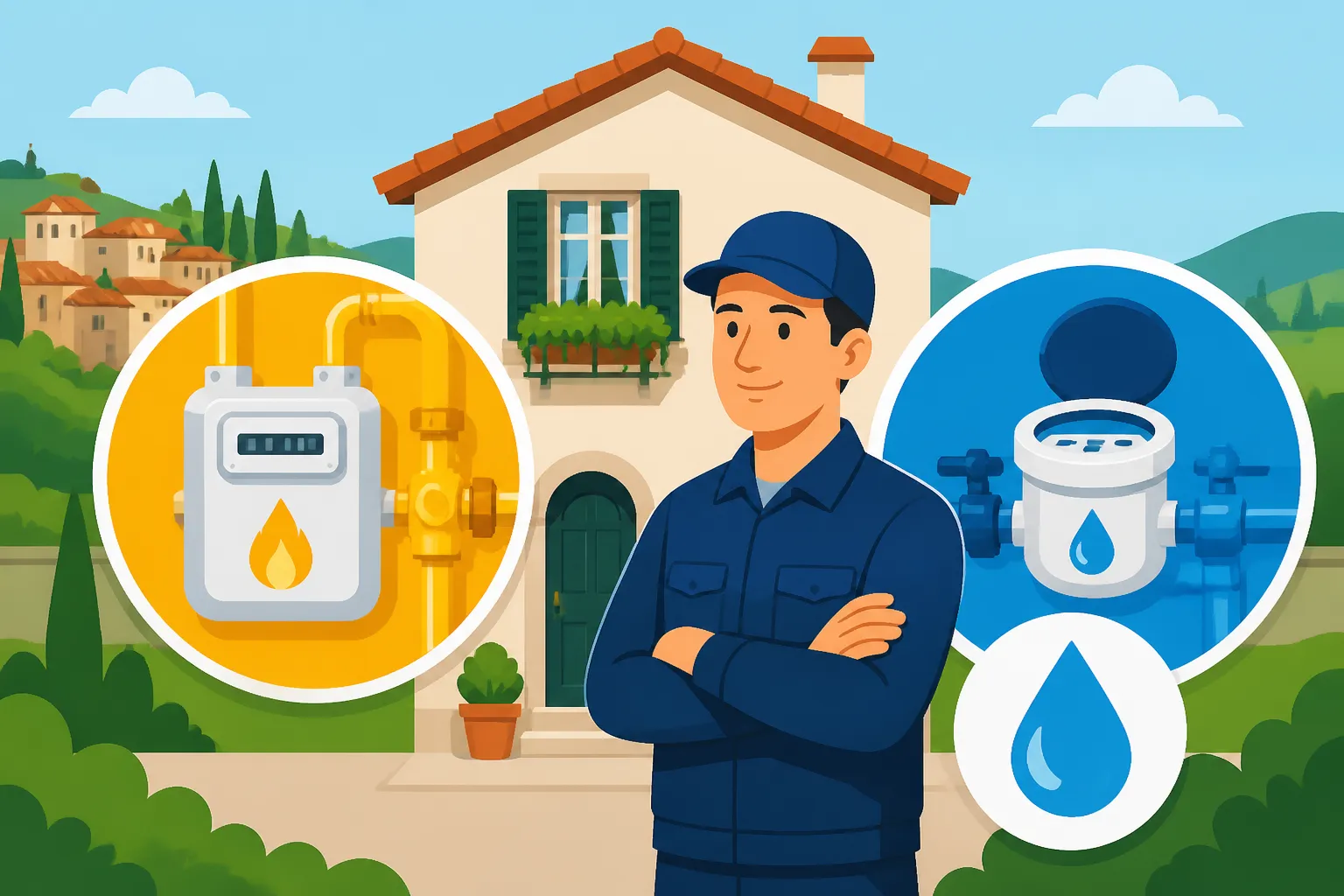
The bureaucratic maze of Italian utilities can turn even the most seasoned traveler into a frustrated mess of paperwork and phone calls. When I first signed the lease for my apartment in Florence, I spent my first four nights shivering in cold showers because I hadn't realized the previous tenant had physically "sealed" the gas meter. This guide will walk you through the exact steps to ensure your gas and water are flowing the moment you turn the key in the lock.
Disclosure: This post may contain affiliate links. We may earn a commission at no extra cost to you if you make a purchase through these links. Read full disclosure.
Understanding the Italian Utility Language: Voltura vs Subentro
Before you even pick up the phone or walk into a service center, you need to understand two Italian words that will dictate your entire experience: voltura and subentro. Getting these mixed up can lead to weeks of delays and unnecessary reconnection fees.
A voltura (transfer) is what happens when the previous tenant is still living in the property or has just left, and the gas and water are still active. You are essentially just swapping the name on the bill. This is the "holy grail" of utility setups because it is fast, usually takes about 5 to 7 working days, and doesn't require a technician to visit your home. If you are using a platform like Spotahome to find your housing, you should clarify with the landlord immediately if a voltura is possible.
A subentro (reactivation), on the other hand, is required when the meters have been deactivated and sealed. This usually happens if the property has been vacant for a while or if the previous tenant was particularly diligent about closing their accounts. This process is more expensive and time-consuming because it involves the local distributor sending a technician to remove the seals and verify the safety of the system. Knowing your Italian Rental Contracts 101: 4+4, 3+2, and Transitorio status is vital here, as the type of contract can sometimes affect the documentation the utility company requires for a subentro.
How to Set Up Your Gas Service
The gas market in Italy is divided into the mercato libero (free market) and the servizio di tutela (protected market), though the latter is being phased out. As an expat, you have the freedom to choose from dozens of providers like Eni Plenitude, Enel Energia, or Edison.
To get started, you need the PDR (Punto di Riconsegna). This is a 14-digit code that uniquely identifies your gas meter. You can find it on a previous tenant's bill or sometimes on a tag attached to the meter itself. If you cannot find the PDR, the provider might be able to locate it using the meter serial number (matricola del contatore), but having the PDR makes the process infinitely smoother.
Once you have your PDR and your Codice Fiscale: Why It’s Essential for Finance in Italy, you can contact a provider. I highly recommend doing this online or via a physical "point" (shop) in your city. If your Italian is still a work in progress, using an Airalo eSIM to ensure you have a stable data connection while navigating these Italian-only websites or using translation apps is a lifesaver. Most providers will ask you to upload a "Dichiarazione di Corretto Possesso dell'Immobile," which is a fancy way of saying you need to prove you have a right to live there by providing your registered lease details.
| Step | Action Item | Responsibility | Estimated Time |
|---|---|---|---|
| 1 | Locate the PDR Code | Tenant/Landlord | 1 Day |
| 2 | Choose a Provider | Tenant | 1-2 Days |
| 3 | Submit ID and Lease Info | Tenant | 1 Day |
| 4 | Technical Inspection (Subentro only) | Distributor | 5-10 Days |
| 5 | Contract Confirmation | Provider | 5 Days |
Navigating the Local Water Monopoly
Unlike gas and electricity, which are open to competition, water in Italy is managed by regional monopolies. In Rome, you’ll deal with Acea; in Florence, it’s Publiacqua; in Milan, it’s MM Spa. Because there is no competition, the bureaucracy can feel a bit more "old school."
To set up your water, you will need the Codice Utenza or the meter serial number. If you are doing a voltura, the most important piece of data is the meter reading (autolettura) on the day you take possession of the keys. Take a photo of the meter! I cannot stress this enough. I once had a provider try to charge me for 200 cubic meters of water used by the previous tenant because I didn't have a photo to prove the starting balance.
The application for water often requires a specific form regarding the "recapito fatture" (where the bills should be sent). While most companies offer digital billing, the initial setup might still involve physical mail. If you need to upgrade any of the plumbing fixtures or buy a high-quality filter once the water is running, Amazon Italy is your best bet for quick delivery to your new doorstep. Ensure you have completed your Registering Residency in Italy (Residenza and Anagrafe) because residents often pay a lower tariff for water than non-residents.
The Paperwork Mountain: What You Need to Have Ready
Italian utility companies thrive on documentation. If you are missing one scan, the whole process grinds to a halt. You should keep a folder on your computer (and a physical one) with the following:
- Identity Document: A valid passport or an Italian CIE (Carta d’Identità Elettronica).
- Codice Fiscale: You cannot do anything in Italy without this. If you haven't secured yours yet, check out How to Get a Codice Fiscale in Italy (and Why You Need One).
- The Registered Lease: The Contratto di Locazione must be registered with the Agenzia delle Entrate. The utility company will often ask for the registration number and date.
- Bank Details (IBAN): While you can pay via bollettino postale (paying at the post office), it’s a nightmare of long lines. Setting up a direct debit (domiciliazione bancaria) is much easier. You’ll need to know How to Open a Bank Account in Italy: Requirements and Tips to get this sorted.
- The Meter Codes: PDR for gas, POD for electricity, and the serial number for water.
Imagine you move into a beautiful top-floor attic in Trastevere. The view is incredible, but you realize the previous tenant had a dispute with the water company and the service was cut off for non-payment. In this scenario, you must provide a "Dichiarazione di Estraneità," a document stating you have no relation to the previous tenant and are not responsible for their debts. Without this, the water company may refuse to open a new account in your name.
Potential Pitfalls and How to Avoid Them
The most common frustration for expats is the "missing technician" syndrome. For a subentro, the distributor will give you a window—usually "between 8:00 AM and 2:00 PM"—during which a technician will arrive to unseal the gas meter. If you aren't there, you go to the back of the queue, which can be another 10 days. If your building has a complex entrance, make sure your name is clearly on the intercom (citofono). If it isn't, the technician might just leave.
Another hurdle is the Italian Homeowner Association (Condominio) rules. In some older buildings, the water is "centralized," meaning the building has one giant meter and the cost is split among the residents by the amministratore (building manager). In this case, you don't need to set up a private water account; you just pay your share through your monthly condo fees. Always ask your landlord: "L'acqua è autonoma o condominiale?"
If you are struggling with the heat or plumbing in the first few weeks, it's helpful to know who to call. Keep a list of Emergency Medical Numbers in Italy (112, 118, 1500) handy just in case of a gas leak or other household emergency. You may also need to consult the Understanding the Italian Land Registry (Catasto) if there is any confusion about the official address of the property, which sometimes differs from what is written on the front door.
Finalizing the Setup and First Bills
Once the contracts are signed and the meters are active, you aren't quite done. You need to register for the "Area Clienti" on your provider's website. This allows you to submit your autolettura (self-reading) every month. If you don't do this, the companies will "estimate" your usage based on average profiles, which often results in massive "conguaglio" (adjustment) bills at the end of the year that can total hundreds of Euros.
Setting up your home is a major milestone in your expat journey. While you wait for the gas to be turned on, you might want to look into other essentials like Finding Doctors and Hospitals in Italy or ensuring you understand the Cost of Healthcare in Italy: What Expats Need to Know so you are fully prepared for your new life. It feels like a lot of work now, but once you’re sitting in a warm apartment with a steaming plate of pasta, the struggle with the PDR codes will feel like a distant memory.
Disclaimer
The information provided in this guide is for general informational purposes only and does not constitute legal or professional advice. Utility regulations and market conditions in Italy can change frequently; therefore, we recommend verifying specific requirements with your local providers or a qualified professional.