How to Visit Lake Garda Without a Car
You land in Verona or Milan, look at Lake Garda on the map, and every rental site pushes you toward a car. Then you read about narrow lakeside roads, summer gridlock and limited parking. This guide shows you how to reach Garda by train, move between towns by ferry and bus, and plan a car-free trip that runs smoothly.
Disclosure: This post may contain affiliate links. We may earn a commission at no extra cost to you if you make a purchase through these links. Read full disclosure.
Getting to Lake Garda by Train
My first trip to Garda went wrong because I booked a hotel in a pretty northern village without checking how I would get there. I ended up hauling a suitcase across two buses and a ferry. On the next visit I started with the rail network, and that is the most useful decision you can make.
Lake Garda has no train station on its shoreline except at the southern end. The main Milan to Venice railway runs along the bottom of the lake, and two stations on that line are your gateways: Desenzano del Garda-Sirmione and Peschiera del Garda. Nearly every car-free itinerary begins at one of them.
Desenzano and Peschiera: The Two Rail Gateways
Desenzano sits on the southwestern corner. It is a real town with a working harbour, a promenade and plenty of restaurants. The station is uphill from the waterfront, so you face a short walk downhill or a local bus to reach the boats. Desenzano has some of the best ferry connections on the southern lake, and buses run from here to Sirmione.
Peschiera sits on the southeastern corner. It is a compact fortress town wrapped in canals and Venetian walls, which form part of a UNESCO-listed defence system. The station is closer to the water than in Desenzano, so walking to the ferry pier with luggage is easier. Peschiera is also the stop for Gardaland, the large theme park nearby, which runs its own shuttle from the station.
Both stations are served by regional trains and many high-speed and intercity services. Regional trains stop at both. Some faster trains skip one or the other, so check your exact service. If you have never used Italian regional rail, read Regional Trains in Italy: How to Use Them and Save before you go. One habit matters a lot: paper regional tickets without a fixed time must be stamped before boarding. The steps are in How to Validate a Regional Train Ticket in Italy.
Arriving From Milan, Venice, Verona or Florence
From Milan, trains run from Milano Centrale or Porta Garibaldi east toward Brescia and Verona. Desenzano comes first, then Peschiera. For a full picture of the route, including the faster trains, see Milan to Venice: Route Options and Seasonal Price Swings, which covers the line that passes the lake.
From Venice, you head west toward Verona and then continue to Peschiera. Many travellers combine the two: they spend a night in Verona and take a short regional hop to the lake the next morning. For that first leg, Venice to Verona: Fares, Frequency, and Which Train to Book explains which trains to choose.
From Verona, Peschiera is a quick regional ride and Desenzano is a little further. Verona Porta Nuova is also the departure point for ATV buses heading up the eastern shore, which I cover below. If you are building a trip around the city itself, How to Visit Verona From Venice or Milan is a good companion.
From Florence, the logical route runs north through Bologna to Verona Porta Nuova, then west on a regional train to Peschiera. You do not need to go through Milan at all. Verona is your hinge station, and approaching from the Venice side of the line keeps the journey simple.
Omio is useful if you want to compare train and coach options from these cities on one screen. It shows Trenitalia, Italo and bus operators together, which helps when you are working out whether a faster train or a cheaper regional suits your arrival time. For regional trains in particular, buying at the station machine works just as well.
The Northern Approach Via Rovereto
If you are coming from the Alps, from Trento or Bolzano, or from Austria over the Brenner, do not detour to the south of the lake. Take the train to Rovereto on the Verona to Brennero line. From there, Trentino Trasporti buses run down to Riva del Garda and Torbole at the northern tip.
This approach is ideal if you plan to base yourself in the north, which is the hub for windsurfing, climbing, mountain biking and hiking. It is also a good fit if Garda is one stop on a larger mountain trip. For that kind of route, How to Plan a Northern Italy Lakes and Mountains Trip shows how to string the regions together.
Getting Around the Lake by Ferry and Bus
Once you are at the lake, the shape of the water decides everything. Garda is long and narrow. It is wide and gentle in the south, then becomes a fjord-like trench between steep mountains in the north. The public ferry company, Navigazione Lago di Garda, links most of the main towns. Buses fill the gaps on each shore.
How the Ferry Network Actually Works
Several types of boat share the same piers, and it took me a summer to understand the difference.
| Boat type | What it is like | Best used for |
|---|---|---|
| Traditional ferry, motonave | Slow, open decks, frequent stops | Scenic hops between nearby towns |
| Fast service, aliscafo or catamarano | Enclosed cabin, fewer stops, faster | Long north to south journeys |
| Car ferry, traghetto | Carries vehicles and foot passengers | Crossing between Maderno and Torri del Benaco |
| Historic paddle steamer | Occasional heritage sailings | A memorable slow cruise |
The fast services charge a supplement on top of the standard fare. They are worth paying for if you are covering the length of the lake, for example from Desenzano to Riva. On a hot day, though, you see less from inside a sealed cabin. For a short scenic hop, the slow ferry is often the better experience.
The basic rhythm works like this:
- Check the timetable at the pier or on the operator’s own website. Schedules change between seasons.
- Buy your ticket at the pier office or machine before boarding. Day passes for a section of the lake can make sense if you plan several stops.
- Arrive early in high season. Popular departures from Sirmione, Limone and Malcesine can fill up, and staff will close the gangway when the boat is full.
- Confirm whether your boat is a fast service, because the supplement must be on your ticket.
- Keep your ticket until you leave the boat. Inspections do happen.
The schedule changes most between summer and winter. In peak months, boats run frequently along most of the lake. In the colder months, service drops sharply, and some northern and cross-lake routes may run only a few times a day or stop entirely. If you are travelling outside summer, plan around buses, not boats.
Buses Along the Eastern and Western Shores
Eastern shore, Veneto side. ATV buses run from Verona and Peschiera up through Lazise, Bardolino, Garda, Torri del Benaco and Malcesine toward Riva. This is the busiest bus corridor. It is easy to use, and it is a lifesaver in the shoulder season when ferries thin out. In July and August it shares the road with heavy traffic, so build in extra time.
Western shore, Lombardy side. Buses run from Desenzano and Brescia up through Salò, Gardone Riviera and Gargnano. The road north of Gargnano toward Limone runs through a long series of tunnels. Buses do use it, but for Limone the ferry is usually the more pleasant choice.
Northern tip. Trentino Trasporti runs the local network around Riva, Arco and Torbole, as well as the link to Rovereto station.
On rural lines, buy your ticket before boarding wherever you can, at a tabaccheria, a newsstand or a ticket office. Some drivers sell tickets, often at a higher price, and some do not sell them at all. Carry a small amount of change for the occasional route that still prefers cash.
Crossing From One Shore to the Other
This trips up many visitors. In the south, the lake is wide, but ferries criss-cross it easily: Desenzano, Sirmione, Peschiera, Lazise and Bardolino are all linked by boat. In the narrow north, the main crossing is the short hop between Limone and Malcesine. The car ferry between Maderno and Torri del Benaco is another useful crossing in the middle section.
Here is a typical scenario. You are staying in Malcesine and want to see Limone’s lemon houses. You take the short boat across, spend the afternoon there, and come back the same way. It is much quicker than going around the lake by road. Just check the time of the last boat back before you get comfortable at a waterfront aperitivo.
Choosing a Car-Free Base and Building Your Itinerary
Your base decides how much time you spend on boats and buses rather than enjoying the lake. If you choose well, the trip feels easy. If you choose badly, you spend each evening checking the last ferry home.
Which Towns Work Best Without a Car
| Town | Shore | Car-free access | Character | Good for |
|---|---|---|---|---|
| Desenzano del Garda | South-west | Train station plus frequent ferries | Lively, practical, good value | First-timers, rail travellers |
| Peschiera del Garda | South-east | Train station close to the pier | Compact, historic, walkable | Short stays, families, Gardaland |
| Sirmione | South | Bus from Desenzano, frequent ferries | Very scenic, crowded by day | Romantic stays, thermal spas |
| Bardolino and Lazise | East | ATV bus plus ferries | Relaxed, wine-focused | Wine lovers, slow travel |
| Malcesine | North-east | ATV bus plus ferries | Castle, cable car, mountains | Hikers, views |
| Riva del Garda | North | Bus from Rovereto station plus ferries | Alpine feel, active | Cyclists, climbers, sailors |
| Limone sul Garda | North-west | Mainly ferry | Dramatic setting, small | Short stays, photographers |
| Salò and Gardone Riviera | West | Bus from Desenzano and Brescia, ferries | Elegant, quieter | Gardens, culture |
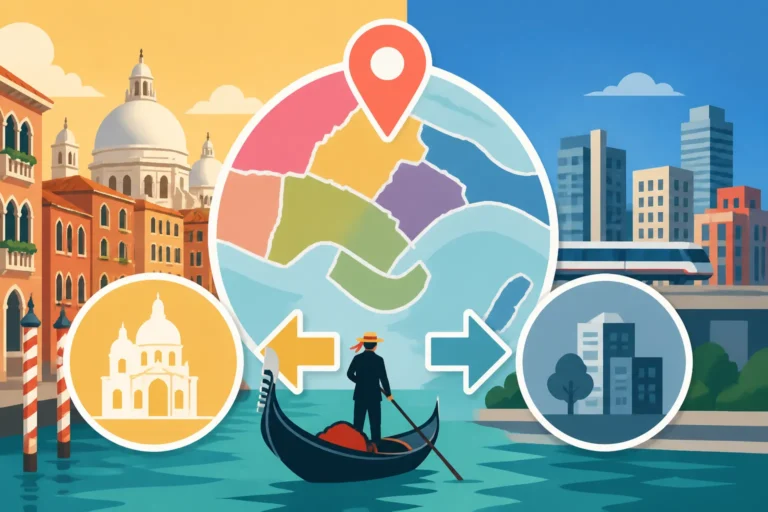
For a first visit, I recommend Desenzano or Peschiera. Being able to walk from the train station to your hotel makes a big difference, especially when you are tired and dragging a bag. Sirmione is beautiful, but it fills with day-trippers. It is better as a place to sleep than as a place to try to visit at midday. For a deeper comparison of north and south, see Where to Stay on Lake Garda: North Shore vs South Shore.
Booking.com is handy here because you can filter by distance and read reviews from guests who arrived without a car. Look for comments that mention “near the station” or “near the ferry”. Also ask whether a lakefront property sits on a pedestrian promenade or on a steep lane up from the shore. A hotel can look central on a map and still require a stiff uphill climb with luggage.
A Sample Three-Day Car-Free Itinerary
This plan uses Peschiera or Desenzano as a single base, so you never have to repack.
- Day one, the southern lake. Arrive by train. Drop your bags, then take a ferry or bus to Sirmione in the late afternoon, when the day crowds thin out. Walk to the Scaligero Castle and the Grotte di Catullo Roman ruins, and stay for sunset over the water.
- Day two, up the eastern shore. Take an ATV bus or a ferry north to Malcesine. Ride the rotating cable car up Monte Baldo for big views across the lake. In the afternoon, take the short boat to Limone, then return south on a fast service.
- Day three, wine and slow towns. Take a slow ferry to Bardolino or Lazise. Walk the lakeside path between them, stop for a tasting of the local red, and catch the train onward from Peschiera in the evening.
If you have more time, add a western-shore day for the Vittoriale degli Italiani in Gardone Riviera and the old waterfront in Salò. You could also spend two nights in Riva to explore the mountains around Arco. For cable car tickets, guided boat trips or wine tours, GetYourGuide is a convenient way to book, particularly in summer when you would rather not queue. Compare its prices with buying directly at the venue, because some local experiences are just as easy to book in person.
If you are still deciding whether Garda is the right lake for you, read The Italian Lakes: Como, Garda, and Maggiore Compared. If the main goal is to unwind, Which Italian Lake Is Best for a Relaxed Holiday? covers the quieter options.
Seasonal Timing and Crowd Strategy
Timing matters even more when you rely on public transport. In high summer, ferries run frequently but get crowded, and buses crawl along the shoreline roads. In the depths of winter, many hotels close and the timetables shrink to a minimum.
My favourite window is late spring or early autumn. The full ferry schedule is still running, the water is calm, and you can walk the lakeside promenades without the shoulder-to-shoulder August crush. Shoulder Season in Italy: May, June, and September Compared breaks down how each month feels around the country.
On a summer weekend, start early. The first boats of the morning are calmer, cooler and less crowded than the midday sailings. Saturdays and Sundays bring an influx of visitors from Milan, Verona and Brescia, so save your most ambitious ferry day for a weekday if you can.
Practical Pitfalls and How to Avoid Them
Car-free Garda is very doable, but a few predictable traps catch visitors out every year. These are the ones I have personally fallen into, or watched friends fall into.
Luggage, Last Departures and Strikes
Luggage. Ferries are generally relaxed about suitcases, but crowded summer boats and buses are not. A medium bag you can lift yourself works far better than two large cases. For rules on trains and coaches, see Luggage Rules on Italian Trains and Buses: Limits and Fees. If you are changing bases mid-trip, some hotels will hold bags after checkout so you can explore before your onward train.
Last departures. This is the biggest risk on a car-free trip. The final boat of the day can leave earlier than you expect, particularly outside July and August. Before you leave in the morning, take a photo of the return timetable at the pier. Check it again after lunch. If you miss the last ferry, a taxi back along the shore can be slow and expensive, and in smaller villages it may be hard to find one at all.
Strikes. Italian transport strikes, called scioperi, are usually announced in advance and often affect a single day. Regional trains, buses and sometimes ferries can be disrupted, although minimum guaranteed services usually run at set times. If a strike falls on your travel day, read Strikes in Italy: How Sciopero Days Work and How to Rebook and plan to arrive or leave on a different day.
Mistakes First-Timers Make
- Booking a northern base for a short stay. Riva and Limone are spectacular, but they are far from the rail line. For one or two nights, a southern base saves hours.
- Assuming every boat stops everywhere. Fast services skip smaller piers. Read the timetable for the specific departure, not just the route.
- Forgetting the station-to-centre gap in Desenzano. The station is uphill from the harbour. Plan for a local bus or a short walk.
- Relying on rideshare apps. App-based rides are limited around the lake. Local taxis exist, but you often need to book them by phone, especially in the evening.
- Ignoring the season. A plan that works perfectly in June can collapse in November, when ferry routes are reduced or suspended.
When a Short Car Rental Still Makes Sense
Being honest, there are a few situations where a car helps. If you want to explore the wine hills inland from Bardolino, or reach remote mountain trailheads above the western shore, a one-day rental in Riva or Desenzano gives you flexibility. For most visitors, though, the train, ferry and bus combination covers everything worth seeing. It also lets you swap traffic and parking stress for drifting across the water with a gelato in hand.
My advice is to start car-free, base yourself near a station or a pier, and decide whether you really need a car only once you are there. In most cases, you will find that you don’t.
Disclaimer
This article is for general informational purposes only and does not constitute professional advice. Laws, prices and regulations vary by location and change over time. Consult a qualified professional for guidance on your specific situation.