Rome, Florence, and Venice: Italy’s Great Cities Explorer’s Guide
Trying to navigate the "Big Three" of Italy for the first time is like trying to drink from a firehose of history, art, and carbohydrate-induced joy. I remember my first week in Rome, clutching a paper map and weeping silently near the Trevi Fountain because I couldn't find a pharmacy that was actually open. This guide solves the logistical nightmare of Rome, Florence, and Venice by providing a veteran-tested roadmap for your sanity.
Disclosure: This post may contain affiliate links. We may earn a commission at no extra cost to you if you make a purchase through these links. Read full disclosure.
Planning Your Golden Triangle Itinerary
The biggest mistake I see newcomers make is trying to "do" these three cities in five days. It is a recipe for physical exhaustion and emotional resentment toward some of the most beautiful places on Earth. You need to respect the pace of Italian life, which ironically moves both very slowly at the counter and very fast in the streets. When you are looking for places to stay, I always suggest checking Booking.com for apartments rather than hotels, as having a kitchen and a washing machine can be a lifesaver when you’ve been living out of a suitcase for a week.
Choosing the Right Duration
If you want to leave Italy still liking the country, you need at least three full days in Rome, two in Florence, and two in Venice. Anything less, and you are just checking boxes without actually seeing anything. Rome is a sprawling, chaotic beast that requires time just to figure out the bus system—or more accurately, to figure out that the bus system is a suggestion rather than a schedule. I’ve spent years here, and I still get lost in the winding alleys of Trastevere, which is why Choosing the Best Neighborhood in Italy’s Major Cities is such a vital first step in your planning process.
A ten-day trip allows for travel days between the hubs. Remember, moving between cities takes about half a day when you factor in packing, getting to the station, the train ride itself, and finding your new accommodation. If you rush, you’ll miss the "dolce far niente"—the sweetness of doing nothing. You want to have time to sit in a piazza and watch the nonni argue about soccer, not just sprint from the Colosseum to the Vatican.
The "Pace of Three" is my golden rule. Three major sights or activities per day is the absolute limit. One in the morning, one in the afternoon, and one "event" in the evening, like a nice dinner or a walk through a lit-up piazza. Any more than that, and your brain will stop recording memories. You'll just have a phone full of photos of statues you can't name and a very expensive case of blisters.
Seasonal Strategies and Timing
Italy in July and August is not a vacation; it is an endurance test. I have lived through Roman summers where the pavement feels like it’s melting your shoes, and the crowds at the Vatican are so dense you move as one giant, sweaty organism. If you have the flexibility, come in April, May, October, or November. The light is better for photos, the air is breathable, and the locals are significantly less grumpy because they aren't being crushed by the summer tourist wave.
Winter is also an underrated gem, especially for Venice and Florence. Venice in the mist is hauntingly beautiful and feels like a movie set from the 1940s. Just be prepared for "Acqua Alta" (high water) and pack some stylish waterproof boots. Florence in January is crisp and cold, but you can actually see the Birth of Venus without five hundred iPads blocking your view. Plus, the hearty Tuscan stews taste much better when there’s a chill in the air.
If you must come in the summer, treat your days like a Mediterranean local. Wake up early, see the big sights before 11:00 AM, and then retreat to your air-conditioned room or a shady park for a long lunch and a nap. Do not attempt to hike the Spanish Steps at 2:00 PM in August. You will see people fainting, and I promise you don't want to be one of them. Re-emerge after 6:00 PM for the "passeggiata" (evening stroll) when the temperature drops and the cities truly come to life.
Connecting the Dots Between Cities
Getting between Rome, Florence, and Venice is the easiest part of the trip, provided you use the high-speed rail. Don't even think about driving. Italian city centers are ZTL zones (Limited Traffic Zones), and the fines for accidentally driving into one will haunt your credit card for months. I always use Omio to compare the two main providers: Trenitalia (the national carrier) and Italo (the private competitor). Both are excellent, but Italo often has better deals if you book a few weeks in advance.
The Frecciarossa (Red Arrow) trains are the pride of Italy. They are clean, fast, and remarkably punctual. You can get from Rome to Florence in just over 90 minutes. It’s faster than going to the airport, and you arrive right in the heart of the city. Make sure you book a "Business" or "Prima" class seat if you have large suitcases; the extra space for luggage is well worth the few extra euros.
When you arrive at the stations—Termini in Rome, Santa Maria Novella in Florence, or Santa Lucia in Venice—be prepared for a bit of a sensory assault. These are busy hubs. In Rome, you’ll likely need to navigate the taxi line or the metro. In Venice, you’ll be stepping out of the station directly onto the Grand Canal, which is one of the few moments in life that actually lives up to the hype. Just keep a firm grip on your bags and ignore anyone who offers to "help" you with your luggage for an unsolicited fee.
Navigating the Eternal City: Rome
Rome is not a city you visit; it’s a city you survive and eventually fall in love with. It’s loud, it’s messy, and the bureaucracy is legendary. I once spent three hours trying to buy a bus pass because the machine was broken, the newsstand was closed for "siesta," and the tobacco shop had run out. But then I turned a corner, saw the Pantheon bathed in moonlight, and forgot all my anger. That is the Roman experience in a nutshell.
Neighborhood Nuances and Where to Bed Down
Choosing where to stay in Rome will dictate your entire experience. If you stay near Termini, you’ll have great transport links, but the area can feel a bit gritty at night. If you stay in Prati, you’ll be near the Vatican and enjoy wider, cleaner streets with a more "local" feel. For those who want the postcard-perfect Rome, look toward the Pantheon or Piazza Navona, but be prepared to pay a premium for the privilege of hearing church bells every hour.
I personally tell my friends to look at Monti. It’s the old Suburra—the ancient slums—but today it’s a hip, central neighborhood filled with vintage shops and great wine bars. It’s walking distance to the Colosseum but feels tucked away from the main tourist drag. Wherever you pick, check Booking.com for reviews that specifically mention noise levels. Roman walls can be thin, and Roman vespas are very loud.
If you are coming from the airport, don't let the "unofficial" taxi drivers hustle you. There is a fixed fare for taxis from Fiumicino to the city center, but many people find the train easier. You should definitely read How to Get From Rome Fiumicino Airport to the City Center before you land so you don't end up paying double for a ride in a car with no air conditioning.
Monumental Logistics and Avoiding the Lines
You cannot wing it in Rome anymore. The days of showing up at the Vatican Museums and waiting in a short line are dead. You need to book everything weeks, if not months, in advance. Use GetYourGuide to find skip-the-line tickets if the official sites are sold out. It might cost a bit more, but when you see the three-hour-long queue in the blistering sun, you will consider that extra ten euros the best investment of your life.
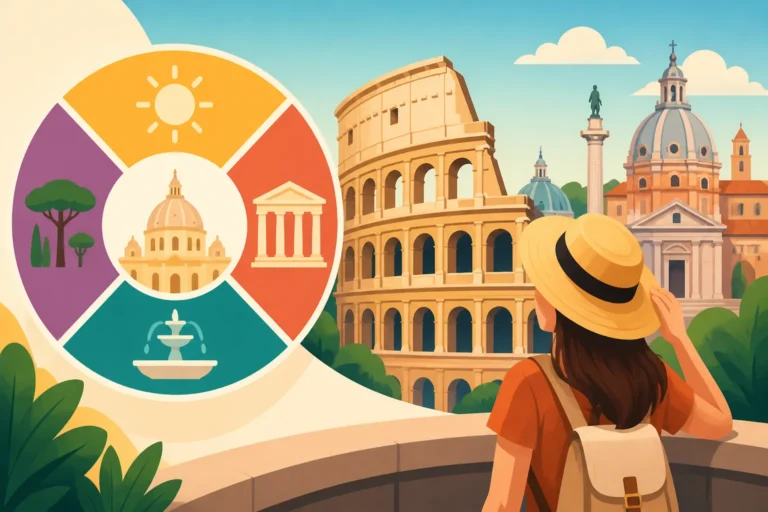
The "Big Three" in Rome are the Colosseum/Forum, the Vatican Museums/St. Peter’s, and the Pantheon. Do not try to do the Colosseum and the Vatican on the same day. Your feet will give out, and you’ll suffer from "statue fatigue." Space them out. Also, remember that St. Peter’s Basilica is free, but the line to get through security can be massive. Go at 7:00 AM when it opens; the light hitting the altar is spectacular, and you’ll have the place almost to yourself.
For a deeper dive into the technicalities of booking, I highly recommend checking out How to Skip the Lines at the Colosseum and Vatican. There are specific tricks, like entering the Forum through the Superiore entrance rather than the main Colosseum gate, that can save you an hour of waiting. Also, keep in mind that the Pantheon now requires a ticket, and on weekends, you must book it in advance. Don't be the person arguing with the guard at the door; it never works.
Rome After Dark and the Art of the Stroll
When the sun goes down, Rome transforms. The harshness of the daytime traffic fades, and the monuments are illuminated with a warm, golden glow. This is the time for the "Passeggiata." Start at the Spanish Steps, walk down Via del Corso, and head toward the Trevi Fountain. Yes, the fountain will be crowded, but there is a strange, communal magic in seeing everyone toss their coins into the water at 11:00 PM.
Cross the river into Trastevere for dinner. This neighborhood used to be the working-class heart of the city, and while it’s very touristy now, the back alleys still hold a lot of charm. Look for a "bottiglieria" where you can grab a glass of wine and sit on a stone step. It’s in these moments, away from the tour groups and the selfie sticks, that you actually feel the soul of the city.
Be wary of the restaurants with "tourist menus" featuring photos of food. Real Roman food is simple and seasonal. You want Cacio e Pepe, Carbonara, or Amatriciana. If a waiter is standing outside trying to pull you in, keep walking. You can find better advice on How to Find Authentic Restaurants in Italy (Not Tourist Traps) to ensure your Roman holiday doesn't end with a microwaved lasagna and a heavy bill.
The Cradle of the Renaissance: Florence
Florence (Firenze) is the elegant, refined cousin to Rome’s chaotic energy. It is a city designed for walking, built on a human scale, and packed with more high-density art than perhaps anywhere else on the planet. I lived in Florence for a summer and lost five pounds just from walking the bridges, despite eating my body weight in gelato every single afternoon.
Compact Living and the Walking City
The beauty of Florence is that you can walk from one side of the historic center to the other in about twenty minutes. This means you don't need to worry about buses or the metro (which doesn't exist anyway). However, those twenty minutes are spent on medieval stone paving that is unforgiving on the joints. Leave your heels at home. I’ve seen many a stylish traveler twisted an ankle on the uneven stones near the Duomo.
When booking your stay on Booking.com, try to stay on the "other" side of the river, the Oltrarno. It’s technically still the center, but it feels much more like a real neighborhood where people actually live and work. You’ll find artisan workshops—goldsmiths, leatherworkers, and paper marblers—who have been practicing their craft in the same spots for generations.
The Duomo is the North Star of the city. You will use it to orient yourself constantly. Keep in mind that while the Cathedral is free, climbing the Dome (Cupola) or the Bell Tower (Campanile) requires a specific ticket and a timed entry. If you are claustrophobic, skip the Dome climb. It’s narrow, steep, and you are trapped in a line of people. The view from the Bell Tower is just as good, and you actually get the Dome in your photos.
The Museum Maze: Uffizi and Accademia
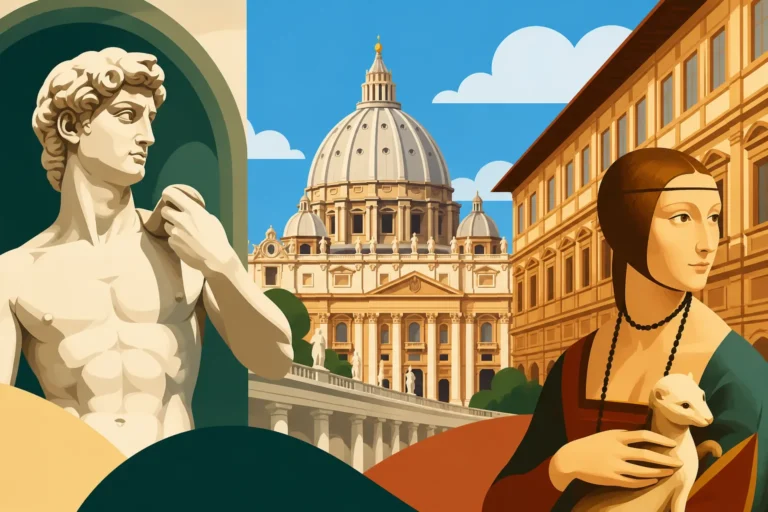
Florence is home to the Uffizi Gallery and the Accademia, which houses Michelangelo’s David. You must book these. There is no "maybe" here. If you show up at the Accademia without a ticket, you will spend your morning staring at a brick wall in a line that doesn't move. Seeing the David in person is a spiritual experience; the scale of the statue and the detail of the veins in his hands are things no photo can capture.
The Uffizi is one of the greatest art museums in the world, but it is exhausting. It’s shaped like a giant 'U' and goes on forever. My advice: pick a period (like the Early Renaissance or the High Renaissance) and focus on those rooms. Don't try to look at every single Madonna and Child, or you will suffer from "Stendhal Syndrome"—a real condition named after a French author who fainted in Florence from an overdose of beauty.
For those worried about the logistics of these massive institutions, I suggest reading How to Get Tickets for the Uffizi Gallery in Florence. It breaks down the various combo passes and the best times to visit (usually late afternoon when the cruise ship crowds head back to the coast). Also, don't forget the Pitti Palace and the Boboli Gardens across the river; they offer a much-needed breath of fresh air after the stuffiness of the galleries.
Oltrarno and the Search for the Real Florence
To escape the "Disney-fication" of the center, cross the Ponte Vecchio—or better yet, the Ponte Santa Trinita—into the Oltrarno. This is where the locals grab their morning espresso and where you’ll find the best "panino" shops. Find a place called "I' Santini" or any small hole-in-the-wall with a line of construction workers outside. That is where the real food is.
In the evening, head up to Piazzale Michelangelo. It’s a steep walk, or a short bus ride, but the view of the city at sunset is the quintessential Florence moment. You’ll see the Arno river snaking through the city, the red-tiled roofs, and the Duomo standing tall above it all. Bring a bottle of wine and some plastic cups, find a spot on the steps, and join the hundreds of others soaking in the view.
While you are exploring, pay attention to the "buchette del vino"—small wine windows in the walls of old palaces. They were used during the plague to sell wine without contact, and many have reopened recently. It’s a fun, quirky way to grab a glass of Chianti while you wander. Just remember that Florence takes its food seriously; What Time Do Italians Eat Lunch and Dinner is essential reading because if you show up for dinner at 6:30 PM, the only thing you’ll find open are the tourist traps you’re trying to avoid.
The Floating Dream: Venice
Venice (Venezia) is an impossibility. It shouldn't exist, and yet it does, defying the tides and the weight of history. It is the most polarizing city in Italy. People either find it magical or they find it a smelly, overcrowded maze. I firmly believe that if you hate Venice, you just stayed in the wrong part and followed the wrong crowd.
Life Without Cars: Navigating the Canals
The moment you step out of the Santa Lucia train station, your relationship with transport changes. There are no cars, no bikes, and no scooters. There are only boats and your own two feet. This is why packing light is non-negotiable. If you bring a 50-pound suitcase, you will have to haul it over multiple stone bridges with steps to reach your hotel. I have seen many people in tears doing this.
The Vaporetto (water bus) is your primary mode of transit. It’s expensive for a single ride, so buy a 24-hour or 48-hour pass if you plan on using it more than twice. It’s the best way to see the Grand Canal. Grab a seat at the very front or back of the boat and just watch the palaces go by. It’s the cheapest "cruise" in the world.
For a more private experience, you can hire a water taxi, but be prepared for the price. It can easily cost 100 euros to get from the station to your hotel. Gondolas are the other iconic option. They have fixed rates (usually 80-100 euros for 30 minutes), so don't try to negotiate. It’s a splurge, but doing it at twilight through the smaller, quiet canals is undeniably romantic, even if it feels like a cliché.
Sestiere Specifics: Choosing Your Neighborhood
Venice is divided into six "sestieri" (neighborhoods). San Marco is the center of everything, home to the Basilica and the Doge’s Palace. It is also ground zero for crowds. If you stay here, you will be surrounded by people 24/7. I suggest looking at Cannaregio or Castello. Cannaregio includes the old Jewish Ghetto and has a wonderful, wide "fondamenta" (canal-side walkway) where you can sit and eat "cicchetti" (Venetian tapas) with the locals.
Dorsoduro is another fantastic option. It’s the university district, so the vibe is a bit younger and more artistic. It’s home to the Peggy Guggenheim Collection and some of the best views across the water to San Marco. When searching on Booking.com, use the map view to ensure you aren't too far from a Vaporetto stop, or you'll be doing a lot of heavy lifting with your bags.
Venice is a labyrinth. Your GPS will fail you. The tall stone walls and narrow alleys play havoc with satellite signals. Learn to look for the yellow signs on the corners of buildings that point toward "San Marco" or "Rialto" or "Ferrovia" (the station). They are more reliable than Google Maps. Embrace getting lost; that is when you find the quiet piazzas where children are playing soccer and the only sound is the water lapping against the stone.
Island Hopping: Murano, Burano, and Torcello
If you have an extra day, get out of the main city and head to the northern lagoon. Murano is famous for its glassblowing. It’s very commercial now, but watching a master craftsman turn a glob of molten glass into a delicate horse in thirty seconds is still impressive. Just be prepared for the high-pressure sales pitch in the showroom afterward.
Burano is the most photogenic island in Italy. Every house is painted a different, vibrant color—legend has it this was so fishermen could find their way home in the fog. It’s famous for lace-making and "bussolai" (buttery cookies). It’s small, so it gets very crowded mid-day. Go early in the morning, grab your photos, and then head to Torcello.
Torcello is nearly empty now, but it was the original heart of the Venetian civilization. It has a stunning 7th-century cathedral with mosaics that rival those in Istanbul. It is incredibly peaceful and feels a world away from the hustle of San Marco. If you are feeling overwhelmed by the crowds, a few hours on Torcello is the perfect antidote.
Logistics and Transportation Mastery
Mastering the logistics of Italy is about understanding that the systems work, but they work on "Italian time." This means you need a backup plan and a sense of humor. I’ve spent more time in Italian train stations than I care to admit, and the secret to a stress-free trip is preparation.
High-Speed Rail Secrets
I cannot emphasize this enough: book your trains early. High-speed rail in Italy works like airline pricing; the earlier you book, the cheaper it is. If you wait until the day of travel, you might pay three times the price. For a comprehensive guide on how the system works, read High-Speed Trains in Italy: Trenitalia, Italo, Routes, and Savings. It will explain the difference between a "Regionale" and a "Freccia."
One thing that trips up visitors is validating tickets. If you have a high-speed ticket with a specific seat and time, you don't need to do anything. But if you have a paper "Regionale" ticket with no time on it, you MUST stamp it in the green or yellow machines on the platform before you board. If you don't, the conductor will fine you on the spot, and they do not care if you are a tourist.
Keep an eye on the "Binario" (platform) number on the big boards. They often aren't announced until 10 or 15 minutes before departure. Once it appears, join the stampede. Italian train stations are a bit of a contact sport. Also, be aware of "Scioperi" (strikes). They are usually announced in advance and often happen on Fridays. If there is a strike, the high-speed trains usually still run during "guaranteed windows," but local trains will be a mess.
Local Transit Hurdles
In Rome and Florence, the local buses and trams are your biggest hurdle. In Rome, you cannot buy a ticket on the bus. You must buy it at a Tabacchi (shops marked with a big 'T') or a newsstand before you board. Once you're on, validate it immediately in the little machine. Rome has recently introduced "Tap & Go" with credit cards on many buses, which is a game-changer, but have a paper ticket as a backup just in case the machine is "guasto" (broken).
Florence is small enough that you won't need the bus often, but if you do, the same rules apply. Venice, of course, is all about the Vaporetto. If you’re staying for three days, the 3-day pass is a massive money-saver. It also covers the tram and bus that run from Mestre (the mainland) to the island, which is useful if you’ve booked a cheaper hotel off the lagoon.
Taxis are expensive and cannot be hailed on the street. You have to go to a designated taxi stand or use an app like FreeNow (formerly MyTaxi). In Rome, Uber exists, but it’s only Uber Black and it’s very pricey. Stick to the official white taxis, and always make sure they turn the meter on. If they tell you the meter is broken, get out and find another car.
Luggage and Mobility
Italy is the enemy of heavy luggage. Between the train station platforms, the cobblestone streets, and the five-story walk-up apartments, you will regret every "just in case" outfit you packed. Aim for one carry-on sized suitcase and a backpack. If you must bring more, ensure your suitcases have sturdy, high-quality wheels that can handle the vibration of stone streets.
If you have a gap between checking out of your hotel and your train departure, use "Stow Your Bag" or the "Deposito Bagagli" at the train stations. It’s a few euros per bag and worth every cent to have a few hours of freedom without dragging your life behind you. In Venice, there are specialized porters with carts, but they are expensive. It’s better to choose a hotel near a Vaporetto stop.
For those with mobility issues, Italy can be challenging but not impossible. Rome and Florence are becoming more accessible, but Venice remains difficult due to the bridges. However, many Vaporettos are wheelchair accessible, and the city has maps showing "barrier-free" routes. Always email your hotel or Booking.com host beforehand to ask about elevators (ascensore). In Italy, the "first floor" is actually the second floor, so a "second-floor apartment" might mean climbing three flights of steep, narrow stairs.
Practical Survival Tips for the Great Cities
After a few days in Italy, you will either be in a state of bliss or a state of collapse. To ensure it’s the former, you need to understand the unwritten rules of Italian life. These are the things that make the difference between feeling like a tourist and feeling like a guest.
The Art of Dining and the Coperto
Dining in Italy is a ritual. It is not meant to be fast. If you want a quick meal, go to a "Tavola Calda" or a sandwich shop. In a restaurant, the table is yours for the night. The waiter will not bring the bill until you ask for it ("Il conto, per favore"). Bringing the bill unprompted is considered rude in Italy, as if they are kicking you out.
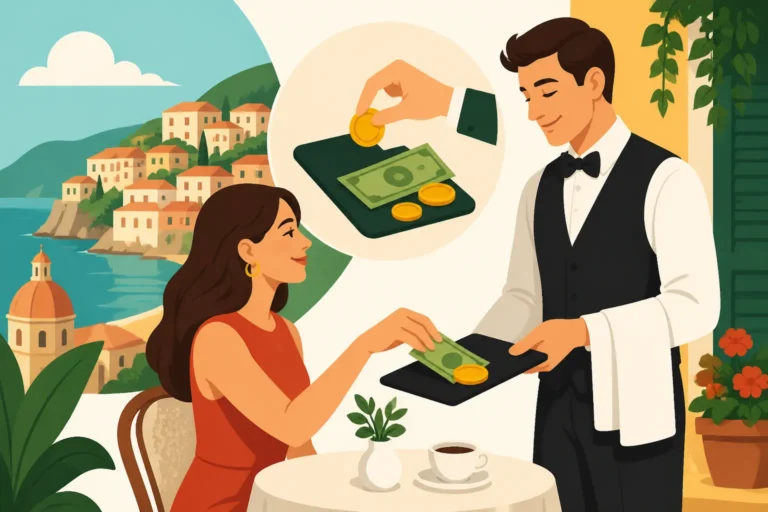
You will see a charge on your bill called the "Coperto." This is a standard cover charge (usually 2-4 euros) that covers the bread, the tablecloth, and the service. Because of the coperto, tipping is not expected in the way it is in North America. A few extra euros or rounding up the bill is appreciated, but a 20% tip is unnecessary and often confusing to the staff. You can find more details in What Is the Coperto on an Italian Restaurant Bill.
Also, be mindful of water. Tap water is safe to drink (and Rome has beautiful public fountains called "nasoni" where you can refill your bottle for free), but in restaurants, everyone drinks bottled water—either "naturale" (still) or "frizzante" (sparkling). If you ask for tap water, you might get a confused look, though it’s becoming more common in tourist areas.
Avoiding Tourist Traps and Scams
If a restaurant has a menu in five languages with photos of the food, it is a tourist trap. If someone hands you a rose or tries to put a "friendship bracelet" on your wrist, it is a scam. If a "gladiator" outside the Colosseum offers to take a photo with you, he will expect 20 euros for the privilege. Be polite but firm: "No, grazie," and keep walking.
Pickpocketing is a reality in crowded areas, especially on the Rome Metro (Line A is notorious) and around the Rialto Bridge in Venice. Use a crossbody bag that zips shut and keep it in front of you. Don't put your phone or wallet in your back pocket. I’ve lived here for years and have never been robbed, but that’s because I’m always aware of my surroundings in high-traffic spots. Read Staying Safe in Italy: Common-Sense Tips for Travelers for a more exhaustive list of what to watch out for.
Another common pitfall is the "Latte" mistake. If you go to a bar and order a "Latte," you will receive a glass of cold milk. You want a "Caffè Latte." Also, remember that drinking your coffee standing at the bar is cheaper than sitting at a table. In some places, the price triples the moment your bottom hits the chair. Learn the etiquette in How to Order Coffee in Italy Like a Local.
Budgeting for the Big Three
Italy can be as expensive or as cheap as you make it. Rome and Venice will eat your budget faster than Florence. A good rule of thumb is to budget 100-150 euros per person per day (excluding accommodation) for a mid-range experience. This covers museum entries, two solid meals, transport, and that inevitable third gelato of the day.
| City | Vibe | Primary Transport | Must-Eat Dish | Suggested Days |
|---|---|---|---|---|
| Rome | Chaotic, Ancient, Energetic | Walking / Metro / Bus | Carbonara | 3-4 |
| Florence | Refined, Artistic, Walkable | Walking | Bistecca alla Fiorentina | 2-3 |
| Venice | Magical, Quiet, Labyrinthine | Vaporetto / Walking | Cicchetti & Spritz | 2 |
To save money, make lunch your main meal. Many restaurants offer a "Pranzo di Lavoro" (worker’s lunch) for a fixed price that is much cheaper than the dinner menu. Also, take advantage of the free sights. Sitting on the steps of a piazza or entering a minor church often yields more "authentic" memories than the big-ticket museums. Just remember the dress code for churches: shoulders and knees must be covered. Carry a light scarf in your bag to wrap around you if needed.
Essential Reference for City Exploration
| Category | Rome Tips | Florence Tips | Venice Tips |
|---|---|---|---|
| Top Museum | Vatican Museums | Uffizi Gallery | Doge's Palace |
| Best View | Janiculum Hill | Piazzale Michelangelo | San Giorgio Maggiore |
| Avoid | Taxis in peak hour | Leather market scams | Eating in San Marco |
| Hidden Gem | Appian Way | Oltrarno workshops | San Polo backstreets |
Disclaimer
The information provided in this guide is based on personal experience and current travel conditions in Italy as of 2026. While I strive for accuracy, travel logistics, prices, and regulations (especially regarding visas and entry requirements) can change rapidly. Always verify specific details such as museum opening hours and train schedules on official websites before your trip. This guide is for informational purposes only and does not constitute legal or professional travel advice.