Italian Regional Cuisine: How Food Changes Across Italy
One of the most common pitfalls for newcomers to Italy, whether you're just visiting or putting down roots, is believing in the singular concept of "Italian food." You arrive with visions of pizza and pasta, perhaps a vague idea of gelato, and then you're hit with a culinary landscape so diverse it can be utterly bewildering. Trust me, I've been there, ordering a carbonara in Bologna and realizing it's a world away from the one I had in Rome. The truth is, there's no single "Italian cuisine"; rather, there's a dazzling tapestry of regional dishes, ingredients, and traditions that vary wildly from one piazza to the next. This guide is here to unravel that delicious mystery, showing you how food changes across Italy and helping you understand what to expect as you explore its incredibly rich gastronomic heritage.
Disclosure: This post may contain affiliate links. We may earn a commission at no extra cost to you if you make a purchase through these links. Read full disclosure.
The Myth of "Italian Food" and the Reality of Regional Diversity
Forget everything you think you know about a monolithic "Italian food" that can be neatly packaged into a single restaurant menu. That's a concept largely created for export. The real Italy, the Italy that locals know and love, is a country of twenty distinct regions, each with its own proud culinary identity, born from centuries of unique history, geography, and cultural influences. It's a land where culinary borders are often more rigidly defined than actual administrative ones, and locals will fiercely defend their traditional recipes against any perceived appropriation.
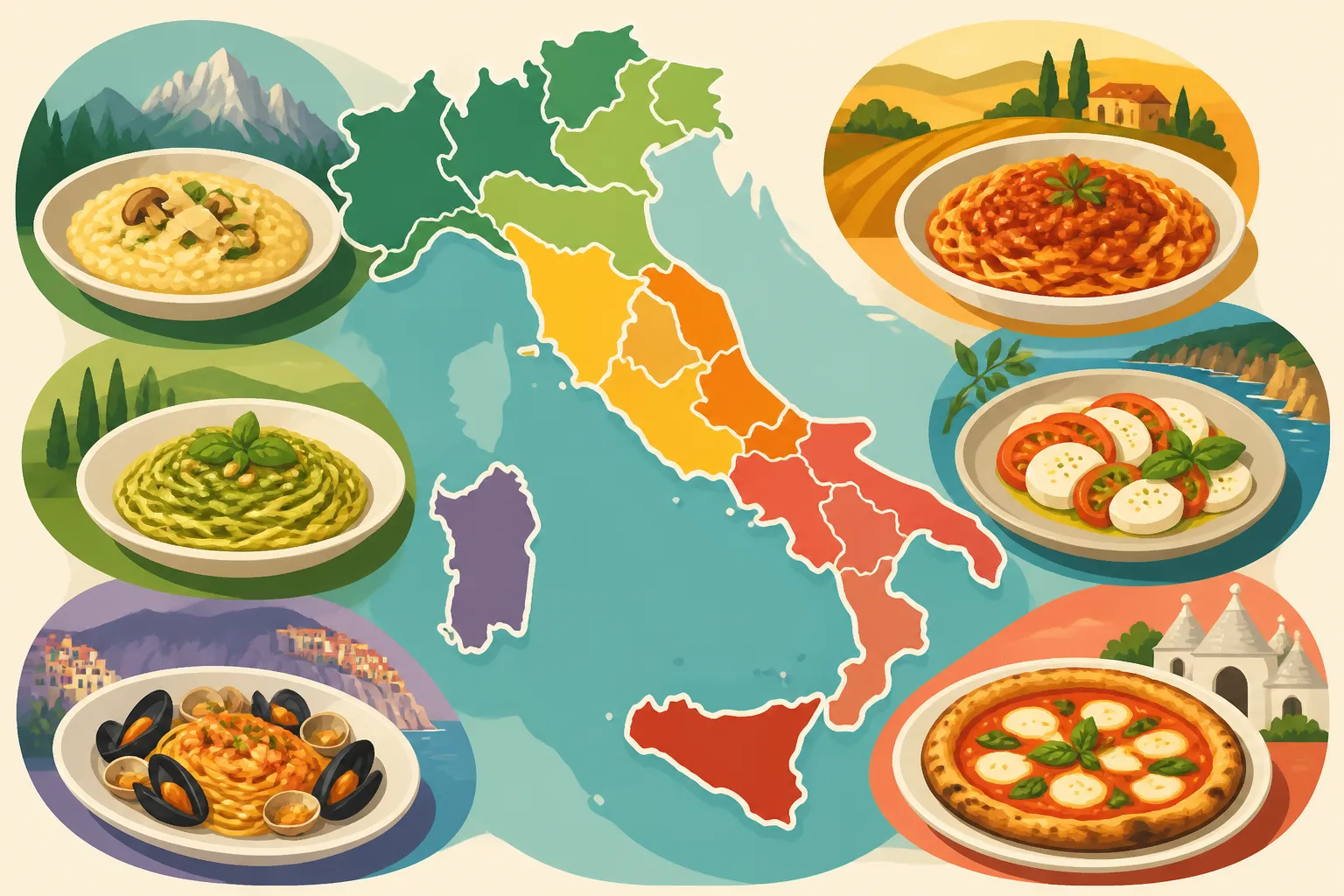
A Culinary Map: North, Central, and South
To truly appreciate Italian cuisine, you need to mentally divide the country into at least three broad culinary zones: North, Central, and South, including the islands. Each zone boasts characteristic ingredients, cooking methods, and flavor profiles that reflect its climate and historical development.
In the North, you'll find a cuisine that often features richer, heartier ingredients. Think butter instead of olive oil, polenta instead of wheat pasta as a staple, and a greater emphasis on rice dishes like risotto. The colder climate of the Po Valley and the proximity to Central European influences mean more use of dairy, cured meats, and dense, warming stews. As you move towards the coast, seafood naturally becomes more prominent, but the overall richness remains a defining characteristic.
Central Italy, particularly Tuscany, Umbria, and Lazio, offers a more rustic and robust cooking style. This is the land of olive oil, hearty bean dishes, grilled meats, and simple, flavorful preparations. The landscape of rolling hills, dense forests, and agricultural plains dictates a diet rich in legumes, game, and fresh produce. Roman cuisine, for example, is famous for its "fifth quarter" dishes – using offal – a testament to its ancient, thrifty roots.
Then, you journey South, where the Mediterranean sun shines brightest. Here, the food becomes lighter, brighter, and often spicier. Olive oil reigns supreme, along with a vibrant array of sun-ripened tomatoes, eggplants, bell peppers, and chili peppers. Seafood is king along the extensive coastlines, and fresh, simple preparations dominate. The influences of past Arab, Greek, and Spanish dominations are keenly felt in the ingredients and sweet pastries of regions like Sicily and Campania. Understanding these broad strokes is your first step to truly appreciating Italy's diverse culinary offerings, allowing you to anticipate and savor the unique delights each region holds.
Historical Roots of Regional Differences
The deep-seated regional differences in Italian food aren't just a matter of preference; they're direct reflections of Italy's tumultuous and fragmented history. For centuries, Italy wasn't a unified nation but a collection of independent city-states, kingdoms, and duchies, often under foreign rule. This political fragmentation meant that culinary traditions developed in isolation, shielded from outside influence except for those who conquered or traded directly with specific regions.
For example, the rich, buttery cooking of Piedmont shows strong French influence, a legacy of the House of Savoy. Lombardy's affinity for rice and saffron is a clear nod to its historical ties with the East via trade routes, giving us iconic dishes like risotto alla Milanese. Further south, Sicily's incredible array of sweet and sour dishes, its abundant use of nuts, citrus, and spices like saffron and cinnamon, speak volumes of its Arab and Norman past. Even the very staple of Italian cuisine, pasta, has diverse origins and forms, evolving differently across the peninsula based on available grains and local customs. In the North, fresh egg pasta (pasta all'uovo) is common, suited to richer sauces, while in the South, durum wheat pasta (pasta di semola) reigns supreme, better suited to the hot climate and simpler tomato or seafood sauces.
The poverty that plagued many regions for centuries also played a crucial role in shaping their culinary identities. "Cucina povera" or "poor man's cooking" is not just a concept but a cornerstone of Italian gastronomic philosophy, especially prevalent in the South and Central Italy. It emphasizes making the most of humble ingredients, minimizing waste, and extracting maximum flavor from simple fare. This led to ingenious dishes born of necessity, like ribollita in Tuscany, a hearty bread and vegetable soup, or pasta e fagioli (pasta and beans) found throughout the South. Understanding these historical roots helps explain why a dish like polenta is a Northern icon, while pizza, a quintessential "poor" food, exploded from the streets of Naples. When you taste a dish, you're not just savoring flavors; you're tasting centuries of history, resilience, and local pride.
Northern Italy: Rich Flavors and Hearty Staples
When you think of Northern Italian cuisine, set aside your notions of light tomato sauces and delicate olive oil drizzles. This is a region where the chill in the air and the historical abundance of dairy and livestock shaped a robust, comforting, and often lavish culinary tradition. The food here feels different, and rightly so, as it reflects distinct agricultural practices and climate.
Piedmont and Lombardy: Butter, Rice, and Meaty Delights
Venturing into the northwestern regions of Piedmont and Lombardy, you immediately notice a shift. Butter, not olive oil, often serves as the primary cooking fat, a legacy that hints at colder climates and Alpine influences. These regions are a paradise for those who appreciate rich, earthy flavors and substantial dishes.
Piedmont, nestled against the Alps, is famous for its truffles, particularly the prized white truffle of Alba. You'll find these aromatic fungi shaved over simple egg pasta (tajarin), creamy risottos, or even steak. The region is also the birthplace of Slow Food, an international movement dedicated to preserving local food traditions. Other Piedmontese specialties include agnolotti del plin, tiny pinched pasta parcels often filled with roasted meat, and brasato al Barolo, beef slow-cooked in the region's famous Barolo wine. Don't forget the incredible array of cheeses, from pungent Gorgonzola to delicate Robiola. The dessert scene is equally decadent, with bonet, a rich chocolate and amaretti pudding, being a local favorite. When exploring this gastronomic haven, consider using a service like Omio to book your train tickets; it's a great way to travel between cities like Turin and Milan and experience the distinct flavors each offers without worrying about driving.
Just next door, Lombardy offers its own culinary treasures, heavily influenced by its fertile plains and the abundance of rice paddies. Milan, its capital, is synonymous with risotto alla Milanese, a creamy saffron-infused rice dish, often served alongside ossobuco, braised veal shanks. Cotoletta alla Milanese, a breaded veal cutlet, is another iconic dish that rivals its Austrian counterpart, the Wiener Schnitzel. The region's vast dairy production also means fantastic cheeses, including Taleggio and Grana Padano, and it’s no surprise that rich mascarpone features heavily in desserts. The food here is designed to satisfy and warm, making it perfectly suited for the often-chilly weather. You might also want to look into booking unique culinary experiences in Milan or Turin through GetYourGuide to learn more about these fascinating food traditions firsthand.
Veneto and Emilia-Romagna: Pasta Perfection and Seafood from the Adriatic
Moving eastward, Veneto and Emilia-Romagna present yet another facet of Northern Italian cuisine, blending robust inland flavors with coastal influences and an undeniable mastery of pasta.
Veneto, home to Venice, combines influences from its Venetian lagoon, the Adriatic Sea, and the fertile plains. Rice remains important here, evident in dishes like risi e bisi (rice and peas), a Venetian spring classic that's somewhere between a soup and a risotto. Seafood, naturally, plays a huge role, with sarde in saor (sweet and sour marinated sardines) and baccalà mantecato (creamed codfish) being staples. Polenta, often served soft, grilled, or fried, accompanies many meat and fish dishes. In terms of dessert, tiramisu, though its origins are debated, is often attributed to the Veneto region, and it's certainly enjoyed with gusto here. You'll find a different kind of pizza in Venice, too, often thinner and crispier than its southern cousins.
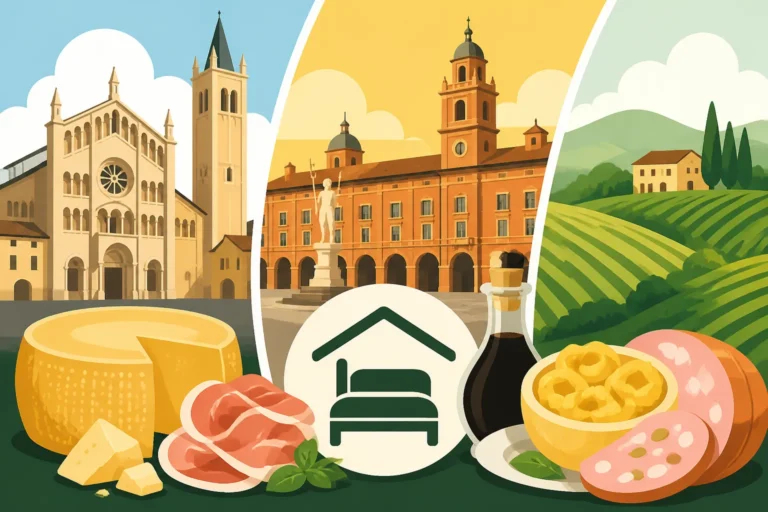
Emilia-Romagna, however, is arguably the culinary heartland of Italy, renowned globally for its incredible contributions to gastronomy. This is where you find Parma, home to Prosciutto di Parma and Parmigiano-Reggiano cheese; Modena, famous for its balsamic vinegar; and Bologna, the undisputed capital of fresh egg pasta. The pasta here is legendary: think tagliatelle al ragù (which Americans incorrectly call "spaghetti bolognese"), tortellini in brodo (tiny stuffed pasta in broth), and lasagne verdi. These pasta creations are rich, luxurious, and embody centuries of culinary perfection. The region also boasts a stunning array of cured meats beyond prosciutto, including mortadella and culatello. Given the sheer depth of culinary experience in Emilia-Romagna, a food-focused trip here is a must. You can find excellent accommodations near Bologna or Parma on Booking.com to ensure you're in the heart of the action, ready to explore everything from local markets to Michelin-starred restaurants. The regional cuisine here is a testament to the idea that simple, high-quality ingredients, combined with meticulous craftsmanship, can achieve culinary transcendence.
Central Italy: The Rustic Heart of Italian Cooking
As you journey into Central Italy, the culinary landscape shifts once again. Here, the flavors become more robust, relying on the land's bounty rather than the sea or rich dairy. This is a place where olive oil truly comes into its own, and the philosophy of cucina povera — making incredible meals from humble ingredients — deeply influences the cooking.
Tuscany and Umbria: Olive Oil, Wild Game, and Simple Elegance
Tuscany and its landlocked neighbor Umbria share a deep culinary connection, rooted in their hilly, forested landscapes and a strong emphasis on quality, often organic, produce. Both regions champion simplicity, believing that outstanding ingredients need little embellishment.
Tuscan cuisine is perhaps one of the most famous and beloved outside of Italy, thanks to its iconic ingredients and dishes. Extra virgin olive oil, often peppery and robust, is the lifeblood of Tuscan cooking. You'll find it drizzled generously over almost everything, from crusty bread (fettunta) to hearty vegetable soups. The region is famed for its bistecca alla Fiorentina, a thick-cut, rare-grilled Chianina steak that is an absolute must-try. Legumes, especially cannellini beans, appear frequently in dishes like fagioli all'uccelletto. Pork, wild boar, and game birds are also staples, reflecting the region's hunting traditions. Tuscan bread is famously unsalted, designed to complement the region's flavorful cured meats, cheeses, and richly seasoned stews. Don't miss ribollita, a thick, comforting vegetable and bread soup, or pappa al pomodoro, a tomato and bread soup that embodies the essence of Tuscan peasant cooking. Many visitors enjoy exploring the region's culinary delights, perhaps taking a day trip from Florence. You can learn more about finding the best experiences in Florence for First-Time Visitors: What to See and Skip to make the most of your trip.
Umbria, often called "the green heart of Italy," shares many similarities with Tuscany but has its own distinct charm. It's another treasure trove for truffles, particularly black truffles, which feature prominently in pasta dishes (strangozzi al tartufo) and egg preparations. Like Tuscany, Umbria prides itself on its olive oil, cured meats (especially pork products like prosciutto di Norcia), and lentils from Castelluccio. Game is also very popular, with wild boar often prepared as a rich ragù for pasta. The cuisine here feels perhaps even more rustic and unpretentious than Tuscany's, focusing on deep, earthy flavors that resonate with the natural beauty of the landscape. Visiting either of these regions is a true immersion into simple, elegant, and deeply flavorful Italian cooking.
Lazio and Rome: Ancient Recipes with Modern Appeal
Lazio, the region surrounding Rome, brings an ancient and robust culinary heritage to the table. Roman cuisine, in particular, is iconic and immediately recognizable, built on a foundation of humble ingredients and a pragmatic, no-waste philosophy.
Roman cooking is famous for its "four pastas": cacio e pepe, carbonara, amatriciana, and gricia. These dishes, while seemingly simple, require precise execution and quality ingredients to truly shine. Cacio e pepe, a minimalist marvel of Pecorino Romano cheese and black pepper, is deceptive in its depth. Carbonara, with its rich guanciale, egg yolk, and Pecorino, is a lesson in culinary alchemy. Amatriciana adds tomato to the gricia base (guanciale, Pecorino, black pepper), creating a savory, satisfying sauce. These pasta dishes are deeply ingrained in the city's identity, representing a comfort food par excellence. If you're pondering Pasta in Italy: Regional Shapes and Sauces to Try, Rome's offerings are certainly a highlight.
Beyond pasta, Roman cuisine makes extensive use of the "quinto quarto" (fifth quarter), referring to offal. Dishes like coda alla vaccinara (oxtail stew) and trippa alla Romana (tripe in tomato sauce) are testaments to a history where no part of an animal was wasted. Artichokes are another beloved Roman ingredient, prepared alla Romana (braised with herbs) or alla Giudia (deep-fried until crispy). You'll find many traditional trattorias in Rome where these historic recipes are lovingly preserved. To truly immerse yourself in the local dining scene and perhaps uncover some hidden gems, exploring Rome for First-Time Visitors: Neighborhoods and Highlights can provide invaluable insights into where and how to eat like a true Roman. The food of Lazio, especially Rome, is a delicious journey back in time, celebrating centuries of culinary wisdom.
Southern Italy and the Islands: Sunshine, Seafood, and Spicy Notes
When you cross into Southern Italy, you immediately feel the warmth, not just from the Mediterranean sun but also in the vibrant, expressive flavors of the cuisine. Here, the cooking is lighter, brighter, and deeply intertwined with the region's long coastlines, volcanic soils, and history of diverse cultural influences. Olive oil is the undisputed king, and fresh, seasonal produce dictates the menu.
Campania and Puglia: Pizza, Tomatoes, and the "Cucina Povera"
Campania and Puglia epitomize the sunny, vibrant flavors of Southern Italy, each with its own iconic contributions to the national table. Their cuisines are characterized by a deep respect for local produce, particularly tomatoes, and an abundance of fresh seafood.
Campania, with Naples as its capital, is quite simply the birthplace of modern pizza. Neapolitan pizza, with its soft, chewy crust, simple San Marzano tomato sauce, fresh mozzarella, and basil, is a UNESCO-protected culinary art form. It's a revelation compared to what often passes for pizza elsewhere. Beyond pizza, Naples offers an incredible array of fried street foods (frittura napoletana), exquisite seafood dishes, and rich, sweet pastries like sfogliatella and pastiera. The region's volcanic soil, especially around Mount Vesuvius, yields exceptionally flavorful tomatoes, lemons, and other produce, which are central to many dishes. When visiting, a trip dedicated to the culinary wonders of Naples is highly recommended; our Naples City Guide: Food, History, and the Bay can help you navigate this delicious city. From pasta with clams (spaghetti alle vongole) to mozzarella di bufala (buffalo mozzarella), Campania's food is a celebration of fresh, high-quality ingredients and straightforward, flavorful preparation.
Puglia, the "heel" of Italy's boot, is often called the "breadbasket" and "olive oil capital" of Italy. Its flat, fertile plains are blanketed with olive groves and durum wheat fields. Consequently, its cuisine is dominated by vegetables, excellent pasta, and seafood. Puglia's cucina povera tradition shines through in dishes like orecchiette con le cime di rapa (ear-shaped pasta with turnip greens), a quintessential regional dish. The region also excels at producing fantastic artisanal bread, notably from Altamura, and a variety of unique cheeses like burrata. Along its extensive coastline, grilled octopus (polpo alla griglia) and fresh fish are abundant. The food here is often hearty but never heavy, showcasing the pure flavors of its agricultural bounty and the Adriatic Sea. For those interested in exploring this beautiful region, platforms like Booking.com can help you find charming masseria (farm stays) to truly experience Puglian hospitality and cuisine.
Sicily and Sardinia: A Melting Pot of Mediterranean Influences
The islands of Sicily and Sardinia offer cuisines that are distinct from mainland Italy, reflecting their unique histories as crossroads of the Mediterranean and their island isolation.
Sicily, the largest island in the Mediterranean, boasts a cuisine that is a vibrant tapestry woven from centuries of Arab, Greek, Spanish, and Norman influences. This history has imbued Sicilian food with an exotic flair, a love for sweet and sour combinations (agrodolce), and generous use of spices, nuts, and citrus. Iconic dishes include arancini (fried rice balls), pasta alla Norma (pasta with eggplant, ricotta salata, and tomato), and caponata (a sweet and sour eggplant relish). Seafood is paramount, from fresh tuna to swordfish and sardines. The island's sweets are legendary, with cannoli, cassata, and granita being world-famous. Sicilian pastries are often elaborately decorated and rich, showcasing its vibrant cultural past. Exploring Sicily for Travelers: Cities, Coast, and Volcanoes will give you a sense of just how diverse and flavorful this island's culinary offerings truly are.
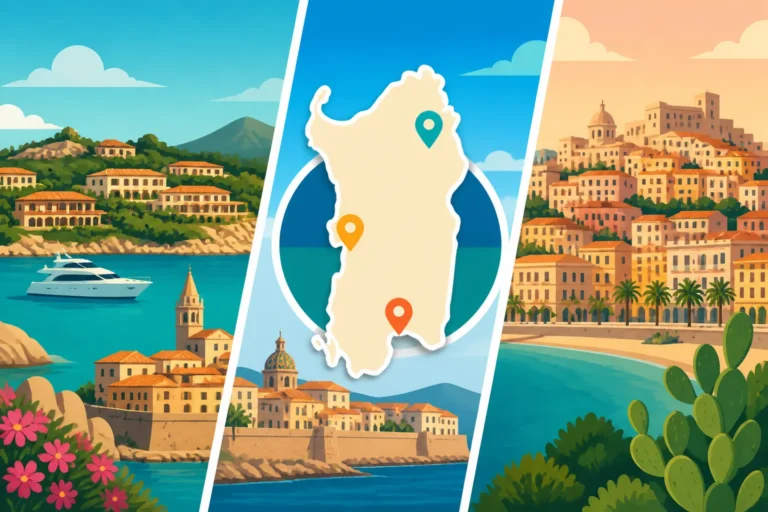
Sardinia, with its rugged, mountainous interior and pristine coastline, has a cuisine that is distinctly different. While seafood is important along the coast, the island's interior has a strong pastoral tradition, meaning lamb, goat, and suckling pig (porceddu) are central to its culinary identity. The famous pane carasau (music paper bread), thin and crispy, is a staple. Sardinia also has unique pasta shapes like malloreddus (Sardinian gnocchetti) and culurgiones (stuffed pasta similar to ravioli). Cheeses, particularly pecorino sardo, are a significant part of the diet. The island's isolation has preserved ancient recipes and a strong sense of culinary independence. While less globally known than Sicilian food, Sardinian cuisine offers a fascinating glimpse into a more ancient Mediterranean diet, often emphasizing roasted meats, hearty stews, and a strong sense of tradition.
Navigating Italy's Culinary Landscape as a Traveler
Understanding the nuances of Italy's regional cuisines is one thing, but actually putting that knowledge into practice while traveling can be another challenge entirely. With so much deliciousness to explore, it’s easy to feel overwhelmed. Here are some tips to help you navigate and truly savor Italy's diverse food scene, no matter where your adventures take you.
How to "Eat Like a Local" in Any Region
Eating like a local in Italy isn't just about ordering the right dish; it's about embracing the rhythm, the traditions, and the unspoken rules of Italian dining. The first and most important rule is to research local specialties before you go. Every town, every village, often has a dish or ingredient it's particularly proud of. A quick search for "cucina tipica di [city/region]" will give you a wealth of information. Don't be afraid to ask locals for recommendations – a friendly "Cosa mi consiglia di mangiare di tipico qui?" (What do you recommend eating that's typical here?) can open doors to incredible culinary experiences.
Next, embrace seasonal eating. Italian cuisine is inherently seasonal, dictated by what's fresh and abundant. If you're in Sicily in summer, expect copious amounts of eggplant and tomatoes. If you're in Piedmont in autumn, truffles will be on every menu. Don't go searching for strawberries in winter or a hearty lentil soup in July; you'll likely be disappointed, or worse, served something out of season and therefore inferior. Visiting local markets is an excellent way to see what's in season and get a feel for the local produce. This naturally leads to understanding How to Eat Like a Local in Italy: Meal Structure and Timing, which is key to enjoying meals as Italians do.
Finally, don't be afraid to venture beyond the main tourist areas. While many central trattorias cater to tourists, some of the best, most authentic food is found on quieter side streets or in less-frequented neighborhoods. Look for places filled with Italian speakers, especially at lunchtime. Often, a handwritten menu or a simple exterior is a good sign. And remember, "Italian food" is a myth – so don't be surprised if your favorite dish from one region is completely absent or different in another. This diversity is what makes culinary exploration in Italy so rewarding. Services like GetYourGuide offer curated food tours in many Italian cities, which can be a fantastic way to discover authentic local eateries and specialties with the guidance of a knowledgeable local.
Essential Phrases and Dining Etiquette
Navigating the dining scene in Italy can feel daunting if you're not familiar with the language or customs, but a few key phrases and an understanding of basic etiquette will go a long way. Italians appreciate any effort you make to speak their language, even if it's just a few words.
Start with greetings: "Buongiorno" (good day) or "Buonasera" (good evening) when entering, and "Grazie" (thank you) and "Arrivederci" (goodbye) when leaving. When ordering, "Vorrei…" (I would like…) or "Posso avere…?" (Can I have…?) are incredibly useful. If you have dietary restrictions, learning phrases like "Sono vegetariano/a" (I am vegetarian) or "Sono allergico/a a…" (I am allergic to…) is crucial. Don't be shy about asking for recommendations: "Qual è il piatto del giorno?" (What's the dish of the day?) or "Cosa mi consiglia?" (What do you recommend?). For a deeper dive into common interactions, check out Ordering Food and Drinks in Italian: A Practical Phrasebook.
Beyond language, understanding Restaurant Etiquette in Italy: Coperto, Courses, and the Bill is vital. Remember that "coperto" (cover charge) is normal and not a tip. Tipping is generally not expected in the same way it is in North America; round up the bill or leave a few extra euros if service was exceptional. Meals are a social event, often lasting for hours, particularly dinner. Don't expect rushed service. Courses are typically ordered separately: antipasto (starter), primo (first course, usually pasta or rice), secondo (main course, meat or fish), and contorno (side dish). It's perfectly fine to order just a primo or just a secondo if you're not ravenous. When you're ready for the bill, a polite "Il conto, per favore" will get your waiter's attention.
And finally, a note on coffee: it's a huge part of Italian culture. Ordering a cappuccino after lunch or dinner is generally not done by locals; it's considered a breakfast drink. Opt for an espresso instead. If you want to master the art of coffee ordering, our guide on Coffee Culture in Italy: How to Order Like a Local is indispensable. Embrace these small cultural nuances, and your dining experiences in Italy will not only be more delicious but also more authentic and enjoyable.
| Region/Zone | Key Ingredients & Staples | Signature Dishes | Common Fats | Notes |
|---|---|---|---|---|
| North | Butter, Rice, Polenta, Beef, Pork, Game, Truffles, Dairy | Risotto, Ossobuco, Polenta, Agnollotti, Lasagne | Butter, Lard | Hearty, rich, French/Alpine influences |
| Piedmont | Truffles, Hazelnuts, Beef, Wine | Agnolotti del Plin, Brasato al Barolo, Tajarin | Butter | Rich, earthy, Slow Food movement birthplace |
| Lombardy | Rice, Saffron, Veal, Cheese | Risotto alla Milanese, Ossobuco, Cotoletta Milanese | Butter | Dairy-heavy, substantial dishes, Central European influence |
| Veneto | Rice, Seafood, Polenta, Peas | Risi e Bisi, Sarde in Saor, Baccalà Mantecato | Olive Oil | Blend of sea and land, unique sweet and sour flavors |
| Emilia-Romagna | Egg Pasta, Pork, Parmigiano-Reggiano, Balsamic, Prosciutto | Tagliatelle al Ragù, Tortellini, Lasagne | Olive Oil | Culinary heartland, rich cured meats, exquisite fresh pasta |
| Central | Olive Oil, Legumes, Wild Game, Lamb, Pecorino Cheese | Bistecca Fiorentina, Ribollita, Pasta Romana | Olive Oil | Rustic, robust, cucina povera origins |
| Tuscany | Olive Oil, Beans, Steak, Wild Boar, Herbs | Bistecca alla Fiorentina, Ribollita, Pappa al Pomodoro | Olive Oil | Simple, elegant, high-quality ingredients, famous unsalted bread |
| Umbria | Truffles (black), Pork, Lentils, Game | Strangozzi al Tartufo, Prosciutto di Norcia, Wild Boar | Olive Oil | Earthy, rustic, similar to Tuscany but perhaps even simpler |
| Lazio (Rome) | Pecorino Romano, Guanciale, Artichokes, Offal, Tomatoes | Cacio e Pepe, Carbonara, Amatriciana, Coda alla Vaccinara | Guanciale | Ancient, pragmatic, intensely flavorful pasta, "fifth quarter" |
| South | Olive Oil, Tomatoes, Seafood, Eggplant, Chili, Citrus | Pizza, Orecchiette, Arancini, Pasta alla Norma | Olive Oil | Lighter, brighter, Mediterranean, spicy notes |
| Campania | Tomatoes, Mozzarella, Seafood, Pizza, Lemons | Pizza Napoletana, Spaghetti alle Vongole, Sfogliatella | Olive Oil | Birthplace of pizza, vibrant, fresh seafood, rich pastries |
| Puglia | Olive Oil, Durum Wheat, Vegetables, Seafood | Orecchiette con Cime di Rapa, Burrata, Pane di Altamura | Olive Oil | "Breadbasket," strong vegetable focus, coastal seafood |
| Sicily | Seafood, Eggplant, Citrus, Nuts, Spices, Ricotta | Arancini, Pasta alla Norma, Cannoli, Cassata | Olive Oil | Diverse influences (Arab, Greek), sweet & sour, rich desserts |
| Sardinia | Lamb, Pork, Pecorino, Pane Carasau, Seafood | Porceddu, Malloreddus, Pecorino Sardo | Olive Oil | Pastoral traditions, unique island flavors, ancient recipes |
Disclaimer
Please remember that while we strive for accuracy, the information provided in this guide is for general informational purposes only and may not be exhaustive or perfectly up-to-date. Culinary traditions and local regulations can change, and individual experiences may vary. Always cross-reference information and consider consulting local experts or official sources when making important decisions, especially concerning travel plans or dietary restrictions.