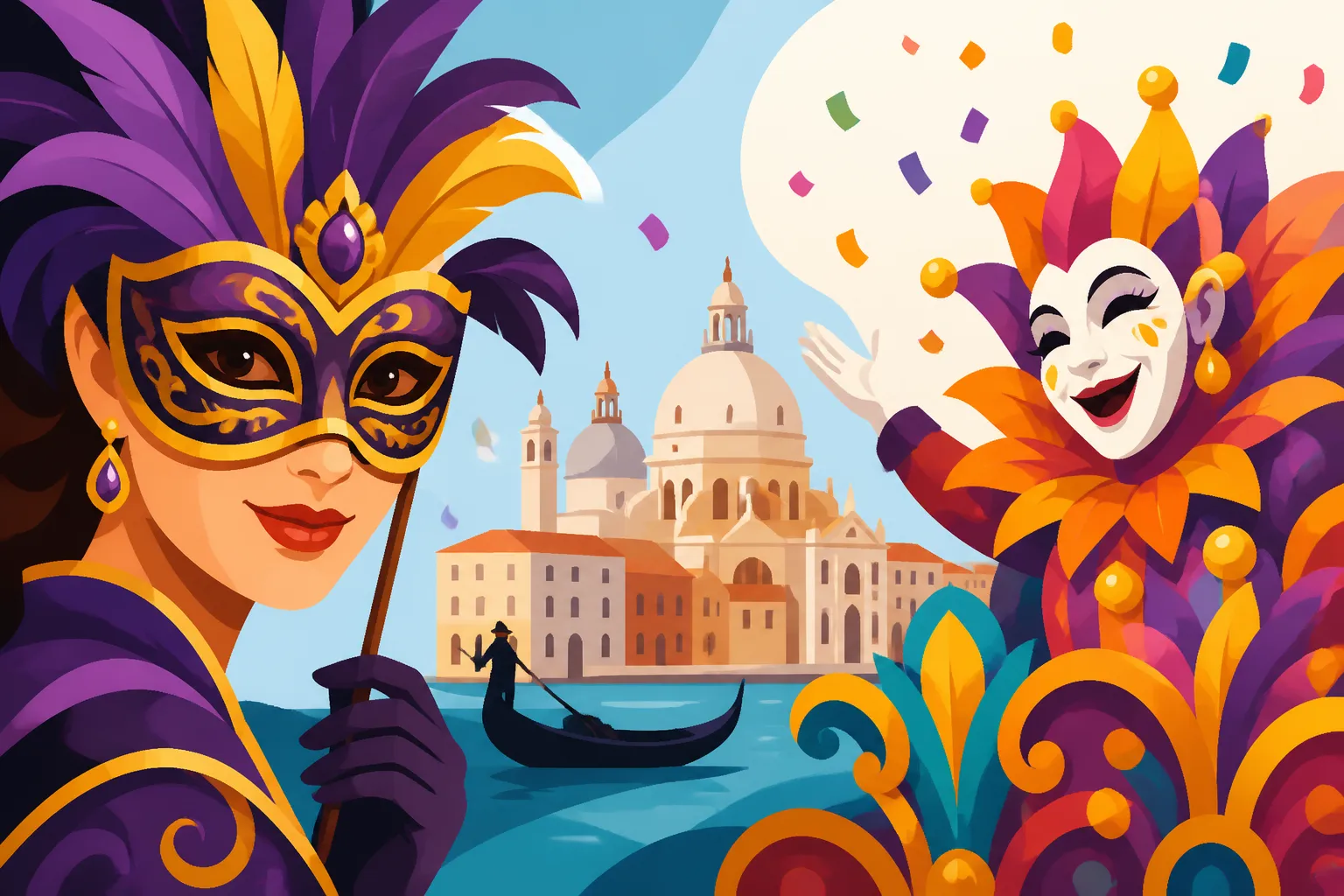
Carnival in Italy: Venice, Viareggio, and Beyond
Picture this: you’ve booked a February trip to Italy and assumed “Carnival” just means Venice. Then you hear that Venice hotels are nearly full, that a town in Piedmont stages a battle with oranges, and that Tuscany builds floats the size of apartment blocks. This guide explains Italy’s main Carnival celebrations, how each one actually works, and how to plan your days so the trip runs smoothly.
Disclosure: This post may contain affiliate links. We may earn a commission at no extra cost to you if you make a purchase through these links. Read full disclosure.
How Carnival Works in Italy
Before you choose a city, it helps to know what Carnival is in Italy, because it is not one festival. It is a season that every region celebrates differently. My first Carnival here, I thought I’d “seen it” after one afternoon in a Venetian square. A Tuscan neighbour laughed at me and dragged me to the coast the following weekend. That was when I understood that Venice is only one voice in a very loud national chorus.
The Calendar Behind the Celebrations
Carnival is tied to the Catholic calendar. It builds toward Martedì Grasso, or Fat Tuesday, the last day before Ash Wednesday and the start of Lent. Lent’s date depends on Easter, so Carnival moves every year. Some years it falls early in February. Other years it runs into early March. Always check the dates for the specific year you plan to travel, and never rely on last year’s calendar.
The season is longer than most visitors expect. Many towns open festivities weeks before the final Tuesday, usually with weekend events that grow larger as the big day approaches. The final Thursday is known as Giovedì Grasso and is often a major day of its own, and the last weekend is usually the most crowded. If you can only visit for a few days, those final days give you the most spectacle. They also bring the most people and the highest accommodation demand.
Milan is the exception you need to know about. The city follows the Ambrosian rite, named after Saint Ambrose, so its Carnival ends on the Saturday after everyone else’s Fat Tuesday. That gives Milan’s Carnevale Ambrosiano a few extra days. It also means you can, in theory, catch the end of Venice and then take a train west for a second round in Lombardy.
Why Every Region Does It Differently
Italy was a patchwork of separate states for centuries, and Carnival traditions grew up locally. Venice turned the season into an aristocratic masquerade. Coastal Tuscany turned it into enormous satirical parades. Piedmont tied it to a medieval rebellion. Sardinian mountain villages kept rituals that feel far older than any Christian calendar. If you want to see where Carnival sits among the rest of the country’s celebrations, take a look at Italy’s Biggest Festivals: A Year-Round Calendar.
For visitors, this means asking a different question. The useful question is not “where is Carnival?” It is “which Carnival suits me?” A family with small children wants something very different from a photographer chasing masks at dawn, and different again from a group of friends who want noise, confetti and a bit of chaos.
The Food That Tells You Carnival Has Arrived
You’ll often taste Carnival before you see it. Bakery windows fill with fried dough strips dusted in powdered sugar. Their name changes depending on where you are: chiacchiere in much of the south and Lombardy, frappe in Rome, galani or crostoli in the Veneto, cenci in Tuscany. Every family swears its version is the real one, and I have learned not to take sides out loud.
Look out for castagnole too, small fried dough balls, sometimes filled with cream. In Venice, frittelle are the star, round fritters that are sometimes plain, sometimes studded with raisins, and sometimes stuffed with zabaione or pastry cream. Venetians queue at their favourite pasticceria for these, which tells you everything you need to know about how seriously they take them.
Venice Carnival: The Masked Classic
Venice is the Carnival most people imagine, and it deserves its reputation. Masked figures in silk gowns pose against misty canals, and for a few weeks the city looks like an eighteenth-century painting. It is also the most crowded and the hardest to plan, so go in with clear expectations.
What Actually Happens in Venice
The Venice Carnival runs through roughly the final couple of weeks before Lent, with events spread across the city. Several fixed points anchor the programme. The Festa delle Marie recalls an old tradition of honouring young Venetian women, with a costumed procession and a contest to choose the “Maria” of the year. The Volo dell’Angelo, or Flight of the Angel, sees a costumed figure descend on a cable from the bell tower of San Marco into the packed square below. It is one of the most photographed moments of the season.
Through the rest of the festival there are mask competitions, costumed parades, concerts and boat events on the canals. There are also private masked balls in historic palazzi, which are ticketed, formal and often require full period costume. Much of the magic, however, happens without any programme at all. Costumed regulars simply appear in quiet campi and along the Riva degli Schiavoni, posing for photographs with a graceful nod.
For a first-timer, the practical side matters as much as the spectacle. I’ve put the nuts and bolts of moving through the city during the festival into How to Experience Carnival in Venice as a Visitor. Read it before you go if you’re nervous about crowds or navigation.
Masks, Costumes, and Buying the Real Thing
The classic Venetian masks each have a story. The bauta is a white, full-face mask with a jutting chin that lets the wearer eat and drink while staying anonymous. The moretta is a small, dark oval mask that was traditionally held in place by biting a button, so the wearer stayed silent. The colombina is a half-mask, often decorated with gold and feathers. The medico della peste, the plague doctor with its long beak, is one of the most recognisable and most photographed.
Here’s my honest warning. Many of the cheap masks sold from stalls near San Marco and the Rialto are mass-produced plastic imports. If you want a real souvenir, look for artisan workshops, the botteghe, where masks are made from papier-mâché, or cartapesta, and hand-painted. You can often see the craftspeople working at the back of the shop. A real artisan mask feels lighter and warmer, and it has small irregularities that a factory piece never has. Ask the maker how it was made. Real artisans love that question.
You don’t need a full costume to enjoy Venice, but a mask makes you part of the scene rather than an observer. Many visitors also hire costumes from specialist ateliers for a single evening, which is worth considering if you’ve bought a ball ticket.
The Hard Truths About Venice in Carnival Season
Venice is small, its streets are narrow, and in Carnival season it fills to its limits. The area around San Marco can become so packed on peak days that movement slows to a shuffle, and access to some areas may be managed or temporarily restricted. Vaporetti, the water buses, get extremely crowded. Plan extra time for every journey and accept that some plans will slip.
The weather adds its own twist. February in Venice can be damp, foggy and cold, and acqua alta, the seasonal high water, can flood low-lying areas, including the square. Pack waterproof shoes and layers. Fog often makes the masked figures look even more haunting, so it isn’t all bad news.
Pickpockets work the crowds hard here, and a masked, distracted crowd is ideal territory for them. Keep your bag zipped and in front of you, and read Avoiding Pickpockets in Italy’s Tourist Areas for the specific tricks to watch for. For quieter corners away from the masked chaos, my tips in Venice for First-Time Visitors: Beyond the Crowds work just as well in February as in summer.
Viareggio: Floats, Satire, and Seaside Spectacle
If Venice is a candlelit ballroom, Viareggio is a stadium concert. This seaside town on the Tuscan coast hosts one of the most impressive Carnival parades in Europe, and many Italians would tell you, quietly, that it’s more fun than Venice.
The Giant Papier-Mâché Floats
The heart of Viareggio’s Carnival is the carri allegorici, enormous allegorical floats made of papier-mâché. They are built over many months by teams of artisans, and some tower several storeys high. Their figures move, nod, open their mouths and wave their arms, thanks to hidden mechanisms and the people inside working them. Standing beside one as it rolls past is genuinely startling.
What makes Viareggio special is the satire. The floats often caricature politicians, celebrities and world events, and some are sharply critical. Even if you miss some of the Italian political references, the craftsmanship and the humour come through. Watch for Burlamacco, the town’s Carnival mascot in his harlequin-style costume. He appears on posters, merchandise and in the parades themselves.
Outside parade days, you can learn about how the floats are made at the Cittadella del Carnevale, the complex where many of them are built. It gives you a real sense of the scale of the work, and the craftspeople’s dedication is moving.
How the Parades Work
Viareggio’s main parades, the corsi mascherati, take place on several days across the Carnival season, usually weekends plus the final Tuesday. The floats move along a circuit on the seafront promenade, the Viali a Mare, with the sea on one side and Art Nouveau buildings on the other. The parade route is enclosed on parade days, and you enter with a ticket. Check the official programme for the year’s parade dates, ticket types and opening times.
The atmosphere is joyful and loud. Confetti and streamers fill the air, music blasts from the floats, and costumed groups dance in the street. Children in costume are everywhere, which makes Viareggio a great choice for families. Locals bring bags of confetti and the youngest join the fun quickly. Bring a hat, because confetti gets absolutely everywhere.
A practical note: the final parades often end with fireworks over the sea, and the departing crowd can be huge. If you’re leaving by train, expect queues at Viareggio station after the last parade of the day.
Getting to Viareggio and Where to Stay
Viareggio is easy to reach by train from Pisa, Lucca and Florence, which makes it a realistic day trip from much of Tuscany. Many visitors stay in Lucca or Pisa and travel in for parade days, which also gives you a calmer evening after the noise. If you’re combining Carnival with a longer Tuscan stay, Tuscany for Travelers: Cities, Hills, and Coast will help you work out a route.
When I plan multi-city Carnival trips, I often compare train and bus options side by side on Omio, because it shows different operators in one search. That’s handy when you’re trying to link Venice to Tuscany on a busy weekend. Book trains for the final parade weekend early. Regional trains don’t need advance seat reservations, but high-speed services between big cities fill up.
Beyond the Big Two: Carnivals Worth the Detour
This is where Italian Carnival gets really interesting. Some of the most memorable celebrations happen in towns most foreign visitors have never heard of.
Ivrea and the Battle of the Oranges
Ivrea is a town in Piedmont, north of Turin, and its Carnival is famous for the Battaglia delle Arance, the Battle of the Oranges. Over the final days of Carnival, organised teams of throwers on foot pelt throwers riding horse-drawn carts with oranges in the town’s squares. The tradition retells a medieval uprising against a tyrant. The carts represent the tyrant’s forces, and the teams on foot represent the townspeople. The heroine of the story, the Mugnaia, or miller’s daughter, is portrayed by a local woman chosen each year and appears in the festivities.
The battle is chaotic, messy and physical. The throwers are organised into registered teams, and they wear team colours. The cart riders wear protective masks. Oranges fly hard and fast, and people do get hurt, so treat this as a serious event rather than a light-hearted food fight.
The most important safety rule for visitors is simple. Wear the red cap, the berretto frigio, sold around town during Carnival. The red cap signals that you are a spectator and not a thrower, so the teams should not target you. Stay behind the netting set up around the squares, keep a safe distance, and never wander into the throwing zones. Dress in old clothes. Even from a safe spot, juice and pulp will reach you. The streets afterwards smell intensely of oranges, which is one of the strangest and most memorable sensory experiences I’ve had in Italy.
Southern Carnivals: Putignano, Acireale, and Fano
In Puglia, Putignano has one of the oldest Carnival traditions in Europe, and one of the longest seasons. It traditionally opens around Saint Stephen’s Day, the day after Christmas, and continues until Lent. Its float parades rival Viareggio’s for ambition, with the same papier-mâché craftsmanship and sharp satire. If you’re building a southern trip around it, Puglia: Trulli, Beaches, and Whitewashed Towns covers the wider region.
In Sicily, Acireale near Catania is known for elaborate floats decorated with flowers alongside papier-mâché figures, all set against the town’s baroque architecture. Up on the Adriatic coast in Le Marche, Fano is famous for showering the crowd with sweets thrown from its floats. Children run around with bags, filling them as fast as they can.
Sardinia’s Ancient Masks
For something completely different, head into the Sardinian interior. In the village of Mamoiada, the Mamuthones wear dark carved wooden masks and sheepskins, with heavy cowbells strapped to their backs. They move in a slow, rhythmic procession, accompanied by the Issohadores, who wear red jackets and carry ropes that they toss over spectators. The atmosphere is solemn and hypnotic rather than festive, and many people feel it reaches back to pre-Christian rural rituals.
Other villages in the region, such as Ottana with its Boes and Merdules, have their own masked traditions. These events are deeply local, and they reward respect. Watch quietly, ask before photographing anyone up close, and remember you’re a guest at something meaningful to the community. For more on the island beyond the coast, see Sardinia for Travelers: Beaches and the Interior.
Choosing Your Carnival at a Glance
| Carnival | Region | Signature Experience | Best For | Crowd Level |
|---|---|---|---|---|
| Venice | Veneto | Historic masks, Flight of the Angel, palazzo balls | Photographers, romantics, costume lovers | Very high |
| Viareggio | Tuscany | Giant satirical papier-mâché floats on the seafront | Families, groups, first-timers | High on parade days |
| Ivrea | Piedmont | Battle of the Oranges | Adventurous adults | High in the main squares |
| Milan | Lombardy | Ambrosian Carnival ending on the Saturday after Fat Tuesday | Travellers extending their trip | Moderate |
| Putignano | Puglia | Long season with float parades | Southern Italy explorers | Moderate to high |
| Acireale | Sicily | Flower-decorated floats in a baroque town | Sicily visitors | Moderate |
| Fano | Le Marche | Sweets thrown from floats | Families with children | Moderate |
| Mamoiada | Sardinia | Mamuthones and Issohadores in carved wooden masks | Culture seekers | Lower, but intense locally |
Planning Your Carnival Trip Without the Stress
Carnival rewards preparation more than almost any other Italian event. The good news is that a little planning removes most of the headaches.
Booking Accommodation Early
In Venice, accommodation demand during Carnival is intense. The final weekend in particular sells out well ahead, and rooms in the historic centre come at a premium. Many visitors stay in Mestre on the mainland, or on the Lido or Giudecca, and commute in. I break down those trade-offs in Budget Beds in Venice: Mestre, Lido, and Giudecca on Price and Commute, and for timing, see Venice Carnival: Booking Windows and Realistic Budgets.
When I’m comparing options, I use Booking.com mainly for its filters. You can narrow results by free cancellation and by neighbourhood, which matters when you’re still deciding which Carnival days to target. Flexible bookings are worth a lot during Carnival, because dates and plans often shift once you see the official programme.
For the smaller Carnivals, the challenge is different. Towns like Ivrea or Mamoiada have limited accommodation, so many visitors base themselves in a nearby city and travel in for the day. Think Turin for Ivrea, or Nuoro for Mamoiada. My guide to Regional Festivals in Italy: Where to Base Yourself and When to Book walks through that strategy in more detail.
A Step-by-Step Carnival Planning Checklist
Here’s the process I follow every year, refined after more than one disorganised February.
- Confirm the year’s Carnival dates by working back from Easter, and note that Milan runs a few days longer.
- Choose your primary Carnival based on your style, using the table above as a starting point.
- Check the official programme for that town to find parade days, key events and any ticketed areas.
- Book accommodation with free cancellation as early as you can, especially for the final weekend.
- Book high-speed train tickets between major cities once your dates are firm.
- Buy or hire your mask or costume, ideally from an artisan workshop if you’re in Venice.
- Pack for the weather: layers, waterproof shoes and a hat for confetti or drizzle.
- Check transport news for strikes in the days before you travel.
- Plan one quiet, unscheduled day to recover from the crowds.
That last point is not a joke. Carnival is wonderful but exhausting. A slow morning with coffee and a plate of frittelle can save your trip.
Tours, Tickets, and Guided Experiences
Some Carnival experiences are easier with a guide. In Venice, mask-making workshops, costumed photo walks and small-group tours of the quieter sestieri can help you see the festival beyond the San Marco crush. I’ve browsed GetYourGuide for these, because it lets you compare options, read recent reviews and check cancellation terms in one place. Always read exactly what’s included, and check the provider’s page for current details.
For ticketed events such as Viareggio’s parade circuit or Venetian palazzo balls, buy directly from the official organiser or an authorised seller whenever possible. Be wary of anyone reselling tickets on street corners or through unofficial social media posts. This is especially true for the balls, which tend to have strict dress codes and named entries.
Making the Most of Carnival on the Ground
Once you arrive, a few habits make the difference between a stressful day and a magical one.
Navigating Crowds and Transport
Arrive early. In Venice, the hours just after dawn are when costumed figures pose in near-empty squares, and photographers swear by this window. In Viareggio, getting to the parade circuit before it fills means a better view and an easier start. In Ivrea, an early arrival helps you find a safe, netted spot before the battle begins.
Transport strikes, or scioperi, can happen at any time of year, and Carnival is no exception. They’re usually announced in advance, and some services are guaranteed during set hours. Learn how they work in Strikes in Italy: How Sciopero Days Work and How to Rebook, and check the news a day or two before your journey.
Agree on a meeting point with your group before you head into a crowd. In Venice especially, mobile signal can struggle in dense crowds, and a costumed sea of people makes it surprisingly hard to spot a friend.
Etiquette, Costumes, and Photography
Costumed participants in Venice are often generous about being photographed. Many of them dress precisely to be seen. Still, a polite gesture or a “posso?”, meaning “may I?”, goes a long way. Don’t grab or touch costumes, which are often handmade and fragile, and don’t block narrow bridges while you set up a shot. Locals still need to get to work.
In smaller, traditional Carnivals, be more cautious. The masked figures in Sardinian villages are carrying out rituals with deep community meaning, not posing for tourists. Watch, listen, follow local cues, and step back if you sense you’re intruding.
Children and adults alike throw confetti and spray foam in many Carnivals, especially in Tuscany and the south. Accept that you’ll go home covered in coloured paper, and don’t wear anything precious. Throwing anything harder or messier than confetti at strangers outside designated events, such as Ivrea’s official battle zones, is not welcome.
Dressing for Carnival Weather
February in Italy is cooler than many first-time visitors imagine. Venice is often damp and foggy, the Tuscan coast can be windy, and inland Piedmont and Sardinia can be genuinely cold, especially in the mountain villages. Layers are your best friend. A warm coat that fits over a costume, gloves you can still take photos with, and waterproof footwear will keep you outdoors for longer.
If you’re wearing a mask for hours, choose one that fits well and lets you see clearly. Your peripheral vision drops more than you’d expect, and that matters on Venetian bridges and steps. Many seasoned Carnival-goers carry a small tote with a spare scarf, tissues and a snack, because queues for anything, from coffee to the toilets, get long on peak days.
Whatever Carnival you choose, give yourself permission to be a little silly. The whole point of the season is to step out of everyday life before the quiet of Lent. Wear the mask, eat the fried dough, get covered in confetti, and enjoy the brief, glorious chaos Italy throws every year.
Disclaimer
This article is for general informational purposes only and does not constitute professional advice. Laws, prices and regulations vary by location and change over time. Consult a qualified professional for guidance on your specific situation.