How to Find the Best Pizza in Naples
Stepping off the train at Napoli Centrale, the sensory overload of honking scooters and shouting vendors can make finding a decent meal feel like a high-stakes gamble. You are surrounded by thousands of signs claiming to serve the original Neapolitan pizza, but most are merely bait for hungry travelers. This guide cuts through the noise to help you identify, locate, and savor the truly transformative pizza experiences that define Naples.
Disclosure: This post may contain affiliate links. We may earn a commission at no extra cost to you if you make a purchase through these links. Read full disclosure.
Deciphering the Anatomy of a True Neapolitan Pizza
Before you start walking the narrow alleys of the Centro Storico, you need to understand what actually constitutes a real pizza in this city. In Naples, pizza is not just dinner; it is a protected cultural heritage. The locals take it so seriously that there are legal definitions for what can be called Pizza Napoletana. If you see a crust that is cracker-thin or topped with a mountain of chicken and pineapple, you aren't eating Neapolitan pizza; you are eating a tourist-facing imitation.
The Ingredients and the Oven
A legitimate pizza in Naples relies on a very short list of high-quality ingredients. The flour must be highly refined (tipo 00 or 0), the tomatoes must be San Marzano or Pomodorino del Piennolo del Vesuvio, and the cheese must be either Mozzarella di Bufala Campana or Fior di Latte from the Agerola region. These aren't just suggestions; they are the bedrock of the flavor profile. The dough is never rolled with a pin but stretched by hand, a process called "schiaffo" (the slap), which pushes air to the edges to create that signature puffy rim.
The cooking process is equally rigorous. A real pizzeria uses a wood-fired bell oven reaching temperatures of nearly 500 degrees Celsius. The pizza stays inside for no more than 60 to 90 seconds. This intense heat creates "leopard spotting"—charred little bubbles on the crust—while leaving the center soft and slightly damp. If your pizza is crispy like a biscuit, the oven wasn't hot enough, or the dough was handled incorrectly. Understanding these nuances is the first step toward knowing How to Eat Like a Local in Italy: Meal Structure and Timing so you don't accidentally order a heavy meal when you should be focusing on the dough.
The Purist’s Choice: Margherita and Marinara
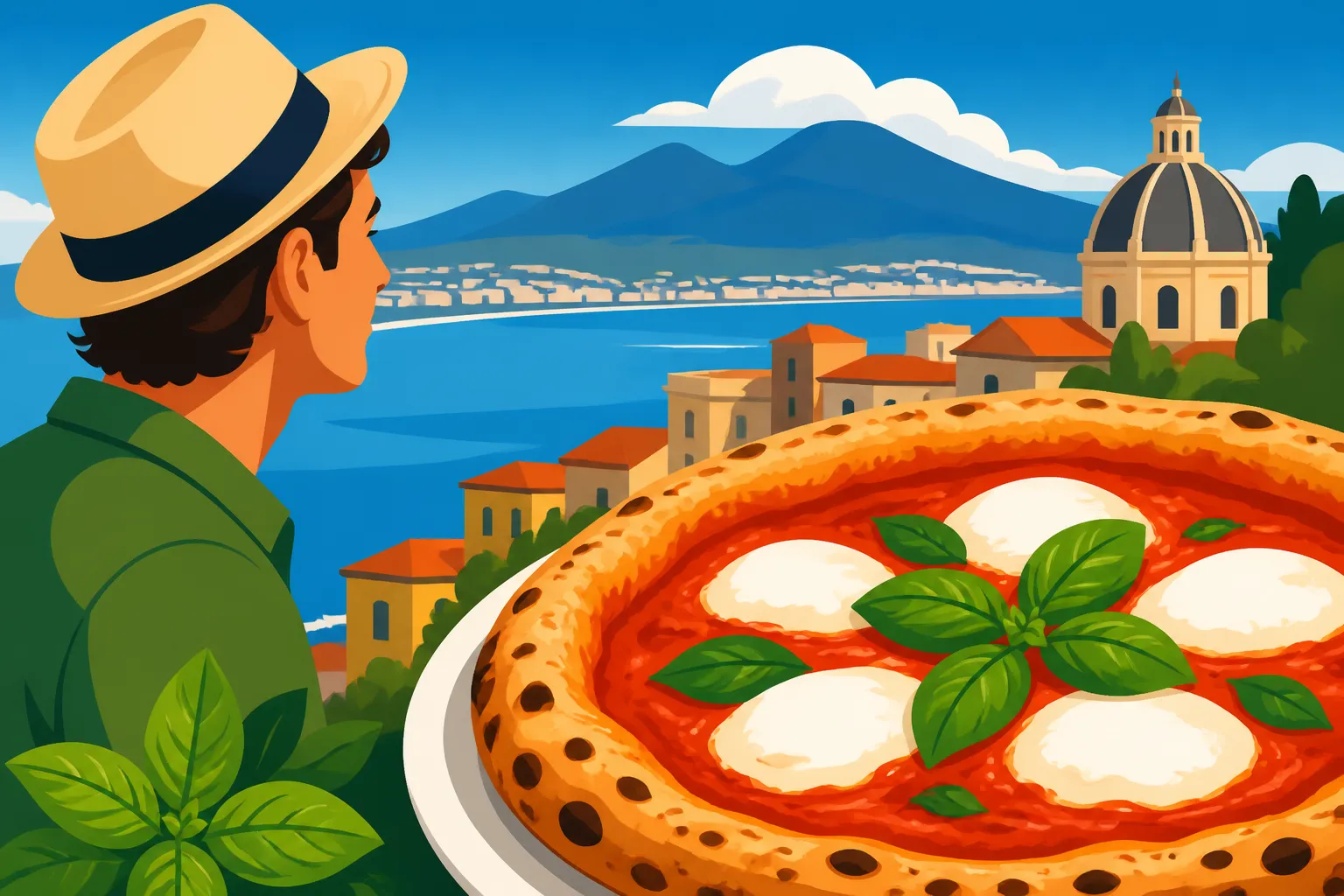
If you want to test the mettle of a Neapolitan pizzaiolo, do not order a pizza with five different toppings. The true test of skill lies in the classics: the Margherita and the Marinara. The Margherita represents the colors of the Italian flag with red tomato, white mozzarella, and green basil. The Marinara is even simpler—tomato, garlic, oregano, and extra virgin olive oil. It contains no seafood, despite the name, which refers to the "mariners" who historically ate it.
In many of the oldest, most traditional spots, these are the only two options on the menu. While modern "gourmet" pizzerias are becoming popular, starting with these classics allows you to appreciate the quality of the raw materials. You will notice that the olive oil is often added in a spiral motion after the pizza comes out of the oven, adding a fresh, peppery finish. This simplicity is a hallmark of Italian Regional Cuisine: How Food Changes Across Italy and nowhere is it more evident than in a Neapolitan pizza parlor.
Identifying the AVPN Seal of Approval
When wandering the streets, look for a small sign featuring Pulcinella (a classic Neapolitan character) holding a pizza peel. This is the seal of the Associazione Verace Pizza Napoletana (AVPN). This organization certifies pizzerias that follow the strict traditional methods of production. While there are many fantastic pizzerias without this seal, seeing it is a guarantee that the establishment is not taking shortcuts with their ingredients or equipment.
I remember my first year living here, being overwhelmed by the choices until an old neighbor pointed out the AVPN sign at a tiny hole-in-the-wall. It changed everything. It serves as a shield against the low-quality "tourist menus" that plague the areas near the main monuments. By looking for this certification, you ensure your money supports artisans rather than industrial kitchens. It is an essential skill to develop, much like learning How to Find Authentic Restaurants in Italy (Not Tourist Traps) in any other major Italian city.
Navigating the Geographic Heart of Neapolitan Pizza
The sheer density of pizzerias in Naples is staggering. However, certain neighborhoods act as "hubs" for the best dough in the world. Knowing where to go—and how to get there—is half the battle. If you are staying in a central location you booked via Booking.com, you are likely within walking distance of at least three legendary spots, but you need to know which direction to head to avoid the mediocre traps.
The Legendary Via dei Tribunali
Commonly referred to as "Pizza Alley," Via dei Tribunali is the epicenter of the pizza world. This ancient Greco-Roman street is home to heavyweights like Gino Sorbillo, Di Matteo, and I Decumani. Walking down this street is an assault on the senses. You will smell the woodsmoke long before you see the storefronts. The energy here is electric, but it can be exhausting if you aren't prepared for the crowds.
Because this area is so famous, the wait times can be legendary. It is not uncommon to see a two-hour wait at Sorbillo. The trick is to put your name on the list, grab a "pizza a portafoglio" (a folded street pizza) from a side window for a couple of euros, and explore the nearby San Gregorio Armeno while you wait. If the chaos of Tribunali feels like too much, you can use Omio to check bus or metro schedules to head toward quieter neighborhoods, though most purists argue that the wait at Di Matteo is a rite of passage every visitor must endure.
The Sanità and the Spanish Quarters
If you want to escape the main tourist drag, head to the Rione Sanità. This neighborhood was once considered "off-limits" for tourists, but it has undergone a massive cultural revival. This is where you will find Concettina ai Tre Santi, a pizzeria that blends high-end ingredients with the gritty, authentic soul of Naples. The Sanità is also home to Ciro Oliva, a young pizzaiolo who is pushing the boundaries of what Neapolitan pizza can be while respecting his great-grandmother’s recipes.
In the Spanish Quarters (Quartieri Spagnoli), the streets are even narrower and the atmosphere more intense. Here, you will find places like Pizzeria 22 or Nennella (mostly known for pasta, but great for the vibe). This area is perfect for a food tour booked through GetYourGuide, as local guides can lead you to the hidden courtyards that you would never find on your own. It is essential to be comfortable with Getting Around Italian Cities: Metro, Tram, and Buses if you plan to jump between these neighborhoods in a single day.
Comparison of Traditional vs. Contemporary Pizza Hubs
| Neighborhood | Vibe | Famous Spots | Best For |
|---|---|---|---|
| Centro Storico | Chaotic, Historic, Vibrant | Sorbillo, Di Matteo | The "Classic" Experience |
| Rione Sanità | Authentic, Local, Artistic | Concettina ai Tre Santi | Gourmet & Creative Pizza |
| Vomero | Upscale, Residential, Quiet | Acunzo, Vitagliano | Avoiding the massive crowds |
| Via Tribunali | Touristy but Essential | I Decumani, Dal Presidente | History & Street Food |
| Lungomare | Scenic, Sea Breezes | Lievito Madre | Pizza with a View |
The Logistics of the Pizza Pilgrimage
Actually getting a seat at a top-tier pizzeria in Naples requires more than just showing up. The bureaucracy of the "lista" (the waiting list) is a unique cultural phenomenon that frustrates many foreigners. You need a strategy to ensure you don't spend your entire vacation standing on a sidewalk in the heat.
Mastering the Waiting List and Timing
Most legendary pizzerias do not take reservations for small groups. When you arrive, there will usually be a person with a clipboard standing near the door. You must give them your name and the number of people in your party. Do not just stand there; be proactive. Once your name is on the list, you are free to wander, but if they call "Rossi, quattro!" and you aren't there, you lose your spot.
To minimize the wait, aim for a "late" lunch (around 2:30 PM) or an "early" dinner (around 7:00 PM). Italians eat late, so showing up at 8:30 PM is a guaranteed recipe for a long wait. Also, remember that many traditional spots are closed on Mondays. Before you set out, it is wise to consult a Naples City Guide: Food, History, and the Bay to see what else is open in the vicinity so you can maximize your time.
Etiquette and Ordering Like a Pro
Once you finally get a table, don't expect a leisurely three-hour meal. Neapolitan pizzerias are high-volume operations. The service is fast, often bordering on abrupt, but it is rarely intended to be rude. They want you to eat the pizza while it is hot and make room for the next person on the list. When the pizza arrives, do not ask for it to be sliced. In Naples, pizza is served whole, and you eat it with a knife and fork, starting from the center and working your way out.
When ordering, it is helpful to have a few phrases ready. Check out How to Order Food and Drinks in Italian: A Practical Phrasebook to brush up on the basics. Remember that the "coperto" (cover charge) is standard and usually covers the bread and service. Also, be aware that most traditional pizzerias will not serve tap water; you will be expected to order bottled "naturale" or "frizzante." Understanding these small details is part of mastering Restaurant Etiquette in Italy: Coperto, Courses, and the Bill.
Payment and Tipping Realities
While Italy is slowly moving toward digital payments, many of the smaller, older pizzerias in the heart of Naples still prefer cash, especially for small bills. If you are grabbing a "pizza a portafoglio" for 2 euros, do not try to pay with a credit card. It is a quick way to annoy the staff. Always keep some small denominations on you for these street food transactions.
Tipping is another area where travelers often get confused. In a standard pizzeria, a tip is not required, as the service is included in the coperto. However, if the service was exceptional, leaving a couple of euros on the table is a nice gesture. For a deep dive into how this works across the country, refer to Tipping in Italy: When, Where, and How Much. It will save you from the awkwardness of overtipping or feeling like you've committed a social faux pas.
Making the Most of Your Culinary Stay
To truly experience the pizza culture, you shouldn't just fly in for a day. Naples is a city that reveals itself slowly. By basing yourself in a strategic neighborhood, you can hit different pizzerias for lunch and dinner without spending your whole budget on taxis.
Where to Stay for Maximum Pizza Access
If your primary goal is food, stay in the Centro Storico or near the University. These areas are dense with options. You can find excellent boutique hotels or apartments on Booking.com that put you within a five-minute walk of the best ovens in the city. If you prefer something quieter with a view, look at the Vomero hill. It is connected to the center by three different funiculars, making it easy to descend for a pizza and retreat to the cool, quiet heights afterward.
Expanding Your Palate Beyond the Dough
While pizza is the star, Naples has an incredible array of fried appetizers called "fritti." You should always start your meal with a "frittatina di pasta" (fried pasta cake), a "crocchè" (potato croquette), or a "supplì." These are the appetizers that define the Neapolitan palate. If you find yourself overwhelmed by the choices, a guided tour from GetYourGuide can help you sample these smaller bites while explaining the history behind them.
If you are coming from elsewhere in Italy, perhaps having just navigated How to Get From Rome Fiumicino Airport to the City Center, the transition to the Neapolitan style can be a shock. The flavors are bolder, the salt is more present, and the energy is much more intense. Embrace the chaos. The best pizza in the world isn't found in a quiet, sterile room; it's found in a crowded, steaming shop where the oven has been burning for a hundred years.
Disclaimer
The information provided in this guide is for educational and informational purposes only. While every effort has been made to ensure the accuracy of the advice regarding pizzerias and travel logistics in Italy, local regulations, opening hours, and business statuses can change without notice. Always verify details with local sources before planning your trip. The author is not responsible for any experiences or financial decisions made based on this content.