How to Order Coffee in Italy Like a Local
Standing at the threshold of a bustling Italian bar at 8:00 AM can be an overwhelming experience for any newcomer. The clatter of porcelain, the hiss of steam wands, and the rapid-fire Italian directives being shouted at the barista often lead to a deer-in-the-headlights moment where you end up paying three times the price for a coffee you didn't actually want. This guide is designed to strip away the intimidation, helping you navigate the unwritten rules of the Italian coffee ritual so you can walk in, order with confidence, and enjoy your caffeine exactly like a seasoned local.
Disclosure: This post may contain affiliate links. We may earn a commission at no extra cost to you if you make a purchase through these links. Read full disclosure.
Understanding the Italian Bar
In Italy, the bar is not just a place to grab a drink; it is the living room of the neighborhood. It is where business deals are sealed, where friends catch up on local gossip, and where the rhythmic pulse of daily life is most audible. However, for an expat or tourist, the layout and pricing structure of these establishments can be a primary source of confusion. Unlike the "grab-and-go" culture prevalent in North America or Northern Europe, the Italian bar operates on a tiered system of service that dictates how much you pay based on where you stand or sit.
Standing at the Banco vs. Sitting at the Tavolo
The most critical distinction to learn immediately is the price difference between standing at the counter (al banco) and sitting at a table (al tavolo). In a traditional Italian bar, an espresso consumed while standing might cost you between 1.10 and 1.30 Euros. The moment you sit down and a waiter brings that same tiny cup to your table, the price can double, triple, or even quadruple, especially in high-traffic tourist areas. This is essentially a "service tax" for the privilege of resting your feet and occupying space.
If you are just arriving in a new city and have used Omio to book your train across the country, you might be tempted to sit down with your luggage and relax. However, if you want to live like a local and stay within a reasonable budget, you should head straight for the counter. Standing is the standard way to take a quick morning coffee break. It is fast, efficient, and deeply rooted in Italian Customs, Etiquette, and Social Life. You’ll notice locals leaning against the marble, scrolling through their phones or chatting with the barista for three minutes before disappearing back into the street.
The Receipt First Rule
In many bars, particularly larger ones or those in city centers, the order of operations is counter-intuitive. You do not walk up to the barista and ask for a coffee. Instead, you must first go to the cash register (la cassa) and pay. You tell the person behind the register what you want— "Un caffè e un cornetto, per favore"—and they will give you a small paper receipt (lo scontrino).
Once you have your receipt, you move to the bar. You place the receipt on the counter, often with a small coin (ten or twenty cents) on top if you want to be extra traditional—though this "tip" is becoming less common—and catch the barista's eye. This ritual ensures that the workflow remains organized during the frantic morning rush. If you are staying in a neighborhood you found through Booking.com, try to find a "regular" bar. Once the staff recognizes you, they might let you drink first and pay later, which is the ultimate sign that you have transitioned from a tourist to a resident.
The Italian Coffee Lexicon
One of the biggest mistakes travelers make is walking into a bar and asking for a "latte" or an "espresso." In Italy, "latte" simply means milk. If you order a latte, you will be handed a glass of cold or steamed milk, much to your disappointment. Furthermore, nobody in Italy actually uses the word "espresso" when ordering. It is redundant because, in the eyes of an Italian, coffee is espresso.
Mastering the Basic Orders
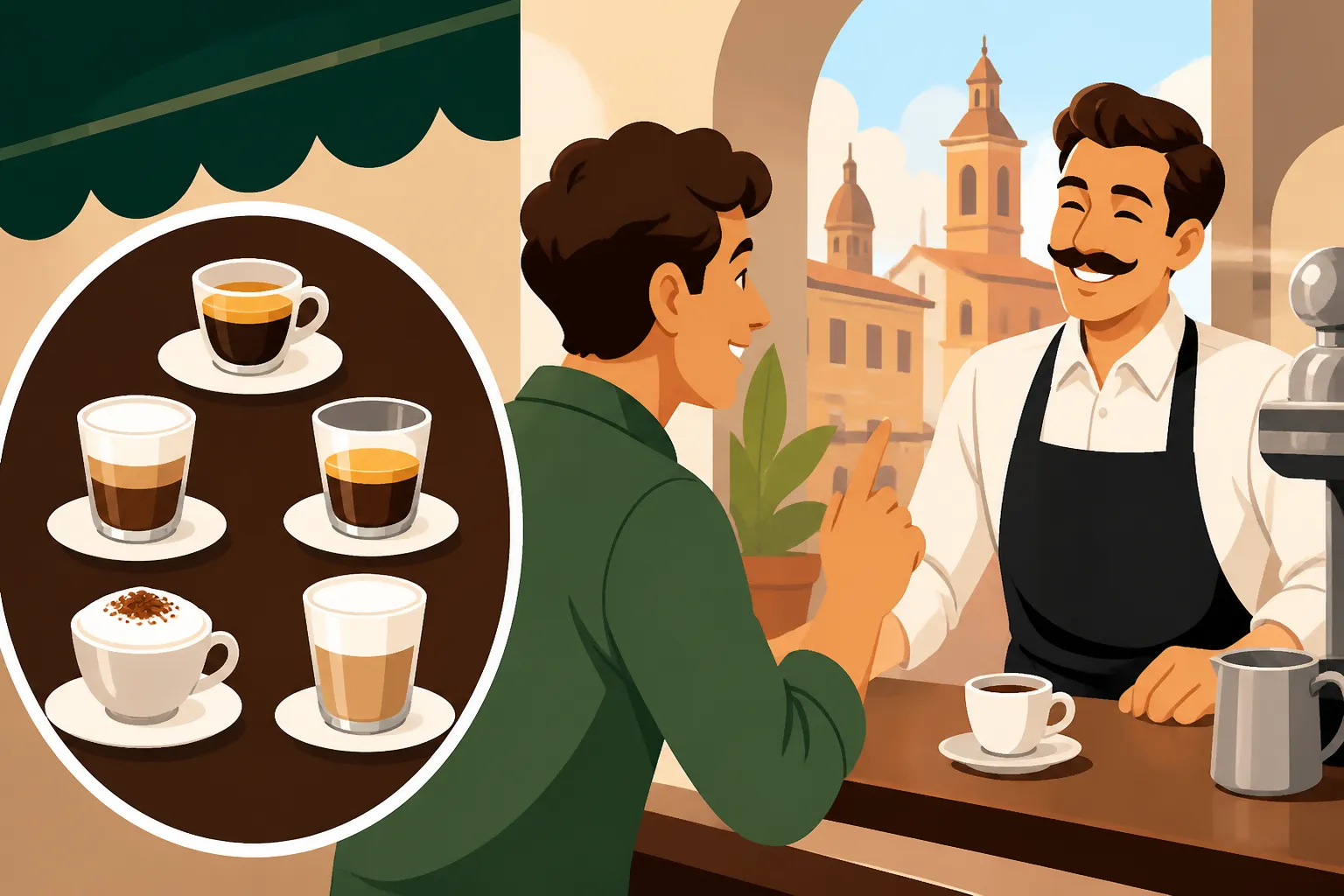
To order a standard shot of espresso, you simply say "un caffè." This is the base of the entire coffee culture. However, the variations are endless and allow you to customize your experience to your specific taste or the time of day. If you want something a bit more substantial, you might order a "caffè lungo," which is an espresso with a bit more water run through the machine, making it slightly weaker but more voluminous. Conversely, a "caffè ristretto" is a shorter, more concentrated shot that packs a powerful punch.
For those who need a touch of milk, the "caffè macchiato" is the gold standard. "Macchiato" means "stained" or "spotted." You are essentially getting an espresso with a tiny dollop of foamed milk on top. You can specify "macchiato caldo" (warm milk) or "macchiato freddo" (cold milk). Understanding these nuances is a key part of Italian Food Culture: Eating Well as a Visitor. If you are adventurous, you might even try a "caffè corretto," which is an espresso "corrected" with a splash of grappa or sambuca, though this is usually reserved for after lunch or dinner.
The Sacred Milk Rule
If there is one rule that will immediately mark you as a foreigner, it is ordering a milk-heavy coffee after 11:00 AM. In Italy, cappuccino, caffè latte, and latte macchiato are considered breakfast drinks. They are heavy, and Italians believe that consuming a large amount of dairy on a full stomach—or after a meal—wreaks havoc on digestion.
You will never see a local drinking a cappuccino after lunch. If you find yourself in a piazza in Florence after a long day of sightseeing, perhaps following a tour you booked on GetYourGuide, and you order a cappuccino at 4:00 PM, the barista will likely serve it to you, but they will do so with a silent judgment. To truly blend in, stick to plain caffè or a macchiato for your afternoon pick-me-up. For more on how the timing of meals and drinks dictates social life, check out our guide on How to Eat Like a Local in Italy: Meal Structure and Timing.
Regional Variations and Specialty Drinks
While the basic espresso is consistent from the top of the boot to the toe, Italy’s diverse geography means that coffee culture changes significantly as you travel. What is considered standard in Milan might be unheard of in Palermo. This regionality is a hallmark of Italian Regional Cuisine: How Food Changes Across Italy and extends deeply into the world of caffeine.
The North: Elegance and Chocolate
In the northern regions, coffee often takes on a more refined, dessert-like quality. In Turin, you must try the "Bicerin." This is a historic drink made of layers of espresso, chocolate, and heavy cream, served in a small rounded glass. It is a decadent experience that reflects the aristocratic history of the city. As you move through Northern Italy: Alps, Lakes, and Cities, you will also encounter the "Marocchino," particularly in Milan. This consists of a shot of espresso, a layer of cocoa powder, and milk froth, often served in a glass cup to show off the beautiful layers.
The South: Intensity and Cold Brews
In the south, coffee becomes darker, stronger, and often sweeter. Naples is the undisputed capital of coffee in Italy. Neapolitan coffee is famously thick and served incredibly hot. It is often accompanied by a small glass of sparkling water, which you should drink before the coffee to cleanse your palate. This ensures you can fully appreciate the intense flavors.
In the sun-drenched regions covered in our guide to Southern Italy and the Islands: Sicily, Sardinia, and Beyond, you will find the "Caffè alla Salentina." Common in Puglia, this is an espresso poured over ice with a splash of almond milk (latte di mandorla). It is the perfect antidote to the sweltering Mediterranean heat. Understanding these regional quirks will make your travels feel far more authentic, whether you are using Omio to navigate the rail networks or exploring hidden corners on foot.
Coffee Etiquette and Social Norms
Ordering the right drink is only half the battle; knowing how to behave in the bar is the other half. Italian bars are high-speed environments, and there is a specific flow you need to follow to avoid getting in the way of the locals. When you approach the bar with your receipt, don’t wait for a formal invitation to step up. Find a small gap in the standing crowd, place your receipt down, and wait for the barista to acknowledge you.
The Role of Water
As mentioned, a small glass of water often accompanies your coffee, especially in the south or at higher-end bars. The cardinal sin is drinking this water after your coffee. The water is meant to wash away any lingering tastes from food or cigarettes so that your taste buds are a blank canvas for the espresso. If you drink it afterward, you are essentially signaling to the barista that the coffee tasted bad and you want to get rid of the flavor.
Tipping and Payment
Tipping culture in Italy is vastly different from the United States or the UK. It is not expected, and in many cases, it isn't even necessary. However, at a bar, it is a common gesture to leave a small 10 or 20-cent coin on the counter when you present your receipt. This is a small "thank you" to the barista for their speed. It is never done when you are sitting at a table, as the service charge is already included in the higher price. For more on managing your daily expenses, see our breakdown of the Cost of Living in Italy 2026: Budgeting for Expats.
| Coffee Type | Description | Best Time to Order | Typical Cost (Banco) |
|---|---|---|---|
| Un Caffè | A standard shot of espresso. | Anytime. | €1.10 – €1.30 |
| Cappuccino | Espresso with steamed milk and froth. | Before 11:00 AM only. | €1.50 – €2.00 |
| Caffè Macchiato | Espresso "stained" with a drop of milk. | Morning or afternoon. | €1.20 – €1.40 |
| Caffè Lungo | Espresso with more water (weaker). | Morning. | €1.10 – €1.30 |
| Caffè Ristretto | Short, very concentrated espresso. | After a heavy meal. | €1.10 – €1.30 |
| Caffè Corretto | Espresso with a splash of liquor. | After lunch or dinner. | €2.00 – €3.00 |
| Caffè Americano | Espresso diluted with lots of hot water. | For those who miss drip coffee. | €1.50 – €2.00 |
Navigating the Practicalities
If you are planning a trip through the major hubs like Rome, Florence, and Venice: Italy's Great Cities Explorer's Guide, you will find that the "tourist trap" bars are everywhere. These are the places that will charge you €5 for an espresso the second they hear an English accent. To avoid this, look for bars that are filled with people in work clothes or those that don't have large, glossy photos of food outside.
When you are ready to venture out and perhaps join a local coffee or food tour through GetYourGuide, keep in mind that your body might need time to adjust to the strength of Italian espresso. It is much more potent than the filtered coffee found in many other countries. If you need to brush up on your ordering phrases, our list of Italian Slang and Everyday Expressions for Visitors can help you sound more like a local and less like someone reading from a textbook.
Staying in a central location, perhaps one you secured via Booking.com, usually means you have several bars within a three-minute walk. Spend your first few days observing. Watch how the locals handle their receipts, notice the way they greet the barista with a "Buongiorno," and pay attention to how they quickly stir their sugar and down the shot in two gulps. The "slow coffee" movement has no place in a busy Italian morning; here, coffee is a functional, beautiful, and rapid necessity.
Whether you are just stopping for a quick shot between museum visits or making the bar your primary social outlet while living abroad, the coffee ritual is your gateway to understanding the heart of Italian culture. It requires a bit of speed, a bit of assertiveness, and a willingness to follow local traditions, but once you’ve had that first perfect caffè al banco, you’ll never want to go back to a paper cup again. You can find more comprehensive advice in our broader guide to Italian Wine, Coffee, and Aperitivo Culture.
Disclaimer
The information provided in this guide is intended for informational purposes only. While every effort has been made to ensure the accuracy of pricing and cultural norms as of 2026, local practices and costs can vary significantly by city, region, and individual establishment. Always check local menus and prices before ordering to avoid unexpected charges.