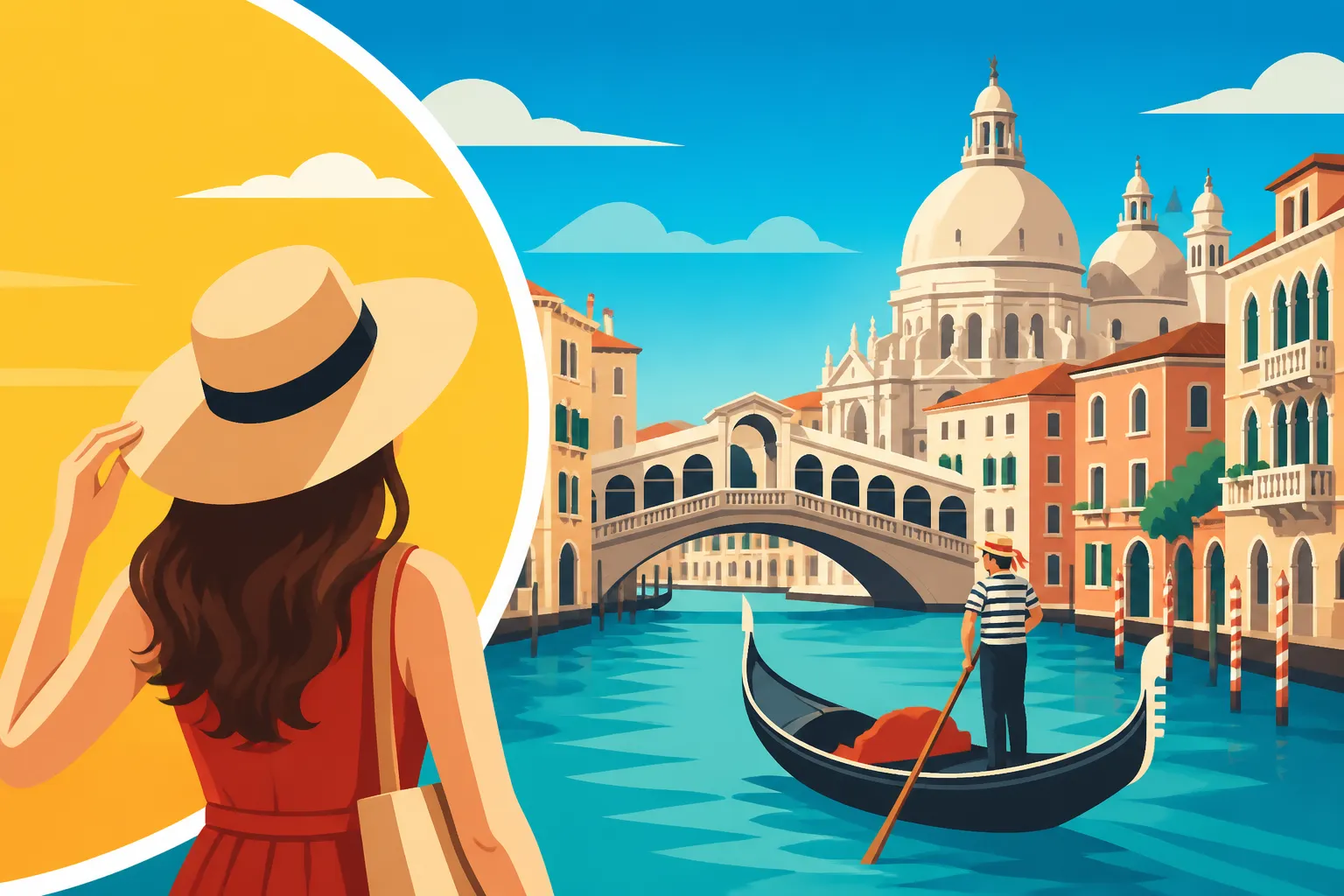
How to Spend 48 Hours in Venice
Most people arrive in Venice and immediately feel suffocated by the crowds, lost in a maze of bridges, and frustrated by the exorbitant prices. This guide solves the tourist trap fatigue by providing a realistic, expat-vetted 48-hour itinerary that balances iconic sights with the authentic, quiet corners of the lagoon that most visitors completely miss.
Disclosure: This post may contain affiliate links. We may earn a commission at no extra cost to you if you make a purchase through these links. Read full disclosure.
The Logistics of Arriving in a City with No Roads
If you’ve ever tried to pull a heavy suitcase with plastic wheels over five consecutive stone bridges while an impatient gondolier yells at you from the canal below, you know the specific brand of stress Venice can induce. As someone who has lived through the administrative and logistical madness of Italy for years, I can tell you that the secret to a successful 48-hour stay is all in the arrival. Most tourists treat Venice like a standard city, but it is an archipelago. Your first hurdle isn't the language barrier; it’s the water.
If you are coming from abroad, you’ll likely land at Marco Polo Airport. From there, you have a choice: the expensive but glamorous private water taxi, the Alilaguna water bus, or the land bus to Piazzale Roma. If you’re arriving by train from other parts of Italy, you’ll pull into Santa Lucia station. I highly recommend using Omio to check the schedules beforehand, especially if you’re trying to coordinate a tight 48-hour window. There’s nothing worse than standing on a platform in the heat, realizing the next Vaporetto is twenty minutes away and packed to the rafters.
Once you hit the pavement—or the docks—the choice of where you stay will dictate your entire experience. I always tell my friends to look at Booking.com for options in the Dorsoduro or Cannaregio districts. Avoid staying right next to San Marco if you value your sleep and your wallet. These outer "sestieri" (neighborhoods) offer a glimpse of actual Venetian life, where you might actually see a nonna hanging laundry or a local craftsman at work, rather than just a sea of selfie sticks.
Getting into the City Center Without Losing Your Mind
The transition from "land Italy" to "water Venice" is where most people falter. If you arrive at Piazzale Roma (the last point cars and buses can reach), you are suddenly thrust into a world governed by the Vaporetto system. It is expensive, often late, and incredibly crowded. To navigate this, you need to think like a resident. Don't just hop on the first boat you see. Line 1 is the "slow boat" that hits every stop on the Grand Canal. It’s beautiful for a view, but if you’re trying to check into your hotel, it’s a nightmare.
For those flying in, comparing the Alilaguna to a private taxi is a lesson in Venetian economics. The Alilaguna is affordable but takes forever. The private taxi can cost upwards of 120 Euros. However, if you are a group of four, the split cost is almost worth the time you save. Time is your most precious resource when you only have 48 hours. If you've spent time learning How to Get From Milan Malpensa Airport to the City Center, you'll find the Venice transition much more "aquatic" and significantly more confusing.
Choosing a Base: Strategic Neighborhoods
As a veteran expat, I cannot stress this enough: San Marco is for day-trippers; Dorsoduro is for travelers. If you want to experience Venice without the constant roar of the crowd, you need to pick a strategic base. Dorsoduro is home to the university and some of the best art galleries, meaning the bars there actually serve locals and the prices reflect that. You’ll find that the Venice for First-Time Visitors: Beyond the Crowds philosophy starts with where you drop your bags.
Cannaregio is another fantastic option. It houses the historic Jewish Ghetto and has some of the longest, widest "fondamente" (walkways along the canals) in the city. This is where you want to be at 7:00 PM when the sun starts to set. The vibe is significantly more relaxed. When you book your stay on Booking.com, filter for "Cannaregio" or "Castello" to find those hidden gems that aren't overshadowed by the Campanile.
Day One: The Grand Canal and the Soul of Venice
Your first day should be about checking off the "must-sees" but doing so with a strategic edge. You cannot come to Venice and skip St. Mark’s Square, but if you go at 11:00 AM, you will hate every second of it. The heat reflects off the Istrian stone, and the sheer volume of people makes it impossible to appreciate the Byzantine architecture. Start your day as early as humanly possible—ideally before 8:00 AM.
Walk through the empty square and watch the pigeons (don't feed them, you'll get a fine) before the cruise ship crowds arrive. For the Basilica and the Doge’s Palace, use GetYourGuide to secure skip-the-line tickets well in advance. This isn't a luxury; it’s a necessity. Standing in a two-hour line under the Venetian sun is the fastest way to ruin your 48-hour trip. It’s a similar logic to How to Skip the Lines at the Colosseum and Vatican; the most famous sites in Italy require military-grade planning.
Morning: Beating the Crowds at San Marco
After you’ve marveled at the golden mosaics of the Basilica, head over to the Palazzo Ducale (Doge's Palace). This was the heart of the Venetian Republic for centuries. To really understand the administrative hurdles I often talk about in my blog, look at how the Venetians organized their government—it was a labyrinth of bureaucracy even in the 1300s! A guided tour through GetYourGuide can take you into the "Secret Itineraries," showing you the prisons and the Bridge of Sighs from the inside.
By the time you emerge, the square will be packed. This is your cue to leave. Head into the backstreets toward the Rialto Bridge. Don't buy anything on the bridge itself; the leather is often imported and the trinkets are mass-produced. Instead, cross the bridge and head into the Rialto Market. This is where the heartbeat of the city used to be. If you get there before noon, you’ll see the fishmongers selling fresh catch from the lagoon.
Afternoon: The Jewish Ghetto and Cannaregio Secrets
For lunch, you need to understand How to Eat Like a Local in Italy: Meal Structure and Timing. In Venice, this means "cicchetti." These are small plates, similar to tapas, usually served on a slice of bread or a piece of polenta. Head over to Cannaregio and find a "bacaro" (a traditional Venetian wine bar). Order an Ombra (a small glass of house wine) and a few cicchetti. It’s affordable, authentic, and delicious.
Spend your afternoon wandering the Jewish Ghetto. It was the first of its kind in the world, and the architecture reflects the historical constraints put upon the community, with "skyscrapers" (for Venice) built because they couldn't expand outward. This area is somber, beautiful, and far quieter than the rest of the city. As you walk, remember that Italian Social Customs: Greetings, Gestures, and Personal Space apply even in these narrow calli. A simple "Buongiorno" goes a long way with the residents who are tired of being treated like museum exhibits.
Day Two: Island Hopping and the Art of the Venetian Evening
On your second day, get off the main island. The Venetian lagoon is a massive ecosystem, and the surrounding islands offer a completely different pace of life. Many tourists try to do Murano, Burano, and Torcello in one day, but that’s a lot of boat time. For a 48-hour trip, I suggest focusing on Burano for the colors and Murano for the glass, or perhaps skipping the "big names" for the quiet vineyards of Mazzorbo.
The Vaporetto lines to the islands (especially Line 12) can be brutal. Again, checking Omio for the best connection times can save you from standing on a hot dock. Once you’re on the water, the view of Venice receding into the distance is one of the most iconic sights in the world. It’s here that you really feel the fragility of this city "built on sticks."
Murano and Burano: A Kaleidoscope of Glass and Color
Murano is famous for its glassblowing. While there are many touristy demonstrations, try to find a workshop that feels authentic. If a guy is standing on the street waving a sign for a "free show," it’s likely a high-pressure sales environment. Burano, on the other hand, is famous for its lace and its neon-colored houses. Legend has it the houses were painted brightly so fishermen could find their way home in the thick lagoon fog.
Burano is a photographer's dream, but please be respectful. People actually live in these houses. Don't lean on their windows or sit on their doorsteps. After you’ve explored, have a "Bussolà" (a local buttery biscuit) from a bakery. It’s a simple pleasure that highlights the local flavors. If you find yourself needing more than just a snack, keep in mind How to Find Authentic Restaurants in Italy (Not Tourist Traps) because the islands are notorious for overpriced tourist menus.
San Polo and the Rialto: A Masterclass in Cicchetti
Return to the main island in the late afternoon for the grand finale of your 48-hour stay: the cicchetti crawl. This is the quintessentially Venetian way to spend an evening. Head to the San Polo district, specifically the area around the Erbaria near the Rialto Bridge. This is where the locals gather after work.
To do this right, you need to know What Is an Aperitivo and How Do You Order One?. In Venice, the king of the aperitivo is the Spritz. You can have it with Aperol (sweet), Campari (bitter), or Select (the local Venetian choice). Stand at the counter, rub shoulders with the locals, and enjoy the sunset over the Grand Canal. It is the perfect end to a whirlwind trip.
| Transport Option | Estimated Cost | Best For |
|---|---|---|
| Vaporetto (Single) | €9.50 | One-off trips |
| 2-Day Vaporetto Pass | €50.00 | Unlimited lagoon travel |
| Private Water Taxi | €120+ | Groups / Luxury arrival |
| Alilaguna (Airport) | €15.00 | Budget airport transfer |
| Traghetto (Gondola ferry) | €2.00 | Crossing the Grand Canal quickly |
Maximizing Your 48 Hours: Practical Tips and Common Pitfalls
Venice is a city that rewards the prepared but punishes the impulsive. One of the biggest mistakes I see tourists make is not accounting for the "tourist tax" or the new entry fee system. Depending on when you visit, you may need to register your presence online and pay a small fee. It’s part of the city’s effort to manage the overwhelming numbers. As an expat, I see both sides—the frustration of the fee and the desperation of a city literally sinking under the weight of its own popularity.
Another tip: learn the "Traghetto." These are large gondolas used as ferries to cross the Grand Canal at specific points where there are no bridges. It costs only 2 Euros for tourists and takes about two minutes. It gives you the "gondola experience" without the 80-Euro price tag. It’s a great way to save money while still feeling like you’re doing something traditionally Venetian.
Finally, always carry a bit of cash. While most places in Italy are moving toward card payments, many small "bacari" still prefer coins for a single Ombra or a 1.50 Euro cicchetto. And remember, Tipping in Italy: When, Where, and How Much is a common question; in a bacaro, it's not expected, but rounding up the change is always appreciated.
Understanding Vaporetto Passes and Water Taxis
The Vaporetto is your lifeline, but it’s an expensive one. If you plan on taking the boat more than three times a day, the 48-hour pass is a no-brainer. You can buy these at the Actv machines at major stops or via their app. Always remember to "validate" your ticket or pass by tapping it against the green machine before you board. The fines for not doing so are steep and the ticket inspectors have heard every excuse in the book.
If you ever find yourself in a bind—perhaps you’ve lost your way or your belongings—don't panic. Knowing What to Do If You Lose Your Passport in Italy is vital for any traveler. Venice is generally very safe, but the crowds are a magnet for pickpockets. Keep your bags in front of you on the Vaporetto and never leave your phone on the table at an outdoor cafe.
Managing the "Tourist Tax" and Crowd Etiquette
In 2024 and 2025, Venice implemented a pilot program for an entry fee on peak days. For 2026, expect this to be a permanent fixture during high season. You’ll need a QR code on your phone to show authorities if asked. It’s another layer of bureaucracy in a country famous for it, but it’s manageable if you do it in advance.
Respecting the city is about more than just paying a fee. It’s about walking on the right side of the narrow calli, not stopping on the middle of a bridge to take a photo (you'll block the "traffic" of people trying to get to work), and never, ever swimming in the canals. The water is not clean, and the fines are massive. By following these small rules, you transition from being a "tourist" to being a "welcome guest."
Disclaimer
The information provided in this guide is based on current travel conditions and personal experience in Italy. Regulations, prices, and entry requirements for Venice are subject to change by local authorities. Always verify specific details such as Vaporetto schedules, entry fees, and booking policies with official sources before your trip. The author and publisher are not responsible for any inconveniences or financial losses incurred while following this itinerary.