How to Plan a First Trip to the Dolomites
Planning a trip to the Dolomites for the first time often feels like trying to solve a beautiful but maddeningly complex puzzle. Between the linguistic shifts from Italian to German, the seasonal closures that can leave you stranded, and the sheer geographical scale of the UNESCO World Heritage site, it is easy to feel overwhelmed. This guide simplifies the process, offering a clear roadmap to help you navigate logistics and choose the right valleys for an unforgettable mountain escape.
Disclosure: This post may contain affiliate links. We may earn a commission at no extra cost to you if you make a purchase through these links. Read full disclosure.
Choosing Your Base: The Great Valley Debate
One of the most common mistakes I see newcomers make is trying to "see it all" in three days. The Dolomites are not a single park; they are a vast mountain range spanning multiple provinces. To truly enjoy your first visit, you need to choose one or two strategic bases rather than spending half your day behind the wheel of a rental car. Generally, the region is split into the Western Dolomites (South Tyrol/Alto Adige) and the Eastern Dolomites (Veneto).
Val Gardena: The Gateway to the Western Dolomites
If you want the quintessential "Sound of Music" experience with world-class infrastructure, Val Gardena is your best bet. Comprised of three main towns—Ortisei, Santa Cristina, and Selva—this valley offers incredible access to the Seceda ridgeline and the Alpe di Siusi, Europe’s largest high-altitude alpine meadow. Ortisei is particularly charming, with its woodcarving tradition and pedestrianized center. From here, you can take a gondola straight from the town center up to 2,500 meters. This area is perfect if you are traveling with family or prefer a mix of rugged hiking and high-end dining. You can easily find mountain chalets and boutique hotels on Booking.com that offer spectacular views of the Sassolungo peak right from your balcony.
Cortina d’Ampezzo and the Tre Cime Region
In the East lies Cortina d’Ampezzo, often called the Queen of the Dolomites. It has a more glitzy, high-fashion vibe than the farm-focused valleys of South Tyrol. Cortina is the best base for reaching the "big hitters" like the Tre Cime di Lavaredo and Lago di Sorapis. While the town itself can be expensive, the surrounding scenery is more jagged and dramatic. This is the heart of the Belluno province, where the culture feels more distinctly Italian compared to the Austrian influence in the West. If you are looking for those iconic, sharp limestone peaks you’ve seen on social media, this is where you want to be.
Val di Funes: The Photographer’s Dream
For those who want a quieter, more "slow travel" experience, Val di Funes is a must. It is home to the famous St. Magdalena church, which sits in front of the Odle Mountains. There is less "infrastructure" here—fewer cable cars and big hotels—but that is exactly why people love it. It is a place for walking through wildflower meadows and breathing in the silence. It’s a great secondary base to pair with a more active valley like Val Gardena. Since it’s a bit more remote, I often suggest checking Northern Italy: Alps, Lakes, and Cities to see how this fits into a broader itinerary.
Logistical Mastery: Getting There and Getting Around
The Dolomites are notorious for their winding mountain passes. While the views are spectacular, the driving can be white-knuckle territory for the uninitiated. Understanding your transport options is the difference between a relaxing holiday and a logistical nightmare.
Flights and Train Connections
Most first-timers fly into Venice (Marco Polo), Verona, or Munich. Venice is arguably the most convenient for the Eastern Dolomites, while Verona or even Milan serves the Western side well. Once you land, you can use Omio to compare the costs and times of taking a train versus a long-distance bus like the Cortina Express or FlixBus. If you choose the train, you will likely head to Bolzano or Bressanone. For those coming from other major hubs, it is helpful to review High-Speed Trains in Italy: Trenitalia, Italo, Routes, and Savings to understand how the Frecciarossa or Italo lines can get you to these gateway cities quickly.
The Car vs. Public Transport Dilemma
I am often asked if a car is necessary. The answer is: it depends. South Tyrol has an incredible public transport system. Many hotels provide a "Mobile Card" that gives you free access to all regional buses and trains. If you stay in Val Gardena, you can get almost anywhere via bus and cable car. However, if you want to be at Lago di Braies at 6:00 AM before the crowds arrive, or if you want to explore the more hidden passes, you will need to look into Renting a Car in Italy: ZTLs, Insurance, and Driving Tips. Be warned: parking at popular spots like Tre Cime or Lago di Braies now requires advanced online booking during the summer months.
Navigating Mountain Passes and ZTLs
If you do drive, prepare for hair-pin turns. Passes like the Gardena Pass or the Sella Pass are breathtaking but require focus. Also, be aware of ZTL (Limited Traffic Zones) in the centers of towns like Bolzano or Bressanone. If you enter these without a permit, the cameras will catch you and a fine will follow you home. For those who find the driving too stressful, there are plenty of private transfers and organized day trips available through platforms like GetYourGuide, which can take the pressure off the driver.
| Feature | Val Gardena (West) | Cortina d'Ampezzo (East) | Val di Funes (Quiet) |
|---|---|---|---|
| Vibe | Alpine, Austrian-Italian, Family-Friendly | Glamorous, Italian, High-Fashion | Rural, Quiet, Traditional |
| Best For | Infrastructure & Easy Hikes | Iconic Peaks & Via Ferrata | Photography & Relaxation |
| Main Peaks | Seceda, Sassolungo, Alpe di Siusi | Tre Cime, Cinque Torri, Sorapis | Odle (Geisler) Group |
| Transport | Excellent Bus/Gondola Network | Best with a Car | Requires Car or Shuttle |
Timing Your Visit: Avoiding the "Closed" Season
One of the biggest heartbreaks for travelers is arriving in the Dolomites in late October or May only to find that every cable car is shut down and the hotels are closed for "Riposo." The mountains have very specific windows for tourism.
Summer and Early Autumn (June to October)
The hiking season really kicks off in mid-June when the snow has melted from the higher trails. July and August are beautiful but incredibly crowded. If you can, aim for September. The weather is stable, the air is crisp, and the "Enrosadira"—the phenomenon where the peaks turn fiery pink at sunset—is at its most spectacular. You’ll also find that the Italian Coffee Culture: How to Order Like a Local is best enjoyed on a sunny rifugio terrace after a long morning hike. If you are planning a summer trip, keep in mind the tips found in Visiting Italy in Summer: Heat, Crowds, and Coastal Escapes to manage the midday sun and peak tourist volumes.
Winter and the Ski Season (December to April)
From December to April, the Dolomites transform into one of the world's premier skiing destinations, thanks to the Dolomiti Superski carousel. Even if you don't ski, the winter is worth visiting for the Christmas markets in Bolzano and San Candido. You can learn more about the specifics of winter sports in the region by reading Skiing in the Italian Alps: Resorts and Season Basics. Just remember that many hiking trails are inaccessible without snowshoes or crampons during this time.
The Shoulder Season Trap
Avoid the "dead" months of November and May. These are the transition periods where it is too muddy for hiking and there is not enough snow for skiing. Most mountain huts (rifugios) and lift systems will be closed. If you find yourself in Italy during these months, you might be better off focusing on the cities or lakes further south.
Essential Experiences for Your First Trip
You cannot leave the Dolomites without standing on the edge of a precipice or eating a plate of Canederli (bread dumplings) in a high-altitude hut. Planning your activities requires a balance of "must-sees" and spontaneous exploration.
Iconic Landmarks: Braies and Tre Cime
Lago di Braies is the "Instagram Lake," and while it is crowded, it is genuinely beautiful. To enjoy it, arrive before 8:00 AM or after 5:00 PM. The same goes for the Tre Cime di Lavaredo loop hike. It is a relatively flat 10km circuit that offers some of the most famous views in the world. For a first-timer, I highly recommend booking a guided via ferrata experience through GetYourGuide if you want to experience the "Iron Paths"—climbing routes using cables and ladders that date back to WWI. It is an adrenaline rush that is unique to this region.
The Rifugio Culture
One of the best things about the Dolomites is the Rifugio system. These are mountain huts where you can eat gourmet meals or even stay the night. Staying in a rifugio allows you to see the stars away from light pollution and start your hike before anyone else. However, they book up months in advance. If you prefer staying in the valley, you can find incredible spa hotels on Booking.com that feature "infinity pools" looking out over the peaks. For more on preparing for the physical side of things, check out Hiking in Italy: Popular Trails and How to Prepare.
Practical Tips for the Trail
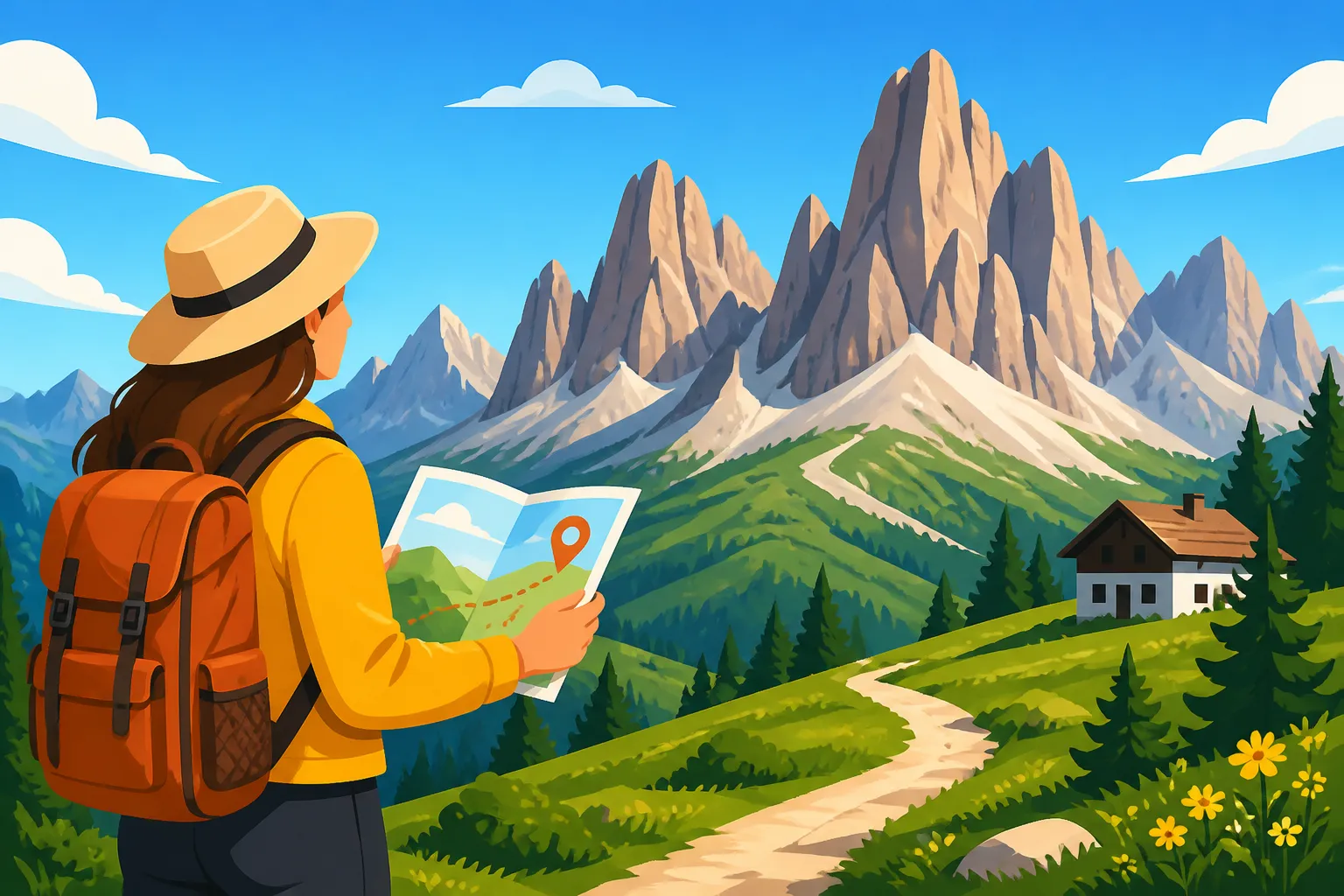
Always carry cash. While many mountain huts now accept cards, some higher-altitude spots still rely on cash for small purchases like coffee or a slice of strudel. Also, download offline maps. Cell service is surprisingly good in most valleys but can drop out entirely once you are behind a massive limestone wall. Lastly, check the weather via the "Meteo Alto Adige" app—it is far more accurate for the mountains than the general weather apps on your phone. If you're coming from abroad and need to figure out your rail tickets to the mountains, How to Buy Trenitalia and Italo Tickets and Save Money is a great resource to ensure you don't overpay for your transit to the Bolzano hub.
Disclaimer
The information provided in this guide is for informational purposes only. Travel conditions, local regulations, and seasonal openings in the Dolomites can change frequently. Always check official local tourism websites and weather forecasts before embarking on your journey. We are not responsible for any changes in services or personal injury that may occur during your travels.