How to See the Cinque Terre Villages in One Day
Trying to see all five villages of the Cinque Terre in a single day often feels like a frantic race against the clock, leaving many travelers exhausted and disappointed by the sheer volume of crowds. This guide provides a strategic, hour-by-hour roadmap to navigating the coast efficiently, ensuring you experience the unique charm of every village without the typical administrative or logistical headaches.
Disclosure: This post may contain affiliate links. We may earn a commission at no extra cost to you if you make a purchase through these links. Read full disclosure.
Planning Your Perfect One-Day Sprint
The most common mistake I see visitors make is arriving at the Cinque Terre without a clear directional strategy. These five villages—Riomaggiore, Manarola, Corniglia, Vernazza, and Monterosso al Mare—are tucked into the rugged cliffs of the Italian Riviera, and while they look close on a map, the logistics of moving between them require a bit of veteran finesse. If you are coming from further afield, such as Florence or Pisa, you will likely start by researching High-Speed Trains in Italy: Trenitalia, Italo, Routes, and Savings to get to the main hub of La Spezia.
Timing is everything. To truly conquer all five spots, you need to be on the first available train from La Spezia Centrale or Levanto. Aiming for an 8:00 AM start isn't just a suggestion; it is the difference between enjoying a quiet espresso in Riomaggiore and being pushed along the pier by a cruise ship excursion group. When I first moved to Italy, I underestimated the midday heat and the sheer density of the summer crowds. By starting early, you buy yourself at least two hours of "breathing room" before the masses arrive.
Another crucial planning element is where you choose to base yourself. While staying inside the villages is romantic, for a one-day blitz, it is often more practical to stay in La Spezia or Levanto. You can find excellent, well-rated apartments on Booking.com that are within walking distance of the train stations. This allows you to drop your bags and head straight to the platform. I always recommend using the Omio app to check the latest schedules for the regional lines, as Italian rail strikes or maintenance can occasionally throw a wrench in your plans.
The Logistics: Getting Around Efficiently
The backbone of your one-day journey is the Cinque Terre Express. This dedicated rail service runs frequently between La Spezia and Levanto, stopping at all five villages. Forget about driving; the narrow, winding roads are a nightmare for outsiders, and parking is virtually non-existent or incredibly expensive. If you are tempted to bring a vehicle, I strongly urge you to read up on Renting a Car in Italy: ZTLs, Insurance, and Driving Tips to understand why most of us expats avoid driving in protected coastal zones.
The Cinque Terre Card is your "golden ticket." For a flat daily fee, you get unlimited train travel on the Express line and access to the hiking paths. You can purchase this at any train station or online. A word of warning from someone who has seen it happen a dozen times: you must validate your paper ticket at the green machines on the platform before boarding. Failing to do so can result in a hefty fine on the spot. If you are confused about the process, check out our guide on How to Validate a Regional Train Ticket in Italy for a step-by-step tutorial.
While the train is the fastest method, it is mostly underground, meaning you miss the stunning coastal vistas. If the weather is clear, consider swapping one train leg for a ferry ride. Seeing the villages from the water provides a perspective that no hiking trail can match. You can often book small-group boat excursions via GetYourGuide, which often include a glass of local Sciacchetrà wine and a stop for a swim. This is particularly effective for the leg between Manarola and Vernazza, where the coastline is most dramatic.
The Five Villages: A Step-by-Step Itinerary
Riomaggiore: The Iconic Postcard Start
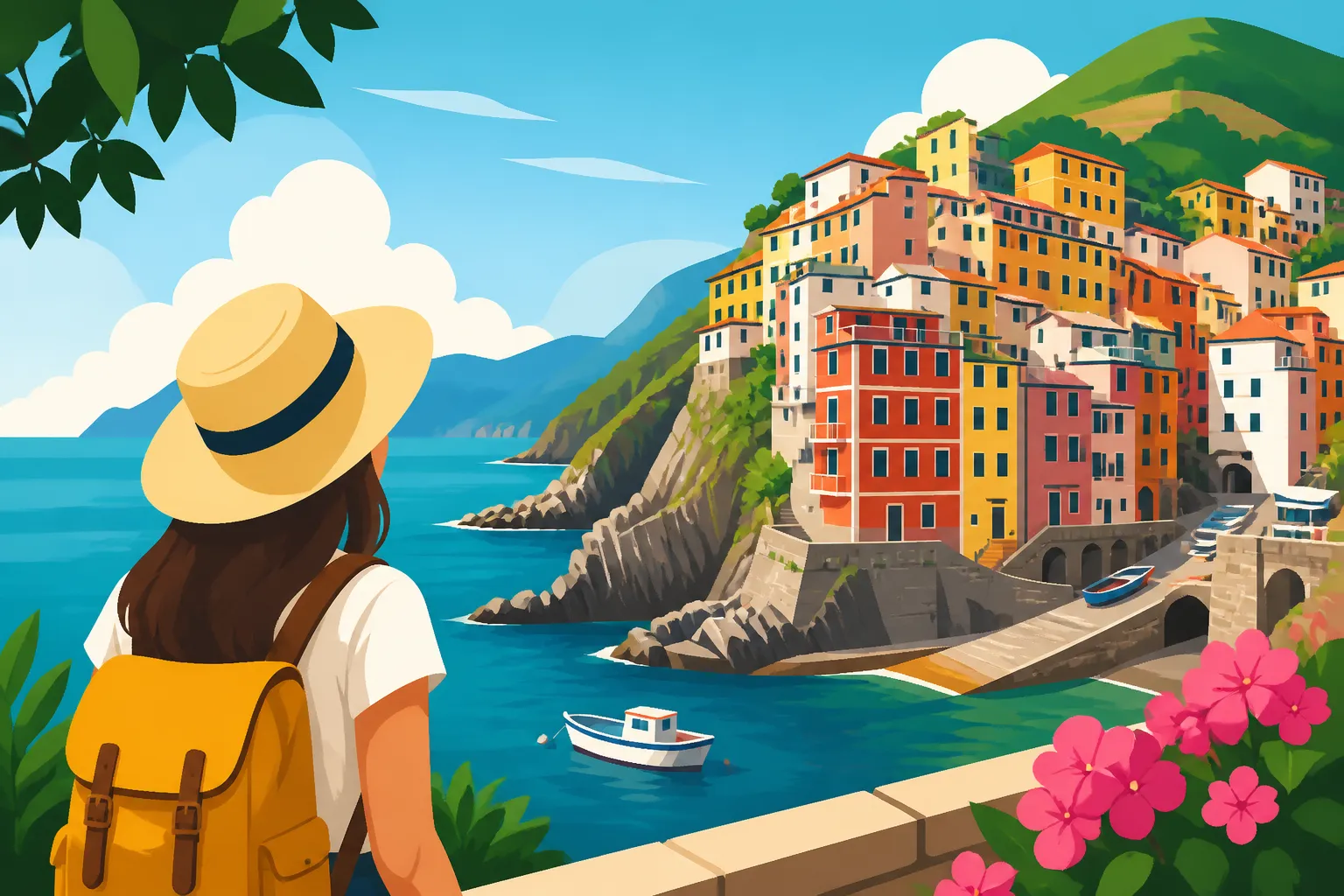
Start your day at the southern end in Riomaggiore. As the first stop from La Spezia, it sets the tone for the day. Walk through the long tunnel from the train station to the harbor. This is where you’ll find those iconic tall, narrow houses painted in shades of terracotta and mustard. Early in the morning, the harbor is peaceful, and the light is perfect for photos.
I usually suggest grabbing a quick pastry and a caffe at one of the small bars near the water. Understanding Italian Coffee Culture: How to Order Like a Local will help you navigate the "standing at the bar" versus "sitting at a table" price difference, which can be significant here. Spend about 45 minutes wandering the steep backstreets before heading back to the station for the two-minute train ride to Manarola.
Manarola: The Scenic Overlook
Manarola is arguably the most beautiful of the five. From the station, follow the path toward the sea and turn right along the cliffside walkway. This lead you to the famous viewpoint overlooking the village. If you have time and want a mid-morning snack, check out Nessun Dorma. It’s a famous spot for a reason, offering incredible views, though you usually need to join a virtual queue via their app.
Manarola is also a great place to observe the local "vineyard culture." The hillsides are covered in ancient stone terraces where grapes are still harvested by hand and transported via small monorail systems. It is a testament to the resilience of the local farmers. Don't linger too long, though; the clock is ticking, and the mid-day heat is likely starting to build.
Corniglia: The Quiet Hilltop Challenge
Corniglia is the "middle child" and the only village not directly on the water. It sits high on a promontory, and reaching it from the train station requires climbing the Lardarina—a brick staircase with 382 steps. It sounds daunting, but it’s a great way to escape the "flip-flop" brigade who find the climb too much effort. If your knees aren't up for it, there is a small shuttle bus that runs from the station, though the line can be long.
Because it’s harder to reach, Corniglia feels more authentic and less like a tourist set. The narrow alleys (carruggi) are cooler and quieter. This is an excellent spot for a quick lunch of focaccia topped with local pesto. Since you're on a tight schedule, you'll want to master the art of How to Eat Like a Local in Italy: Meal Structure and Timing so you don't get stuck waiting for a full three-course sit-down meal when a quick bite will do.
Vernazza: The Port and the Piazza
Next up is Vernazza, often cited as the most "charming" village. It has a natural harbor and a beautiful piazza right by the water, dominated by the Church of Santa Margherita d’Antiochia. By the time you reach Vernazza in the early afternoon, the crowds will be at their peak. My advice? Head toward the breakwater for a breeze or find a spot on the rocks to watch the boats come in.
If you are a fan of Gelato in Italy: How to Spot the Real Thing, Vernazza is home to some excellent gelaterie. Look for the tubs with lids (pozzetti)—that’s usually a sign of high quality. Take your gelato and walk up toward the Doria Castle for a view looking down over the harbor. It’s a steep walk, but the perspective is worth the effort before you hop on the final train to Monterosso.
Monterosso al Mare: The Beach Finale
End your day in Monterosso, the largest and most "resort-like" of the villages. It is divided into an Old Town and a New Town (Fegina) by a short tunnel. Fegina is where you’ll find the long sandy beaches and the giant "Statua del Gigante." After a long day of walking and train-hopping, there is nothing better than renting a chair for an hour or just taking a quick dip in the Ligurian Sea.
Monterosso is also the best place for a proper dinner before heading back. The Old Town is packed with excellent seafood restaurants serving acciughe di Monterosso (anchovies). If you have been exploring Tuscany for Travelers: Cities, Hills, and Coast, you will notice the culinary shift here toward seafood and herb-heavy sauces like salsa di noci. It’s the perfect way to toast to a successful, albeit fast-paced, day.
Survival Tips for the Time-Pressed Traveler
To survive the Cinque Terre in a day, you must prioritize comfort over style. I see so many tourists struggling on the uneven stone paths in high heels or restrictive clothing. Wear sturdy walking shoes or high-quality trekking sandals. Even if you aren't doing the full hike between villages, the amount of stair-climbing involved in just exploring the towns is significant.
Luggage is another major pain point. Do not attempt to bring large suitcases into the villages if you are only there for the day. Use the luggage storage (deposito bagagli) at La Spezia Centrale. It is safe, affordable, and will save you from the nightmare of dragging wheels over cobblestones and up hundreds of stairs.
Finally, stay hydrated and be mindful of your surroundings. Pickpockets are unfortunately common in crowded train stations and on the Express trains. Practice Staying Safe in Italy: Common-Sense Tips for Travelers by keeping your bag in front of you and being wary of "staged" distractions on the platforms. The Cinque Terre is a magical place, but it requires a bit of street-smarts to enjoy fully.
Comparing Travel Options for Cinque Terre
| Transport Method | Best For | Speed | Pros | Cons |
|---|---|---|---|---|
| Cinque Terre Express | Efficiency | Very Fast (2-5 mins per stop) | Frequent, cheap with card, reliable. | Mostly in tunnels; no views. |
| Public Ferry | Scenic Views | Moderate | Stunning photo ops from the water. | Expensive, weather-dependent. |
| Hiking Trails | Adventure | Slow (1.5 – 2 hours per leg) | Immersive nature and panoramas. | Physically demanding, requires time. |
| Private Boat | Luxury/Relaxation | Flexible | Customizable, no crowds, swim stops. | High cost; requires booking via GetYourGuide. |
Important Considerations for Travelers
The Cinque Terre is a UNESCO World Heritage site and a highly sensitive environmental zone. Many of the hiking trails between villages, such as the famous Via dell'Amore, may be closed for maintenance or due to landslide risks. Always check the official National Park website or the local information booths at the train stations before planning a hike. Additionally, please be a responsible traveler: pack out your trash, respect the privacy of local residents, and avoid feeding the local wildlife.
Disclaimer
This guide is for informational purposes only. Local regulations, train schedules, and trail accessibility can change without notice due to weather conditions or government mandates. Always verify current travel requirements and safety protocols through official Italian authorities before embarking on your trip. Mention of specific brands like Omio, Booking.com, or GetYourGuide is based on general utility for travelers and does not constitute a legal endorsement or guarantee of service.