What Are the Best Beaches in Sardinia?
You land at Olbia, rent a tiny Fiat, and realise that “the best beaches in Sardinia” covers almost 2,000 kilometres of coastline and hundreds of coves. Many travellers drive to the famous ones and find crowds, wind and booking rules. This guide shows you which beaches deserve your time, how to reach them, and how to work around the wind and the access limits.
Disclosure: This post may contain affiliate links. We may earn a commission at no extra cost to you if you make a purchase through these links. Read full disclosure.
Northeast Sardinia: Costa Smeralda, San Teodoro and La Maddalena
Most first-timers start in the northeast because Olbia airport and the Golfo Aranci and Olbia ferry ports are there. My first Sardinian summer started the same way. I assumed the Costa Smeralda would be all yachts and velvet ropes. Some of it is. Its beaches are still among the most beautiful in the Mediterranean, and most of them are public.
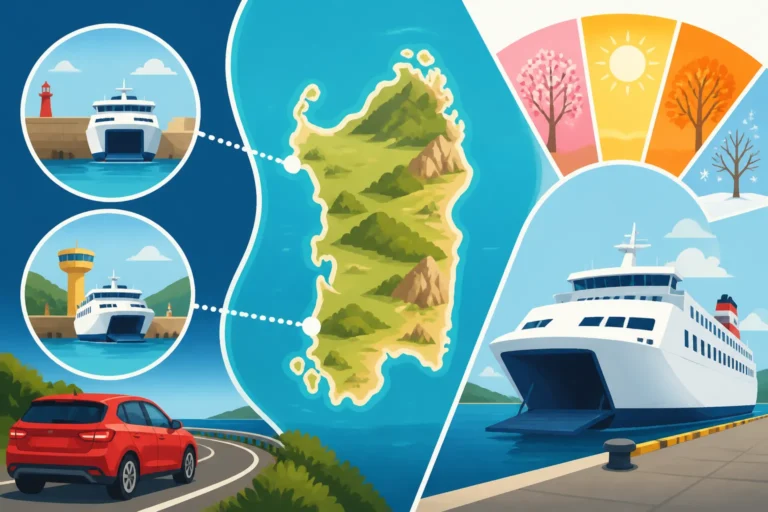
If you are still deciding how to get to the island, read How to Reach Sardinia From Mainland Italy and Getting to Sardinia: Which Port, Which Operator, Which Season before you book anything.
Capriccioli, Liscia Ruja and Spiaggia del Principe
These three beaches give you the classic Costa Smeralda picture: pale granite boulders, juniper scrub and water that shifts from turquoise to deep emerald.
- Capriccioli is a set of small coves split by rocky outcrops. It works well for families because the water stays shallow for a long way. If one cove is packed, walk over the rocks to the next.
- Liscia Ruja is the longest beach on the coast. You can find space here even in August, which matters when every other cove has run out of towel room.
- Spiaggia del Principe is reached on foot along a short dirt path from a parking area. That short walk keeps some people away. Go before ten in the morning. By midday in high season the parking area fills and late arrivals get turned around on the access road.
The car parks at these beaches are usually paid in summer. Bring coins or check whether the machine takes cards, because machines on remote dirt lots fail more often than you would expect. For a full explanation of sunbed concessions and free sand, see Are Italy’s Beaches Free, or Do You Pay for a Lido?.
San Teodoro: La Cinta and Cala Brandinchi
South of Olbia, the town of San Teodoro has two beaches that regularly appear on lists of the island’s finest.
La Cinta is a long strip of white sand between the sea and a lagoon where flamingos often feed. It suits people who like to walk, and it has enough room that the crowds thin out quickly.
Cala Brandinchi has earned the nickname “little Tahiti” for its shallow, glowing lagoon-like water backed by pine forest. Its popularity has brought a summer system of limited entry with advance booking. Check the official San Teodoro municipal information before your trip, because procedures and dates are set locally and can change from season to season. Turning up without a reservation in July and being sent away is a very common Sardinian holiday frustration.
The La Maddalena Archipelago
From Palau, a short ferry takes you and your car to La Maddalena island. From there a bridge leads to Caprera. This national park area has some of the clearest water you will ever swim in.
- Cala Coticcio on Caprera is often described as Sardinia’s most dazzling cove. In peak season, access usually requires joining a guided walk or booking a limited slot through the park. The trail is rocky and steep, so wear proper shoes, not flip-flops.
- Spiaggia Rosa on Budelli is famous for its pink-tinged sand, but you cannot step onto it. It has been closed to visitors for years to protect it. Boats pass close enough for you to see it from the water.
- Cala Corsara on Spargi is usually reached by boat. Its granite shapes and pale water make it a favourite stop on day cruises.
The easiest way to see the outer islands is a boat tour from Palau or La Maddalena. You can book at the harbour kiosks or in advance through platforms like GetYourGuide, which is useful in August when the better boats sell out. Pick smaller boats if you can. The big ones drop dozens of people at a single cove at the same moment.
The East Coast: Gulf of Orosei Coves
If the northeast is postcard Sardinia, the Gulf of Orosei is wild Sardinia. Limestone cliffs drop straight into the sea and hide coves that have no road access at all. This stretch moved me more than anywhere else on the island. It also caught me out on my first visit, because I underestimated both the hiking and the boat logistics.
Cala Goloritzé
Cala Goloritzé is a protected natural monument with a tall limestone pinnacle above a pebbly cove and water so clear that boats appear to float. You reach it on foot from the Golgo plateau above Baunei.
Practical points from my own climbs back up:
- The descent takes most people around an hour. The climb back takes longer and is fully exposed in the afternoon heat.
- Carry more water than you think you need, because there is no reliable shop at the bottom.
- Access is managed in summer, with a ticket and a capped number of daily visitors. Check the Baunei municipality’s current arrangements before you set out.
- Boats cannot land passengers directly on the beach. A boat trip lets you admire it from the water, but only walkers get onto the pebbles.
Cala Luna, Cala Mariolu and Cala Biriola
From the harbours at Cala Gonone and Santa Maria Navarrese, boats run along the gulf and stop at a series of coves.
- Cala Luna has large caves at the back of the beach and a river mouth behind it. It can also be reached on a long coastal hike from Cala Fuili.
- Cala Mariolu has small, smooth white pebbles and water that looks almost electric blue. Many people consider it the most photogenic cove in the gulf.
- Cala Biriola is smaller and often slightly calmer than its neighbours.
Two kinds of trip are available: scheduled shuttle boats that drop you at a cove and collect you later, and self-drive rental dinghies. You do not need a licence for the smaller engine sizes. The rental dinghy gives you freedom, but it will hurt if you are not comfortable at sea when the wind picks up in the afternoon. The shuttle is the relaxed option. If you want to plan the boat leg early, GetYourGuide lists several gulf excursions that you can compare by boat size and stop list.
Diving and Snorkelling the East
The underwater caves and walls along this coast attract divers from across Europe. Before you book a dive, read Diving in Sardinia and the Aeolian Islands: Depth Limits and Chamber Costs. It covers the insurance questions most people only think about once they are already in the water.
The South and West: Chia, Villasimius and the Oristano Coast
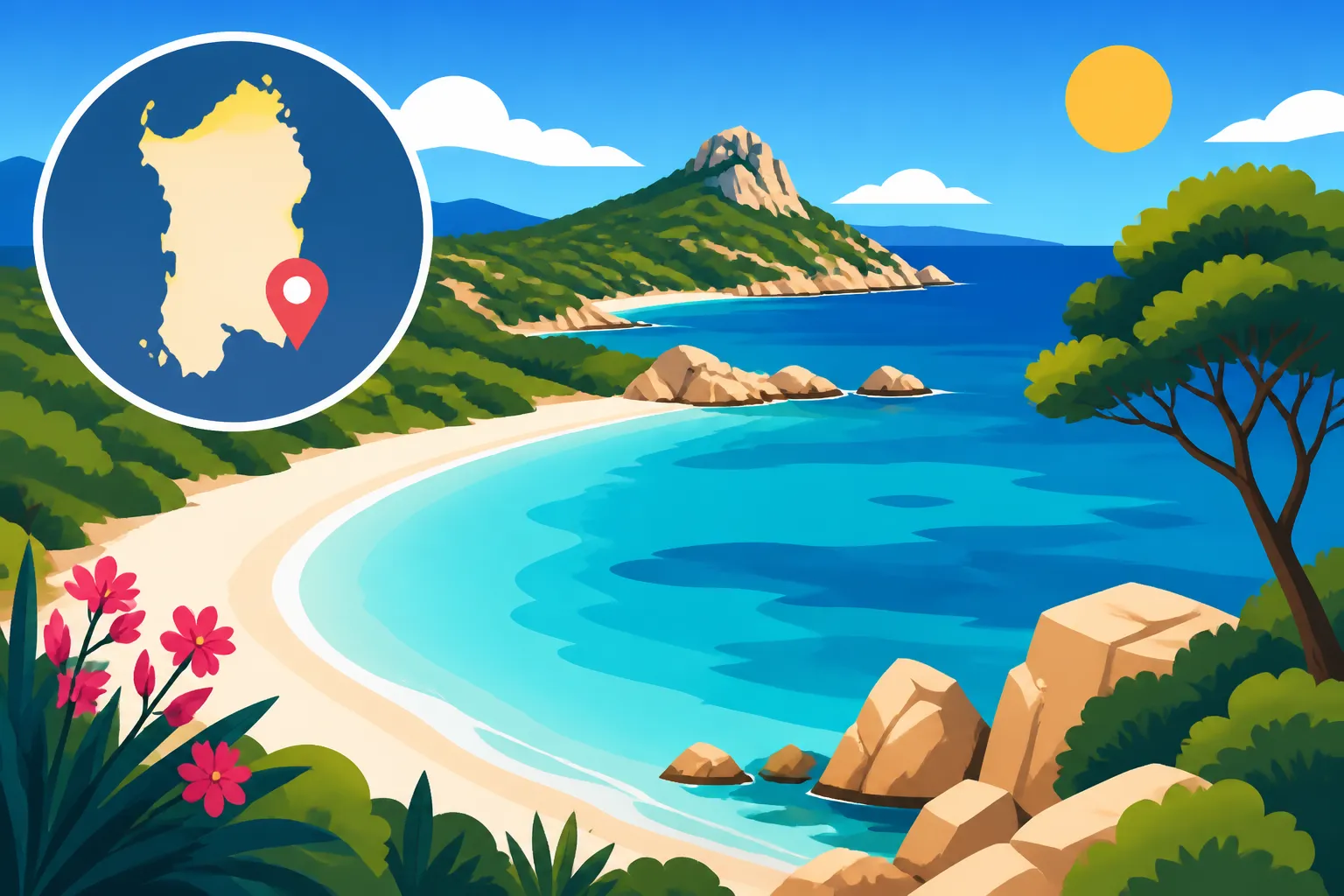
Many visitors never make it south or west, and they are missing some of the best variety on the island. Here you find dunes, quartz sand, flamingo lagoons and Atlantic-style surf, all within a few hours’ drive of each other.
Chia and the Southwest Coast
Southwest of Cagliari, the Chia area combines dunes, lagoons and pale sand.
- Su Giudeu has shallow water and a small island you can sometimes wade towards when the sea is calm.
- Tuerredda is a horseshoe bay with a small island in front. Its sheltered position makes it a good choice when other beaches are choppy.
- Cala Cipolla is reached by a short walk through the maquis. It feels wilder and has rocky snorkelling at the edges.
Villasimius and Costa Rei
East of Cagliari, the Villasimius peninsula has beaches that rival the Costa Smeralda but with more of a local, holiday-town feel.
- Punta Molentis sits on a narrow spit of land with water on both sides. In summer it uses a limited-entry system with booking, so check the Villasimius municipal arrangements ahead of your visit.
- Porto Giunco lies between the sea and a lagoon where flamingos gather, under the watch of an old Spanish tower.
- Costa Rei, further north, is a long, easy beach with plenty of space and holiday rentals close to the sand.
Cagliari’s own city beach, Poetto, is not a wild cove, but it is a lovely, practical beach if you are staying in the capital without a car.
Is Arutas, Piscinas and the Wild West
The west coast is where Sardinia stops looking like a resort brochure.
- Is Arutas on the Sinis peninsula near Oristano is famous for its rice-sized grains of quartz in white, pink and green. Do not take any of it home. Removing sand, pebbles and shells from Sardinian beaches is prohibited, and fines are issued, including at airport checks. I have watched a tourist at Cagliari airport empty a bottle of pink sand into a bin with a very red face.
- Mari Ermi, nearby, has similar quartz sand and fewer people.
- Piscinas on the Costa Verde sits in front of huge, shifting dunes and has the feel of a desert meeting the sea. The access road is long and partly unpaved, which is exactly why it stays quiet.
Around Alghero in the northwest, Le Bombarde, Lazzaretto and Mugoni are easy to reach and a good fit for families. Further north, La Pelosa near Stintino is perhaps the most photographed beach on the island. To protect it, the municipality manages entry in high season with a booking system and access rules, such as requiring a mat under your towel. Check the Comune di Stintino’s own information for the current procedure.
Planning Your Sardinia Beach Days: Wind, Access Rules and Logistics
The beaches are the easy part. Wind, roads and booking systems decide whether your day is magical or miserable.
Comparing the Top Sardinian Beaches
| Beach | Area | Access | Best For | Watch Out For |
|---|---|---|---|---|
| Cala Goloritzé | Gulf of Orosei | Hike from Golgo plateau | Adventurous walkers | Steep climb back, managed access |
| Cala Mariolu | Gulf of Orosei | Boat only | Snorkelling, photos | Boat crowds midday |
| Cala Coticcio | Caprera | Trail, guided or booked in season | Clear water | Rocky path |
| Cala Brandinchi | San Teodoro | Car park plus short walk | Families, shallow water | Summer booking required |
| La Pelosa | Stintino | Car park, booking in season | Iconic views | Strict beach rules |
| Liscia Ruja | Costa Smeralda | Car park | Space in August | Paid parking |
| Tuerredda | Chia area | Car park | Shelter from wind | Fills by late morning |
| Punta Molentis | Villasimius | Car park, booking in season | Two-sided sea views | Limited entry |
| Is Arutas | Sinis peninsula | Car park | Quartz sand | Sand removal prohibited |
| Piscinas | Costa Verde | Long, partly unpaved road | Dunes, solitude | Rough access, waves |
Reading the Wind: The Mistral Rule
This is the single most useful tip I can give you. The maestrale, or mistral, blows from the northwest. It can turn west and north coast beaches into rough, sandblasted places with dangerous currents. When it blows, head for the east and southeast, where the Gulf of Orosei, San Teodoro and Costa Rei are usually sheltered.
When the scirocco blows from the southeast, the opposite applies. Head west or north, towards Alghero or the Sinis peninsula.
Most locals check a wind forecast before they choose a beach. Do the same and you will avoid wasting a day. If you stay flexible and base yourself centrally, you can switch coasts depending on the forecast. For timing your whole trip around the calmest and warmest weeks, read When Is the Best Time for a Beach Holiday in Italy?.
Getting Around and Where to Base Yourself
A car is close to essential for beach-hopping. The regional ARST buses connect towns but rarely reach the coves themselves.
If you are connecting from the mainland by train to a ferry port such as Livorno, Genoa or Civitavecchia, Omio lets you compare rail and ferry options in one search. That saves you from juggling several operator sites with different date formats.
For airport arrivals, Sicilian and Sardinian Airport Transfers: Island-by-Island Options explains the routes from Olbia, Alghero and Cagliari.
Choosing a base is a real trade-off. Here is how I would think about it:
- Base in the northeast if you want the Costa Smeralda, San Teodoro and La Maddalena boat days.
- Base near Cala Gonone or Santa Maria Navarrese for the Gulf of Orosei coves.
- Base near Cagliari to cover Chia, Villasimius and the city at once.
- Split your stay between two areas if you have ten days or more, rather than driving four hours a day from a single base.
Booking.com is handy for comparing coastal agriturismi, apartments and hotels across these zones, especially if you filter for free parking. That filter matters more here than almost anywhere else in Italy. For neighbourhood-level advice, see Where to Stay in Sardinia: Costa Smeralda, Alghero, and Cagliari. For a wider look at the island beyond the coast, Sardinia for Travelers: Beaches and the Interior covers the mountain villages and nuraghi.
Packing, Signal and Beach Etiquette
Pack for practical needs. You will want water shoes for pebbly coves, a sun umbrella or tent because many wild beaches have no shade, a mat if you plan to visit La Pelosa, and plenty of water. For a full checklist, see What to Pack for a Beach Trip in Southern Italy.
Phone signal can drop out in the Gulf of Orosei and along remote western stretches. Download offline maps before you leave your accommodation. If you are relying on mobile data, eSIM Coverage in Sicily and Sardinia: What to Check Before You Buy helps you pick a network that actually covers the coves.
Respect the local rules. Some beaches ban smoking, many restrict access to the dunes, and none of them allow you to take the sand. The stricter rules can feel bureaucratic at first. They are the reason these places still look the way they do.
Disclaimer
This article is for general informational purposes only and does not constitute professional advice. Laws, prices and regulations vary by location and change over time. Consult a qualified professional for guidance on your specific situation.