How to Reach Sardinia From Mainland Italy
Planning a trip to Sardinia can feel like solving a logistical puzzle, especially when you realize the continente—as Sardinians call mainland Italy—is separated by a vast stretch of the Tyrrhenian Sea. This guide removes the guesswork by detailing exactly how to navigate ferry routes, flight connections, and local transport hacks to get you to the island completely stress-free.
Disclosure: This post may contain affiliate links. We may earn a commission at no extra cost to you if you make a purchase through these links. Read full disclosure.
Flying vs. Ferrying: The Eternal Expat Debate
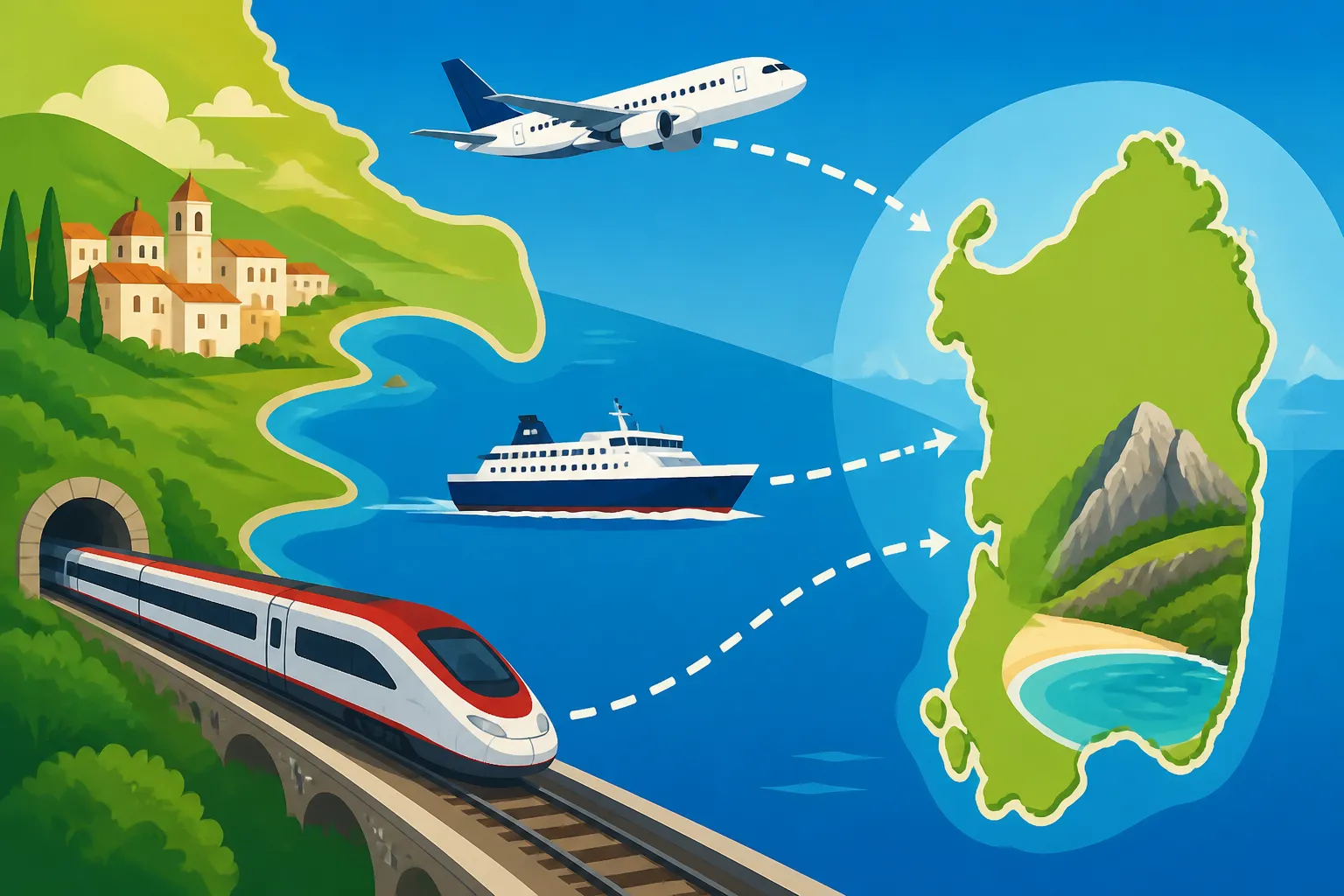
When I first moved to Italy, I assumed that getting to Sardinia would be as simple as hopping on a train. I quickly learned that the "island life" starts with a significant choice: do you want to be there in an hour, or do you want to bring your own car and a suitcase full of supplies? This is the fundamental question every resident and traveler must answer. Choosing between a flight and a ferry isn't just about price; it’s about the kind of experience you want to have once you land.
The Speed and Convenience of Flying
If you are traveling solo or as a couple and don't plan on doing a massive road trip across the rugged interior, flying is undoubtedly the most efficient path. Italy’s mainland is incredibly well-connected to the three main Sardinian airports: Cagliari (Elmas) in the south, Olbia (Costa Smeralda) in the northeast, and Alghero (Fertilia) in the northwest. From Rome or Milan, the flight time is barely 60 minutes. It’s often faster than the commute from the Roman suburbs to the city center on a bad Tuesday.
A major tip for those looking at flights: keep an eye on the "territorial continuity" (continuità territoriale) rules. These are subsidized fares designed for Sardinian residents, but during certain times of the year or under specific tenders, the flight availability for non-residents can fluctuate wildly. For the best overview of these quick connections, I often use Omio to compare different airlines and see if a low-cost carrier like Volotea or EasyJet makes more sense than the national carrier, ITA Airways. Just remember that if you fly, you’ll likely need to arrange a rental upon arrival to see the best spots, so check out Renting a Car in Italy: ZTLs, Insurance, and Driving Tips to avoid any expensive surprises at the rental desk.
The Romantic and Practical Allure of the Ferry
There is something undeniably "Old World" about standing on the deck of a massive traghetto as it pulls out of the port of Civitavecchia. If you are moving to the island or planning a stay longer than ten days, the ferry is usually the superior choice. Why? Because Sardinia is huge. It is the second-largest island in the Mediterranean, and public transport between the mountain villages and the secluded beaches is, let's be honest, a bit of a challenge. Bringing your own vehicle saves you a fortune in rental costs and gives you the freedom to pack all the beach gear, olive oil, and wine you desire.
Taking the ferry is also a rite of passage for many expats. You’ll find yourself amongst families heading home for the summer, trucks hauling goods, and adventurous travelers. It’s a slower pace of life that starts the moment you drive onto the ramp. To get a better sense of how this fits into the broader Italian infrastructure, you can read more about Getting Around Italy: Trains, Buses, Flights, and Car Hire to see how the ports connect to the rail and road networks.
Navigating the Major Ferry Routes and Ports
Choosing your departure port on the mainland is just as important as choosing your destination on the island. Depending on where you are starting your journey—be it the industrial north, the historic center, or the vibrant south—your port of call will vary significantly in terms of travel time and onboard amenities.
| Mainland Port | Sardinian Destination | Average Duration (Night) | Average Duration (Day) |
|---|---|---|---|
| Civitavecchia | Olbia | 6–8 hours | 5 hours |
| Civitavecchia | Cagliari | 13–15 hours | N/A |
| Livorno | Olbia | 8–10 hours | 7 hours |
| Genoa | Porto Torres | 10–12 hours | N/A |
| Genoa | Olbia | 10–12 hours | N/A |
| Naples | Cagliari | 13–15 hours | N/A |
Departing from Central Italy: Civitavecchia
Civitavecchia is the powerhouse of the Italian ferry system. Located about an hour north of Rome, it is the most popular jumping-off point for anyone living in or visiting Central Italy. The most frequent route is to Olbia, which serves as the gateway to the famous Costa Smeralda. In the summer, Tirrenia, Moby, and Grimaldi Lines run multiple ships daily.
If you are heading to the capital of the island, the Civitavecchia to Cagliari route is a long haul. It usually leaves in the evening and arrives the next morning. My advice? Book a cabin (cabina). Trying to sleep in a "passaggio ponte" (deck passage) or a "poltrona" (reclining seat) might save you 50 euros, but you will arrive in Cagliari feeling like you’ve been through a blender. For those who need to manage their legal status while traveling through these major hubs, it is worth checking Traveling on a Permesso di Soggiorno: rules and restrictions to ensure your paperwork is in order before boarding.
Departing from Northern Italy: Genoa and Livorno
For those coming from Milan, Turin, or even Central Europe, Genoa is the logical choice. The routes from Genoa to Porto Torres or Olbia are longer but allow you to bypass the long drive down the Italian peninsula. These ships are often the most luxurious, feeling more like mini-cruise ships with cinemas, restaurants, and swimming pools.
Livorno, located in Tuscany, is the "Goldilocks" port—not too far north, not too far south. It is particularly popular for those who want a shorter crossing than Genoa but don't want to drive all the way to Rome. The Livorno to Olbia route is a staple for expats living in Florence or Pisa. Once you arrive at your destination, you'll want to have your accommodation sorted. I usually head to Booking.com to find those hidden agriturismi that aren't always visible on the main tourist maps.
Booking Tips, Logistics, and Professional Secrets
After a decade of navigating the Tyrrhenian Sea, I’ve picked up a few tricks that the official websites won’t tell you. The Italian ferry system is efficient but can be chaotic if you don't know the "unwritten rules" of the port.
Timing and Dynamic Pricing
Ferry prices in Italy behave much like airline prices. If you try to book a Saturday night crossing in mid-August two days before departure, you will pay a king's ransom. If you book in February for a June trip, you can often find "auto a 1 euro" (car for 1 euro) promotions. I highly recommend using Omio to track these price fluctuations across different companies simultaneously.
Another secret is the "diurna" (daytime) vs "notturna" (nighttime) crossing. Daytime crossings are often significantly cheaper and faster because the ships use high-speed engines and don't require the staff to manage cabins. If you don't mind spending five hours watching the blue horizon, the daytime ferry from Civitavecchia to Olbia is a fantastic budget hack. To help with your overall vacation planning, you might want to look into Sardinia for Travelers: Cities, Coast, and Volcanoes to decide which part of the island deserves your time.
On-Board Survival Guide
If you book a night ferry, the boarding process usually starts two hours before departure. If you are bringing a car, be prepared for a high-stress environment. The "maritimi" (port workers) will scream "Vai! Vai! Sinistra! Destra!" with incredible urgency. Just keep your cool, fold in your mirrors, and remember where you parked—take a photo of the deck number and the nearest colored pillar.
Once on board, if you haven't booked a cabin, there is a mad dash for the best sofas in the lounge. This is where the veteran expats shine. We bring our own blankets, a power bank, and a stash of snacks. While there are restaurants on board, they are often overpriced and underwhelming. I usually grab a panino from a local deli on the mainland before boarding. If you find yourself in need of local advice or guided experiences once you land, GetYourGuide offers some excellent boat tours around the Maddalena Archipelago that are worth every penny.
Essential Preparation for Your Arrival
Sardinia is a place of incredible beauty but also significant logistical quirks. Arriving at 6 AM in a sleepy port like Porto Torres requires a bit of foresight. Many shops and cafes won't open for another hour or two, and if you haven't booked your first night’s stay, you might find yourself wandering.
Currency and Connectivity
While Sardinia is part of Italy, the mountainous interior can sometimes have spotty mobile reception. Make sure you have downloaded your maps for offline use. Also, while credit cards are widely accepted in the main towns, many small "chioscos" (beach bars) or mountain trattorias still prefer cash. You can check How Much Cash Should You Carry When Traveling in Italy? to get a better idea of how much to keep on hand.
If you’re traveling from elsewhere in the EU, remember that your health coverage still applies here. It is always a good idea to refresh your memory on Using Your European Health Insurance Card (EHIC) in Italy just in case an unexpected sea urchin encounter ruins your beach day.
Navigating the Island’s Infrastructure
Once you disembark, the SS131 (known as the Carlo Felice) is the main artery of the island, connecting Cagliari to Porto Torres. It’s a good road, but be wary of the "autovelox" (speed cameras)—they are everywhere. If you didn't bring a car and are relying on the ARST bus network or the Trenitalia trains, be prepared for a slower pace. The trains in Sardinia are not the high-speed Frecciarossa you find on the mainland; they are charmingly slow and offer spectacular views of the landscape.
For those planning to explore the more urban areas of the island, Getting Around Italian Cities: Metro, Tram, and Buses provides a good baseline of what to expect in terms of ticketing systems, even if Cagliari’s light rail is much smaller than Milan’s metro. If you are specifically looking for the most pristine spots to sunbathe after your long journey, don't miss our guide on Italy's Best Beaches by Region.
Finally, if you're looking for things to do once you've settled into your hotel, check GetYourGuide for local wine tasting experiences in the Cannonau regions. It's the best way to immerse yourself in the local culture after a long journey across the sea. Getting to Sardinia is more than just a transit; it's the beginning of a different kind of Italian experience—one that is rugged, ancient, and deeply rewarding.
Disclaimer
The information provided in this guide is for informational purposes only and reflects the personal experiences and research of the author. Travel regulations, ferry schedules, and flight availability in Italy are subject to frequent changes. Always verify specific travel requirements, visa rules, and health protocols with official government sources or the respective transport providers before booking your trip.