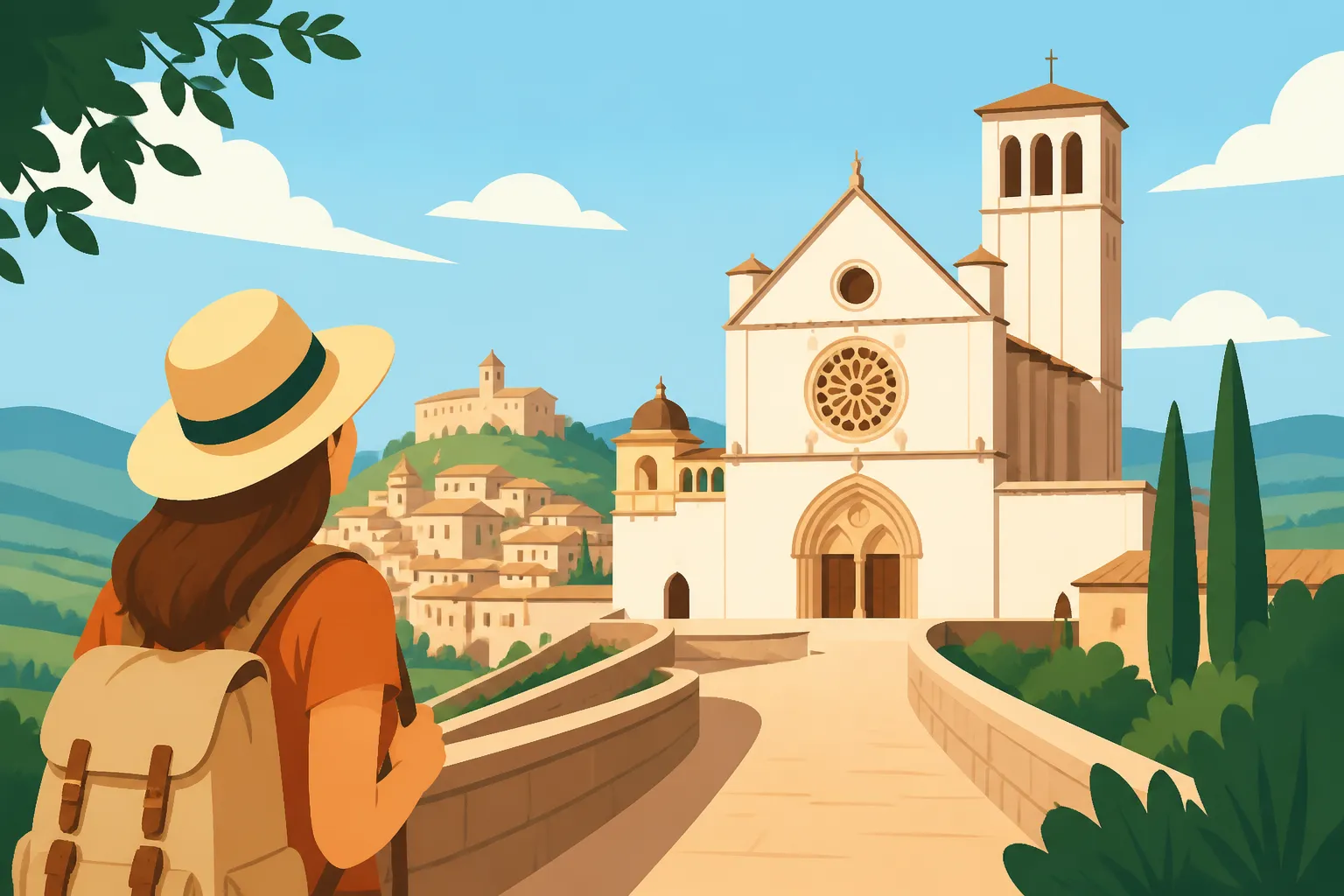
How to Visit Assisi and the Basilica of St. Francis
Assisi. Just the name conjures images of profound peace, spiritual tranquility, and breathtaking Umbrian landscapes. It’s a place many of us expats, or even seasoned tourists, dream of visiting to connect with the legacy of St. Francis and soak in the serene atmosphere. But let’s be real, navigating Italy’s transport systems and understanding the specific nuances of visiting such a sacred and historically rich site can feel like deciphering an ancient scroll. This comprehensive guide is here to unravel all those mysteries, providing you with practical, empathetic advice so your visit to Assisi and its magnificent Basilica of St. Francis is nothing short of magical.
Disclosure: This post may contain affiliate links. We may earn a commission at no extra cost to you if you make a purchase through these links. Read full disclosure.
Getting to Assisi: Your Journey to the City of Peace
Planning your journey to Assisi, nestled beautifully in the heart of Umbria, requires a bit of foresight. It’s not one of those major hubs with direct train lines to everywhere, which is part of its charm but also a source of slight logistical challenge. Don't worry, though, it's absolutely doable!
By Train: A Scenic But Not Direct Route
While Italy's train network is generally fantastic, Assisi isn't directly on a high-speed line. Your destination, if traveling by train, will be the Assisi-Santa Maria degli Angeli station (Stazione di Assisi). This station is located in the lower town, about 4 kilometers (2.5 miles) from the historic hilltop center of Assisi.
Once you arrive at Santa Maria degli Angeli, you’ll need to complete the journey up the hill. There's a local bus service (usually Bus Line C) that runs regularly from the station up to Piazza Matteotti and Piazza Unità d'Italia in the historic center. Taxis are also readily available just outside the station if you prefer a quicker, more direct route, especially if you're carrying luggage. The bus ride typically takes about 15-20 minutes, while a taxi might shave a few minutes off that, depending on traffic and where exactly in the center you're heading. For checking train schedules and booking tickets in advance, especially from major cities like Rome, Florence, or Milan, you can easily use platforms like Omio to compare options and prices. It helps a lot to have your tickets sorted before you go, especially during peak seasons when trains can get crowded.
By Bus: Directness and Convenience
For some travelers, particularly those coming from nearby cities in Umbria or even further afield, long-distance buses can be a surprisingly convenient option. Services like FlixBus connect Assisi to a wider network of Italian cities, often dropping you off closer to the main town or making the connection to the hilltop easier than the train. However, always double-check the exact drop-off point. Sometimes, these buses also stop in Santa Maria degli Angeli, meaning you’d still need that final bus or taxi up the hill.
If you're already in Umbria, say Perugia or Spello, regional bus lines (like BusItalia Umbria) offer frequent and affordable connections directly to Assisi's upper town. These regional buses are often the most straightforward way to get there if you're exploring the area without a car. They drop you right in the historic center, which is a huge plus.
By Car: The Freedom and Parking Headaches
Driving to Assisi gives you immense flexibility, particularly if you're planning to explore the wider Umbrian countryside, visiting charming towns like Spello, Montefalco, or Gubbio. The winding roads leading up to Assisi are picturesque, offering stunning views as you ascend.
However, be warned: driving within the historic center of Assisi is heavily restricted by ZTLs (Zone a Traffico Limitato), which are limited traffic zones enforced by cameras. If you drive into these zones without a permit, you'll incur a hefty fine. The best approach is to park in one of the designated car parks outside the ZTL. Some popular parking options include Parcheggio Mojano, Parcheggio Piazza Matteotti, and Parcheggio Saba Porta Nuova. These are all well-signposted and relatively close to escalators or lifts that take you further up into the town. Parking can range from €2-€3 per hour, or a flat daily rate of around €15-€20. During peak season or on weekends, these car parks fill up quickly, so arriving early in the morning is highly recommended. It’s also wise to research Renting a Car in Italy: ZTLs, Insurance, and Driving Tips before you hit the road, just to be fully prepared for Italian driving quirks.
Organized Tours: Easing the Logistics
If the thought of coordinating all these logistics feels a bit much, especially if you're coming from a major city like Rome or Florence, consider a guided day trip. Services like GetYourGuide offer excellent options that handle all the transport and provide insightful commentary on the history and significance of Assisi and St. Francis. These tours often include transport, a guided visit to the Basilica, and some free time to explore the town, making for a stress-free day. They're a great choice if you prefer someone else to take the wheel (literally and figuratively!) so you can just enjoy the experience. Many tour operators specifically cater to English-speaking visitors, which can be a huge relief for those who aren't confident in their Italian.
Navigating Assisi: Getting Around the Hilltop Town
Assisi is a beautiful, medieval hilltop town, and its charm lies in its ancient, winding cobblestone streets. However, this also means getting around requires a bit of planning and sturdy shoes.
Walking: The Best Way to Explore Bring Good Shoes!
Hands down, the best way to experience Assisi is on foot. The historic center is mostly pedestrianized, and every corner seems to reveal another breathtaking view, a hidden alley, or a quaint shop. However, this is a hilltop town, meaning there are plenty of steep inclines, stairs, and uneven cobblestones. Forget your fancy heels or flimsy sandals; comfortable, supportive walking shoes are an absolute must. You'll be climbing, descending, and wandering for hours, and your feet will thank you for the foresight. Take your time, embrace the climb, and stop often to admire the vistas. Seriously, plan on a good long walk, maybe even bringing a small bottle of water. For general advice on exploring Italy's towns, you might find our guide on Getting Around Italian Cities: Metro, Tram, and Buses helpful, even though Assisi is primarily walkable.
Local Buses and Taxis: When Your Legs Need a Break
While walking is ideal, sometimes your legs just need a break, or you need to cover a longer distance, like from the lower town (Santa Maria degli Angeli) up to the historic center. Assisi has a local urban bus system that efficiently connects the train station and the Basilica di Santa Maria degli Angeli (where the Porziuncola is located) to various points within the historic hilltop center. These buses are reliable and affordable. You can purchase tickets at tabaccherie (tobacco shops), newsstands, or directly from the driver (though it might be slightly more expensive).
Taxis are also available, particularly around the train station and major parking areas. They offer a convenient option for quick transfers, especially if you're traveling with luggage or have limited mobility. Look for designated taxi stands or ask your accommodation to call one for you. Be aware that prices will be higher than the bus, and it's always a good idea to confirm the fare beforehand, or at least ensure the meter is running.
Parking in Assisi's Historic Center
As mentioned earlier, Assisi's historic center is largely a ZTL (Zona a Traffico Limitato), meaning access for private vehicles is restricted. Trying to drive into the center without proper authorization will result in fines. The best strategy is to utilize the numerous paid parking lots located around the periphery of the town.
- Parcheggio Mojano: One of the largest and most popular, located below the Rocca Maggiore. It has escalators and lifts that take you directly up into the heart of the town.
- Parcheggio Piazza Matteotti: Situated at the northern end of the historic center, offering good access to the upper parts of Assisi, including the Rocca Maggiore.
- Parcheggio Saba Porta Nuova: Convenient for accessing the western side of the town and a bit closer to the Basilica of St. Francis if you don't mind a downhill walk.
Each parking lot has varying rates, usually charged per hour with a maximum daily cap. It's smart to check signage carefully. Arriving early, especially during peak tourist season (spring, summer, major holidays), is crucial, as these lots fill up quickly. Remember, the convenience of driving directly to Assisi comes with the need to park strategically outside the restricted zones.
Visiting the Basilica of St. Francis: A Spiritual and Artistic Masterpiece
The Basilica Papale di San Francesco d'Assisi is not just a church; it's a UNESCO World Heritage site, a spiritual beacon, and a monumental repository of medieval art. It’s a place that draws millions, not only for its religious significance but also for its stunning beauty.
Understanding the Basilica Complex
The Basilica is actually composed of two distinct churches, built one on top of the other, plus a crypt and the Sacro Convento (monastery).
- The Lower Basilica: This is the older, darker, and more somber of the two, built directly over the tomb of St. Francis. Its walls and ceilings are adorned with incredible frescoes by masters like Cimabue, Giotto (early works), Pietro Lorenzetti, and Simone Martini. The atmosphere here is one of deep reverence. You'll find the crypt of St. Francis at the very bottom, a profoundly moving place where silence is paramount.
- The Upper Basilica: In stark contrast, the Upper Basilica is brighter, more spacious, and features the iconic fresco cycle depicting the Life of St. Francis, traditionally attributed to Giotto and his workshop. These frescoes are considered a pivotal moment in Western art, marking a transition from Byzantine to Renaissance styles. The light streaming through the stained-glass windows illuminates the vibrant storytelling on the walls.
Both basilicas offer a unique experience, blending spiritual devotion with unparalleled artistic achievement. Take your time in each, absorbing the art and the palpable sense of history.
Dress Code and Etiquette
As with all religious sites in Italy, a strict dress code is enforced at the Basilica of St. Francis. This isn't just a suggestion; it's a rule that visitors are expected to follow out of respect.
- Shoulders and Knees Covered: Both men and women must have their shoulders and knees covered. This means no sleeveless tops, tank tops, short shorts, or mini-skirts. Scarves are great for women to cover shoulders if needed.
- Modest Attire: Generally, modest clothing is appreciated. While less strict than some other holy sites, showing excessive skin is frowned upon.
- Silence and Respect: Inside the Basilica, maintain silence. Turn off your phone and avoid loud conversations. This is a place of worship and contemplation for many.
- Photography: Photography is usually forbidden inside the Basilica, especially in the Lower Basilica and crypt. Look for signs, but generally, it's best to keep your camera put away unless explicitly stated otherwise. Guards are often present and will enforce these rules. For broader cultural tips on visiting Italy, consider checking out Visiting Italian Churches Respectfully as a Traveler.
Best Times to Visit and Avoiding Crowds
Assisi, and particularly the Basilica, can get incredibly crowded, especially during peak tourist season (Easter to October), religious holidays, and weekends. If you want to experience the Basilica in a more serene atmosphere:
- Early Morning: Arrive right when the Basilica opens. The first hour or two are usually the quietest, allowing for a more reflective visit.
- Late Afternoon: Just before closing time, the crowds tend to thin out as tour groups depart.
- Off-Season: Consider visiting in the shoulder seasons (late autumn or early spring) or even winter. While some services might be reduced, you'll experience a much calmer, more authentic Assisi.
- Weekdays: Whenever possible, plan your visit for a weekday rather than a weekend.
Even when crowded, the sheer scale and beauty of the Basilica make it a worthwhile visit, but setting your expectations about crowds can enhance your experience.
Guided Tours and Audio Guides
To truly appreciate the art and history of the Basilica, a guided tour or audio guide can be invaluable.
- Official Guided Tours: The Franciscan friars occasionally offer guided tours, often in multiple languages. Check the Basilica's official website or inquire at the information desk upon arrival for schedules and availability.
- Private Guides: You can hire a private, licensed guide (often booked in advance, especially through tour platforms like GetYourGuide) who can provide a personalized and in-depth explanation of the frescoes, the life of St. Francis, and the significance of the site. This can be particularly enriching for art history enthusiasts.
- Audio Guides: Audio guides are typically available for rent at the Basilica's entrance or gift shop. These allow you to explore at your own pace while still gaining detailed information about the art and architecture.
Having some form of interpretive guide can transform your visit from merely seeing beautiful art to truly understanding its context and profound meaning.
Beyond the Basilica: Exploring Assisi's Other Gems
While the Basilica of St. Francis is undoubtedly Assisi's crown jewel, the town offers so much more to explore. Don't rush out after your visit; take your time to discover the other layers of history and spirituality.
Piazza del Comune and Temple of Minerva
The Piazza del Comune is the vibrant heart of Assisi's historic center. This bustling square is a fantastic place to soak in the atmosphere, grab a coffee, or simply people-watch. Dominating one side of the piazza is the incredibly preserved façade of the Temple of Minerva, an ancient Roman temple dating back to the 1st century BC. Today, it houses the church of Santa Maria sopra Minerva, but its classical columns offer a striking reminder of Assisi's ancient past, long before St. Francis walked these streets. It’s a wonderful juxtaposition of pagan history and Christian faith.
Rocca Maggiore: Panoramic Views
Perched majestically above Assisi, the Rocca Maggiore is a formidable medieval fortress that offers the most breathtaking panoramic views of the town, the Umbrian valley, and the distant Apennine mountains. The walk up to the Rocca can be steep, but it's well worth the effort. Inside, you can explore the castle's ramparts, towers, and inner courtyards, imagining centuries of history unfolding within its walls. It's a fantastic spot for photography and for gaining a real sense of Assisi's strategic position. Make sure to factor in enough time to climb to the highest points.
Santa Chiara Basilica: Home of St. Clare
A short walk from the Piazza del Comune brings you to the Basilica di Santa Chiara (Basilica of St. Clare), dedicated to St. Francis's close friend and founder of the Order of Poor Clares. This beautiful, lighter-hued church houses the remains of St. Clare and the original crucifix that spoke to St. Francis in San Damiano, inspiring his spiritual journey. Its pink and white striped façade is iconic, and the interior is simple yet deeply moving. The crypt here is also a place of quiet contemplation.
Eremo delle Carceri: Serene Retreat
For a truly profound and peaceful experience, venture a few kilometers outside the town walls to the Eremo delle Carceri (Hermitage of the Prisons). Nestled in a dense forest on the slopes of Mount Subasio, this is where St. Francis and his early followers retreated for prayer and meditation in natural caves. The atmosphere here is utterly serene, a stark contrast to the bustle of the town. You can explore the small chapel, the friars' cells, and the ancient oak forest. It's a place that genuinely feels untouched by time and offers a powerful connection to the Franciscan spirit. A local bus or a short taxi ride can take you there, or it's a pleasant (though uphill) walk if you're feeling energetic.
Where to Stay and Eat in Assisi
Planning a visit means not just seeing the sights, but also immersing yourself in the local life, especially through food and comfortable lodging.
Accommodation Options
Assisi offers a diverse range of accommodations, catering to all tastes and budgets.
- Within the Historic Walls: Staying inside the ancient walls provides an immersive experience. You'll wake up to the sounds of the town, be steps away from the main attractions, and enjoy the charming atmosphere of medieval streets at night. Options here range from boutique hotels in converted historic buildings to cozy bed & breakfasts. Expect prices to be a bit higher due to the prime location.
- Santa Maria degli Angeli: The lower town, where the train station and the impressive Basilica di Santa Maria degli Angeli (housing the Porziuncola, St. Francis's tiny original chapel) are located, offers more modern hotels, often with more amenities like parking and swimming pools. It's usually a more budget-friendly option, with easy bus connections up to the historic center.
- Agriturismi in the Umbrian Countryside: For those seeking tranquility and a taste of rural Italian life, consider staying in an agriturismo in the hills surrounding Assisi. These farm stays often offer delicious homemade meals, stunning views, and a peaceful escape. You'd typically need a car for this option.
When it comes to finding a place to rest your head, websites like Booking.com are invaluable for comparing prices, reading reviews, and finding exactly what you need, whether it's a luxurious hotel or a charming, family-run B&B. You can find more comprehensive details on Accommodation in Italy: Hotels, B&Bs, and Agriturismi if you're exploring options across the country.
Local Cuisine: Savoring Umbrian Flavors
Umbria is known as "the green heart of Italy," and its cuisine reflects this with hearty, earthy flavors and a focus on fresh, local ingredients. Assisi is no exception, offering a culinary journey that complements its spiritual one.
- Wild Game: Given its forested landscape, Umbria excels in dishes featuring wild boar (cinghiale), venison, and pigeon (piccione). Look for pasta dishes with rich, slow-cooked game ragùs.
- Truffles: This region is a paradise for truffle lovers, especially black truffles (tartufo nero). You'll find them shaved over pasta, eggs, bruschetta, or used in sauces. If you're visiting in autumn, you're in for a real treat.
- Legumes and Grains: Lentils from Castelluccio (a nearby mountain plain) are famous for their quality and flavor. Expect delicious soups and stews.
- Olive Oil: Umbrian olive oil is renowned for its robust, peppery flavor. You'll find it drizzled generously over everything.
- Local Wines: Assisi is part of a wine-producing region. Look for local white wines like Grechetto or red wines like Sagrantino di Montefalco. Enjoying an aperitivo with some local wine and appetizers is a delightful way to wind down.
- Porchetta: This savory, fatty, and utterly delicious roasted pork, often served in a sandwich, is a street food staple in Umbria. Keep an eye out for it!
Don’t be afraid to venture beyond the main tourist streets. Often, the best eateries are found tucked away in smaller alleys, serving authentic, family-style meals. For a deeper dive into Italy's diverse culinary landscape, you might want to read Italian Regional Cuisine: How Food Changes Across Italy.
Transport Options Comparison
To help you decide the best way to approach your visit to Assisi, here's a quick comparison of the primary transport methods:
| Transport Method | Pros | Cons | Estimated Cost (approx.) | Convenience Score (1-5, 5=most convenient) |
|---|---|---|---|---|
| Train + Local Bus | Scenic, eco-friendly, affordable long-distance | Requires transfer at Assisi-SM degli Angeli station | €10-€30 (long-distance) + €1.50 (local bus) | 3 |
| Long-Distance Bus | Can be direct, often drops closer to center | Less frequent, journey times can vary | €10-€25 (long-distance) | 3 |
| Car (self-drive) | Maximum flexibility, great for regional exploration | ZTLs, parking challenges/costs, navigation on winding roads | €15-€20 (daily parking) + fuel/tolls | 4 (once parked) |
| Organized Tour | Stress-free, all-inclusive, knowledgeable guide | Less flexibility in itinerary, may feel rushed at times | €50-€100+ (day trip) | 5 |
Ultimately, the best way to visit Assisi depends on your starting point, budget, and preference for independent exploration versus organized convenience. Whatever you choose, the journey to this spiritual heart of Italy is sure to be rewarding.
Disclaimer
Please note that travel information, including public transport schedules, ticket prices, opening hours, and specific entry requirements for sites like the Basilica of St. Francis, can change. It is always advisable to check official websites or contact relevant service providers for the most current information before your visit. This guide is based on general information and the typical experience of an expat living in Italy.