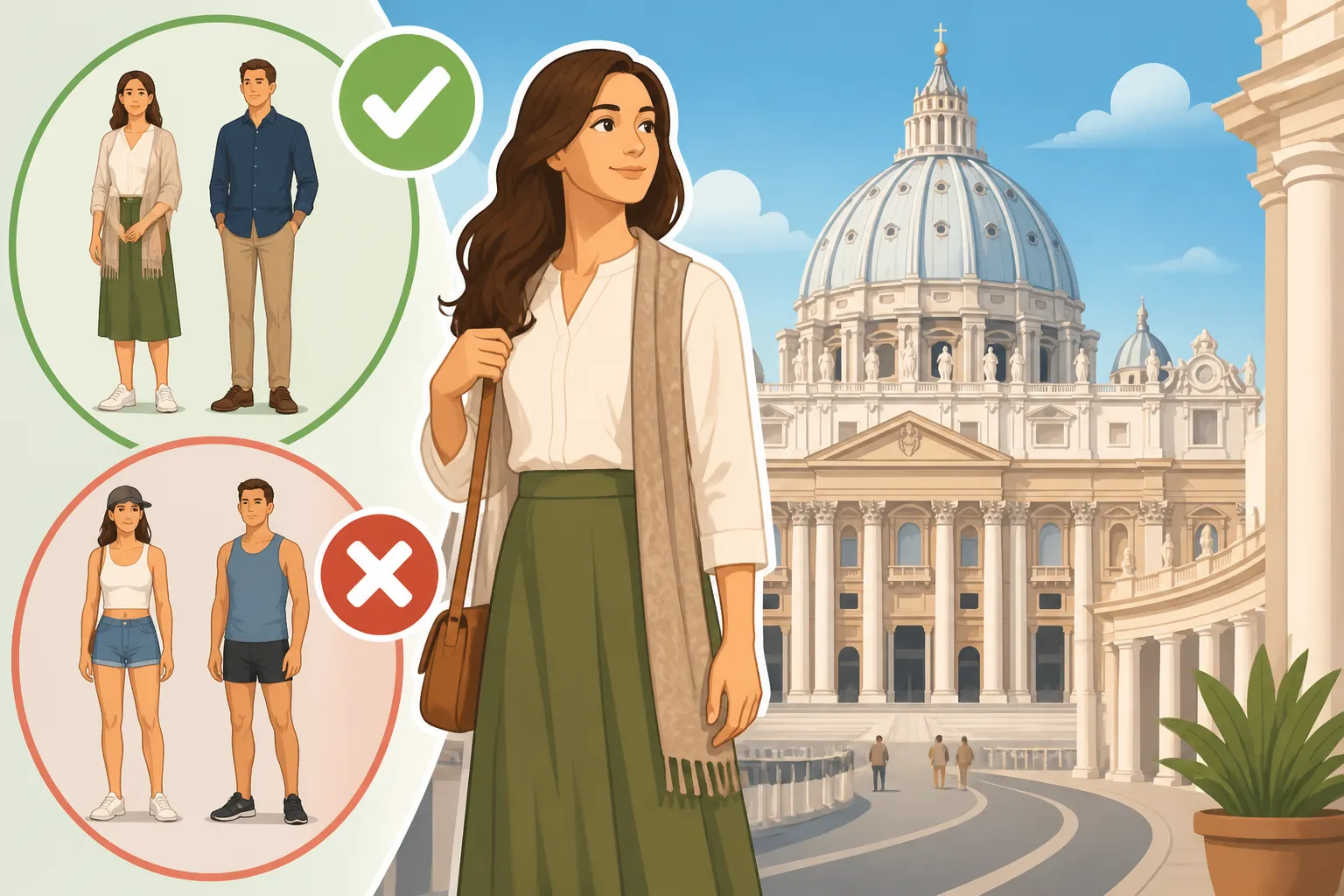
How to Dress to Enter St. Peter’s Basilica
Ah, the sheer awe of standing in St. Peter's Square, gazing up at the magnificent Basilica! It's an absolutely breathtaking experience, a true bucket-list moment for anyone visiting Italy. However, many visitors, especially those swept up in the Roman summer heat or the excitement of sightseeing, often encounter an unexpected hurdle right at the entrance: the dress code. Getting turned away from such an iconic site for inappropriate attire can be incredibly frustrating and frankly, a bit embarrassing. This comprehensive guide is here to ensure that your visit to St. Peter's Basilica is seamless, respectful, and entirely free of any wardrobe-related disappointments.
The Golden Rule of Vatican Dress Codes: Modesty is Key
When you step foot into Vatican City, particularly when approaching St. Peter's Basilica or the Vatican Museums, you are entering one of the holiest sites in Christianity. This isn't just a historical monument; it's a living, breathing place of worship, a spiritual heart for millions around the world. As such, a certain level of respect, reflected in one's attire, is expected and strictly enforced. It's not about fashion or judgment, but about honoring the sacred nature of the space.
Disclosure: This post may contain affiliate links. We may earn a commission at no extra cost to you if you make a purchase through these links. Read full disclosure.
Understanding the "No Shoulders, No Knees" Policy
This policy is the cornerstone of Vatican dress code enforcement, and it applies to both men and women, regardless of age. It's crucial to understand precisely what this means to avoid any issues at the security checkpoints. For "no shoulders," this means that tank tops, spaghetti straps, strapless tops, halter tops, and any garment that fully exposes the shoulders are strictly prohibited. The rule aims for coverage, so even off-the-shoulder blouses, while stylish, won't pass muster. Think about a top that covers the entire shoulder, from the base of the neck to the upper arm. T-shirts are generally fine, as are blouses with sleeves of any length, provided they aren't sheer or overly revealing.
When it comes to "no knees," the interpretation is equally strict. This means shorts, mini-skirts, and dresses that fall above the knee are not allowed. Your pants, skirt, or dress needs to cover your knees fully. For skirts and dresses, it's best to aim for midi or maxi length. Even if you have "bermuda" shorts that come close to the knee, if they don't fully cover it when you're standing or sitting, you risk being denied entry. Transparent or excessively sheer fabrics on any part of your body will also be problematic, as they defeat the purpose of "coverage." The idea is respectful modesty, not just a superficial covering.
Footwear and Headwear Considerations
While the "no shoulders, no knees" rule is paramount, there are a few additional points regarding footwear and head coverings. For shoes, generally, any reasonable footwear is accepted. Sandals are perfectly fine, as are sneakers or smart shoes. However, overly casual flip-flops, especially those you might wear to the beach, could be subtly frowned upon by some guards, though they are rarely a reason for outright denial unless combined with other dress code violations. The key is to look presentable and respectful, and extremely casual footwear can sometimes detract from that impression.
Regarding headwear, women are not required to cover their heads in St. Peter's Basilica, unlike in some other religious sites. In fact, many visitors choose to wear hats to combat the sun in the square, but men are typically asked to remove their hats once inside the Basilica as a sign of respect. It's a small gesture, but one that aligns with traditional etiquette in many places of worship globally. So, if you're a gentleman sporting a baseball cap, just be ready to slip it off when you cross the threshold.
Practical Solutions for the Unexpected Tourist
Let's be honest, Rome in the summer is hot, and you might not always be thinking about long sleeves and midi skirts when you're exploring ancient ruins or enjoying a Aperitivo in Italy: The Pre-Dinner Ritual Explained. But fear not, even if you find yourself at the Vatican gates in less-than-ideal attire, there are plenty of practical solutions to ensure you still get to experience the wonder of St. Peter's. A little preparation goes a long way, but even on the fly, you can usually rectify the situation.
The Art of Layering: Scarves, Shawls, and Sarongs
This is probably the most common and easiest solution for many tourists. For women, a large, lightweight scarf or shawl is an absolute lifesaver. You can drape it over your shoulders when entering the Basilica, transforming a sleeveless top into an acceptable one. It's a versatile accessory that can also be used to cover your head if you visit other, more conservative churches or simply to protect yourself from the sun in the square. Similarly, a light cardigan, jumper, or even a denim jacket can easily be tied around your waist or carried to throw on over a sleeveless top.
For covering knees, if you're wearing shorts, a lightweight sarong or a long scarf can be wrapped around your waist to form a makeshift skirt. It might not be the most fashionable look, but it will get you through the security check. Some savvy travelers even carry a pair of very thin, packable linen pants or a long skirt in their day bag specifically for church visits. Near the Vatican, you'll inevitably find street vendors selling cheap scarves and sarongs. While they might be overpriced for the quality, they offer a quick fix if you're caught unprepared. Don't be surprised to see a bustling market for these items just outside the Vatican walls – they exist precisely because so many people forget or underestimate the dress code.
What to Wear in Different Seasons
Navigating the Vatican dress code successfully also means factoring in Italy's diverse climate. What works in a Roman summer certainly won't in a winter visit to Northern Italy: Alps, Lakes, and Cities.
- Summer (June-August): Rome can be scorching. Opt for breathable, lightweight fabrics like linen, cotton, or rayon. Long linen pants, capris that cover the knee, or maxi skirts are excellent choices for bottoms. For tops, light blouses with sleeves, or a simple cotton t-shirt worn with a lightweight cardigan or shawl, will keep you cool and compliant. Think about clothes that dry quickly if you get sweaty. Remember, even if it's 35°C, those shoulders and knees need to be covered.
- Spring (April-May) & Autumn (September-October): These seasons offer much more pleasant temperatures for exploring. You'll find it easier to comply with the dress code naturally with longer sleeves, light jackets, or stylish layering. Long-sleeved shirts, modest dresses, and smart trousers are perfect. A trench coat or a stylish blazer can serve both as a fashion statement and a modesty shield for spontaneous church visits. These are also ideal times to consider Day Trips From Rome by Train where you might encounter smaller, equally strict churches.
- Winter (November-March): During the cooler months, dressing appropriately for the Vatican is much simpler. Layers are essential for warmth, and by default, most winter clothing covers shoulders and knees. Sweaters, long-sleeved tops, jeans, and longer skirts are all perfectly acceptable. Just remember to remove your hat if you're a man. You'll appreciate the warmth of your clothing, especially if you plan to spend time outdoors in Visiting the Vatican: St. Peter's and the Museums.
Beyond St. Peter's: Dress Code Etiquette for Other Italian Churches
It's a common misconception that strict dress codes are only found at major Vatican sites. While St. Peter's Basilica might be the most rigorously enforced, the expectation of modest attire extends to virtually all Catholic churches throughout Italy. From the smallest village chiesa to grand cathedrals like the Duomo in Florence or Milan, you'll encounter similar rules, though enforcement can vary.
General Church Rules in Italy
The "no shoulders, no knees" rule is a cultural norm for entering any sacred space in Italy. This means that if you're planning a full day of sightseeing that includes churches, you should plan your outfit accordingly from the start. Imagine visiting the awe-inspiring Siena Duomo or the peaceful churches tucked away in Tuscany for Travelers: Cities, Hills, and Coast. You'd hate to miss out because of a sleeveless top.
In smaller or less touristy churches, there might not be a guard at the door, but you can be sure that local parishioners and even the priest will notice and appreciate respectful attire. It's a sign of understanding and honoring their traditions and beliefs. Sometimes, a sign will simply ask for "decoro" (decorum or modesty), which implies the same level of coverage. Always err on the side of caution. If you are unsure, observe how locals dress for church services. That's usually the best indicator.
Why it Matters: Respect and Experience
Beyond avoiding the immediate hurdle of being denied entry, adhering to dress codes in Italian churches is about something deeper: cultural respect. Italy is a deeply Catholic country, and its churches are not just museums; they are active places of worship, often holding daily mass and private prayer. Dressing modestly is a simple yet profound way to show respect for the local culture, traditions, and the sacred space itself.
Furthermore, dressing appropriately enhances your experience. When you feel comfortable and culturally integrated, you can fully immerse yourself in the beauty, history, and spirituality of these incredible places. You won't be distracted by worrying if you're offending anyone or constantly adjusting your clothes. It allows you to appreciate the art, the silence, and the centuries of devotion that resonate within those walls. It’s a part of engaging with Italian Customs, Etiquette, and Social Life in a meaningful way.
Common Misconceptions and Troubleshooting
Despite clear guidelines, misunderstandings about Vatican and Italian church dress codes persist. Many visitors have questions or find themselves in tricky situations. Let's tackle some of these head-on, so you're prepared for any scenario.
"But I Saw Someone Get In With X!"
This is a common refrain heard outside the Vatican, and it leads to a lot of confusion. The reality is that enforcement of the dress code, while strict, can sometimes feel inconsistent. This isn't because the rules change, but because human beings are involved. There might be a new or less vigilant guard on duty, or perhaps the individual you saw had a last-minute, barely-there cover-up that just slipped past. It could also be that you're seeing people exit the Basilica, having removed their cover-ups once inside.
The crucial takeaway here is: do not gamble on inconsistency. If you see someone get in with attire that seems to violate the rules, consider it an anomaly, not a precedent. The official policy remains clear, and if you follow it, you are guaranteed entry (barring other issues, of course). Trying to "test" the rules will most likely result in disappointment and a wasted trip to the entrance. It's always better to be safe than sorry when planning your Rome for First-Time Visitors: Neighborhoods and Highlights.
What Happens If You're Turned Away
If you approach the security checkpoint for St. Peter's Basilica or the Vatican Museums and your attire doesn't meet the requirements, the guards will politely but firmly deny you entry. They won't make a scene; they'll simply point to the signs and indicate that you need to cover up. It's not a personal attack, so avoid arguing or getting upset. They are just doing their job, enforcing rules that have been in place for a very long time.
What are your options then?
- Immediate Fix: If you have a scarf, cardigan, or a pair of long pants in your bag, you can put them on right there.
- Purchase a Cover-Up: As mentioned, there are numerous vendors around St. Peter's Square selling inexpensive scarves, shawls, and sometimes even long, lightweight pants or skirts. You can quickly buy one to cover up and then rejoin the queue. These are usually quite cheap, around €5-€10.
- Return Later: If you're staying nearby, you might choose to go back to your accommodation, change, and return. This can be a hassle, especially if you have a tight schedule, but it's an option.
- Visit Elsewhere: If all else fails, you can always visit other parts of Rome that don't have such strict dress codes. But trust me, you'll regret missing St. Peter's.
Here's a quick summary to help you visualize acceptable and unacceptable attire for St. Peter's Basilica:
| Category | Acceptable | Not Acceptable |
|---|---|---|
| Shoulders | T-shirts, blouses with sleeves (any length), long-sleeved shirts, sweaters, cardigans, jackets. Shoulders fully covered. | Tank tops, spaghetti strap tops, strapless tops, halter tops, off-the-shoulder blouses, extremely sheer tops without an opaque layer underneath. Shoulders exposed. |
| Knees | Long pants, jeans, capris that fully cover the knee, midi skirts (below the knee), maxi skirts, dresses that cover the knee. | Shorts (even Bermuda shorts if they don't fully cover), mini-skirts, dresses above the knee, skirts/dresses with high slits that reveal the knee. |
| Footwear | Sandals, sneakers, dress shoes, loafers. | Beach flip-flops (generally discouraged, though rarely a sole reason for denial), bare feet. |
| Headwear | (Women) Any headwear is fine, not required. (Men) Hats for sun protection outside. | (Men) Hats worn inside the Basilica. |
| Transparency | Opaque fabrics. | Sheer or see-through fabrics on any part of the body (shoulders, midriff, legs) without an opaque layer underneath. |
Ultimately, your visit to St. Peter's Basilica should be a highlight of your trip, filled with wonder and reflection, not stress over clothing. A little planning and understanding of Dress Codes and Bella Figura in Italy will ensure you walk through those grand doors with confidence and respect, ready to soak in the incredible atmosphere.
Disclaimer
The information provided in this guide is for general informational purposes only and is based on typical experiences and current public information regarding dress codes for St. Peter's Basilica and other religious sites in Italy. Dress code policies are subject to change without notice and may be enforced at the discretion of individual security personnel. While every effort has been made to ensure accuracy, visitors are encouraged to check official Vatican City or specific church websites for the most up-to-date rules before their visit.