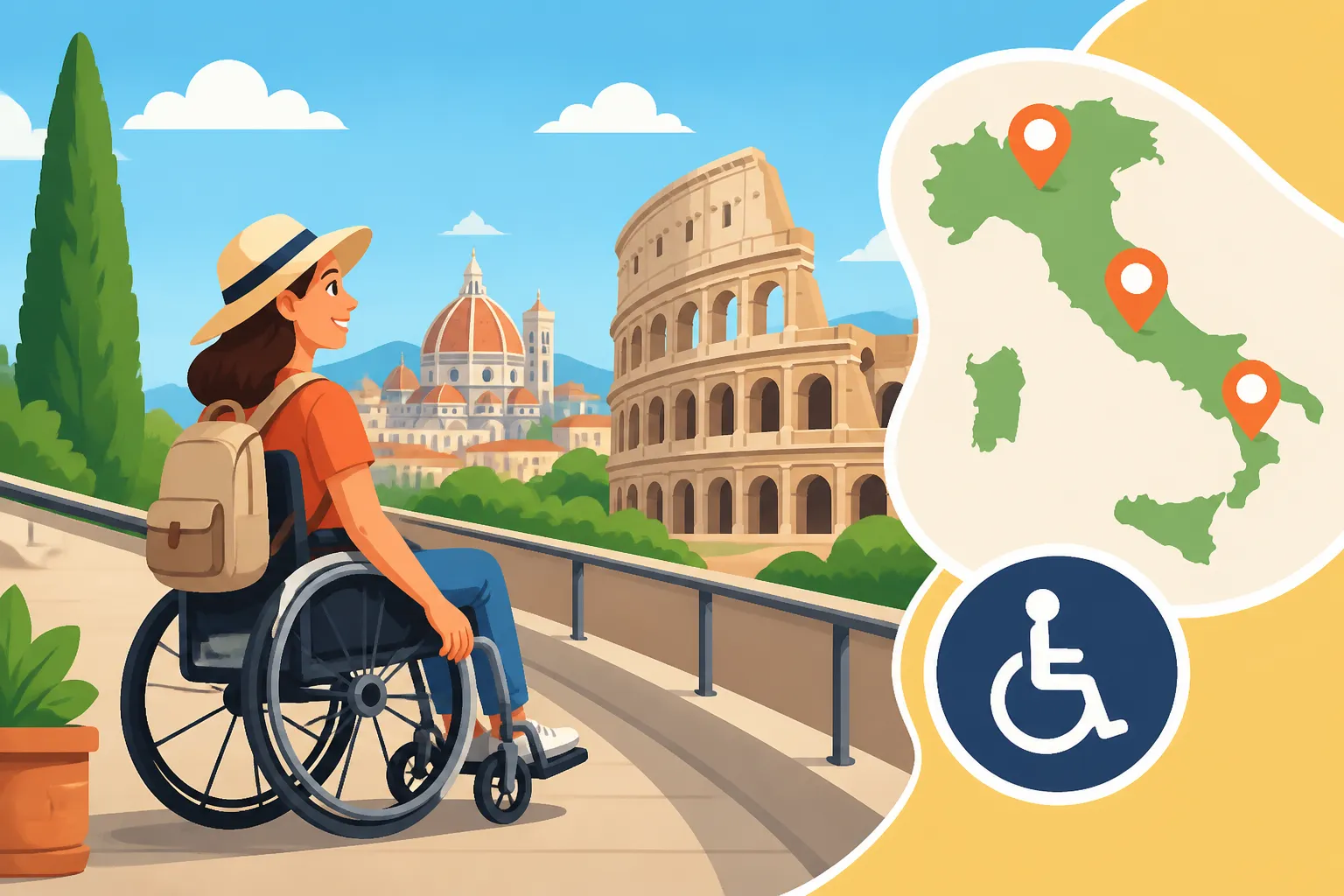
How to Find Wheelchair-Accessible Attractions in Italy
Ah, Italy. The land of breathtaking beauty, ancient history, and pasta that makes your soul sing. It’s a dream destination for so many, but for those of us navigating the world with a wheelchair or other mobility aids, that dream can often feel like a beautiful but inaccessible mirage. The sheer age of many of Italy’s most iconic sites, coupled with often vague or outdated information online, can turn planning an accessible trip into a full-time job. This guide is here to tell you that it is possible, and to arm you with the practical advice you need to find genuinely wheelchair-accessible attractions across Italy.
Disclosure: This post may contain affiliate links. We may earn a commission at no extra cost to you if you make a purchase through these links. Read full disclosure.
The Unique Challenges of Accessible Travel in Italy
Let's be real for a moment: Italy wasn't built with accessibility in mind. Its charm often lies in its antiquity, its winding cobblestone streets, and the centuries-old architecture that gives it so much character. But these very elements can present significant hurdles for anyone with mobility challenges.
Architectural Barriers and Historic Preservation
One of the biggest frustrations you'll face is the clash between historic preservation and modern accessibility. Italy is a treasure trove of UNESCO World Heritage Sites, ancient ruins, and medieval towns. While these are undeniably magnificent, they were constructed long before ramps, elevators, or even wide doorways were a consideration. Many structures are simply too old, or too historically significant, to be significantly altered. Think of the narrow, uneven streets of Matera, the countless steps within the Colosseum (even with modern additions), or the tiny, centuries-old doorways of a charming Roman trattoria.
This means that even when a site claims to be "accessible," it might mean something different in practice. Perhaps there's a single, discreet ramp that bypasses only a few steps, or an old, small lift that can only accommodate a very specific wheelchair size. You might find accessible toilets that are locked and require a key from staff, or pathways that suddenly narrow and become impassable. It’s a constant dance between admiring the past and trying to navigate it, which can be both awe-inspiring and incredibly frustrating. You'll often find yourself trying to appreciate the view while simultaneously calculating the next potential obstacle.
Inconsistent Information and "Italian Accessibility"
Another major headache is the sheer inconsistency and sometimes outright lack of reliable information. What one website defines as "accessible," another might not. You might read online that a museum has ramps, only to arrive and discover they are steep and poorly maintained, or that the "accessible entrance" is around the back and rarely staffed. This isn't usually due to malice; it's more often a disconnect in understanding what true accessibility entails, or a simple failure to update information.
The concept of "Italian accessibility" often means some effort has been made, but not necessarily a comprehensive one. For instance, many public buildings now have ramps, but sometimes they are so steep they are unusable without assistance, or they lead to another set of stairs further inside. Elevators might be present but out of order, or too small for power wheelchairs. This reality makes pre-planning absolutely critical, and it often requires a level of persistence and verification that can feel exhausting before you even leave home. Don't be surprised if you ask three different people the same question about accessibility and get three different answers – it's just part of the journey here.
Navigating the Information Maze: Where to Find Reliable Details
Given the challenges, finding accurate information is your superpower when planning an accessible trip to Italy. You can’t just rely on general travel sites; you need to dig deeper and be prepared to verify everything.
Dedicated Accessibility Portals and Associations
Thankfully, there are fantastic resources specifically dedicated to accessible travel that can be lifesavers. Start with organizations like Accessible Italy, which provides detailed, verified information on hotels, attractions, and transport across various Italian cities. They often conduct on-site inspections and offer personalized itineraries, which can take a huge burden off your shoulders. Also look into local disability associations within Italy, such as those that might be linked to regional tourism boards. While their websites might be in Italian, a quick Google Translate can often give you enough information to make an informed decision or to find contact details.
These specialist sites understand the nuances of accessibility that general travel platforms might miss. They're more likely to mention the width of a doorway, the slope of a ramp, or the size of a lift, which are crucial details that can make or break your visit. Remember, the expat community is also a goldmine of information – online forums and social media groups for expats in Italy often have members who have faced similar challenges and can share firsthand experiences and recommendations.
Leveraging Technology and Community Platforms
Beyond dedicated accessibility sites, modern technology and community-driven platforms offer invaluable tools. Google Maps, for instance, has an accessibility feature where users can report wheelchair-friendly entrances, restrooms, and seating. While user-generated content can be hit or miss, it's a good starting point. Look for places with multiple reviews mentioning accessibility.
For accommodation, platforms like Booking.com allow you to filter for "wheelchair accessible" rooms, but always, always cross-reference and confirm directly with the hotel. Don't just tick the box; call or email them with specific questions about bathroom dimensions, roll-in showers, and bed height. I've heard countless stories where "accessible" meant a few grab bars, but not nearly enough space to maneuver a wheelchair. For tours and activities, sites like GetYourGuide sometimes offer specific accessible tour options, but again, verify. Read reviews carefully, looking for comments from other wheelchair users. If a tour mentions "some walking," it's usually a red flag. For long-distance travel, especially by train, check Omio for routes, but then go to the specific train operator's website (Trenitalia or Italo) to find their dedicated accessibility services and booking procedures, which usually require pre-notification.
The Importance of Direct Communication
This cannot be stressed enough: always communicate directly with the attraction, restaurant, or hotel you plan to visit. Email is often best as it creates a written record. Be specific in your questions:
- "Do you have a step-free entrance, or a ramp? What is the gradient of the ramp?"
- "Is your elevator large enough for a standard motorized wheelchair (e.g., 70cm wide x 100cm deep)?"
- "Do you have an accessible restroom, and does it have grab bars and enough turning space?"
- "Are all areas of the exhibition/site accessible by wheelchair, or only certain sections?"
- "If parts are inaccessible, is there an alternative viewing option or a virtual tour?"
Many Italian venues, especially smaller, family-run establishments, genuinely want to help but may not fully grasp the specifics of accessibility. Be patient but firm in your inquiries. If you don't receive a clear answer, consider it a potential red flag and look for alternatives. Having a few key Italian phrases related to accessibility can also be incredibly helpful when speaking on the phone or in person. It shows effort and often elicits a more helpful response.
Exploring Italy's Gems: What to Expect at Different Attractions
Italy offers an incredible variety of attractions. Knowing what to generally expect for accessibility across different types of sites can help you plan realistically.
Museums, Galleries, and Major Tourist Sites
Italy's grand museums and art galleries, such as the Vatican Museums, the Uffizi Gallery in Florence, or the Borghese Gallery in Rome, have often made significant strides in accessibility. These are typically government-funded or major institutions with the resources and motivation to comply with modern accessibility standards. You’ll often find:
- Step-free entrances: Usually a main entrance or a clearly marked alternative.
- Elevators/Lifts: For moving between floors. However, verify their size and reliability.
- Accessible restrooms: More common in larger, newer facilities.
- Designated pathways: Clear routes designed for wheelchairs, often with tactile paving for visually impaired visitors.
For instance, the Vatican Museums in Rome offer free entry for visitors with certified disabilities (and one companion), and they have dedicated accessible routes, lifts, and even special tours. Similarly, the Colosseum, while challenging in parts due to its ancient nature, has an accessible route to the arena floor and an elevator to the upper tier, offering fantastic views. However, smaller, municipal museums or private galleries in older buildings might be less equipped. Always check their official website's accessibility section, or better yet, call them. When visiting a major city like Rome, Florence, or Venice, it’s worth checking out specific guides like Rome, Florence, and Venice: Italy's Great Cities Explorer's Guide for city-specific accessibility tips.
Churches, Cathedrals, and Religious Sites
Italy is dotted with thousands of churches, from small parish chapels to magnificent cathedrals like Milan's Duomo or Florence's Cattedrale di Santa Maria del Fiore. Accessibility here is a mixed bag. Many older churches have imposing steps at their entrances, and often no ramps due to historical constraints. Inside, the nave (main body) is usually flat and accessible, but chapels or crypts might involve steps.
Larger, more frequently visited cathedrals often have at least one accessible entrance, sometimes at a side door, but you might need to ask staff to open it. For example, St. Peter's Basilica in Vatican City is largely accessible, with ramps and wide doorways. Smaller churches, however, are less likely to have made significant alterations. If a particular church is high on your must-see list, absolutely verify its accessibility beforehand. Remember to also consider the surrounding environment – many churches are located on piazzas that are cobbled or on slight inclines, which can add to the challenge.
Public Parks, Gardens, and Natural Wonders
Italy boasts stunning natural beauty, from the Dolomites to the coastal paths of Cinque Terre. Public parks and gardens within cities are often quite accessible, with paved pathways and relatively flat terrain. Villa Borghese in Rome, for example, offers wide, paved paths perfect for a wheelchair stroll.
However, once you venture into more rugged natural areas, accessibility can quickly diminish. Trails are often unpaved, uneven, or steep. Coastal towns, particularly those built into hillsides like parts of the Amalfi Coast or Cinque Terre, present significant challenges with their vertical layouts and numerous stairs. While there might be some accessible sections, it's crucial to manage expectations. Some national parks or larger protected areas might offer specific accessible routes or viewpoints, but these are often limited. If you're hoping to experience Italy's natural wonders, focus on well-maintained urban parks, or specific accessible viewpoints that can be reached by car. For example, some lake regions, like Lake Garda, have accessible promenades.
Planning Your Accessible Itinerary: Beyond the Attractions
Beyond the specific sites, truly accessible travel in Italy requires careful consideration of how you'll get around and where you'll rest your head. This is where holistic planning makes all the difference.
Accessible Accommodation and Transportation
Finding truly accessible accommodation is paramount. As mentioned, use filters on sites like Booking.com, but then contact the hotel directly with detailed questions. Look for specifics: roll-in showers, grab bars in the bathroom, bed height, and the clear space around the bed. Ask about the route from the hotel entrance to your room – are there any unexpected steps, or is it genuinely flat? Remember, what's called "accessible" might just mean a larger room. If you're looking for Accommodation in Italy: Hotels, B&Bs, and Agriturismi, be meticulous in your research.
Transportation is another critical piece of the puzzle. While Italian cities are improving, public transport can still be a hurdle. Buses often have ramps, but they might not always be working, or the driver might need a reminder to deploy them. Metro systems in major cities like Rome and Milan usually have elevators to platforms, but older stations might lack them. Always check specific station accessibility on the city transport website. For intercity travel, Italy's high-speed trains (Frecciarossa, Italo) are generally excellent for accessibility. They usually have dedicated spaces for wheelchairs, accessible restrooms, and staff trained to assist. However, you absolutely must book assistance in advance, usually at least 24-48 hours before travel. You can find more details on options in Getting Around Italy: Trains, Buses, Flights, and Car Hire. Smaller, regional trains might be less accommodating, so again, check specifically. Taxis vary greatly; some cities have accessible taxis, but they are fewer and often need to be booked in advance. Private transfer services specializing in accessible transport can be expensive but offer peace of mind.
For a broader understanding of how to navigate Italy's urban sprawl, consider reading Public Transportation in Italian Cities: A Guide to familiarize yourself with the nuances before you go.
Essential Tips for a Smoother Journey
To make your accessible trip to Italy as smooth as possible, a few extra tips go a long way:
- Travel Insurance: This is non-negotiable. Ensure your policy covers medical emergencies, mobility equipment damage or loss, and trip interruptions. Italy is safe, but unforeseen events can happen. For more information, check out Travel Insurance for Trips to and Within Italy.
- Backup Equipment & Supplies: If possible, bring a basic repair kit for your wheelchair. Research where to find medical supply stores in the cities you'll visit for things like spare tubes or batteries, just in case.
- Charge Power Wheelchairs: Always start the day with a fully charged battery. Portable charging solutions can also be a lifesaver.
- Embrace "Slow Travel": Don't overschedule. Allow ample time for getting from one place to another, factoring in potential delays or unexpected barriers. Italy is best enjoyed at a leisurely pace anyway! This ties into the idea of How to Plan a Stress-Free Family Trip to Italy, where pace and preparation are key.
- Language Basics: Learn a few key Italian phrases related to accessibility ("Is it accessible by wheelchair?", "Do you have a ramp?", "Where is the accessible restroom?"). Italians generally appreciate the effort. Even if you only know "parla inglese?" (do you speak English?), it's a start. For cultural insights, see Italian Customs, Etiquette, and Social Life.
- Patience and Persistence: You will encounter challenges. Bureaucracy and old infrastructure can test your patience. A positive attitude, a good sense of humor, and a willingness to ask for help (and sometimes firmly demand it) will serve you well.
- Know Your Rights: While Italy has accessibility laws, enforcement and awareness can vary. Knowing your rights as a disabled traveler can be empowering, though navigating disputes in a foreign language can be tough.
- Medical Preparedness: Have copies of prescriptions, know the generic names of your medications, and carry a basic first-aid kit. Knowing Where to Find English-Speaking Doctors and Clinics in your destination cities can also provide immense peace of mind.
- Stay Aware: Like any popular tourist destination, crowded areas can attract pickpockets. Keep your belongings secure. More on general safety can be found in Staying Safe in Italy: Common-Sense Tips for Travelers.
Accessible Travel Resources in Italy
Here's a quick overview of some essential resources to help you in your planning:
| Resource Type | Key Considerations | Examples/Tips |
|---|---|---|
| Dedicated Accessibility Sites | Detailed, verified info specific to accessible travel. | Accessible Italy (accessibleitaly.com) for verified hotel/attraction info. Local disability associations (often found via regional tourism sites) might offer local insights. |
| General Travel Sites | Good for initial search filters, but always cross-verify. | Booking.com (filter for "wheelchair accessible"), GetYourGuide (look for "accessible tours," then confirm details). Tripadvisor reviews for user-generated accessibility comments (take with a grain of salt, but useful for initial research). |
| Transportation | Crucial for intercity movement; requires advance booking for assistance. | Trenitalia (assistance via Sala Blu), Italo (dedicated accessible spaces). Omio for booking and checking routes. City transport websites (e.g., ATAC for Rome, ATM for Milan) for metro/bus accessibility maps. |
| Accommodation | Filters are a start; direct communication is key for specific needs. | Call hotels directly after filtering on Booking.com or other sites. Ask about bathroom specifics (roll-in, grab bars, space), bed height, and entrance/lobby accessibility. |
| Community Forums | Peer advice and real-world experiences can be invaluable. | Expat groups on Facebook, specialized accessible travel forums. Search for "wheelchair travel Italy" on Reddit or other forums. |
| Tourist Information Offices | Can be helpful for local details, but staff awareness of specific accessibility needs varies. | Visit in person upon arrival. Bring specific questions in Italian if possible. They might have maps indicating accessible routes or points of interest. |
While Italy's ancient charm poses unique challenges for wheelchair accessibility, it doesn't have to be a deterrent. With thorough research, direct communication, a flexible attitude, and a little bit of grit, you absolutely can unlock the beauty and culture of this incredible country. It might take more planning, more patience, and more questions than other destinations, but the rewards are immeasurable.
Disclaimer
Please note that accessibility conditions in Italy can change, and information may become outdated. Always verify specific details directly with service providers, attractions, and accommodations before your trip. This guide provides general advice and is not a substitute for personalized, up-to-date verification.