Italy to France: Milan-Paris, Nice, and the Ventimiglia Route
Ah, the romance of hopping from Italy to France! It’s a dream many of us expats harbor, a quick dash from espresso to croissant, from ancient ruins to chic boulevards. But let's be real, the logistics of cross-border travel can often feel less like a dream and more like a bureaucratic labyrinth. If you're pondering a journey from the sun-drenched Italian coast to the sophisticated French Riviera, or from Milan's fashion hub straight into the heart of Paris, this guide is designed to cut through the confusion and show you how a platform like Omio can make your journey surprisingly straightforward and enjoyable.
Disclosure: This post may contain affiliate links. We may earn a commission at no extra cost to you if you make a purchase through these links. Read full disclosure.
The Allure of Connecting Italy and France: Why Make the Journey?
There’s something undeniably appealing about bridging these two iconic European nations. It’s not just about changing countries; it’s about experiencing a fascinating shift in culture, cuisine, and landscape within a few hours. For those of us living in Italy, a trip to France often feels like a natural extension of our European adventure, offering a fresh perspective without the hassle of long-haul flights.
From Milan's Fashion to Paris's Romance
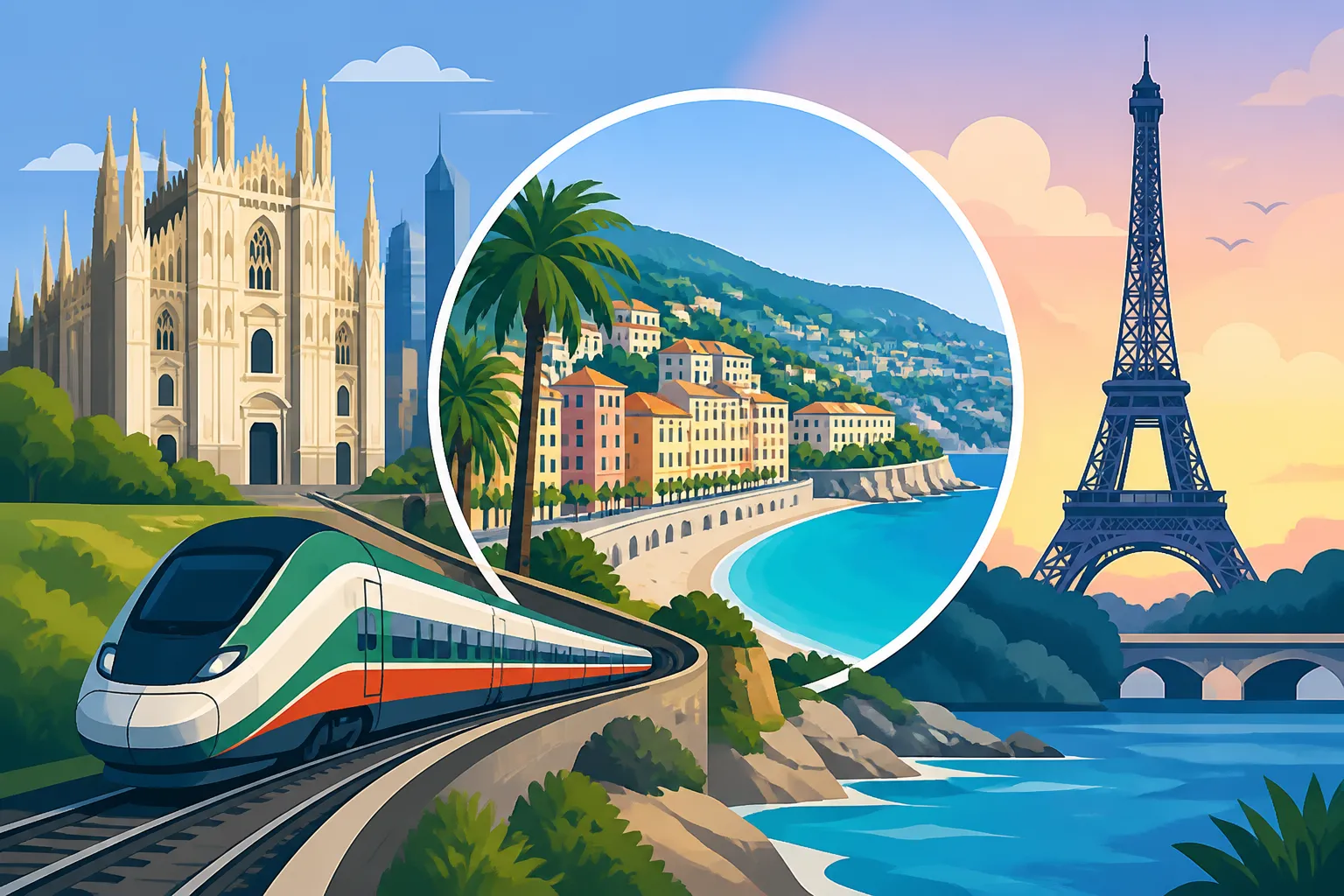
Imagine spending your morning sipping a cappuccino in a bustling Milanese piazza, admiring the Duomo, and by evening, you’re strolling along the Seine, gazing at the Eiffel Tower, perhaps with a glass of Bordeaux in hand. This isn't just a fantasy; it's a very real possibility thanks to excellent transport links. Italy’s vibrant north, with its economic powerhouses like Milan and Turin, is perfectly positioned for a seamless transition into the French capital. The cultural shift is palpable but wonderfully harmonious. You trade the Italian emphasis on family and passionate conversation for a more reserved, yet equally engaging, French charm. From haute couture to historical masterpieces, the connection between these two capitals offers an enriching, dual-country experience that truly defines the magic of European living.
The Ligurian Coast to the French Riviera
Perhaps your Italian base is further south, or you're simply drawn to the sparkling Mediterranean. The journey from Italy's Ligurian coast to the French Riviera is an experience in itself, a stunning coastal ride where the dramatic cliffs of the Cinque Terre give way to the pastel hues of Nice and Cannes. The border town of Ventimiglia acts as a crucial gateway, a place where Italian charm slowly fades into French elegance. This route offers a taste of both worlds: the robust flavors and laid-back atmosphere of the Italian Riviera contrasting with the chic glamour and sophisticated beaches of its French counterpart. It’s a transition that’s not only scenic but also culturally intriguing, allowing you to observe the subtle shifts in architecture, language, and daily life as you move from one country to the next. The proximity of these coastal gems makes them an ideal pairing for a short getaway or a longer exploration, showcasing the diverse beauty of the Mediterranean.
Navigating the Main Routes: Milan to Paris and Beyond
When planning your trip from Italy to France, you'll generally find yourself looking at two primary corridors: the direct high-speed links connecting major cities, or the more regional, coastal route. Both offer unique experiences and conveniences, and understanding them is key to a smooth journey.
Direct High-Speed Trains: Milan to Paris and Vice Versa
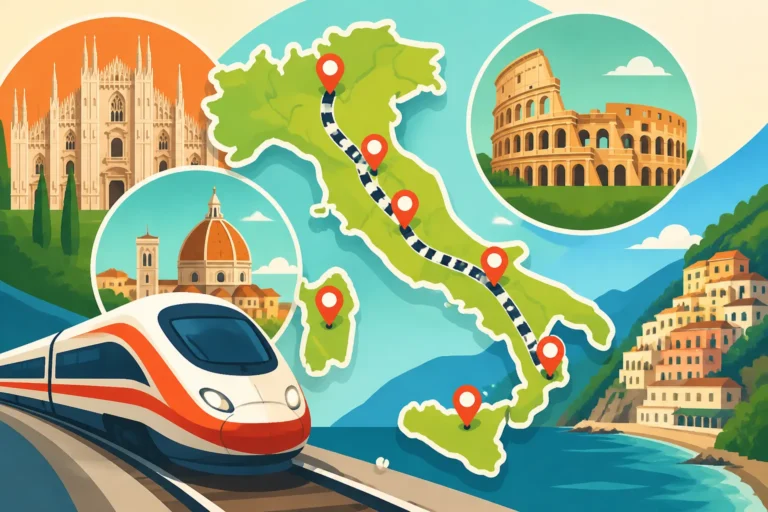
This is often the preferred choice for many, and for good reason. If you're starting from cities like Milan or Turin, the direct high-speed train to Paris is a game-changer. Trenitalia, Italy's national railway company, now operates its Frecciarossa high-speed trains directly from Milan to Paris, offering a comfortable and efficient journey right into the heart of the city. These trains glide through picturesque landscapes, taking roughly 6 to 7 hours, depending on your starting point and specific train. You depart from a central station like Milano Centrale and arrive directly at Paris Gare de Lyon, eliminating the hassle of airport transfers and allowing you to soak in the views.
SNCF, the French counterpart, also operates TGV services on similar routes. The beauty of these high-speed services is their convenience: spacious seating, onboard catering, and Wi-Fi. It’s a chance to truly relax and watch the European countryside unfold outside your window. Imagine you've just finished a delightful week exploring the canals of Venice or the fashion houses of Milan, and now you want a seamless transfer to Paris. Checking options like these on Omio provides a clear overview of available times and prices, letting you compare the Trenitalia and SNCF offerings side-by-side. For an even deeper dive into this mode of transport, our guide on High-Speed Trains in Italy: Trenitalia, Italo, Routes, and Savings can offer more insights.
The Scenic Coastal Route: Ventimiglia to Nice and Beyond
If your journey is more about the Riviera, then the route through Ventimiglia is your friend. Ventimiglia, often called the "Gateway to the French Riviera," is an Italian border town just a stone's throw from France. This route is particularly popular for those traveling from Genoa, Sanremo, or any other part of Liguria towards destinations like Nice, Monaco, Cannes, or even Marseille.
The process typically involves taking an Italian regional train (Trenitalia) to Ventimiglia. Once there, you usually transfer to a French regional train (SNCF TER) that will take you along the stunning French Riviera coast to your final destination. While this involves a change of trains, it's often quite straightforward. The Ventimiglia station is well-equipped for transfers, and the journey itself offers breathtaking views of the Mediterranean. You’ll pass through charming coastal towns, see opulent villas, and witness the sparkling blue of the sea.
This isn't a high-speed dash; it's a leisurely and incredibly picturesque journey. Omio is exceptionally helpful for this route because it allows you to easily find and book the separate legs of your journey – your Trenitalia ticket to Ventimiglia and your connecting SNCF TER ticket from Ventimiglia onwards – all in one place. It truly simplifies what could otherwise be a confusing booking process across two different national rail systems. For more on how these local lines work, check out our piece on Regional Trains in Italy: How to Use Them and Save.
Your Transport Options: Train, Bus, and Even a Little Bit of Flight
When crossing borders in Europe, you're blessed with a variety of transport choices. Each has its merits, depending on your priorities for speed, cost, and comfort. As a veteran expat, I've tried them all, and I can tell you, the right choice makes all the difference.
The Reign of Rail: Comfort and Efficiency
For many journeys between Italy and France, especially Milan to Paris, the train is truly king. It offers a fantastic balance of speed, comfort, and environmental friendliness. You get to avoid airport security lines and transfer times, stepping directly into city centers. The high-speed trains, like Trenitalia's Frecciarossa or SNCF's TGV, are modern, spacious, and provide a pleasant travel experience. You can stretch your legs, grab a snack from the onboard café, and even get some work done if you’re a digital nomad.
There are different classes of service, from standard to business or first class, offering varying levels of amenities and space. Booking through a platform like Omio allows you to compare these options side-by-side, seeing the prices and journey times for both Trenitalia and SNCF. It’s perfect for ensuring you get the best deal and the most convenient schedule for your travel style. I remember my first time trying to book a cross-border train, flipping between websites, struggling with language barriers on foreign sites. Omio simplifies all of that into one user-friendly interface.
Budget-Friendly Bus Travel: A Slower but Cheaper Alternative
Sometimes, budget is the absolute priority, or perhaps the train schedule doesn't quite fit your plans. This is where bus travel comes in. Companies like FlixBus and Eurolines offer extensive networks connecting Italian and French cities. You can often find incredibly cheap tickets, especially if you book in advance. The trade-off, however, is time. Bus journeys are significantly longer than trains, and they are susceptible to traffic delays, particularly around major cities or during peak holiday seasons.
While less luxurious than a high-speed train, modern buses are generally comfortable enough for a long journey, with amenities like Wi-Fi and power outlets becoming standard. For an intrepid traveler on a shoestring budget, or someone looking for a direct route to a smaller town not easily accessible by train, a bus can be a fantastic option. Just be prepared for the extra hours on the road. Omio is excellent for finding these bus options, too, allowing you to see if a bus route might save you a significant amount, even if it adds to your travel time. For more on intercity bus travel in Italy, our Intercity Buses in Italy: FlixBus and Regional Networks guide has you covered.
When to Consider Flying: Long Distances and Time Constraints
For most direct Italy-France city pairs, especially Milan-Paris, flying often doesn't save you much time once you factor in airport transfers, check-in, security, and baggage claim. However, if you're traveling from southern Italy (like Sicily or Puglia) to northern France, or vice versa, then a flight can definitely be the quicker option. Budget airlines such as Ryanair and EasyJet offer frequent and affordable flights between various Italian and French airports, while national carriers like ITA Airways and Air France provide more premium services.
Keep in mind the hidden costs: transfers to and from airports can be expensive and time-consuming. You also have baggage restrictions and potential fees that don't apply to train travel. So, while a flight might seem faster on paper, always do the math for door-to-door travel time and total cost. For environmental reasons and general comfort, many choose trains for shorter international hops within Europe. Our comprehensive guide on Getting Around Italy: Trains, Buses, Flights, and Car Hire explores all these modes of transport in more detail.
Making the Booking Seamless: Why Omio is Your Best Friend
Navigating the various transport options across two countries, with different national carriers and booking systems, can be a real headache. As an expat who’s been there, done that, and bought the t-shirt (usually with a coffee stain from a rushed connection), I can tell you that a centralized booking platform is invaluable. This is precisely where Omio steps in and shines as the ultimate tool for cross-border travel.
The Power of Comparison: All Modes in One Place
Imagine this scenario: you're trying to figure out the best way from Milan to Nice. Do you take a direct train, a series of regional trains, a long-distance bus, or is flying somehow more efficient? Traditionally, you'd be bouncing between the Trenitalia website, the SNCF website, FlixBus, and maybe Skyscanner for flights. Each site has its own quirks, language options (or lack thereof), and payment systems. It's enough to make you want to throw your cellulare across the room.
This is where Omio truly shines, cutting through the typical bureaucratic nightmare. It aggregates data from multiple transport providers – trains (Trenitalia, SNCF), buses (FlixBus), and flights – and presents all the available options in a clear, easy-to-understand format. You can instantly see journey times, prices, and even the number of transfers for each mode. This comprehensive comparison allows you to make an informed decision based on your priorities, whether that's speed, cost, or a specific travel experience. For anyone trying to get a handle on their travel logistics in Italy, and beyond, it’s a lifesaver. You can find more helpful info on broader travel planning in Travel Logistics in Italy: Money, Safety, and Connectivity.
Real-Time Information and Easy Booking
Beyond just comparing options, Omio provides real-time information. Train schedules, bus departures, and flight statuses are updated, meaning you're looking at the most current data. This is crucial when planning a journey, especially if you're building a multi-leg trip with tight connections.
The booking process itself is wonderfully simple. Once you've chosen your preferred option, you can book directly through the Omio platform. No more printing physical tickets or trying to decipher Italian or French rail websites. You typically receive e-tickets directly to your email or within the Omio app, which can often be used directly on your phone. This makes boarding a breeze, a true blessing when you're trying to navigate a busy European train station for the first time. For those of us who have fumbled with foreign ticket machines or wrestled with language barriers at ticket counters, this streamlined experience is a breath of fresh air.
Multilingual Support and Currency Options
Another significant advantage for expats and international travelers is Omio's multilingual support. The platform is available in multiple languages, including English, which means you won't get lost in translation when trying to understand ticket details or customer service information.
Furthermore, Omio handles various currency options. This feature is incredibly helpful for managing your travel budget, especially if you're dealing with bank accounts in different currencies or trying to understand the exact cost without mental conversions. It takes a lot of the stress out of international transactions, making your journey from booking to arrival as smooth as a fresh gelato.
Practical Tips for Your Cross-Border Journey
Embarking on a journey from Italy to France, while thrilling, can come with its own set of practical considerations. Having lived here for years, I've learned a few things the hard way, and I'm here to share those nuggets of wisdom so your trip is as smooth as possible.
Documentation and Border Crossings
Since both Italy and France are part of the Schengen Area, border crossings by train or car are generally seamless. There are no routine passport checks, and you won't typically need to show your documents when hopping between the two countries. However, this absolutely does not mean you should leave your passport or national ID card (if you're an EU citizen) tucked away in your luggage. Random checks do happen, especially on trains that cross borders. Don't be surprised if occasionally, border police hop on at Ventimiglia or a similar point, just to check a few passengers' IDs. Always keep your valid travel document (passport for non-EU citizens, national ID for EU citizens) readily accessible. It's a small precaution that can save you a significant headache. For general safety tips while traveling, our guide on Staying Safe in Italy: Common-Sense Tips for Travelers is always a good read.
Packing Smart and Station Savvy
When traveling by train, one of the biggest advantages is the flexibility with luggage compared to flying. There are generally no strict weight limits, and you can bring more or larger bags. However, "no strict limits" doesn't mean "bring everything including the kitchen sink." You'll still need to manage your own luggage, lifting it onto train racks and navigating through stations. Pack smartly, aiming for bags you can comfortably handle.
Italian train stations, particularly major hubs like Milano Centrale, can be vast and bustling. Arrive with enough time to spare – at least 20-30 minutes before your train departure – especially if you need to orient yourself, grab a coffee, or find your platform. Platforms (binari) are usually well-signed, but last-minute changes can occur. Keep an eye on the electronic departure boards. French stations operate similarly, often with clear signage. Remember that while train travel is often more relaxed, it still benefits from a bit of pre-planning.
Language and Cultural Nuances
You're traveling between two distinct cultures, so embracing a few basic phrases in both Italian and French will go a long way. While many people in tourist areas or on international trains will speak English, making an effort in the local language is always appreciated. Simple greetings, "please," "thank you," and "excuse me" can smooth over many interactions.
- In Italy: Buongiorno (good day), Grazie (thank you), Per favore (please), Scusi (excuse me).
- In France: Bonjour (good day), Merci (thank you), S'il vous plaît (please), Pardon (excuse me).
Understanding basic announcements or directions in stations can also be helpful, though major routes tend to have English translations. The joy of this journey is truly experiencing the rich tapestry of both countries back-to-back, from the vibrant gesticulations of Italians to the elegant politeness of the French. For more on navigating conversations, check out Survival Italian for Travelers: Key Phrases to Learn First and Italian Language and Everyday Communication for Visitors.
Overcoming Common Cross-Border Hurdles
Even with the best planning, life in Europe (and cross-border travel) loves to throw a curveball. From unexpected delays to managing your belongings, knowing how to anticipate and react to common hurdles will make your Italy-France journey much smoother.
Dealing with Delays and Strikes (Sciopero)
Oh, the sciopero! It's practically a rite of passage for expats here, a ubiquitous term for a strike, and it can certainly impact both Italian and French public transport. While often announced in advance, strikes can sometimes pop up unexpectedly or last longer than anticipated. This is perhaps one of the most frustrating aspects of European travel for foreigners, who aren't used to an entire transport system grinding to a halt.
What to do:
- Check in advance: Before you travel, especially if your journey is on a known strike day, check the websites of Trenitalia and SNCF, or simply look at Omio's real-time updates. Omio is great because it pulls information from multiple sources.
- Be flexible: If possible, try to book flexible tickets or have a backup plan. Sometimes, a bus might run even if trains are stopped, or vice versa.
- Validate your frustrations: It's okay to be annoyed! We all are. But try to channel that into finding solutions rather than letting it ruin your day. Local staff at stations, though sometimes harried, will usually provide alternative advice if you approach them politely.
For more specific advice on dealing with this unique challenge, our article Dealing with Strikes in Italy: Transport and Services offers deeper insights.
Luggage Management and Connecting Journeys
The charm of train travel comes with the responsibility of your own luggage. While you avoid airport baggage carousels, you're the one hauling your suitcases between platforms, up and down stairs (though most major stations have escalators or lifts), and onto the train itself. This can be particularly challenging if you have multiple connections or heavy bags.
Tips for smooth luggage management:
- Pack light: Seriously, this is always my top advice. If you can manage with just a carry-on and a personal item, you'll be immensely grateful.
- Wheels are your friend: Ensure your luggage has robust wheels that can handle cobblestones and station floors.
- Sensible connections: When booking, especially if using a platform like Omio that shows all legs of your journey, try to build in generous connection times (e.g., 30-45 minutes minimum) if you have heavy luggage or need to navigate a large station. A missed connection because you underestimated transfer time is a pain nobody needs.
Currency and Payment Across Borders
Thankfully, both Italy and France use the Euro (€), simplifying currency matters considerably. You won't have to deal with currency exchange rates as you cross the border, which is a huge relief compared to other international travel.
Payment advice:
- Credit/Debit Cards: Major credit and debit cards (Visa, Mastercard) are widely accepted in both countries, especially in shops, restaurants, and hotels.
- Contactless Payments: Contactless payment systems (like Apple Pay, Google Pay) are also very common and convenient.
- Some Cash is King: While cards are prevalent, it’s always wise to carry a small amount of cash for smaller purchases (like a quick coffee at a bar, a newspaper, or a local market), tips, or in case a card machine is temporarily out of order.
- Inform your bank: Always tell your bank about your travel plans to avoid your card being flagged for suspicious activity.
- Travel-friendly apps: Consider using a multi-currency debit card or an app like Revolut or Wise, which offer competitive exchange rates for withdrawals and payments if you're pulling from a non-Euro account.
For more in-depth financial wisdom for expats, be sure to check out our Money Matters in Italy: Banking and Finance for Expats guide.
Comparing Your Italy to France Travel Options
To help you visualize the choices for a popular route like Milan to Paris, here’s a quick comparison of the primary transport modes. Keep in mind that prices can vary wildly based on how far in advance you book, the time of year, and specific operators.
| Mode of Transport | Average Journey Time | Typical Cost Range (€) | Comfort Level | Pros | Cons |
|---|---|---|---|---|---|
| High-Speed Train (e.g., Frecciarossa, TGV) | 6-7 hours | 40-150+ | High | City center to city center, scenic, comfortable, spacious | Can be expensive last minute, less flexible for remote towns |
| Long-Distance Bus (e.g., FlixBus) | 9-12 hours | 20-70 | Medium | Very budget-friendly, sometimes direct to smaller towns | Much longer journey, less comfortable, susceptible to traffic |
| Flight (Milan Linate/Malpensa to Paris CDG/Orly) | 1.5-2 hours (flight only) | 50-200+ | Medium-High | Fastest for flight duration, good for connecting to other flights | Airport transfers add time/cost, security checks, baggage fees |
Note: The cost ranges are approximate and can fluctuate significantly.
So, there you have it, folks. Traveling from Italy to France isn't just about changing countries; it's about embarking on a mini-adventure, rich with cultural shifts and stunning scenery. Whether you're chasing the high-speed dream from Milan to Paris or savoring the coastal views on the Ventimiglia route, the journey itself is part of the experience. And with a trusty tool like Omio in your corner, comparing and booking those tickets becomes less of a chore and more of a pleasure. So go on, indulge that European wanderlust! Buon viaggio and bon voyage!
Disclaimer
Please note that travel information, including visa requirements, travel restrictions, and service availability, can change rapidly. Always verify the latest information with official sources and transport providers before making travel plans. This guide provides general information and recommendations based on typical scenarios.