Strikes in Italy: How Sciopero Days Work and How to Rebook
Oh, the dreaded sciopero! If you've lived in Italy for any length of time, or even just planned a significant trip, you’ve likely felt that sudden pang of dread when you hear the word "strike." It feels like the universe conspired against your meticulously planned train journey or crucial flight, leaving you stranded and scrambling for answers. But don't despair – this guide is here to demystify Italian strikes, explain how they work, how to stay ahead of them, and most importantly, how to rebook your travel with minimal fuss, making sure you know why services like Omio are truly invaluable in these moments.
Disclosure: This post may contain affiliate links. We may earn a commission at no extra cost to you if you make a purchase through these links. Read full disclosure.
Understanding "Sciopero": The Ins and Outs of Italian Strikes
Italy has a vibrant history of public demonstration, and strikes, or scioperi, are a recognized part of the democratic process, deeply embedded in the country's labor culture. While they can be incredibly disruptive for everyday life and travel, they are often a reflection of workers advocating for their rights or protesting government policies.
Why Do Strikes Happen in Italy?
Strikes in Italy usually stem from collective bargaining disputes between unions and employers, or broader protests against government policies affecting workers' rights, wages, working conditions, or public services. It’s not uncommon to see national unions like CGIL, CISL, and UIL, or more specific sector unions, call for these actions. For example, transportation workers might strike over contract renewals, while teachers might protest education reforms. These aren't just random acts; they are usually the culmination of long negotiations or deep-seated disagreements. As an expat, it might feel like an annoyance, but it's a fundamental aspect of Italian civil society.
Key Sectors Affected by Strikes
While scioperi can hit any sector, certain areas are more prone to disruption, especially those managed by public or semi-public entities.
- Public Transportation: This is hands-down the most frequently affected sector. We're talking about national and regional trains (Trenitalia, Italo), local city buses, trams, and metro lines. Air travel, including ground staff and air traffic controllers, can also be impacted, leading to flight delays or cancellations. Even ferries, especially those serving islands, aren't immune. These transport strikes can feel like they happen with alarming regularity, and they often cause the most widespread headaches for travelers and commuters alike. If you're planning on Getting Around Italy: Trains, Buses, Flights, and Car Hire, you simply must keep an eye on strike news.
- Public Services: Beyond transport, you might encounter strikes affecting public schools, healthcare facilities (though often with guaranteed minimum services), and even post offices or other administrative offices. While less directly impactful on daily tourism, a strike at a public office could delay an urgent document request or appointment, adding another layer of bureaucracy to your life as an expat.
Not All Strikes Are Created Equal: Types and Duration
One of the most confusing aspects for foreigners is that strikes aren't a monolithic event. They come in various forms, and understanding the differences can help you assess the potential impact.
- National vs. Local Strikes: A national strike affects a specific sector across the entire country, like a nationwide train strike. Local strikes, on the other hand, might only impact public transport in, say, Milan, or only the staff at a particular airport. The scale of the sciopero will dictate the breadth of the disruption.
- General Strikes vs. Sector-Specific Strikes: A sciopero generale (general strike) is a rare, widespread event that can involve multiple sectors, aiming for maximum impact. More commonly, you'll encounter sector-specific strikes, such as a "train strike" or "airport staff strike."
- Limited-Hour vs. Full-Day Strikes: This is crucial. Many strikes are limited to specific hours, often designed to hit peak commuting times but allow for some service during off-peak hours. For instance, a four-hour train strike might run from 9:00 AM to 1:00 PM. Full-day strikes, as the name suggests, mean services are halted for the entire day, often 24 hours.
- Minimum Service Guarantees (Fasce di Garanzia): Italian law mandates minimum service levels for essential public services, including transportation, even during strikes. These "guaranteed slots" or fasce di garanzia usually occur during morning and evening rush hours (e.g., 6:00 AM – 9:00 AM and 6:00 PM – 9:00 PM). This means that certain trains or bus lines are guaranteed to run during these windows. Always check the specific strike notice for these crucial times, as they can be your lifeline.
How to Stay Informed About Upcoming Strikes
The key to surviving an Italian sciopero is information and proactive planning. Waiting until the last minute is a recipe for stress and missed connections.
Official Sources for Strike Information
When it comes to strikes, don't rely on social media rumors or unverified blogs. You need official, reliable sources.
- Ministry of Infrastructure and Transport (MIT): The official government website of the Ministry of Infrastructure and Transport (Ministero delle Infrastrutture e dei Trasporti) is the ultimate authority. They maintain a section dedicated to upcoming strikes (scioperi) with detailed information, including the specific dates, times, sectors, and unions involved. It's in Italian, but Google Translate can be your best friend here.
- Individual Transport Company Websites: For trains, check Trenitalia and Italo's official websites. They will usually have prominent banners or news sections detailing any upcoming disruptions, often translated into English. For local public transport in major cities like Rome or Milan, visit the websites of ATAC (Rome) or ATM (Milan). For air travel, check the airline's website and the specific airport's website (e.g., Aeroporti di Roma for Fiumicino and Ciampino). These sites are usually the first to provide specific details about which routes or flights might be affected.
- Reliable News Outlets: Major Italian news sites (e.g., Ansa.it, Corriere.it, La Repubblica) will report on significant national strikes well in advance. While these might not give you minute-by-minute updates, they're good for initial awareness. Sometimes, expat forums or local English-language news sites catering to foreigners might also compile this information.
Interpreting Strike Notices
Italian strike notices, or comunicati di sciopero, can be a bit overwhelming, but learning to pick out the critical information will save you a lot of grief.
- Date and Time: Look for data (date) and orario (time). This will specify when the strike starts and ends. Pay close attention to the fasce di garanzia (guaranteed service hours) mentioned earlier.
- Sector and Company: The notice will clearly state settore (sector, e.g., trasporti – transport) and the specific companies or operators affected (e.g., Trenitalia, Air Italia, ATAC).
- Unions Involved: It will list the trade unions (sigle sindacali) that have called the strike. This might not directly impact your travel, but it provides context.
- Reason: Often, a brief reason (motivazione) for the strike is given. Again, more for context than actionable advice.
A common example might say: "Sciopero Generale Trasporto Pubblico Locale – 24 ore – Dalle 00:00 alle 24:00 del 15 Marzo 2026, con fasce di garanzia dalle 6:00 alle 9:00 e dalle 18:00 alle 21:00." This tells you it's a 24-hour general local public transport strike on March 15, 2026, with guaranteed service in the morning and evening.
Planning Ahead: The Golden Rule for Travelers
This isn't just advice; it's a survival strategy. If you're traveling long distance or have critical connections, check for strikes as soon as you book your tickets, and then regularly in the days leading up to your departure. It's particularly vital if you have flights to catch. Remember that Emergency Medical Services in Italy: 112 and Hospitals won't be affected, but getting to a hospital might be if public transport is shut down. If your trip involves Getting to and Around Sicily and Sardinia by Ferry, check those operators specifically.
Navigating a Strike: Your Action Plan
Even with all the preparation in the world, strikes can still throw a wrench in your plans. Here’s what to do when sciopero strikes.
Before You Travel: Checking and Alternative Planning
The best defense is a good offense. If you discover a strike looming for your travel day, don't wait for it to happen.
- Check Your Existing Bookings: Your airline or train company should notify you via email or SMS if your specific journey is affected. However, don't assume they will; proactively check their websites or customer service.
- Utilize Flexible Tickets: If you have tickets that allow for changes or refunds, investigate those options immediately. Often, companies will offer free changes or full refunds if your service is canceled due to a strike.
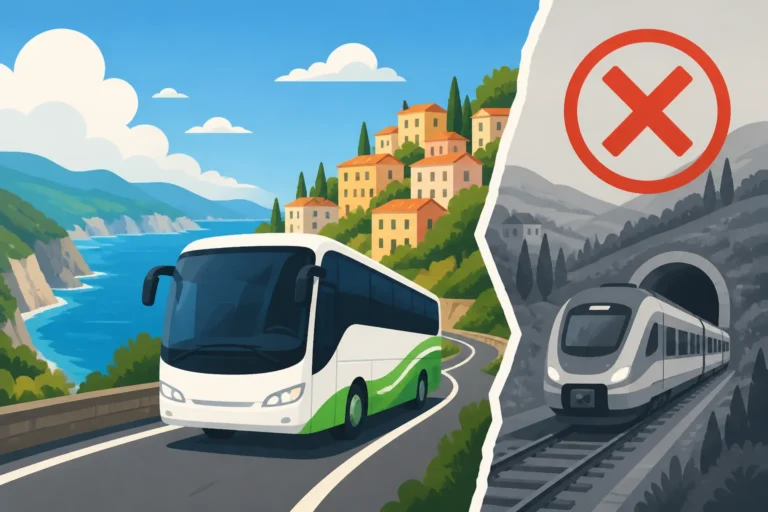
- Consider Alternative Transport Modes: This is where a multi-modal booking platform like Omio becomes your absolute hero. Instead of just looking at trains, Omio allows you to compare trains, buses, and flights all in one place for your route. If trains are striking, a bus might be unaffected. If short-haul flights are disrupted, a long-distance bus could be a viable (though slower) option. Omio's strength is showing you all the possibilities from different providers side-by-side, so you can quickly pivot your plans. It's a lifesaver when you need to switch gears fast. You might find a bus operator like FlixBus is still running smoothly when Trenitalia is not.
- Think About Car Hire: If public transport is entirely out, and especially if you're traveling with family or a lot of luggage, renting a car might be your only recourse. Be aware that this can be expensive, and driving in Italian cities has its own challenges, like What Is a ZTL in Italy and How to Avoid Fines. Book a car as soon as possible, as demand will skyrocket during a strike.
- Adjust Your Schedule: If possible, can you travel the day before or the day after the strike? Sometimes shifting your plans by 24 hours can completely avoid the headache. This is particularly relevant if you're moving between major cities or regions, say, from Rome for First-Time Visitors: Neighborhoods and Highlights to Florence.
During a Strike: What to Do if You're Caught
If you find yourself stuck in Italy mid-strike, here’s how to navigate the chaos.
- Stay Calm and Seek Information: Panicking won't help. Look for information boards at stations or airports. Listen to announcements. Check the official websites again. Local staff might be able to offer advice, but often they are just as overwhelmed.
- Leverage Apps and Digital Tools: Many public transport apps (like those for Trenitalia, Italo, or city transport) offer real-time updates. Omio also provides real-time updates for many of its listed operators, which can be incredibly useful.
- Local Public Transport: For getting around within a city, local buses and trams often have a lower "guaranteed service" threshold, or the strike might be for a limited number of hours. During the fasce di garanzia, try to utilize these services.
- Taxis and Ride-Sharing: Taxis are usually unaffected by transport strikes (unless taxi drivers themselves are striking, which is a separate issue). However, demand will be incredibly high, and fares will surge. Ride-sharing apps like Uber are less prevalent in Italy than in some other countries, often operating only in major cities like Rome and Milan, and with fewer drivers. Always confirm availability and estimated costs.
- Walk or Cycle: For shorter distances, embrace the Italian way and walk! It's a great way to see more of the city anyway. In some cities, bike-sharing services are available.
Rebooking and Refunds: Your Rights and Options
Understanding your passenger rights is crucial, especially when dealing with cancellations due to strikes.
- Train Travel: If your train is canceled or significantly delayed (usually over 60 minutes for high-speed trains or longer for regional), Trenitalia and Italo are obligated to offer you either a full refund or alternative transport (on a later train, for example). You can often apply for refunds online or at the station. When rebooking, consider using Omio to quickly find the next available journey, even if it's with a different operator or a bus. Their platform makes it straightforward to compare and purchase tickets across various providers, which is a massive advantage when your original plan falls through.
- Air Travel: For flights within the EU or departing from an EU airport, EU Regulation 261/2004 applies. If your flight is canceled due to a strike, the airline must offer you a refund, re-routing, or alternative transport. However, strikes are often considered "extraordinary circumstances," meaning you might not be entitled to additional compensation for delays, but you are still entitled to care (meals, accommodation) if stranded. For any flight rebooking or alternative options, Omio can once again show you available flights from different airlines, helping you secure a new ticket quickly.
- Bus Travel: Bus companies also have obligations for cancellations. Check the specific terms and conditions of your ticket. Many will offer refunds or rebooking on the next available service. Again, Omio provides an excellent interface to see all bus options if your original bus is canceled.
- Travel Insurance: If you have Travel Insurance for Trips to and Within Italy, review your policy. Some comprehensive plans may cover additional expenses (like unplanned accommodation or alternative transport) incurred due to strikes, especially if they are unforeseen. Keep all receipts!
Omio: Your Go-To for Stress-Free Travel in Italy
In the unpredictable world of Italian scioperi, having a reliable travel companion is key. Omio isn't just another booking site; it's a strategic tool for navigating the complexities of travel in Italy, especially when strikes hit.
Why Omio Makes a Difference During Sciopero
When a sciopero is announced, your beautifully crafted itinerary can instantly become a pile of crumpled paper. This is where Omio steps in as a true problem-solver for expats and tourists alike.
- Multi-Modal Comparison at Your Fingertips: The biggest advantage of Omio is its ability to aggregate and display options for trains, buses, and flights from multiple providers. If Trenitalia announces a strike, you can immediately search on Omio to see if Italo is unaffected, or if there's a bus option that gets you to your destination. This eliminates the frantic scramble of checking three different websites. You can instantly compare travel times and prices, allowing you to make an informed decision quickly.
- Real-Time Information (Often): While the most granular, real-time updates for specific train or bus numbers during a strike often come directly from the operator, Omio typically reflects general service disruptions and cancellation statuses as provided by their partners. This means you’ll often see if entire routes or specific modes of transport are severely impacted directly within the search results, saving you valuable time.
- Ease of Rebooking: If your original booking with a partner airline or train company is canceled, Omio simplifies the process of finding and booking a replacement journey. You're not stuck trying to re-navigate complex Italian operator sites; you can simply search for a new route, potentially with a different provider or mode of transport, and book it in your preferred language.
- International Reach: For expats with families or those planning trips around Europe from Italy, Omio’s ability to book cross-border travel is invaluable. A strike affecting domestic routes might still allow international connections via unaffected operators or alternative modes, and Omio helps you find them.
How to Use Omio to Rebook During a Strike
Let's walk through a hypothetical scenario. You've planned a weekend trip from Rome to Naples via high-speed train, but a 24-hour national train strike is announced for your departure day.
- Stay Alert for Operator Notifications: First, check your email or messages from Trenitalia or Italo. They will usually inform you of a cancellation and options for refunds or rebooking.
- Open the Omio App or Website: Even if you didn't book through Omio initially, you can use it to find alternatives. Enter your original route (Rome to Naples) and your travel date.
- Review the Search Results: Omio will display available options. During a strike, you might see fewer train options, or some marked as "likely to be affected." But crucially, you'll also see bus options (e.g., from FlixBus, Itabus) and potentially domestic flights if the distance warrants it.
- Compare and Choose: You can compare prices, travel times, and even the number of stops for each alternative. Perhaps a slightly longer bus journey is preferable to a canceled train and the uncertainty of waiting it out. Omio puts all these choices in front of you clearly.
- Book Your New Ticket: Once you've identified a viable alternative, you can book your new ticket directly through Omio. The process is streamlined, in your language, and handles currency conversions effortlessly. This agility in a crisis is why Omio is so essential for any traveler in Italy.
- Seek Refund for Original Ticket: Separately, follow the instructions from your original operator (Trenitalia, Italo, etc.) to get a refund for your canceled journey.
Beyond Strikes: General Benefits of Using Omio
Even when there isn't a sciopero on the horizon, Omio simplifies travel in Italy significantly.
- Language Barrier Breaker: Let's be honest, deciphering Italian travel websites can be a challenge, even for seasoned expats. Omio presents information clearly in English and other languages, removing a huge source of potential frustration.
- Comprehensive Coverage: Whether you're planning Day Trips From Florence Without a Car or a longer journey across the country, Omio covers a vast network of routes and operators, ensuring you find the most suitable and cost-effective travel solutions. This is especially useful for those navigating the intricacies of High-Speed Trains in Italy: Trenitalia, Italo, Routes, and Savings.
- Mobile Convenience: The Omio app allows you to keep all your tickets in one place, receive updates, and easily manage your bookings on the go, which is a godsend for travelers.
- Transparent Pricing: See all the costs upfront, with no hidden fees, helping you manage your travel budget effectively, whether you're taking regional trains or Intercity Buses in Italy: FlixBus and Regional Networks.
No one likes a sciopero, but with the right information, a proactive mindset, and a powerful tool like Omio in your arsenal, you can significantly reduce the stress and navigate these inevitable Italian quirks with confidence.
Travel Disruption Comparison Table
| Transport Mode | Typical Strike Notice | Likelihood of Strike Impact | Minimum Service Guarantees (Fasce di Garanzia) | Rebooking/Refund Options (General) | Omio Value During Strike |
|---|---|---|---|---|---|
| National Trains | 5-10 days | High | Yes (morning/evening rush) | Refund or rebooking on next available train | Compare across Trenitalia/Italo, find bus alternatives, faster rebooking. |
| Local City Transport (Bus/Metro/Tram) | 5-10 days | Very High | Yes (specific hours vary by city) | Refund or rebooking on next available service | Find affected routes, quickly check guaranteed hours, identify walk/taxi options. |
| Air Travel (Flights/ATC) | 5-10 days | Medium-High (can cause severe delays) | Yes (essential flights) | Refund, re-routing, or alternative transport | Compare flights across airlines, find train/bus alternatives for domestic routes, access airline policies. |
| Intercity Buses | Varies (often less affected) | Low-Medium | Less common | Refund or rebooking on next available service | Often unaffected, providing a strong alternative when trains/flights strike. Easy to compare and book. |
| Ferries | Varies | Medium | Less common | Refund or rebooking on next available service | Check specific operators; Omio can show alternative modes to coastal areas. |
Disclaimer
The information provided in this guide is for general informational purposes only and does not constitute legal or professional advice. Strike schedules and regulations can change rapidly. Always consult official government sources, transportation company websites, and your travel insurance provider for the most accurate and up-to-date information regarding strikes and your specific travel plans in Italy.