Combining Train, Bus, and Ferry in One Journey: Connections That Hold
Ah, the romance of Italian travel! It's all sun-drenched piazzas and ancient ruins until you try to get from that charming hilltop village in Tuscany to a tiny island off the Amalfi Coast. Suddenly, you're not just booking a train; you're orchestrating a symphony of different transport modes, each with its own website, language, and ticketing system. It can be a bewildering, frustrating mess, but trust me, after years of navigating these waters, I've found that the key to seamless multi-modal journeys lies in having the right tool. This guide is all about simplifying that complex dance, showing you how to combine trains, buses, and ferries into one smooth, stress-free trip, with a little help from a truly indispensable companion.
Disclosure: This post may contain affiliate links. We may earn a commission at no extra cost to you if you make a purchase through these links. Read full disclosure.
The Italian Transport Puzzle: Why Combining Modes is a Necessity (and a Headache)
When you dream of Italy, you might picture hopping on a high-speed train from Rome to Florence, or perhaps renting a cute little car to zip through the Tuscan countryside. But the reality for many expats and long-term visitors is that getting to those truly off-the-beaten-path gems, or even just connecting between major hubs and their charming surrounding areas, often requires a bit more ingenuity. Italy’s diverse geography and regional transport systems mean that one mode simply won't cut it for many journeys.
The Reality of Italian Geography and Infrastructure
Italy is a land of incredible contrasts, from the soaring Dolomites in the north to the sun-baked beaches of Sicily in the south. This very diversity, while beautiful, creates a complex transportation landscape. High-speed trains, like those operated by Trenitalia and Italo, are fantastic for covering long distances between major cities quickly. They're often the first choice for getting from, say, Milan to Naples. But what about when your destination isn't a bustling city center with a grand stazione?
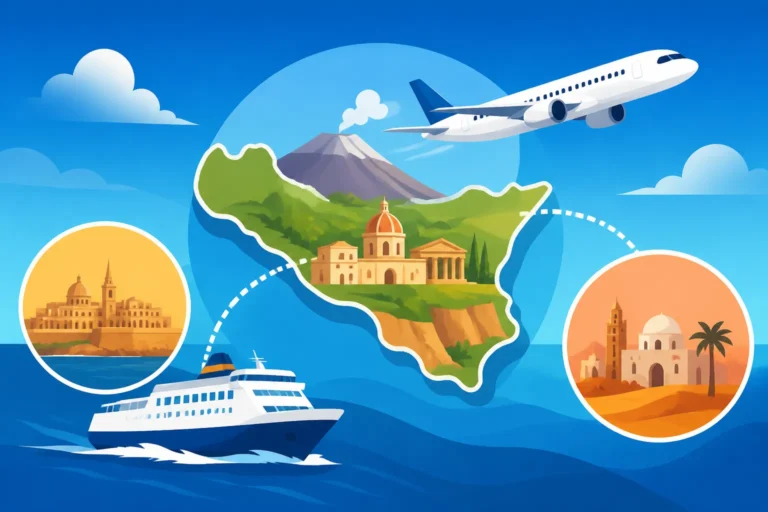
Take the Amalfi Coast, for example. You might take a train to Naples or Salerno, but to truly explore Positano, Amalfi, or Ravello, you'll likely need a bus or, even better, a ferry to enjoy the stunning coastal views. Or imagine wanting to visit a small borgo in Umbria; a regional train might get you close, but a local bus or even a private shuttle will be necessary for the final leg. The Italian railway network, while extensive, doesn't reach every corner, and sometimes, a bus route is simply more direct or more frequent than a meandering regional train. Similarly, the country's extensive coastline and numerous islands necessitate ferries, which are often the only practical way to reach places like Capri, Ischia, or the Aeolian Islands. You can't train to Sicily; you either fly or take a train-ferry combo (yes, they put the train on the ferry!). This inherent need to switch modes means you're constantly dealing with different companies, different schedules, and different booking platforms.
The Hidden Traps of Booking Independently
Trying to coordinate all these different transport providers yourself can feel like navigating a minefield, especially when you're still getting used to the language and local customs. First, there's the sheer number of operators. You've got national train companies like Trenitalia, private ones like Italo, a myriad of regional bus companies (like SITA Sud for the Amalfi Coast or Autolinee Toscane in Tuscany), and countless ferry services ranging from large national carriers to small local boats. Each has its own website, often only in Italian, with different payment methods and cancellation policies.
Then comes the booking headache. You find a train ticket, then a bus ticket, but what if the bus is delayed and you miss your ferry? Or what if the train station is miles from the ferry port, and you haven't accounted for the local bus transfer? The independent approach demands meticulous cross-referencing of schedules, generous buffer times, and a good dose of optimism. Trying to get reliable information in English from a small regional bus company in the middle of nowhere can be a real challenge, as can dealing with unforeseen strikes or cancellations. Trust me, I've spent hours trying to piece together itineraries only to find out a critical connection was mis-timed or no longer existed. The stress of coordinating it all can really take the shine off what should be an exciting journey.
Omio to the Rescue: Your Integrated Travel Companion
This is where a service like Omio becomes an absolute lifesaver. Instead of juggling multiple websites, languages, and booking systems, Omio pulls it all together into one intuitive platform. It’s like having a personal travel agent who speaks fluent Italian and understands all the nuances of combining different transport methods across the country.
How Omio Simplifies Multi-Modal Booking
Omio is brilliant because it aggregates results from major Italian transport providers – think Trenitalia, Italo, FlixBus, and even many ferry companies – allowing you to search, compare, and book tickets for trains, buses, and ferries all in one place. You simply input your starting point and final destination, and Omio does the heavy lifting, presenting you with various combinations of transport modes to get you there.
For instance, let’s say you want to go from Rome to the island of Ischia. Without Omio, you'd likely:
- Book a high-speed train from Rome Termini to Naples Centrale with Trenitalia or Italo.
- Then, figure out how to get from Naples Centrale to Molo Beverello (the main ferry port), likely by local bus or taxi.
- Finally, navigate the websites of different ferry operators (like Caremar, SNAV, or Medmar) to find a suitable crossing to Ischia.
It's three separate bookings, three payment processes, and a lot of mental gymnastics. With Omio, you type "Rome" to "Ischia," and it will show you options that seamlessly combine the train from Rome to Naples, and then the ferry from Naples to Ischia. It even often accounts for the transfer time and sometimes integrates the local transport in Naples needed to get from the train station to the port. You see the full journey, the total price, and you make one booking. It's incredibly straightforward, cutting through so much of the usual Italian bureaucratic hassle. Plus, having all your tickets in one app is a game-changer when you're rushing between connections. This unified approach is precisely what makes Omio such a powerful tool for navigating Italy's complex travel network.
Real-World Scenarios Where Omio Shines
Let me give you a few real-world examples where Omio has truly proven its worth, based on my own adventures and those of fellow expats:
- From City to Coastal Paradise (e.g., Florence to Cinque Terre): You start in Florence, and you want to experience the iconic Cinque Terre. Traditionally, you'd take a regional train from Florence Santa Maria Novella to La Spezia Centrale. From there, you'd transfer to another regional train that hops between the five Cinque Terre villages, or you might opt for a scenic ferry ride between some of them. Booking this through Omio allows you to see the entire train journey, potentially even showing you combined train and ferry options if you want to approach via the sea. You get a clear overview of times and prices, letting you choose the fastest or most scenic route.
- Exploring Hilltop Towns (e.g., Bologna to Urbino): Urbino is a stunning Renaissance city, but it's not on a major train line. You'd typically take a train from Bologna to Pesaro, and then a local bus from Pesaro up to Urbino. Trying to find the bus schedule for the Pesaro-Urbino route can be a project in itself. Omio often pulls in these regional bus connections, allowing you to see the train-bus combo as a single itinerary. This is invaluable for reaching those charming, slightly remote towns that define so much of Italy's beauty.
- Island Adventures (e.g., Palermo to Stromboli): Imagine you're exploring Sicily and decide you want to witness the active volcano on Stromboli. You'd likely take a train or bus from Palermo to Milazzo, then a hydrofoil or ferry from Milazzo to Stromboli. That's at least two different booking websites and potentially confusing connections. Omio can map out the entire trip, showing you available buses or trains to Milazzo and then the various ferry options, simplifying what would otherwise be a multi-layered logistical puzzle. This comprehensive booking power makes Omio a vital tool for exploring even the farthest reaches of Italy.
Beyond Tickets: Omio's Additional Benefits for Expats
Omio offers more than just consolidated booking; it provides several features that are particularly beneficial for us expats navigating Italy:
- Multi-Language Support: This is huge! You can browse and book in English (or many other languages), eliminating the frustration of trying to decipher Italian transport terminology on various individual operator websites. This alone can save hours of headache.
- Mobile Tickets: Most tickets booked through Omio are digital, meaning you get them straight to your phone. No need to print out tickets, wrestle with validation machines, or worry about losing paper. Just show your phone to the conductor or gate agent. This is especially useful when you're on the move and don't always have access to a printer.
- Currency Options: You can view prices and pay in your preferred currency, making budgeting and expense tracking much simpler than dealing with multiple small transactions in Euros.
- Clear Information: Omio generally provides clear details about journey duration, transfers, and specific station/port locations, which is vital when you're unfamiliar with an area. It often includes helpful information about travel times between connections, giving you a realistic idea of the journey.
- Customer Support: While you're still dealing with transport providers directly for issues during the journey, Omio offers a layer of support for booking issues, which can be a relief compared to trying to contact a regional Italian bus company with limited English-speaking staff. Having that intermediary can make a real difference when plans go awry.
- Flexibility: Need to change your plans? While specific ticket terms vary by operator, Omio makes it easy to review these conditions and, if eligible, manage cancellations or modifications through a centralized portal, rather than bouncing between providers.
Using Omio truly streamlines the entire travel planning and booking process, letting you focus on the experience of Italy rather than the logistical nightmare of getting there. If you're looking for an easier way to coordinate your travels, I highly recommend checking out Omio for your next adventure.
Mastering the Art of Connections That Hold: Tips for Seamless Italian Journeys
Even with a fantastic tool like Omio, successful multi-modal travel in Italy requires a bit of savvy. It’s not just about booking; it’s about understanding the rhythm of Italian transport and building in safeguards.
Strategic Planning with Omio for Complex Routes
When you're dealing with journeys that involve multiple changes, a little strategic planning goes a long way. Omio's search results are your best friend here. Don’t just pick the cheapest or fastest option immediately.
- Examine the Full Itinerary: Click on each suggested journey to see all the legs of the trip. How long are the layovers between connections? Is it a quick 10-minute dash or a comfortable hour? If you’re changing from a train to a ferry, consider if the port is within walking distance or if you’ll need local transport.
- Build in Buffer Time: This is critical in Italy. Delays can happen. A train might run late, or traffic could slow down a bus. I always try to add at least 30-60 minutes buffer between crucial connections if I’m booking separate tickets or if the integrated option on Omio shows a very tight transfer. For example, if you’re taking a high-speed train and then catching a regional train, consider picking an option that gives you a decent window at the transfer station. Don't be afraid to choose a slightly longer total journey time if it means a less stressful transfer.
- Consider the Season and Day: High season (summer, holidays like Easter or Ferragosto) means more crowds and potentially more delays. Weekends might have fewer services on certain routes, especially regional buses. Check the specific dates of travel carefully on Omio. If you're planning a trip during a major Italian holiday, make sure to check if services might be reduced or affected.
- Read the Details: Omio often provides helpful notes about specific connections, like which station or port terminal to use. Pay attention to these details to avoid last-minute confusion.
Navigating Transfers: Practical Advice for On-the-Ground Success
Once you've booked your multi-modal journey, the real test comes during the transfers themselves. Being prepared can make all the difference.
- Locate Your Connections: Before you even leave, use Google Maps or a similar app to orient yourself. If you're arriving at a train station and need to catch a bus or ferry, figure out exactly how to get there. Is there a local bus? A taxi stand? How long will it take? For instance, if you're arriving at Naples Centrale by train and need to get to Molo Beverello for a ferry to Capri, know that you'll need a taxi, a local bus, or the metro to reach the port, which is not directly adjacent to the train station.
- Travel Light: This might sound obvious, but lugging heavy suitcases between different modes of transport, up and down stairs, and across city centers is no fun. Pack strategically, especially if your itinerary involves multiple transfers. A small rolling suitcase and a backpack are usually sufficient.
- Have Information Handy: While Omio keeps everything digital, it’s not a bad idea to have screenshots of your tickets and key connection details (train/bus/ferry numbers, times, platforms/gates) on your phone, just in case you lose signal or your battery dies.
- Ask for Help (Politely!): Don't be afraid to ask station or port staff for directions if you're unsure. A polite "Scusi, dov'è il binario [platform number]?" (Excuse me, where is platform [number]?) or "Scusi, per il traghetto per [destination]?" (Excuse me, for the ferry to [destination]?) can go a long way. Even if your Italian isn't perfect, most people will try to help. For instance, knowing how to ask for directions can save you a lot of time and stress. This is where a little bit of Italian Language and Everyday Communication for Visitors can come in handy.
What to Do When Things Go Wrong (and How Omio Helps)
Let's be realistic: travel in Italy, while wonderful, can sometimes throw a curveball. Delays and cancellations happen. Knowing what to do can turn a potential disaster into a minor hiccup.
- Stay Calm: Panicking never helps. Take a deep breath.
- Check Your Omio App: In many cases, if a train or bus is delayed, Omio might update you. For some providers, especially high-speed trains, you might even find alternative options through the app or by contacting Omio support.
- Go to the Source: If a train is delayed, look at the departure boards (partenze) for updates. If a bus is a no-show, ask at the bus station (stazione degli autobus) or a local tabaccheria (which often sell bus tickets and know local schedules). For ferries, go directly to the port office.
- Seek Alternatives: If you miss a connection, immediately start looking for the next available option. Omio can be invaluable here, as you can quickly search for new routes, even if it means trying a different mode of transport (e.g., if the next ferry is hours away, see if a bus can get you to an alternative port or even closer to your destination).
- Know Your Rights: For significant delays or cancellations, especially on longer journeys, you might be entitled to refunds or alternative travel arrangements, particularly with major operators like Trenitalia. Keep your tickets and any evidence of the delay. Understanding High-Speed Trains in Italy: Trenitalia, Italo, Routes, and Savings can also give you insights into their delay policies.
- Travel Insurance: For really complex or expensive journeys, travel insurance is always a good idea. It can provide peace of mind for unforeseen disruptions.
Deeper Dive: Combining Specific Modes for Popular Italian Routes
Let’s get into some specific examples of how combining modes, especially with a tool like Omio, really makes sense for exploring Italy.
Coastal & Island Hopping: Train + Ferry Combinations
Italy’s islands and coastlines are arguably some of its most alluring features. But getting to them almost always means a combination of land and sea transport.
- The Neapolitan Coast and Islands (e.g., Naples to Capri, Ischia, Procida): You'll most likely arrive in Naples by train – perhaps a high-speed Frecciarossa from Milan, Florence, or Rome. From Naples Centrale, you then need to reach one of the city's ferry ports, usually Molo Beverello or Calata Porta di Massa. As mentioned, this involves a short local bus ride, tram, or taxi. Omio can show you train tickets to Naples and then seamlessly integrate ferry options to the islands from various operators like SNAV, Caremar, and Medmar, giving you departure times, journey durations, and prices all in one view. This is essential for a smooth transfer, as missing a ferry can mean a long wait for the next one.
- Exploring the Italian Riviera (e.g., Genoa to Portofino, Cinque Terre): While the Cinque Terre itself is famous for its regional train line, getting to the region or visiting other Riviera gems like Portofino often involves a mix. You might take a train to a major hub like Genoa or La Spezia, and then catch a local ferry or bus to your specific coastal town. For instance, to get to Portofino, you'd train to Santa Margherita Ligure and then hop on a local bus or ferry. Omio can help you find these combined routes efficiently. Understanding the nuances of The Amalfi Coast and Cinque Terre: Choosing Your Coast often involves knowing these multi-modal options.
- Sicilian Adventures (e.g., Milazzo to Aeolian Islands): If you're dreaming of the volcanic beauty of the Aeolian Islands (Stromboli, Lipari, Vulcano, etc.), you'll typically take a train or bus to Milazzo on Sicily’s northern coast, and then catch a hydrofoil or ferry. Omio can bridge that gap, showing you how to get to Milazzo from major Sicilian cities like Palermo or Catania, and then presenting all the available ferry crossings to the various islands.
Reaching the Hidden Gems: Bus + Regional Train Combinations
Some of Italy's most authentic experiences lie off the main railway lines, in smaller towns and remote areas. Buses and regional trains become indispensable for these journeys.
- Tuscan Hill Towns (e.g., Florence to Siena, San Gimignano): While there is a train line to Siena, many locals (and savvy expats) prefer the bus from Florence, as it drops you directly in Siena's city center, avoiding the steep walk from the train station. For other towns like San Gimignano, buses are often the only public transport option after a regional train gets you to a nearby larger town. Omio can effectively combine these bus and regional train routes, showing you options that might not be apparent if you only looked at train schedules. This means you can discover places like Siena or San Gimignano with far less logistical stress.
- Umbrian Exploration (e.g., Perugia to Assisi): Assisi, with its stunning Basilica, is easily reachable by regional train from Perugia, but the train station is down in the valley, requiring a local bus ride up to the hilltop town. Omio often includes these final bus legs in its itinerary suggestions, giving you a complete picture of the journey. For wider exploration of Umbria, you might rely heavily on Regional Trains in Italy: How to Use Them and Save combined with local bus services.
- Dolomite Foothills (e.g., Bolzano to Ortisei): To truly immerse yourself in the Dolomites, you'll often take a train to a gateway town like Bolzano, and then connect to mountain villages via regional buses. These buses are well-integrated into the local transport network, and Omio can help piece together these colder-weather multi-modal adventures.
The North-South Link: High-Speed Train + Local Bus/Ferry
For grander tours of Italy, combining high-speed efficiency with local charm is key.
- Major City to Coastal Resorts (e.g., Rome to Puglia's Salento Coast): You could take a high-speed train from Rome to Lecce, Puglia, which is the gateway to the stunning Salento region. From Lecce, you would then rely on local buses (or car rental) to reach coastal towns like Otranto or Gallipoli. Omio can help you plan that crucial high-speed train leg and then guide you on connecting to local services, making Southern Italy and the Islands: Sicily, Sardinia, and Beyond much more accessible.
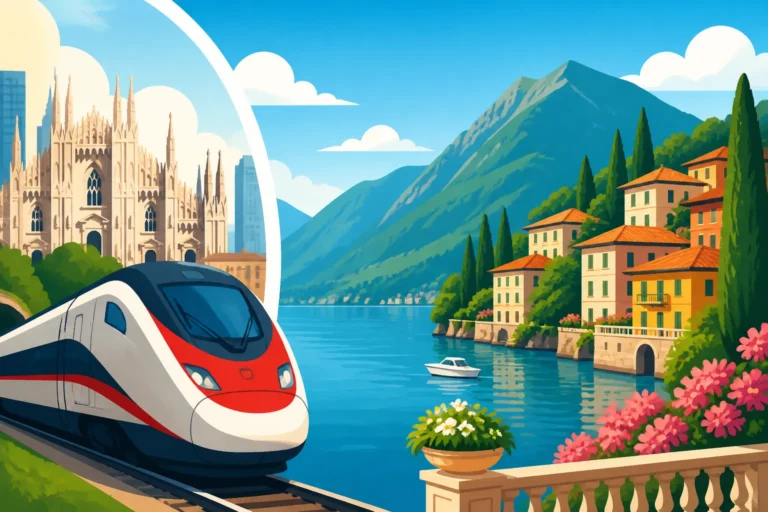
- Lake District Exploration (e.g., Milan to Lake Como): A high-speed train gets you to Milan, but to fully appreciate Lake Como, you'd take a regional train to Como city or Varenna, and then use local ferries to explore the lakeside towns like Bellagio. Omio can help piece together this journey, ensuring your arrival in Milan leads directly to a smooth transfer to the lakes. If you're comparing Renting a Car in Italy: ZTLs, Insurance, and Driving Tips versus public transport for this type of trip, Omio often makes the latter a much more appealing and less stressful option.
Here's a quick comparison of the booking methods:
| Feature | Booking via Omio | Booking Individually (Operator Websites) |
|---|---|---|
| Search & Comparison | Aggregates options from multiple providers (train, bus, ferry) | Separate searches for each mode/provider |
| Booking Process | One unified booking for multi-modal journeys | Multiple individual bookings |
| Language Support | Available in multiple languages (English, etc.) | Often limited to Italian, especially for regional operators |
| Ticket Delivery | Digital tickets, usually in the app | Varies by operator (print, email, app); often requires validation |
| Transfer Visibility | Shows integrated journey times and transfers | Requires manual cross-referencing of schedules |
| Problem Solving | Centralized support for booking issues, app updates | Contacting individual operators, often with language barriers |
| Flexibility | Easy to review cancellation/change policies in one place | Policies vary and must be checked per operator |
| Overall Stress Level | Significantly reduced | Can be very high, especially for complex itineraries |
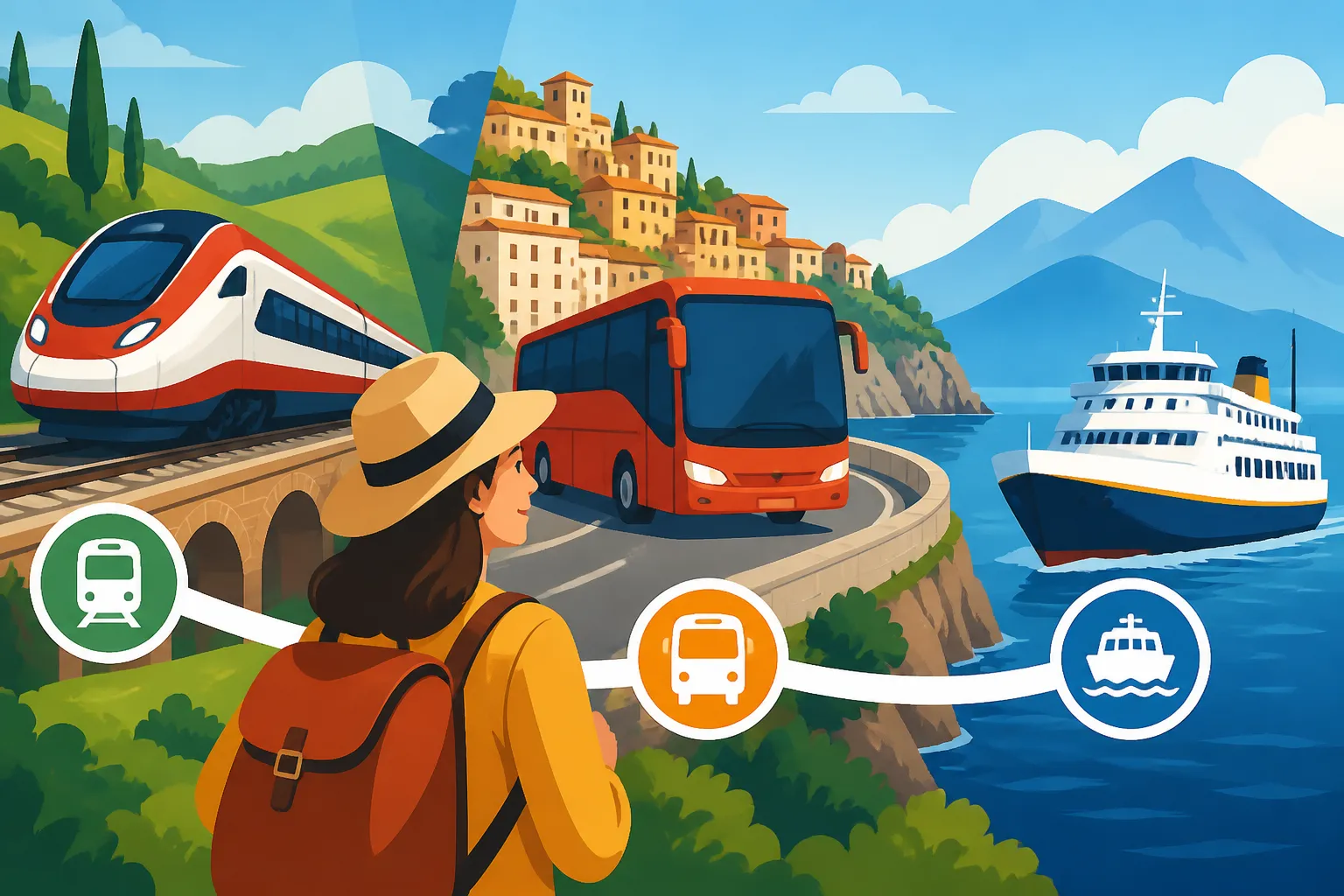
Ultimately, for anyone navigating the beautiful but sometimes bewildering world of Italian travel, having a reliable platform like Omio is a game-changer. It takes the stress out of the equation, allowing you to focus on soaking in the experience, not the logistics. So go ahead, plan that ambitious journey combining a train through the plains, a bus through the hills, and a ferry to a hidden island – Omio has your back. Don't forget to keep an eye on your mobile data, as Mobile Data and eSIMs for Travel in Italy will be essential for using the Omio app on the go!
Disclaimer
The information provided in this guide is for general informational purposes only and does not constitute professional advice. While we strive to keep the content accurate and up-to-date, transport schedules, prices, and regulations in Italy can change without notice. Always verify the latest information with relevant transport providers or official sources before making travel arrangements. Travel decisions are at your own discretion and risk.