Childhood Vaccination Schedule in Italy
Navigating the healthcare system abroad can be complex, especially when it involves the health of your children. This comprehensive guide details the Italian childhood vaccination schedule, mandatory requirements for school enrollment, and how expat parents can access immunization services seamlessly.
Disclosure: This post may contain affiliate links. We may earn a commission at no extra cost to you if you make a purchase through these links. Read full disclosure.
Introduction
Italy boasts one of the most robust and comprehensive pediatric healthcare systems in Europe. The country approaches childhood vaccinations not merely as a personal health choice, but as a fundamental public health imperative. Over the past decade, Italy has implemented stringent laws to combat declining immunization rates and prevent outbreaks of infectious diseases. Consequently, understanding the difference between mandatory vaccinations and recommended immunizations is crucial for any expatriate parent living in the peninsula.
The national vaccination plan, known as the Piano Nazionale Prevenzione Vaccinale, outlines a clear timeline for when children should receive specific vaccines. This schedule ensures maximum protection during the most vulnerable stages of early development. Furthermore, adherence to this schedule is tightly linked to the Italian educational system; compliance is a strict prerequisite for enrolling young children in daycare and preschool facilities. This exhaustive guide will walk you through the entire childhood vaccination schedule in Italy, explaining the specific diseases targeted, the timeline for administration, the legal requirements for school entry, and the practical steps for integrating your child’s foreign medical records into the Italian system.
The Legal Framework The Lorenzin Decree
To fully grasp the current state of pediatric immunizations in Italy, it is essential to look back at the legislative changes implemented in 2017. Facing a concerning drop in herd immunity and localized outbreaks of measles, the Italian government introduced a landmark piece of public health legislation commonly referred to as the Lorenzin Decree.
This decree fundamentally altered the landscape of pediatric healthcare by expanding the list of legally mandatory vaccines for all children residing in Italy between the ages of zero and sixteen. Prior to this law, only four vaccines were strictly required. The Lorenzin Decree expanded this number to ten. The objective was to create an impenetrable shield of herd immunity across the country, protecting not only healthy children but also those who are immunocompromised and cannot be vaccinated for medical reasons.
For expatriate families, this means that the vaccination schedule is not a mere suggestion. It is a legal obligation tied directly to your child’s ability to participate in the local educational system and community activities. Navigating these legalities requires you to be proactive in your child’s healthcare management from the moment you establish residency.
Mandatory Childhood Vaccinations in Italy
Under the current national health regulations, there are ten mandatory vaccines that every child must receive unless they possess a certified medical exemption from an Italian pediatrician. These ten vaccines target diseases that are highly contagious and can cause severe, long-term health complications or even death in young children.
The ten mandatory vaccinations are:
- Diphtheria
- Tetanus
- Pertussis
- Polio
- Hepatitis B
- Haemophilus influenzae type b
- Measles
- Mumps
- Rubella
- Varicella (Chickenpox)
To minimize the number of injections a child must endure, the Italian healthcare system utilizes combination vaccines. The first six diseases on the list are typically administered together in a single shot known as the hexavalent vaccine. The remaining four are administered together in a single shot known as the quadrivalent vaccine. This streamlined approach makes the process significantly less stressful for both the infant and the parents. If you want to understand the broader legal implications of these requirements, you can review our guide on Mandatory Vaccinations for Living in Italy.
Strongly Recommended Vaccinations
In addition to the ten mandatory vaccines, the Italian Ministry of Health provides several other highly recommended vaccines free of charge through the public health system. While your child will not be barred from attending daycare if they skip these, public pediatricians strongly advocate for their administration to ensure comprehensive protection.
The primary recommended vaccinations include:
- Pneumococcal Vaccine: Protects against Streptococcus pneumoniae, a leading cause of severe pneumonia, meningitis, and ear infections in young children.
- Meningococcal B and C Vaccines: These protect against different strains of Neisseria meningitidis, the bacteria responsible for meningococcal disease, which can lead to rapid and fatal meningitis and blood poisoning.
- Rotavirus Vaccine: Administered orally, this vaccine protects against rotavirus, the most common cause of severe, dehydrating diarrhea in infants worldwide.
- Human Papillomavirus Vaccine (HPV): Offered to both boys and girls around their twelfth birthday to protect against the viruses that cause cervical cancer and other genital cancers.
- Influenza Vaccine: Recommended annually, particularly for children between the ages of six months and six years, to protect against seasonal flu strains.
The Role of the Public Pediatrician
To access the vaccination system, your child must be formally registered with the Italian National Health Service. The first step in this process is selecting a primary care physician for your child, known as a Pediatra di Libera Scelta. You can learn more about this initial administrative hurdle in our guide on Registering Your Newborn and Health Care for Babies.
Your public pediatrician is your primary medical advocate. They will monitor your child’s growth, manage acute illnesses, and provide detailed guidance on the vaccination schedule. However, it is an important distinction that in Italy, the pediatrician generally does not administer the vaccines in their private clinic. Instead, the administration of preventative immunizations is centralized and managed by the local health authority at a dedicated vaccination center. Your pediatrician will ensure your child is healthy enough to receive the vaccine and will answer any clinical questions you may have before you head to the appointment.
The Detailed Childhood Vaccination Schedule
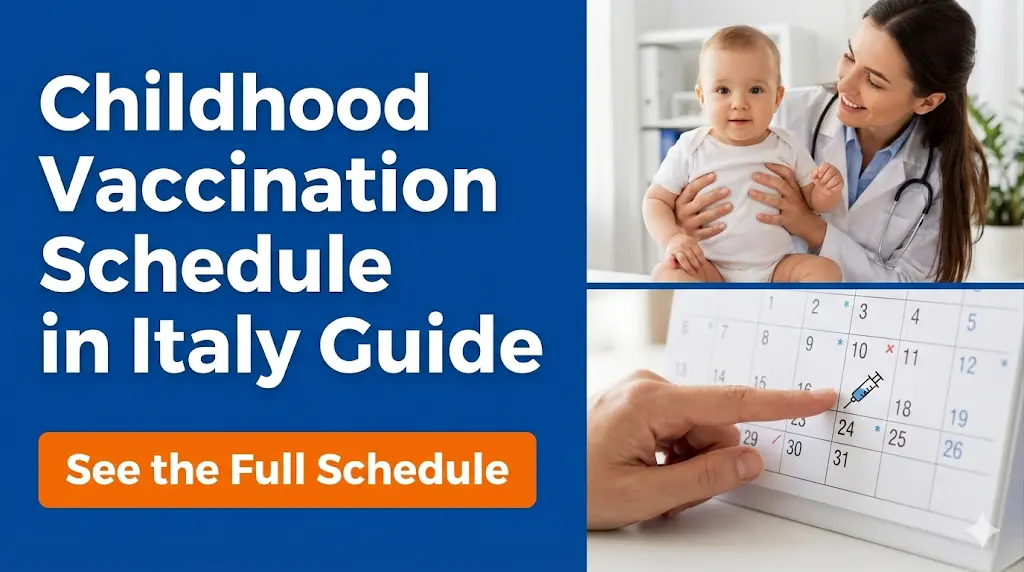
The Italian National Immunization Prevention Plan dictates a precise chronological schedule for administering these vaccines to ensure maximum efficacy. The following table provides a clear overview of the standard vaccination timeline for children from birth to adolescence.
| Age / Milestone | Administered Vaccines | Status |
| 2 to 3 Months | Hexavalent Dose 1, Pneumococcal Dose 1, Rotavirus Dose 1, Meningococcal B Dose 1 | Mandatory & Recommended |
| 4 to 5 Months | Hexavalent Dose 2, Pneumococcal Dose 2, Rotavirus Dose 2, Meningococcal B Dose 2 | Mandatory & Recommended |
| 11 to 13 Months | Hexavalent Dose 3, Pneumococcal Dose 3, Meningococcal C Dose 1 | Mandatory & Recommended |
| 13 to 15 Months | Quadrivalent Dose 1 (Measles, Mumps, Rubella, Varicella), Meningococcal B Dose 3 | Mandatory & Recommended |
| 5 to 6 Years | Diphtheria Tetanus Pertussis Polio Booster, Quadrivalent Booster | Mandatory |
| 11 to 12 Years | Human Papillomavirus Dose 1 and 2, Meningococcal ACWY | Recommended |
| 12 to 18 Years | Diphtheria Tetanus Pertussis Polio Booster | Mandatory |
This schedule is meticulously designed to provide early protection and is continuously reviewed by the scientific committee of the Italian National Institute of Health to reflect the latest epidemiological data. If you are navigating the early months of parenthood in Italy, integrating these appointments is a key part of the process outlined in our article on Postnatal Care and Pediatrician Follow Up in Italy.
Booking and Attending Vaccination Appointments
The process of booking and attending vaccination appointments in Italy is generally highly organized and automated, provided you are properly registered with the local health authority.
In most Italian regions, the Azienda Sanitaria Locale uses a proactive invitation system. When your child is due for their next set of immunizations, the local health authority will automatically mail an official invitation letter to your registered home address. This letter will specify the exact date, time, and location of your appointment at the local vaccination center.
If the assigned date is inconvenient, you can usually reschedule by calling the regional toll-free booking number or accessing the regional digital health portal online.
When you attend the appointment, you must bring your child’s Italian health card, your own identification, and the child’s official vaccination booklet. The vaccination centers are staffed by specialized public health doctors and nurses who will conduct a brief triage interview to ensure your child does not currently have a high fever or an acute infection before administering the shot. The actual administration is swift, and you will be asked to remain in the waiting room for fifteen to twenty minutes afterward to monitor for any immediate, albeit extremely rare, allergic reactions.
The Vaccination Booklet Your Child’s Medical Passport
Every child vaccinated in Italy is issued a physical document known as the Libretto delle Vaccinazioni or simply the vaccination booklet. This small booklet is incredibly important. It serves as the official, stamped record of every immunization your child has received, detailing the date, the specific brand of the vaccine, and the batch number.
You must treat this document with the same care as a passport. It will be requested frequently throughout your child’s life in Italy. You will need to present it when enrolling in school, when signing up for organized sports leagues, and when attending summer camps. Furthermore, the local health authority digitizes this information, creating an electronic immunization record that follows your child even if you move to a different region within Italy. If you ever decide to relocate back to your home country or to another international destination, this booklet will be the foundational document required to translate your child’s health history into a new medical system.
School Enrollment and Vaccination Compliance
The intersection of public health and education is where the Italian vaccination laws are most strictly enforced. The regulations differ significantly depending on the age of the child and the level of schooling.
For children between the ages of zero and six, who attend infant daycare (asilo nido) or preschool (scuola dell’infanzia), compliance with the ten mandatory vaccinations is an absolute prerequisite for enrollment. If you cannot provide an official certificate of vaccination or a formal medical exemption from an Italian pediatrician, the school administration is legally obligated to refuse your child entry. There are no philosophical or religious exemptions permitted under Italian law.
For children aged six to sixteen, who fall under the mandatory education bracket attending elementary and middle school, the rules shift slightly. An unvaccinated child cannot be denied their constitutional right to a basic education, so they will be allowed to attend classes. However, the school director is required by law to report the non-compliant family to the local health authority. The parents will then be summoned for an educational interview. If the parents continue to refuse the mandatory vaccinations without medical justification, they will be subjected to significant financial penalties, which can range from several hundred to over a thousand euros per child.
Catch Up Schedules for Expatriate Children
One of the most common sources of anxiety for expatriate parents is moving to Italy with children who have already begun their vaccination schedule in another country. Different countries have different protocols; they may use different combination vaccines, administer them at different ages, or lack mandates for vaccines that Italy requires.
If you are moving to Italy, you must bring an official, translated copy of your child’s complete immunization record from your home country. Upon registering with the Italian public healthcare system, you will schedule an appointment with the local vaccination center specifically for a record review.
An Italian public health doctor will painstakingly compare your child’s foreign records against the Italian mandatory schedule. Because different countries bundle vaccines differently—for instance, using a five-in-one vaccine instead of the Italian six-in-one hexavalent—the doctor will create a personalized catch-up schedule. This customized plan ensures your child receives any missing doses required by Italian law so they can seamlessly enroll in school, without unnecessary over-vaccination.
Managing Post Vaccination Side Effects
It is entirely normal for parents to feel protective and slightly anxious about how their child will react to multiple immunizations. The vaccines used in the Italian public health system are subject to rigorous safety testing by both the European Medicines Agency and the Italian Medicines Agency.
However, like any medical intervention, vaccines can cause mild side effects as the child’s immune system responds and builds protective antibodies. Common, temporary side effects experienced within the first forty-eight hours include:
- Redness, swelling, or tenderness at the injection site (usually the thigh for infants and the upper arm for older children).
- A low-grade fever.
- Increased fussiness, irritability, or crying.
- Temporary changes in sleep patterns or a decreased appetite.
Italian pediatricians typically advise parents to manage these mild symptoms with comfort care. A cool compress applied to the injection site can reduce local swelling. If the child develops a fever or appears to be in pain, the standard pediatric recommendation is the administration of paracetamol. It is critical, however, that you only administer fever-reducing medication under the direct dosage guidance of your pediatrician, as the correct dosage for infants and young children is calculated strictly by weight, not by age. If a fever spikes unusually high, or if the child exhibits inconsolable crying or severe lethargy, you should contact your pediatrician immediately or visit the local pediatric emergency room.
Understanding the Costs and Financial Aspects
A significant relief for many expatriate families is the financial structure surrounding childhood immunizations in Italy. As long as your child is legally registered with the Servizio Sanitario Nazionale, the administration of all mandatory vaccines is completely free of charge. There are no co-pays, consultation fees, or administrative charges at the public vaccination centers.
Furthermore, the vaccines classified as strongly recommended by the Ministry of Health—such as those for rotavirus, pneumococcus, and meningococcus—are also provided free of charge when administered according to the national age-based schedule.
If you choose to administer a recommended vaccine outside of the specific target age window, or if you opt for a vaccine that is available but not actively promoted by the public health schedule (such as certain travel vaccines), you may be required to purchase the vaccine out-of-pocket at a local pharmacy with a prescription from your pediatrician, and then pay a nominal fee for its administration. However, for the vast majority of standard childhood immunizations, the Italian state bears the entire financial burden.
Dispelling Common Myths and Anxieties
Expatriate parents often encounter conflicting information online regarding vaccine safety and schedules. It is important to rely on verified, scientific sources when making healthcare decisions for your family.
The Italian medical community is highly vocal in dispelling myths linking vaccines to developmental disorders. The Ministry of Health and the National Institute of Health continuously publish transparent epidemiological data demonstrating the safety and efficacy of the national schedule. The decision to administer combination vaccines, such as the hexavalent or the quadrivalent, is rooted in decades of clinical evidence proving that the infant immune system is more than capable of handling multiple antigens simultaneously safely, thereby reducing the trauma of multiple separate injection appointments.
If you have philosophical reservations or fears based on information from your home country, it is highly recommended to schedule a dedicated consultation with your Italian pediatrician. They are trained to address these concerns empathetically, using evidence-based medicine to explain the rigorous safety protocols surrounding the vaccines used in Italy.
Conclusion
Navigating the childhood vaccination schedule in Italy is a fundamental aspect of your expatriate parenting journey. While the transition from your home country’s medical system to the Italian public health infrastructure may initially seem daunting due to language barriers and bureaucratic procedures, the underlying system is incredibly supportive, highly organized, and deeply committed to the well-being of your child.
The strict adherence to the mandatory vaccination schedule, enforced by the Lorenzin Decree, ensures that your child is growing up in a community protected by strong herd immunity. By registering your child with the national health service, securing a trusted public pediatrician, and responding promptly to your vaccination invitations, you are seamlessly integrating your family into the Italian way of life. Embrace the preventative care offered by the Italian state; it is a world-class system designed to provide your children with the healthiest possible foundation as they thrive in their new Mediterranean home.
References
Primary sources (official)
- Ministero della Salute: The central portal for the Italian Ministry of Health, providing the complete National Immunization Prevention Plan, legal frameworks, and detailed information on mandatory pediatric vaccinations. https://www.salute.gov.it/
- Istituto Superiore di Sanità: The leading technical-scientific body of the Italian National Health Service, offering extensive epidemiological data, vaccine safety records, and public health statistics. https://www.iss.it/
Other helpful sources
- Società Italiana di Pediatria: The Italian Society of Pediatrics, an authoritative professional organization providing educational resources for parents on vaccine schedules, safety, and managing infant side effects. https://sip.it/
Disclaimer
The information provided in this article is intended for general educational and informational purposes only and does not constitute official medical, diagnostic, or legal advice. Vaccination schedules, mandatory public health laws, and regional administrative procedures in Italy are subject to change based on frequent legislative updates and epidemiological assessments. Always consult directly with your licensed public pediatrician or your local health authority for personalized medical advice, correct medication dosages, and the most up-to-date legal requirements regarding your child’s health and school enrollment. In the event of a severe or life-threatening allergic reaction following a vaccination, please dial the universal European emergency number 112 immediately.