How to Plan a Self-Guided Day Trip in Italy
Trying to navigate the Italian rail system or braving the restricted driving zones of an ancient hilltop town can turn a dream afternoon into a logistical nightmare of fines and missed connections. Many travelers feel forced into rigid, overpriced group tours just to avoid the headache. This guide solves that by teaching you how to master local transport, timing, and cultural nuances for a perfect, independent adventure.
Disclosure: This post may contain affiliate links. We may earn a commission at no extra cost to you if you make a purchase through these links. Read full disclosure.
Master the Logistics of Regional Travel
The backbone of any successful self-guided day trip in Italy is your transportation strategy. Unlike North America or parts of Northern Europe, Italy relies on a complex hierarchy of train services and highly restrictive driving laws in city centers. If you don't understand the difference between a Regionale and a Frecciarossa, you might end up stranded on a platform in the middle of Tuscany with no way back to your base.
Choosing Between Trains and Buses
For the vast majority of travelers, the train is your best friend. Italy’s rail network is extensive and generally affordable. When planning, you’ll encounter two main types of service. The high-speed lines, run by Trenitalia and Italo, are incredible for long distances—think Florence to Rome in 90 minutes. However, for a day trip to a smaller village, you’ll likely be using the regional trains. These don't require seat reservations and have fixed prices, but they can be slow and occasionally prone to delays.
I always suggest using a tool like Omio to compare different routes and see if a regional bus might actually be faster for certain hilltop towns. For example, if you are heading from Florence to Siena, the bus often drops you right in the center, whereas the train station is at the bottom of a very steep hill. Checking these nuances ahead of time prevents that "how do I get up there?" panic upon arrival. Remember that if you take a regional train, you must validate your paper ticket in the small green or yellow machines on the platform before boarding, or you’ll face a hefty on-the-spot fine. For more details on ticketing, check out High-Speed Trains in Italy: Trenitalia, Italo, Routes, and Savings.
The ZTL Trap for Drivers
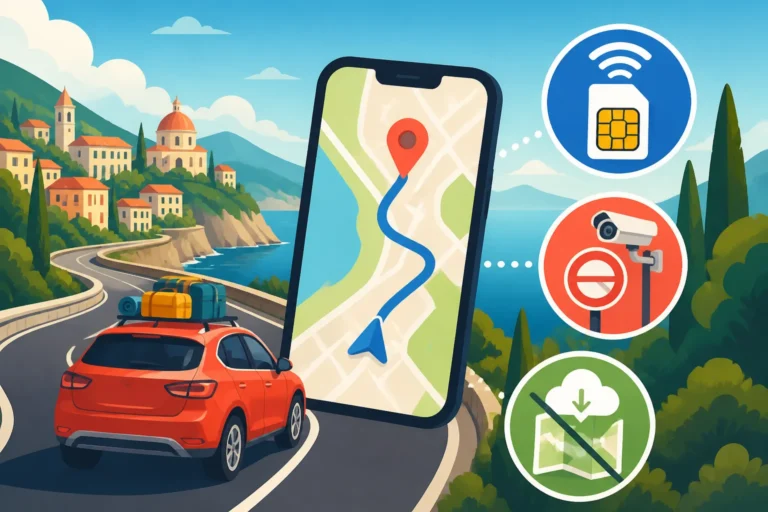
If you decide to rent a car for more flexibility in regions like Puglia or the Tuscan countryside, you must become an expert on the Zona a Traffico Limitato (ZTL). These are restricted traffic zones found in almost every Italian city and town center. They are monitored by cameras, and if you drive past the sign—which is often a simple white circle with a red border—you will receive a fine in the mail months after you return home.
Planning a self-guided drive requires identifying a "Parcheggio Scambiatore" (commuter parking lot) on the outskirts of your destination. You park there and take a shuttle or a short walk into the historic center. This saves you the stress of navigating narrow medieval alleys and keeps your budget safe from administrative penalties. To help you prepare for the road, see What Is a ZTL in Italy and How to Avoid Fines.
Balancing Your Buffer Zones
One of the biggest mistakes I see newcomers make is booking their return travel too tightly. Italian life is beautiful because it is unpredictable, but that unpredictability extends to transport. A "binario" (platform) change might be announced only in Italian two minutes before departure, or a local strike might cause a sudden cancellation.
Always build in at least a 45-minute buffer before your intended return. This gives you time to finish that last gelato, browse a local leather shop, or handle a platform shift without the stress of missing your connection. If you are starting your trip immediately after landing, knowing How to Get From Rome Fiumicino Airport to the City Center will ensure you don't waste the first three hours of your day just trying to find your hotel.
Designing an Itinerary That Breathes
A self-guided day trip isn't a race to see every monument in a guidebook; it's about experiencing the "ritmo" (rhythm) of a new place. When you pack too many sites into eight hours, you end up seeing everything through a camera lens and nothing through your own eyes. The secret to a veteran-level itinerary is the "One Big, Two Small" rule.
Selecting Your Primary Anchor
Pick one major site that requires a ticket and deep focus. This might be the Cathedral in Orvieto, the Roman Arena in Verona, or the ruins of Pompeii. This is your "anchor" for the day. To ensure you aren't standing in a two-hour line under the Mediterranean sun, I highly recommend using GetYourGuide to secure skip-the-line tickets in advance. Having a digital voucher on your phone means you can walk past the queue and start your experience immediately, preserving your energy for the rest of the day.
Once your anchor is set, find two smaller, less demanding activities. This could be a specific panoramic viewpoint, a historic pharmacy, or a local market. These "small" items should be flexible. If you spend longer at lunch than expected, you can drop one without feeling like you’ve missed the core of the trip. This flexibility is the hallmark of a seasoned traveler.
Embracing the Pausa and Meal Timing
In smaller Italian towns, the "Pausa" (afternoon break) is very real. Between 1:30 PM and 4:30 PM, many shops and smaller churches will close their doors. If you plan your big shopping spree for 2:00 PM, you'll be met with shuttered windows.
Use this time for a long, leisurely lunch. This is when you should focus on How to Find Authentic Restaurants in Italy (Not Tourist Traps). Look for places without menus in four languages or photos of the food on boards outside. If the menu is only in Italian and the locals are loud, you’ve found a winner. A self-guided trip allows you the luxury of sitting for two hours over a plate of local pasta, which is often the most memorable part of the day.
Practical Comparisons for Day Trip Planning
To help you decide where to go and how to get there, consider this comparison of popular day-trip hubs and their typical logistics:
| Departure City | Destination | Best Transport | Duration | Top Tip |
|---|---|---|---|---|
| Rome | Orvieto | Train (Regional) | 1h 15m | Take the funicular from the station to the town. |
| Florence | Lucca | Train (Regional) | 1h 20m | Rent a bike and ride the top of the city walls. |
| Milan | Lake Como (Varenna) | Train (Regional) | 1h 05m | Buy your ferry tickets to Bellagio early in the day. |
| Naples | Procida | Ferry (Alilauro) | 40m – 1h | Walk to the Terra Murata for the best view. |
| Venice | Verona | High-Speed Train | 1h 10m | Book high-speed seats 3 weeks out for best prices. |
Cultural Nuances and On-the-Ground Success
The success of your trip often hinges on the small interactions you have throughout the day. Italians are famously hospitable, but they value social etiquette and "bella figura" (making a good impression). Knowing the local unwritten rules will make your day much smoother and often result in better service.
Mastering the Bar and Coffee Culture
You will likely need several "caffè" breaks to keep your energy up. In a typical Italian bar, there is a price difference between drinking your coffee standing at the counter and sitting at a table. If you sit down, you are paying for the service and the "rent" of the seat, which can be triple the price of the counter service.
When you just need a quick espresso hit, follow the local lead: pay at the cash register first, take your receipt ("scontrino") to the barista, and drink while standing. Also, remember that ordering a cappuccino after 11:00 AM is considered quite strange to Italians, though they’ll still serve it to you. For a deeper dive into these rituals, read How to Order Coffee in Italy Like a Local.
Communication and Tipping
You don't need to be fluent in Italian, but learning ten basic phrases will open doors. Starting every interaction with "Buongiorno" (Good morning) or "Buonasera" (Good evening) is non-negotiable. It acknowledges the person before you start asking for a ticket or a coffee.
When it comes to the bill, don't look for a "tip" line on the credit card slip. Tipping is not mandatory in Italy and is generally reserved for exceptional service in sit-down restaurants, where you might leave a few euros or round up the bill. To avoid confusion over extra charges like the "coperto," see Tipping in Italy: When, Where, and How Much.
Safety and Practical Preparation
Italy is generally very safe, but in crowded day-trip destinations and on public transport, petty theft can occur. I always tell my friends to wear a crossbody bag with a zipper and keep it in front of them in crowded areas like the Rome Metro or the Florence train station.
Carry a small amount of cash in coins and small bills for public toilets (which often cost 50 cents to 1 euro) and for small purchases in "tabacchi" shops. If you find yourself in a bind or need help with local directions, refer to Staying Safe in Italy: Common-Sense Tips for Travelers for a comprehensive safety checklist. Finally, if you fall in love with a city and decide to stay the night, you can often find last-minute deals on Booking.com, which is the most reliable platform for Italian guesthouses and boutique hotels.
Essential Summary for Your Trip
Before you head to the station, run through this mental checklist:
- Have you downloaded the offline map of your destination city?
- Do you have your GetYourGuide tickets saved or printed?
- Did you check Omio for any last-minute schedule changes or strikes?
- Is your phone fully charged, or do you have a portable power bank?
- Do you have a "Plan B" return train or bus time in case you miss your first choice?
By taking control of the planning process, you move from being a passive spectator on a tour bus to an active explorer. You’ll find that the "wrong" turn that leads to a hidden courtyard or a conversation with a local cheesemonger becomes the highlight of your Italian journey.
Disclaimer
The information provided in this guide is for informational purposes only. While we strive to keep all travel logistics and legal requirements up to date, Italian regulations regarding transport schedules, ZTL zones, and ticket prices can change without notice. Always verify local laws and schedules through official channels before your departure.