Reconnecting With Heritage Italian: Lessons for Second-Generation Speakers
It's a unique journey, isn't it? That feeling of having Italian in your blood, in your family's stories, but perhaps not quite on your tongue. For so many of us second-generation expats, there's a deep yearning to reconnect with the language of our nonni, a heritage that often feels just out of reach. This guide is for you, offering practical steps and heartfelt advice to bridge that linguistic gap and reclaim your ancestral tongue.
Disclosure: This post may contain affiliate links. We may earn a commission at no extra cost to you if you make a purchase through these links. Read full disclosure.
Why Reconnect? The Heart of Your Heritage
For second-generation Italian speakers, the decision to learn or relearn Italian isn't just about picking up a new skill; it's about a profound reconnection to family, history, and identity. It's often an emotional journey, driven by a desire to understand deeper roots, communicate with relatives back home, or simply feel more whole.
The Emotional Pull of Ancestry
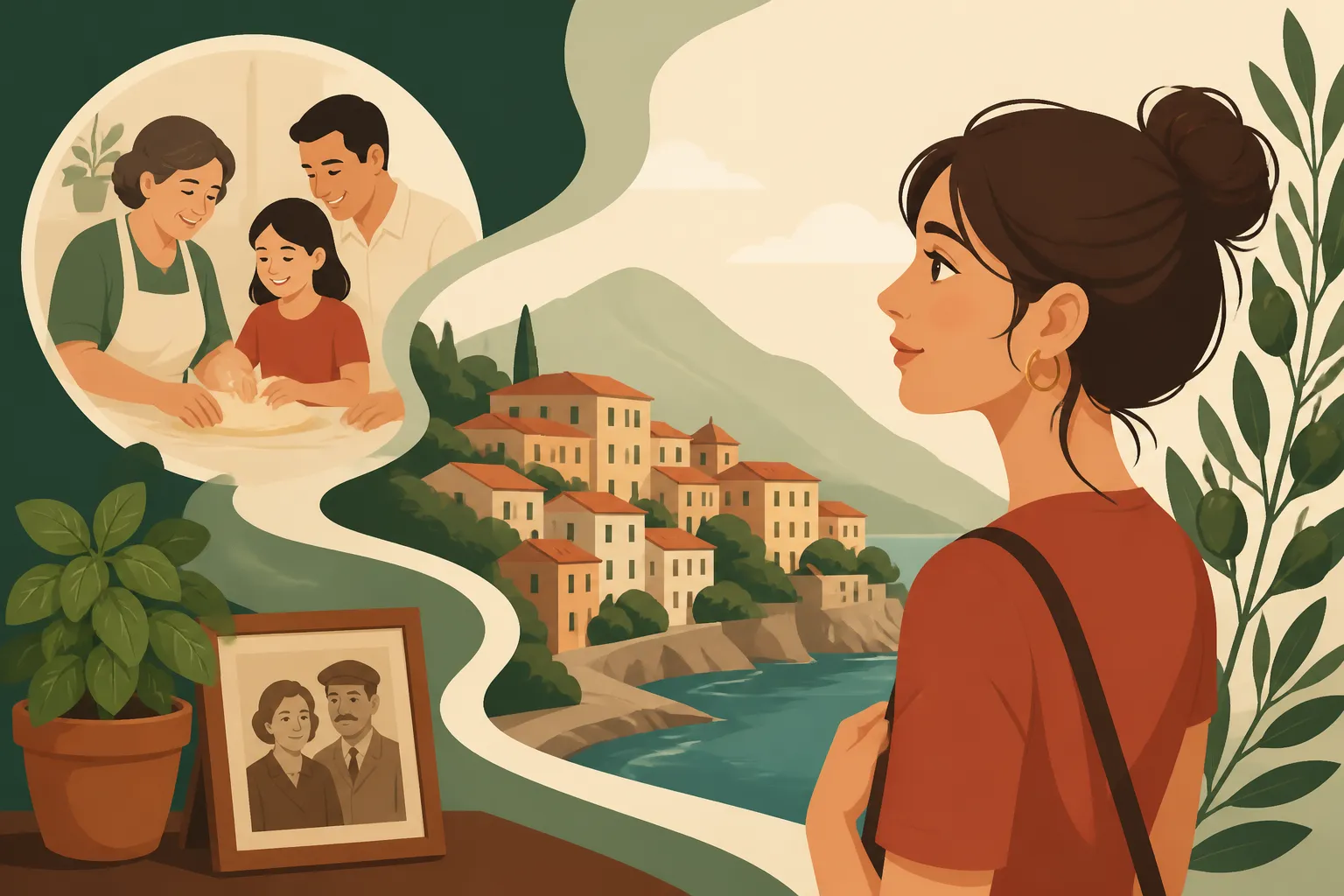
Think about it: those snippets of conversation you overheard as a child, the untranslatable exclamations, the family recipes passed down with Italian names. For many, Italian isn't just a foreign language; it's the soundtrack of their childhood, even if they didn't fully grasp the words. Deciding to learn Italian as a second-generation speaker often stems from a powerful, almost primal, pull towards understanding where you come from. It's about more than vocabulary; it's about unlocking a part of your personal story that has been dormant. This journey can bring immense satisfaction, filling a void you might not have even realized was there. You'll find yourself understanding old family jokes, appreciating the nuances in a song, or feeling a deeper resonance when visiting Italy, as if a missing piece of your own puzzle has finally clicked into place. It’s truly a beautiful process, almost like a homecoming of the soul.
Unlocking Family Connections
One of the most immediate and rewarding benefits of reconnecting with Italian is the ability to communicate directly with older relatives. How many times have you wished you could chat freely with a nonna or zio who speaks little English? Language barriers can create a frustrating distance, preventing truly deep bonds from forming. When you start speaking Italian, even imperfectly, those barriers begin to crumble. Imagine being able to ask your grandmother directly about her childhood in Puglia, or to share stories with a cousin in Sicily without relying on a translator. These aren't just polite conversations; they are gateways to invaluable oral histories, family traditions, and a level of intimacy that only shared language can provide. It's a gift you give not just to yourself, but to your entire family, revitalizing connections that might have faded over time. Furthermore, for those looking to explore Family Reunification Italy: Bringing Your Spouse and Kids or maintain ties while abroad, a strong grasp of the language can make a world of difference.
Common Hurdles for Second-Generation Learners
While the motivation is strong, second-generation learners often face a unique set of challenges that differ from those starting from scratch. You might have some passive understanding or a smattering of vocabulary, which can be both a blessing and a curse.
The "I Understand More Than I Speak" Phenomenon
Ah, the classic heritage speaker conundrum! You've heard Italian all your life – maybe your parents spoke it, or your grandparents. You can often follow the gist of a conversation, pick up on emotions, and sometimes even anticipate phrases. But when it comes to producing the language, suddenly your tongue feels tied. It's like having a library of Italian words and phrases in your brain, but no librarian to help you retrieve them and construct sentences on the fly. This isn't laziness; it's a specific linguistic challenge. Your brain has absorbed passive input, but hasn't developed the active pathways for speech production. You might find yourself searching for grammar rules you never explicitly learned, or hesitating because you're worried about sounding "wrong" compared to the native speakers you grew up with. This can lead to frustration and a sense of inadequacy, making the initial steps feel harder than for someone with a completely blank slate.
Overcoming Grammar Gaps and Dialect Confusion
Many heritage speakers learn Italian informally, picking up phrases and vocabulary from family without formal grammatical instruction. This can leave significant gaps in understanding verb conjugations, article agreements, or sentence structures – the very building blocks of coherent speech. You might know what to say, but not how to say it grammatically correctly. To compound this, many Italian families, especially older generations, might speak a regional dialect or a blend of standard Italian and dialect. While beautiful and authentic, this can be confusing when you then try to learn standard Italian from a textbook or a teacher. You might find yourself mixing pronunciations or using words that aren't understood outside your family bubble. The key here is to acknowledge these differences and embrace them, rather than letting them deter you. It's a part of your unique linguistic journey, and a good teacher can help you navigate it. For those truly diving deep, understanding Italian Dialects and Regional Languages: What to Expect can be a fascinating study.
Strategies for Effective Language Reconnection
So, how do you move past these hurdles and effectively reconnect with your Italian heritage? It requires a blend of structured learning, consistent practice, and cultural immersion.
Tailored Language Learning: Finding Your Path
For second-generation speakers, a generic beginner's Italian class might not be the most effective approach. You already possess an innate, if unrefined, understanding that can be leveraged. What you need is often a more personalized, flexible learning environment that can address your specific strengths (passive vocabulary) and weaknesses (active speech, formal grammar). This is where online platforms shine. Services like iTalki are a game-changer because they allow you to connect with native Italian speakers and certified teachers from all over Italy, tailoring lessons to your exact needs.
Imagine this: you can find a tutor from the very region your grandparents hailed from, who might even understand some of the dialectal quirks you grew up with. You can explain your unique situation – "I understand my nonna, but I can't speak back confidently." An iTalki teacher can then design lessons specifically to bridge that gap, focusing on conversational practice, correcting common heritage speaker errors, and formalizing the grammar you absorbed informally. They can help you transition from passive understanding to active, confident communication, all on your schedule. This kind of personalized attention is invaluable, allowing you to bypass content you already know and hone in on areas that truly need improvement. For those who already have some foundation, exploring Choosing Language Schools vs University Language Courses might also offer perspective, but the flexibility of one-on-one platforms often proves superior for heritage speakers.
Embracing Conversational Practice
The biggest leap for many heritage speakers is moving from understanding to speaking. And the only way to do that is to speak. Don't wait until you feel "perfect" – perfection is the enemy of progress here. Start practicing, even if it feels clunky and slow at first. This is another area where iTalki truly excels. You can schedule informal conversation practice sessions with community tutors, which are often more affordable and less intimidating than formal lessons. These sessions provide a safe space to make mistakes, try out new phrases, and build confidence without the pressure of a classroom setting.
Think of it like this: your brain is a muscle, and speaking Italian is a specific exercise. The more you do it, the stronger those neural pathways become. Engage in role-playing common scenarios, discuss topics you're passionate about, or simply chat about your day in Italian. The goal is fluency, not flawless grammar, especially in the beginning. Regularly chatting with native speakers will not only improve your spoken Italian but also help you internalize natural rhythms and expressions. Plus, it’s a wonderful way to start making friends and understanding Making Friends in Italy as a Foreigner.
Structured Learning and Resource Utilisation
While conversation is key, don't shy away from filling those grammar gaps with some structured learning. This doesn't mean boring textbooks from cover to cover. Many online resources, apps, and even iTalki teachers can provide targeted exercises for specific grammatical points you find challenging.
Here's a comparison of different learning approaches:
| Approach | Pros | Cons | Best For Heritage Speakers |
|---|---|---|---|
| iTalki (Tutors) | Personalized, flexible, direct feedback, cultural insights, overcome speaking hesitation | Requires self-motivation to book, quality can vary slightly by tutor | Bridging speaking gaps, formalizing grammar, dialect exposure, custom lessons |
| Traditional Classes | Structured curriculum, group interaction, accountability | Less personalized, pace might be too slow/fast, often generic beginner content | If highly disciplined by group setting, but can be frustrating if you already know basics |
| Language Exchange | Free, conversational practice, cultural exchange | No formal correction, inconsistent partners, can reinforce errors | Supplementing other learning, casual chat, confidence building |
| Self-Study Apps | Convenient, vocabulary building, gamified learning | Lacks speaking practice, no feedback on pronunciation/grammar, can feel isolated | Vocabulary review, basic grammar concepts, supplemental practice |
| Immersion | Fastest way to fluency, authentic experience, cultural depth | Expensive, requires travel, can be overwhelming initially | Once a solid foundation is built, or short bursts for intense progress |
Consider using resources like comprehensive Italian grammar websites or apps that break down concepts clearly. Focus on areas you know are weak, like past tenses or subjunctive mood, rather than starting from scratch. Utilize online dictionaries and translation tools judiciously – not for full sentence translation, but for looking up individual words or checking verb conjugations. Podcasts, Italian music, and films can also be fantastic supplemental resources for improving listening comprehension and exposing you to natural speech patterns. For practical phrases, Survival Italian for Travelers: Key Phrases to Learn First or Ordering Food and Drinks in Italian: A Practical Phrasebook can be great starting points.
Beyond the Classroom: Immersing in Italian Culture
Language and culture are inextricably linked. To truly reconnect with your Italian heritage, you need to immerse yourself not just in the words, but in the way of life. This means seeking out cultural experiences, even from afar, and understanding the context in which the language thrives.
Connecting with Expat Communities and Italian Cultural Centers
Living outside Italy doesn't mean you can't be surrounded by Italian culture. Look for local Italian cultural centers, expat groups, or even just Italian restaurants and delis in your area. These places often host events, language conversation groups, or cooking classes that can provide a taste of Italy and a chance to practice your language skills. Joining an expat community or attending cultural events is an excellent way to connect with others who share your passion for Italy, practice your language, and even learn some of the unspoken Italian Customs, Etiquette, and Social Life. It's a supportive environment where your heritage is celebrated, and you'll find people who understand your journey. Many cities have a "Circolo Italiano" or similar organization that organizes film nights, book clubs, or social gatherings. These are goldmines for practicing your Italian in a relaxed, authentic setting.
Embracing Italian Media and Entertainment
One of the most enjoyable ways to immerse yourself is through Italian media. Start with content that matches your current proficiency. If you're a beginner, Italian children's shows or simple YouTube videos can be a great start. As you progress, move on to Italian films (with subtitles initially, then without!), TV series, podcasts, and music. This not only improves your listening comprehension but also exposes you to contemporary Italian slang, humor, and cultural references that you won't find in textbooks. For example, listen to an Italian radio station while doing chores, or subscribe to an Italian news podcast. You don't have to understand every word; the goal is to get comfortable with the rhythm and flow of the language. This also helps you understand the cultural context that gives words their full meaning. When you're ready, dive into topics like Italian Food Culture: Eating Well as a Visitor or Italian Wine, Coffee, and Aperitivo Culture through Italian-language vlogs or articles.
Planning a Trip to Italy
Ultimately, there's no substitute for experiencing Italy firsthand. Planning a trip, even a short one, can supercharge your language learning and solidify your connection to your heritage. When you're there, commit to speaking Italian as much as possible. Order your coffee at the bar in Italian, ask for directions, and engage with locals. You'll be surprised how much you pick up and how quickly your confidence grows. Consider focusing your trip on the region your family is from. This personal connection will make the experience even more meaningful and give you a deeper understanding of your specific roots. You might discover local festivals, learn more about your family's history, or simply enjoy the feeling of belonging. Whether it’s exploring Northern Italy: Alps, Lakes, and Cities or delving into Southern Italy and the Islands: Sicily, Sardinia, and Beyond, every conversation and interaction will be a valuable lesson. And don't forget, having a solid language foundation, perhaps built with a dedicated iTalki teacher, will make your trip far more enriching and less stressful.
Reconnecting with your heritage Italian is a marathon, not a sprint, but it's a profoundly rewarding one. With personalized support from platforms like iTalki, consistent practice, and a commitment to cultural immersion, you'll soon be speaking the language of your ancestors with confidence and joy.
Disclaimer
This article is for general informational purposes only and does not constitute professional advice. Laws, prices and regulations vary by location and change over time. Consult a qualified professional for guidance on your specific situation.