Bringing Family to Italy: Family Reunification in Detail
Moving to Italy is often a dream, but that dream quickly turns into a lonely nightmare when your spouse or children are stuck thousands of miles away due to bureaucratic red tape. I spent months staring at a "pending" status on an Italian government website, wondering if my family would ever actually join me in our new home. This guide breaks down the complex family reunification process so you can navigate the hurdles and reunite with your loved ones sooner.
Disclosure: This post may contain affiliate links. We may earn a commission at no extra cost to you if you make a purchase through these links. Read full disclosure.
The Foundation of Family Reunification in Italy
The process of bringing your family to Italy is formally known as Ricongiungimento Familiare. Unlike a simple tourist visit, this is a legal procedure that grants your family members a long-term residence permit based on their relationship with you. The central piece of this puzzle is the Nulla Osta, which essentially translates to a "certificate of no impediment." It is the formal green light from the Italian Ministry of the Interior allowing your family to apply for a visa at the Italian consulate in their home country.
Defining the Nulla Osta for Family Members
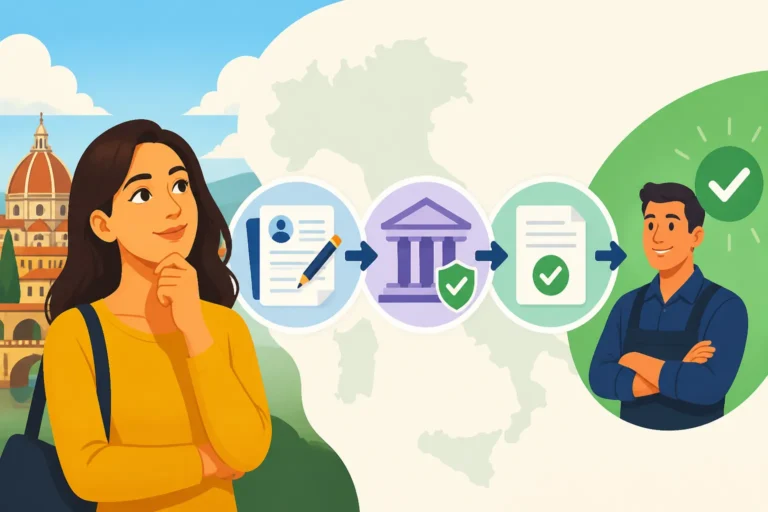
The Nulla Osta is not a document you simply print out. It is the result of a rigorous background check and verification of your status in Italy. As the sponsor, you are the one who initiates this. You must demonstrate that you have the legal right to stay in Italy, the financial means to support your family, and a home that meets specific health and safety standards. I remember the anxiety of waiting for this document; it feels like your entire future is sitting in a digital queue at the Sportello Unico per l’Immigrazione (SUI).
To get started, you will need a SPID (Digital Identity) to access the Ministry of Interior’s portal. If you haven't set this up yet, you should look into How to Set Up SPID From Abroad for Italian Services as it is the gateway to almost all Italian bureaucracy. Once you submit the application, the Prefettura has up to 90 days to respond, though in high-traffic cities like Rome or Milan, it can take longer.
Who Qualifies as a Family Member
Italy’s definition of "family" for reunification purposes is specific, and trying to bring someone who doesn't fit these categories will lead to an immediate rejection. You can apply for your spouse (provided they are at least 18 years old) and your minor children, including those from a previous marriage, provided the other parent gives consent.
There are also provisions for adult dependent children, but only if they cannot provide for their own needs due to serious health reasons or permanent disability. Parents can also be brought over, but only if they are over 65 and have no other children in their home country who can support them, or if they are under 65 but have no other children at all. This "dependency" aspect is heavily scrutinized, so you will need mountain-loads of proof.
The Online Application Portal SUI
The Sportello Unico per l’Immigrazione is the online portal where the magic—or the headache—happens. You will fill out "Model SM" for family reunification. The portal requires you to upload scans of your residence permit, your passport, and documents proving your income and housing.
One thing I learned the hard way: the portal can be incredibly finicky. It often times out or refuses to upload files that are even slightly over the size limit. Always keep your files under 1MB and name them clearly. If you are struggling with the digital aspect, you might want to read about Navigating Italian Bureaucracy: Comune and Prefettura to understand the different entities involved in your life as an expat.
Financial and Housing Requirements for Sponsors
You cannot simply bring your family over because you miss them; the Italian government wants to be absolutely sure you won't become a "burden" on the state's social welfare system. This means you must meet very specific financial thresholds and housing standards. These are often the two biggest hurdles for expats who are just starting out or working on freelance contracts.
Calculating the Minimum Income
The income requirement is tied to the Assegno Sociale (Social Allowance), which changes annually. For family reunification, you need an annual income equal to the social allowance plus half of that amount for every family member you are bringing. For example, if you are bringing a spouse and one child, you need double the social allowance.
| Number of Family Members | Required Annual Income (Approx. 2026) |
|---|---|
| 1 Family Member | €10,000 – €11,000 |
| 2 Family Members | €13,500 – €14,500 |
| 3 Family Members | €17,000 – €18,000 |
| 2+ Children under 14 | €13,500 (Special Rule) |
Keep in mind that this income must be "legal" and taxable. If you are a freelancer, you will need to show your Unico or Dichiarazione dei Redditi. For those just starting out, you can see The Regime Forfettario in Italy: Flat-Rate Tax for Freelancers to understand how your income is calculated for tax purposes, which directly affects your reunification eligibility.
Securing the Certificato di Idoneità Alloggiativa
This document is the bane of many expats' existence. It is a certificate issued by your local Comune or the ASL (local health authority) stating that your apartment is large enough and healthy enough for the number of people who will live there. It’s not enough to have a nice flat; it must meet the specific square-footage-per-person requirements defined by regional laws.
To get this, you usually have to hire a private technician (a geometra or architect) to come to your home, measure everything, and draft a floor plan. Then, you submit this to the Comune. The process can take anywhere from three weeks to three months. If you are currently looking for a place, make sure to ask the landlord if the house is "up to code" for this certificate. You can find more tips on this in The Ultimate Guide to Renting and Buying a Home in Italy.
Proving Social Security Contributions
In addition to your gross income, the authorities want to see that you are an active part of the system. This means showing your INPS contributions. If you are an employee, your busta paga (payslip) is usually enough. If you are self-employed, it becomes a bit more complex.
Failure to show consistent social security payments can be a red flag for the Prefettura. They want to see that you have a stable life here. I found it helpful to keep a dedicated folder with every single INPS receipt and contract. For a deeper look at how this works, check out INPS Social Security Contributions in Italy: An Overview.
Navigating the Documentation and Translation Maze
Once you have your own house and income in order, you have to prove your relationship with the people you are bringing over. This sounds simple—"of course she's my wife"—but the Italian government requires ironclad, legalized proof. This is where many applications get stuck for months because a stamp is missing or a translation isn't "official" enough.
Preparing Birth and Marriage Certificates
You will need original copies of birth certificates for children and marriage certificates for spouses. These documents must be "Apostilled" or legalized by the Italian Embassy in the country where they were issued. An Apostille is an international certification that makes a document valid in another country.
If your home country is not part of the Hague Convention, the legalization process is even more tedious and involves multiple steps at the local Ministry of Foreign Affairs and then the Italian Consulate. It’s a marathon, not a sprint. I recommend starting this process the moment you decide to move to Italy, even before you have your own residency permit, because gathering these papers from abroad is a logistical nightmare.
The Role of Certified and Sworn Translations
Italian authorities will not accept documents in English, Spanish, or any other language. Everything must be translated into Italian. However, a standard translation is not enough. You generally need a "sworn" translation (traduzione giurata), where the translator goes to an Italian court and signs an oath that the translation is accurate.
For expats who need reliable results, services like RushTranslate or Translayte can be incredibly helpful for getting the initial certified translations prepared. While RushTranslate is great for speed and accuracy in English-speaking contexts, Translayte offers deep expertise in the specific nuances required for European administrative standards. Once you have these, you may still need to have them "sworn" at an Italian court (Tribunale) if you are already in Italy, or legalized by the consulate if you are abroad.
Proving Dependency for Parents or Adult Children
If you are bringing a parent over 65, you have to prove they have no other children who can care for them. This often requires "certificates of family composition" from your home country, translated and legalized, showing that you are the only child.
If there are other children, you must provide medical or financial proof that they are unable to provide support. This is a very high bar to clear. The Prefettura will look for any reason to suggest the parent can stay in their home country. Be prepared to provide bank statements showing you have been sending money home for years as proof of an existing "dependency" relationship.
Health and Insurance Considerations for Families
One of the first questions my wife asked when we were planning her move was, "What happens if I get sick the day I arrive?" It's a valid concern. While Italy has a fantastic public health system, your family members aren't automatically enrolled the moment they step off the plane.
Choosing Private Health Insurance
Before your family members can register with the Italian National Health Service (SSN), they usually need private health insurance to get their initial visa and their first Permesso di Soggiorno. The requirements for this insurance are specific: it must have a high coverage limit (usually €30,000 minimum), have no co-pays, and cover emergency hospitalizations and repatriation.
Many expats opt for Cigna Global during this transition phase. Cigna Global is particularly well-regarded because their policies are designed for expats and are widely recognized by Italian consulates. Having a policy from Cigna Global provides peace of mind while you navigate the months-long wait for the official Italian health card. For more details on these options, you should read Getting Health Insurance in Italy: Public and Private Options.
Enrolling in the SSN for Family Members
Once your family has arrived and applied for their Permesso di Soggiorno for family reasons, they have the right to register with the SSN. This is known as "obligatory registration" because they are dependents of a legal resident worker. Unlike some other categories, family members usually don't have to pay the voluntary contribution fee; their coverage is tied to your status.
You will need to take them to the local ASL with their passport, the receipt for the Permesso di Soggiorno application, and your own Codice Fiscale. To understand the full process, check out Enrolling in Italy’s National Health System (SSN). Once registered, they can choose a family doctor, which is a huge milestone in feeling "at home."
Finding English-Speaking Doctors
Even with the SSN, the language barrier can be terrifying in a medical emergency. In the beginning, you might prefer to find a private clinic where the staff speaks English. Many expat families in Rome or Milan use private services for the first few months. You can find resources on this in Where to Find English-Speaking Doctors and Clinics. Eventually, you will find that many Italian doctors speak excellent English, but having a plan for those first few weeks is essential for your family's comfort.
The Final Steps: Visa and Permesso di Soggiorno
Once the Prefettura issues the Nulla Osta, they send it electronically to the Italian consulate in your family's home country. This is the moment you can finally breathe—a little. But the process isn't over yet. Your family still needs to physically go to the consulate and get the visa stamped in their passport.
The Consulate Phase
Your family members have 180 days from the issuance of the Nulla Osta to apply for the visa. They will need to bring the original documents you used for the application, plus the visa application form and photos. I suggest they also bring a copy of the Nulla Osta itself, even if it's sent electronically, just in case there is a glitch in the system.
The consulate will check their background one last time and issue the "D" Visa (Long-stay). This visa is what allows them to enter Italy with the intent to stay. For a broader view of this step, see How to Apply for an Italy Family Reunification Visa. Once they have that stamp, it’s time to book the flights!
Post-Arrival Bureaucracy: The Kit Postale
Within eight days of arriving in Italy, your family must go to a "Sportello Amico" at a post office to send off the Kit Postale. This is the formal application for their Permesso di Soggiorno per Motivi Familiari. The kit is a big envelope with a yellow stripe. It’s notoriously confusing to fill out, and many people seek help from a Patronato (a free administrative assistance office).
When you send the kit, the post office will give you a receipt with a "username" and "password." This receipt is their most important document until the actual card arrives. It proves they are legally in the country and allows them to travel back to their home country (provided it’s a direct flight and not through another Schengen country). You can read more about this in The Kit Postale: Applying for a Permesso di Soggiorno by Post.
The Questura Appointment and Fingerprinting
Months after sending the kit, your family will get an SMS with an appointment at the Questura (police headquarters) for fingerprinting. This is often the most stressful part of the process—standing in line at 7:00 AM, waiting for your number to be called in a crowded hall.
They will need to bring 4 passport-sized photos and all their original documents. After this appointment, it can take another 2 to 6 months for the actual plastic card to be ready. You can track the status of the card on the Polizia di Stato website. For tips on how to handle this day, look at Booking and Attending Questura Appointments in Italy.
Practical Tips and Common Pitfalls
If there is one thing I have learned from living in Italy, it is that "the rules" are often subject to the interpretation of the person sitting behind the desk. What works in a small village in Tuscany might be different from the process in downtown Naples. Staying flexible and patient is the only way to survive.
Handling Delays and the "Silenzio Assenso"
If the 90-day window for the Nulla Osta passes without a word, you might feel like your application has vanished into a black hole. In some cases, Italian law allows for "silent consent," but in immigration matters, it’s rarely that simple. Often, a delay just means they are backlogged.
Instead of waiting forever, go to the Prefettura in person during their public hours. Sometimes, seeing a human face and showing your frustration politely can nudge a file from the bottom of the pile to the top. I found that a polite "I just want to make sure I didn't miss a request for more documents" works much better than an angry "Why is this taking so long?"
Staying Together During the Wait
Sometimes, family members enter Italy on a tourist visa while the reunification process is still ongoing. While this is great for morale, it does not "speed up" the process, and they cannot apply for their residence permit until the Nulla Osta is issued and they have returned home to get the proper visa.
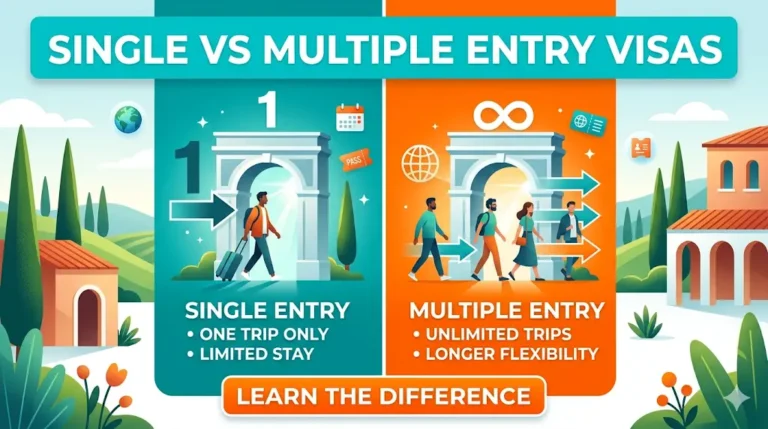
Technically, you cannot convert a tourist visa into a family residence permit while inside Italy. There are very few exceptions to this rule, mostly involving families of EU citizens. For most non-EU expats, the "exit and re-enter with a D visa" rule is non-negotiable. To understand the difference between these paths, see Comparing Italian Visas: Tourist vs Long-Stay.
Living Together in Italy
Once the bureaucracy is settled, the real work of integration begins. Your family will need a How to Get a Codice Fiscale in Italy (and Why You Need One) for everything from opening a bank account to signing up for a gym. They might also feel isolated if they don't speak the language.
Encourage them to join local expat groups or enroll in an Italian course. Settling in is about more than just papers; it’s about finding your place in the neighborhood. For some inspiration on how to start this new chapter, check out Settling In Italy: Daily Life Tips for Expats.
Disclaimer
The information provided in this guide is for informational purposes only and does not constitute legal advice. Immigration laws and bureaucratic procedures in Italy are subject to frequent change. Always consult with the official Ministry of Interior website, your local Prefettura, or a qualified immigration lawyer before making any legal or financial decisions regarding family reunification.