Southern Italy and the Islands: Sicily, Sardinia, and Beyond
Oh, Southern Italy and its majestic islands! You know, when I first thought about moving to Italy, like so many, my mind immediately conjured up images of the Colosseum or a gondola in Venice. But let me tell you, that's barely scratching the surface of what this incredible country truly offers. The south, with its raw beauty, ancient history, and vibrant culture, is a world unto itself, and it often gets overlooked or misunderstood by those who haven't ventured beyond the well-trodden paths. I've spent countless sun-drenched days and star-filled nights exploring these regions, and I understand the apprehension of stepping into an area that might feel less "expat-friendly" or harder to navigate. This guide is here to unravel the magic of Southern Italy, including the incomparable islands of Sicily and Sardinia, helping you embrace their unique charm and navigate them like a seasoned local.
Disclosure: This post may contain affiliate links. We may earn a commission at no extra cost to you if you make a purchase through these links. Read full disclosure.
Why Southern Italy and the Islands Captivate Expats and Travelers
There’s a common narrative that portrays Italy as a tale of two halves: the industrious, sophisticated North and the charming, perhaps a little chaotic, South. While stereotypes are just that – stereotypes – there’s an undeniable truth to the fact that Southern Italy, alongside Sicily and Sardinia, offers a distinct and utterly captivating experience that sets it apart. It’s a place that gets under your skin, a region where history isn't just in museums but etched into every street, every face, every ancient olive tree.
Beyond the Postcard North: The Unique Allure
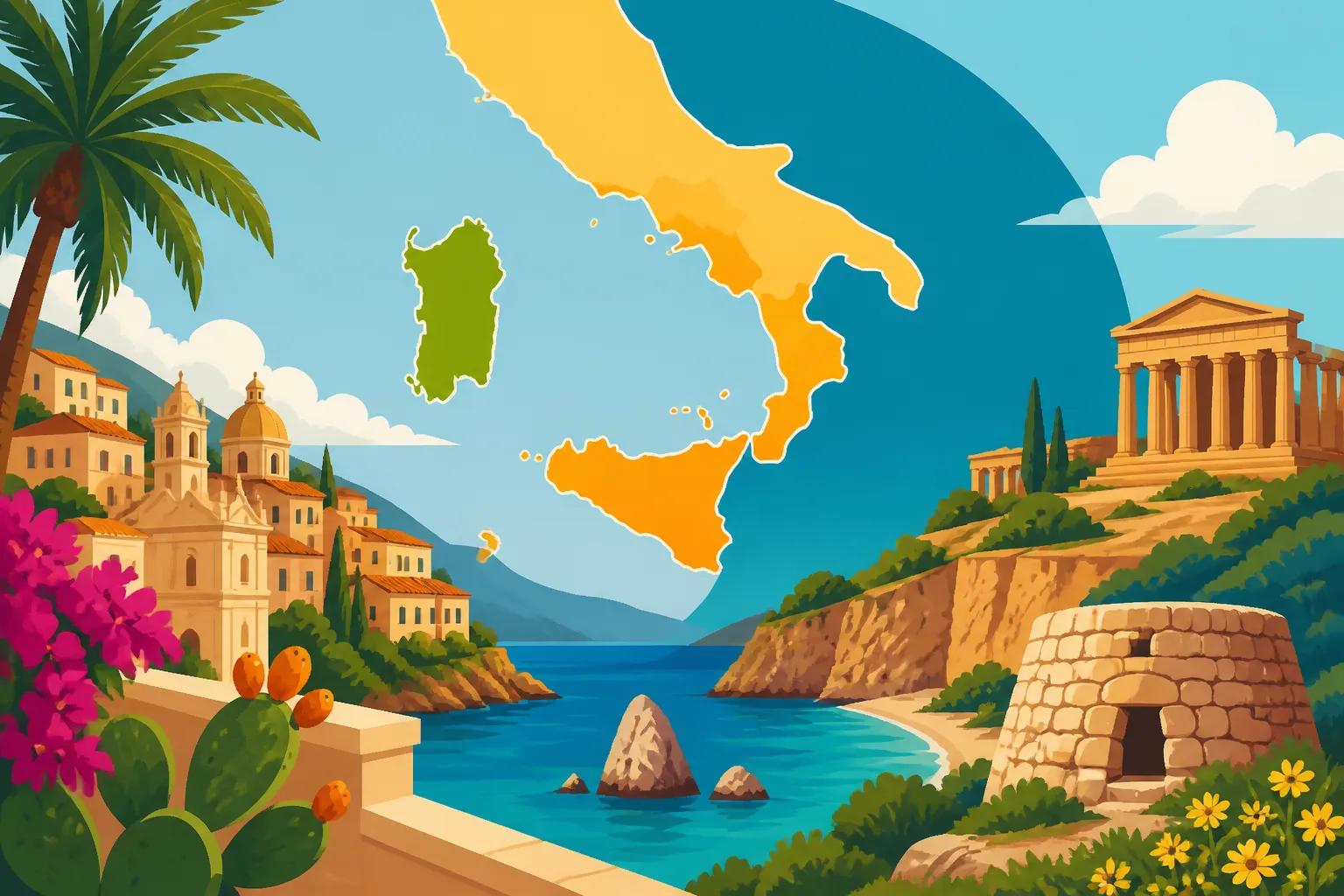
While cities like Florence and Rome hold undeniable global appeal, Southern Italy presents a different kind of grandeur, one that is often more authentic, less polished, and deeply soulful. Here, life moves at a different rhythm, dictated by the sun, the sea, and centuries of tradition. Forget the bustling, often expensive, metropolitan hubs of the North; the South offers a slower pace, a more profound connection to nature, and an astonishing tapestry of cultures that have left their indelible mark. From the ancient Greek temples scattered across Sicily to the Nuragic ruins of Sardinia, the influence of conquerors and traders from across the Mediterranean is palpable. You'll find a genuine warmth from the locals, often more direct and eager to share their corner of the world. It’s a place where you can still stumble upon hidden beaches, untouched villages, and culinary traditions passed down through generations, far from mass tourism. This is where Italy's heart truly beats, raw and unadulterated.
A Lifestyle of La Dolce Vita, Southern Style
The "sweet life" in Southern Italy and the islands isn't about luxury yachts and designer boutiques (though you can find those, too, especially in places like the Costa Smeralda). Here, it's about the simple, profound joys: an afternoon siesta under a lemon tree, a multi-course family meal stretching late into the evening, the sound of waves lapping against ancient shores, and the shared laughter of friends over an aperitivo. Life is lived outdoors, under the generous sun. The focus is firmly on family, community, and the enjoyment of fresh, local produce – often straight from the land or the sea. Expats often find that the cost of living can be significantly lower than in the North, allowing for a higher quality of life, more space, and greater opportunities to immerse themselves in local customs. It’s a lifestyle that encourages slowing down, appreciating beauty, and savoring every moment, a stark contrast to the fast-paced life many of us are accustomed to.
Dispelling Myths and Embracing Authenticity
One of the biggest hurdles many foreigners face when considering Southern Italy is the sheer number of myths and misconceptions. "It's dangerous," "it's too chaotic," "the bureaucracy is impossible" – I've heard them all. While it's true that the south has its challenges, just like any region, many of these ideas are outdated or exaggerated. Yes, certain cities like Naples have a gritty edge, but they also pulsate with an unmatched energy and rich cultural heritage. Bureaucracy, well, that's an Italian constant, North or South, but you learn to navigate it! The key is to approach these regions with an open mind and a willingness to embrace their authenticity. Southern Italians are fiercely proud of their heritage and incredibly resilient. They’re warm, generous, and often surprisingly hospitable once you break through any initial shyness. By engaging respectfully, trying to speak a few words of Italian, and showing genuine interest, you'll unlock experiences and connections that tourist guides rarely cover. This is a place where real life happens, and that's precisely its charm.
Sicily: A Tapestry of Cultures and Dramatic Landscapes
Sicily, the largest island in the Mediterranean, is truly a world unto itself. Shaped by millennia of invasions, from the Greeks and Romans to the Byzantines, Arabs, Normans, and Spanish, it’s a breathtaking mosaic of cultures, art, and architecture. Its landscapes range from active volcanoes to pristine beaches, ancient ruins to bustling cities. It’s a place that will challenge your perceptions and reward your curiosity with unparalleled experiences.
Palermo and Western Sicily: A Vibrant, Gritty Jewel
Palermo, Sicily's capital, is a city that vibrates with an almost primal energy. It's loud, it's chaotic, it's beautiful, and it's utterly captivating. The architecture tells tales of its many rulers, with Norman palaces, Arab domes, and Baroque churches often sitting side-by-side. Walking through its ancient markets, like Ballarò or Vucciria, is an assault on the senses in the best possible way – a riot of colors, sounds, and incredible street food. Here, you’ll find some of the island’s most unique culinary delights, from pane con la milza (spleen sandwich, surprisingly delicious!) to arancine (fried rice balls). Beyond Palermo, Western Sicily offers stunning Greek ruins at Segesta and Selinunte, the charming hilltop town of Erice with its medieval charm and almond sweets, and the salt pans of Trapani, where windmills still dot the landscape. The beaches around San Vito Lo Capo are considered some of Italy's finest, boasting crystal-clear turquoise waters that rival any tropical paradise. It's a region that demands to be explored slowly, allowing its layers to unfold before you.
Eastern Sicily: Ancient Greeks, Volcanoes, and Baroque Wonders
Shift your gaze to the eastern side of Sicily, and you'll find a dramatically different, yet equally enchanting, panorama. This is the land dominated by Mount Etna, Europe's most active volcano, whose towering presence shapes the landscape and the character of the region. Catania, a vibrant city built from black volcanic rock, offers a lively fish market and a buzzing nightlife. Further south, you enter the Val di Noto, a UNESCO World Heritage site renowned for its stunning Baroque towns, painstakingly rebuilt after a devastating earthquake in the 17th century. Syracuse, with its ancient Greek theatre and the island of Ortigia, a jewel-box of a historic center, transports you back in time. Taormina, perched dramatically on a cliff overlooking the Ionian Sea and Etna, offers breathtaking views, a magnificent ancient Greek theater, and a more sophisticated, albeit tourist-heavy, vibe. Here, you can spend your mornings exploring archaeological sites and your afternoons relaxing on black sand beaches or indulging in a leisurely Sicilian lunch overlooking the sea. The blend of natural power, ancient history, and refined beauty is truly remarkable.
The Culinary Heartbeat of Sicily: Flavors and Traditions
Sicilian cuisine is legendary, and rightly so. It's a glorious fusion of all the cultures that have graced its shores, with strong influences from Arab and North African flavors, alongside classic Italian traditions. Fresh ingredients are paramount, from the abundant seafood caught daily in its waters to the island's renowned citrus fruits, pistachios, almonds, and sun-ripened tomatoes. Expect rich, flavorful pasta dishes like Pasta alla Norma (with eggplant and salted ricotta) from Catania, or Pasta con le Sarde (with sardines, wild fennel, pine nuts, and raisins) from Palermo. Street food culture thrives here, offering delectable fried treats like panelle (chickpea fritters) and arancine. And then there are the desserts: cannoli (crisp pastry shells filled with sweet ricotta), cassata (a rich sponge cake with ricotta, candied fruit, and marzipan), and granita (a semi-frozen dessert often flavored with lemon, almond, or coffee), especially popular in the summer. Each meal is an experience, a celebration of the island's bounty and its rich history. Don't rush it; savor every bite, just like a true Sicilian. For more on the delicious local fare, you might want to check out our guide on Italian Food Culture: Eating Well as a Visitor.
Sardinia: Untamed Beauty and Pristine Coasts
Just west of the Italian mainland, Sardinia beckons with its rugged, untamed beauty. It’s an island of stunning contrasts, from its world-famous Costa Smeralda with its glittering yachts and upscale resorts to its wild, mountainous interior, home to ancient traditions and a deeply rooted, resilient culture. Sardinia isn’t just about beaches; it’s about a profound connection to nature and a history that stretches back to the enigmatic Nuragic civilization.
The Emerald Coast and Northern Splendor
The northeastern coast of Sardinia, famously known as the Costa Smeralda, is synonymous with luxury, crystal-clear emerald waters, and exclusive resorts. Porto Cervo and Porto Rotondo are playgrounds for the wealthy, offering high-end boutiques, gourmet restaurants, and a vibrant nightlife during the summer months. But even beyond the glitz, this part of the island boasts some truly breathtaking beaches like Capriccioli and Liscia Ruja, where the sand is powdery white and the sea shimmers with incredible shades of blue and green. Further north, the archipelago of La Maddalena, a national park, is a collection of unspoiled islands and islets, perfect for sailing, snorkeling, and exploring hidden coves. Ferries easily connect you to this pristine paradise. Alghero, on the northwest coast, offers a different flavor entirely. A beautiful medieval walled city with strong Catalan influences, it boasts stunning Gothic architecture, a charming old town, and lovely beaches nearby. The atmosphere is more laid-back, and it’s a fantastic base for exploring the dramatic cliffs of Capo Caccia and the Neptune’s Grotto.
The Wild Heart of the Interior: Barbagia and Beyond
While the coasts draw the crowds, the true soul of Sardinia lies within its rugged interior. The region of Barbagia, particularly, is a land of dramatic mountains, ancient forests, and a rich pastoral heritage. This is where you’ll find some of the island’s most distinctive traditions, including the haunting sounds of canto a tenore, a polyphonic style of singing that is a UNESCO Intangible Cultural Heritage. Towns like Orgosolo are famous for their vibrant murals (murales) depicting political and social themes, offering a fascinating glimpse into Sardinian identity. The Gennargentu mountain range, Sardinia's highest, provides incredible opportunities for hiking and experiencing untouched nature. You can still find shepherds tending their flocks, and if you’re lucky enough to be invited for a meal, you’ll experience hospitality that is deeply ingrained in the culture. The interior is also home to thousands of Nuraghi – mysterious stone towers built by the ancient Nuragic civilization, predating Roman times. Su Nuraxi di Barumini is the most famous and a UNESCO site, offering a fascinating peek into an almost lost world. Exploring this part of Sardinia requires a car and a willingness to venture off the beaten path, but the rewards are immense.
Sardinian Gastronomy: A Taste of the Island's Soul
Sardinian cuisine is unique and distinct from mainland Italian fare, with a strong emphasis on hearty, rustic dishes that reflect its pastoral and agricultural traditions. While seafood is abundant along the coasts, the interior proudly showcases its sheep and goat products. You absolutely must try porceddu (roast suckling pig), slow-cooked over an open fire until the skin is impossibly crisp. Other specialties include malloreddus (small ridged pasta shells, often served with a rich sausage sauce), culurgiones (hand-filled pasta resembling tiny ears of wheat, typically stuffed with potato, mint, and pecorino cheese), and the iconic pane carasau (crisp, wafer-thin flatbread, also known as "music paper bread"). The island is also famous for its exceptional pecorino Sardo cheese, often aged to a sharp, salty perfection. And don't forget the wines; Sardinia produces excellent reds like Cannonau and whites like Vermentino. Dining here is often an unhurried, communal experience, where the flavors are bold, honest, and deeply satisfying. It's a taste of the island's rugged, soulful character.
Beyond the Main Islands: Exploring Southern Italy's Coastal Gems and Hidden Treasures
While Sicily and Sardinia are often the stars, mainland Southern Italy holds a treasure trove of regions, each with its own distinct charm, history, and culinary delights. Venturing into these areas will deepen your appreciation for Italy's incredible diversity.
Puglia: Trulli, Salento Beaches, and Baroque Lecce
Puglia, the "heel" of Italy’s boot, has rapidly gained popularity, and for good reason. It offers a captivating blend of unique architecture, stunning coastlines, and a rich culinary scene. The iconic trulli of Alberobello, whitewashed dry-stone huts with conical roofs, are a UNESCO World Heritage site and an absolute must-see. The Salento peninsula, at the very tip of the heel, boasts some of the most beautiful beaches in Italy, with Caribbean-like turquoise waters and soft, golden sands in places like Pescoluse (often called "the Maldives of Salento"). The Baroque city of Lecce, often referred to as the "Florence of the South," dazzles with its intricate stone carvings and grand piazzas. Beyond the visual feasts, Puglia is an agricultural powerhouse, famous for its olive oil (it produces more than any other Italian region), durum wheat, and delicious wines, particularly Primitivo and Negroamaro. Eating in Puglia means abundant fresh vegetables, orecchiette pasta handmade by nonnas in Bari, and the freshest seafood imaginable. A drive through Puglia is a journey through ancient olive groves, whitewashed hilltop towns, and breathtaking coastal vistas. If you're looking for more detailed information about this charming region, our guide on Puglia: Trulli, Beaches, and Whitewashed Towns is a great resource.
Campania: Naples, Amalfi Coast, and Ancient Ruins
Campania is perhaps the most iconic region of Southern Italy, famed for its dramatic coastline, ancient history, and vibrant, bustling cities. Naples, the regional capital, is a city you either love or hate, but it’s impossible to ignore. The birthplace of pizza, it’s a whirlwind of sensory experiences: chaotic streets, grand architecture, world-class museums, and an unparalleled passion for life. From Naples, you can easily access the archaeological wonders of Pompeii and Herculaneum, preserved by the eruption of Vesuvius in 79 AD, offering an eerie and poignant glimpse into Roman life. And then, there’s the Amalfi Coast. A UNESCO World Heritage landscape of pastel-colored villages clinging to dramatic cliffs, terraced lemon groves, and sparkling azure seas, it's undeniably stunning. Towns like Positano, Amalfi, and Ravello are postcard-perfect, though they can get incredibly busy, especially during peak season. The nearby island of Capri is another gem, famous for its Blue Grotto and chic ambiance. Campania’s cuisine is a highlight, from the authentic Neapolitan pizza to fresh mozzarella di bufala, limoncello, and a vast array of seafood dishes. For a deeper dive into this magnificent area, check out our guide on Campania: Naples, the Amalfi Coast, and the Bay.
Calabria and Basilicata: Unspoiled Beauty and Deep Roots
These two often-overlooked regions offer a glimpse into a more rugged, authentic, and less touristy side of Southern Italy. Calabria, the "toe" of the boot, is characterized by its dramatic coastline, wild mountains, and ancient traditions. It boasts incredible beaches along both the Tyrrhenian and Ionian seas, such as those around Tropea, perched on a cliff with its dazzling white sands and turquoise waters. The Sila and Aspromonte national parks offer stunning mountain landscapes, hiking trails, and traditional mountain villages. Calabrian cuisine is known for its spicy kick, particularly the 'nduja (a spreadable spicy pork sausage) and peperoncino peppers.
Basilicata, tucked between Puglia and Calabria, is a region of raw, striking beauty. Its crown jewel is Matera, a UNESCO World Heritage city famous for its sassi – ancient cave dwellings that have been inhabited since the Paleolithic era. Walking through Matera feels like stepping back in time, an experience unlike any other in Italy. Beyond Matera, Basilicata offers rugged mountains, remote villages, and a short but beautiful coastline on the Ionian Sea, particularly around Maratea. Both Calabria and Basilicata offer opportunities for genuine immersion in Italian life, far from the tourist crowds, and at a very reasonable cost. They are perfect for those seeking adventure, authenticity, and profound natural beauty.
Navigating the South: Transport and Logistics for a Smooth Journey
Traveling through Southern Italy and its islands presents its own set of logistical considerations compared to the more interconnected North. But with a little planning, it's absolutely manageable and incredibly rewarding.
Getting There: Flights, Ferries, and Trains
Reaching Southern Italy and the islands often involves a combination of transport methods.
- Flights: Major cities like Palermo, Catania, Naples, Bari, and Cagliari (Sardinia) all have international airports, with connections to other European cities and, increasingly, direct flights from further afield. Budget airlines often serve these routes, making air travel a convenient option.
- Ferries: For Sicily and Sardinia, ferries are a vital link. You can catch ferries to Sicily from Naples, Salerno, Civitavecchia (near Rome), and Villa San Giovanni (Calabria). Sardinia is well-connected by ferry from Civitavecchia, Genoa, Livorno, and Naples. Companies like Tirrenia and Grandi Navi Veloci are popular choices. Booking ferry tickets in advance, especially during peak season, is highly recommended. For those crossing by ferry, services like Omio can be a great help for comparing routes and prices for Ferry travel to Sicily and Sardinia: How to book and what to expect. They offer a seamless way to plan your journey across land and sea.
- Trains: While the high-speed rail network is less extensive in the South, cities like Naples and Salerno are well-connected to Rome and other northern hubs. Regional trains serve many towns within the southern regions, though they can be slower. Always check schedules carefully, as services are less frequent in some areas. Our comprehensive guide on Getting Around Italy: Trains, Buses, Flights, and Car Hire offers more general insights into Italy's transport system.
Getting Around: Cars, Buses, and Regional Connections
Once you're there, navigating Southern Italy often requires a bit more flexibility, especially if you want to explore the more remote areas.
- Rental Cars: For exploring the interiors of Sicily and Sardinia, or the hidden gems of Puglia, Calabria, and Basilicata, a rental car is almost essential. It gives you the freedom to explore at your own pace and reach places not served by public transport. However, be prepared for narrow, winding roads, especially in mountainous regions or charming old towns. Parking can also be a challenge in city centers. Remember that many Italian cities have ZTLs (Limited Traffic Zones) – restricted areas that only authorized vehicles can enter – and hefty fines if you're not careful. Make sure to read up on Renting a Car in Italy: ZTLs, Insurance, and Driving Tips before you hit the road.
- Buses: Regional bus networks are extensive and can be a good option for connecting towns, particularly in areas where trains are sparse. Companies like FlixBus offer intercity routes, and local operators handle more regional connections. While often cheaper, they can be slower and less punctual than trains.
- Local Transport: In larger cities like Naples, Palermo, or Catania, public transport (buses, trams, metro) is available. However, be aware that schedules can be erratic, and it might not cover all the sights you want to see efficiently. For smaller towns, walking is often the best way to get around once you've arrived.
Booking and Planning Your Southern Adventure
When planning your trip, online platforms are incredibly useful. For accommodations, Booking.com offers a vast selection of options, from charming B&Bs to agriturismi and luxury hotels across all regions, making it easy to find something that fits your style and budget. When it comes to experiences, GetYourGuide is fantastic for finding tours, cooking classes, and unique excursions that will help you dive deeper into the local culture. Whether it’s a guided tour of Pompeii, a street food tour in Palermo, or a boat trip along the Amalfi Coast, you can find and book authentic experiences with ease. Don’t forget to check out our broader guide to Travel Logistics in Italy: Money, Safety, and Connectivity for more general advice.
Embracing Local Culture: Etiquette, Language, and Connections
Stepping into Southern Italy and its islands means stepping into a culture that, while distinctly Italian, possesses its own unique nuances and rhythms. Embracing these differences will enrich your experience immeasurably.
Southern Hospitality: A Warm Welcome
Southern Italians are renowned for their incredible warmth and generosity, a trait often referred to as ospitalità meridionale. While it might take a moment to break through an initial reserve, once you do, you'll often find yourself treated like family. Don't be surprised if a shopkeeper offers you a small coffee or a piece of local cheese, or if a new acquaintance invites you to their home for a meal. This isn't just politeness; it's a deep-seated cultural value. Respond with gratitude and genuine appreciation. A simple "Grazie mille!" (Thank you very much!) or "È delizioso!" (It's delicious!) goes a long way. They value genuine connection and a willingness to engage, and this open-hearted approach will unlock some of your most memorable experiences.
Bridging the Language Gap: Basic Italian and Body Language
While English might be more widely spoken in major tourist hubs, especially in places like the Amalfi Coast, venturing further into Southern Italy means that Italian becomes increasingly important. Don't let this intimidate you! Even a few basic phrases can make a huge difference. Learning "Buongiorno" (Good morning/day), "Buonasera" (Good evening), "Per favore" (Please), "Scusi" (Excuse me), and "Mi scusi" (I'm sorry) shows respect and effort. Locals will appreciate your attempt, even if your pronunciation isn't perfect, and they will often be more inclined to help.
Beyond words, Italian body language, or gesticolazione, is an art form in itself. Observing and even subtly mirroring some of these gestures can be a fun way to connect. A shrug often means "I don't know," while fingers pressed together and pointed upwards can mean "What do you want?" or "What are you saying?" Don't be afraid to use your hands; it's part of the communication! Our guide on Italian Language and Everyday Communication for Visitors provides excellent starter phrases and tips for bridging the language barrier.
Engaging with the Community: Markets, Festivals, and Daily Life
To truly experience Southern Italy, you need to immerse yourself in daily life.
- Local Markets: These are the beating heart of any Italian town. From Palermo's Vucciria to Catania's fish market, or the weekly markets in smaller towns, they are vibrant, noisy, and full of incredible local produce, cheeses, and crafts. Engage with the vendors, ask questions (even with gestures), and soak in the atmosphere.
- Festivals and Sagre: Southern Italy is rich in traditions, and throughout the year, towns celebrate their patron saints or local produce with lively festivals (feste patronali) and food fairs (sagre). These are fantastic opportunities to witness local customs, enjoy traditional music and dancing, and sample regional specialties. Check local tourism websites for event calendars.
- Daily Rhythm: Observe and adapt to the local rhythm. Shops often close for a few hours in the early afternoon for riposo (rest/siesta), especially in warmer months, reopening in the late afternoon. Dinner is typically later than in many other countries, often starting around 8 PM or 9 PM. Embrace the pace, and you'll find yourself relaxing into the southern Italian way of life. For more on local customs, you might find our article on Italian Customs, Etiquette, and Social Life helpful.
Practicalities for Expats and Long-Term Visitors
If you're considering a longer stay or even moving to Southern Italy or the islands, there are specific practicalities to consider to ensure a smooth transition.
Finding Accommodation and Settling In
Finding a home in Southern Italy can be a different experience than in the North. While online portals are available, local real estate agents (agenzie immobiliari) and even word-of-mouth can be crucial, especially in smaller towns.
- Rental Market: The rental market in the South is generally more affordable than in central or northern Italy. You'll find a range of options, from modern apartments in cities to traditional homes in historic centers or rural properties (case di campagna). Be prepared for contracts that might require some negotiation.
- Rural vs. Urban: Decide if you prefer the vibrancy of a city like Palermo or Naples, the coastal charm of a town like Gallipoli or Tropea, or the serene tranquility of an inland village in Basilicata or Sardinia. Each offers a vastly different lifestyle and community feel.
- Essential Registrations: Once you have secured a long-term rental, one of the first things you’ll need is your Codice Fiscale (Italian tax code), which is essential for almost everything, from opening a bank account to signing contracts. Following this, you'll need to register your residency at the local Comune (municipal office) in the Anagrafe. This is a critical step for accessing many local services. For detailed information on this process, our guide on Registering Residency in Italy (Residenza and Anagrafe) is an excellent starting point. Also, checking out resources like Accommodation in Italy: Hotels, B&Bs, and Agriturismi can help you understand the types of long-term options available.
Healthcare and Emergency Services in the South
Understanding the healthcare system is crucial for any expat in Italy.
- SSN (Servizio Sanitario Nazionale): Italy has a national healthcare service (SSN) that provides universal coverage. As a legal resident, you are generally entitled to register with the SSN, which involves registering with your local ASL (Azienda Sanitaria Locale) office. Once registered, you'll be assigned a family doctor (medico di base) and receive your Tessera Sanitaria (health card). This process can sometimes be a bit bureaucratic, but it's well worth the effort. Our comprehensive guide on How to Register for Italian Healthcare (SSN) as a Foreigner provides step-by-step instructions.
- Emergency Services: In case of a medical emergency, you can call 112, the single emergency number in Italy. This connects you to police, fire, and medical services. For less urgent matters, the Guardia Medica provides after-hours and weekend medical care. Knowing these numbers and procedures can provide immense peace of mind. Find more details in our article about Emergency Medical Services in Italy: 112 and Hospitals.
- Private Options: While the public system is generally good, some expats choose private health insurance for faster access to specialists or specific services. This is a personal choice based on individual needs and budget.
Connecting with Expat Communities
While Southern Italy might have smaller expat communities compared to Rome or Milan, they are vibrant and growing.
- Online Groups: Facebook groups and online forums for expats in specific cities or regions (e.g., "Expats in Puglia," "Sicily Expats") are invaluable resources for asking questions, sharing advice, and meeting people.
- Local Meetups: Look for local meetup groups, language exchange events, or cultural associations. Many smaller towns may not have formal expat groups, but getting involved in local activities like cooking classes or volunteer work is a fantastic way to meet both locals and other international residents. Connecting with these groups can help you navigate the initial challenges and build a supportive network. Our guide on Connecting with Expat Communities in Italy offers general advice that applies to all regions.
Regional Comparisons: Sicily, Sardinia, and Mainland South
To help visualize some of the differences and aid in your planning, here’s a quick overview comparing key aspects of Sicily, Sardinia, and the broader Southern Mainland regions.
| Feature | Sicily | Sardinia | Southern Mainland (e.g., Puglia, Campania) |
|---|---|---|---|
| Primary Appeal | Rich history (Greek, Roman, Arab, Norman), active volcano (Etna), diverse landscapes, vibrant cities. | Pristine beaches, rugged interior, ancient Nuragic sites, luxury resorts (Costa Smeralda). | Baroque architecture, ancient ruins (Pompeii), iconic coastlines (Amalfi), charming hilltop towns. |
| Cost of Living | Generally affordable, slightly higher in major cities like Palermo/Catania. | Moderate to high, especially in northern tourist hotspots; interior is more affordable. | Generally affordable, but higher in popular tourist areas like Amalfi Coast; more modest elsewhere. |
| Transport | Good ferry connections; regional trains/buses; car recommended for rural exploration. | Strong ferry links; limited train network; car essential for exploration. | Well-connected by train to North (Campania); extensive bus networks; car good for rural areas. |
| Cuisine Highlights | Arab-influenced (couscous, pistachios), seafood, citrus, arancine, cannoli, Pasta alla Norma. | Pastoral focus (lamb, goat, porceddu), pane carasau, pecorino cheese, unique pasta shapes. | Seafood, fresh vegetables, olive oil, orecchiette (Puglia), Neapolitan pizza (Campania), spicy foods (Calabria). |
| Expat Community | Growing, particularly in Palermo, Catania, Syracuse, and smaller coastal towns. | Smaller, but present in Cagliari, Alghero, and some coastal areas. | Growing, especially in Puglia (Lecce, Bari), Naples, and around the Amalfi Coast. |
| Top Experiences | Valley of the Temples, Mount Etna, Palermo markets, Syracuse/Ortigia, Taormina. | La Maddalena Archipelago, Nuragic sites, Costa Smeralda, Alghero, hiking in Barbagia. | Matera (Basilicata), Alberobello trulli, Lecce Baroque, Amalfi Coast, Pompeii, Naples street food. |
| Best For | History buffs, foodies, adventurers, those seeking diverse cultural influences. | Beach lovers, hikers, luxury travelers (north), those seeking wild, ancient landscapes. | Culture seekers, coastal scenery, ancient history, food enthusiasts. |
This table provides a snapshot, but each region offers a depth that can only be truly discovered by experiencing it firsthand.
Disclaimer
The information provided in this guide is intended for general informational purposes only and does not constitute legal, financial, or medical advice. While we strive to keep the information accurate and up-to-date, regulations, procedures, and circumstances in Italy can change. It is always recommended to consult with relevant local authorities, legal professionals, financial advisors, and healthcare providers for specific guidance tailored to your individual situation. We do not endorse any specific brands or services mentioned over others, and their inclusion is for illustrative purposes only. Always exercise due diligence and independent research when making decisions based on this information.