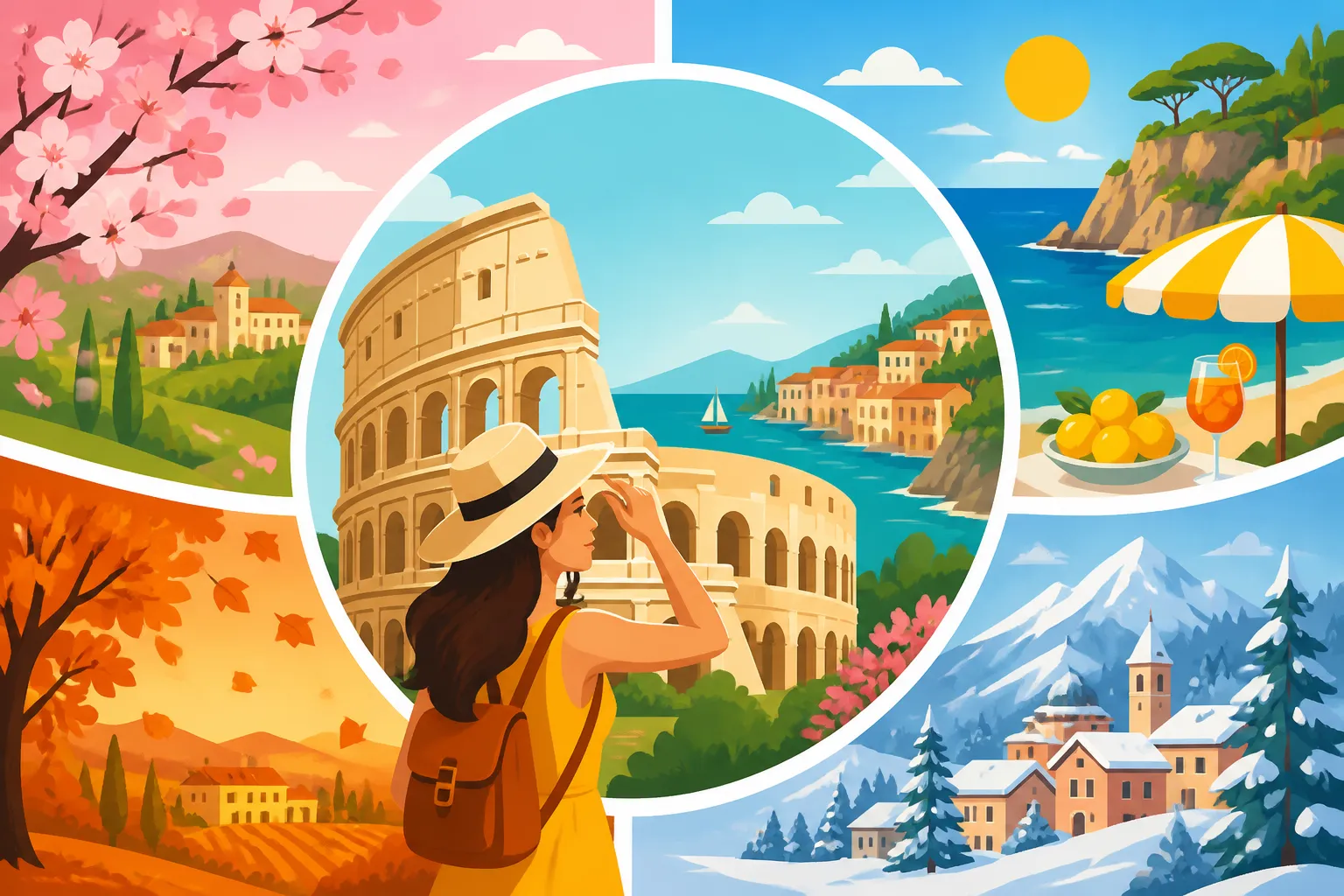
Seasonal Italy: When to Visit and What’s On
Planning a trip to Italy often leads to a major dilemma: deciding when to go. Visitors frequently find themselves melting in oppressive midsummer humidity, arriving in quiet towns during widespread holiday shutdowns, or missing out on incredible seasonal food festivals simply due to timing. This comprehensive guide details Italy’s distinct seasonal shifts, seasonal events, regional climate nuances, and travel advice to help you build your ideal itinerary.
Disclosure: This post may contain affiliate links. We may earn a commission at no extra cost to you if you make a purchase through these links. Read full disclosure.
Spring in Italy: Blossoms, Mild Weather, and Easter Traditions
Weather and Packing for the Shoulder Season
Springtime across the Italian peninsula brings a noticeable shift in energy. From March through May, temperatures gradually rise, transforming chilly mornings into sun-drenched afternoons. In northern hubs like Milan or Turin, early spring can still feel brisk, carrying crisp mountain air from the nearby Alps. Down south in Sicily or Apulia, you will often find pleasantly warm days suitable for outdoor dining long before the summer crowds arrive. Weather patterns during this transitional period can be somewhat unpredictable, meaning sunny skies can suddenly give way to quick, scattered rain showers.
When packing for an Italian spring, layering is your best strategy. Locals call this transitional style dressing a cipolla (onion-style). Start with breathable cotton base layers, add a light knit sweater or fleece, and top it off with a water-resistant trench coat or tailored jacket. A sturdy umbrella and broken-in walking shoes are non-negotiable necessities for navigating slick cobblestone streets. As you transition into late April and May, temperatures warm considerably, making it ideal for Spring and Autumn in Italy: The Best Travel Seasons.
It is also worth keeping a light scarf in your daypack at all times. In Italy, drafty breezes are treated with great serious caution by locals trying to avoid colpo d’aria (a hit of air). Furthermore, a scarf comes in handy for covering shoulders when visiting historic churches or cathedrals, which often maintain strict dress codes regardless of the temperature outside.
Major Spring Events and Cultural Festivals
Spring brings some of the most vibrant cultural and religious observances on the Italian calendar. Easter, known locally as Pasqua, is a profound experience marked by solemn processions, historic reenactments, and joyful family feasts. In Florence, thousands gather on Easter Sunday to witness the Scoppio del Carro (Explosion of the Cart), an elaborate ceremony dating back centuries where a decorated wooden cart is set off with fireworks to ensure a good harvest. Smaller towns across Umbria and Sicily host intricate Holy Week parades where medieval brotherhoods march through historic squares.
Beyond Easter, spring celebrates local heritage and nature. In late April, Venice honors its patron saint during the Feast of Saint Mark, a day when local custom dictates giving a single red rosebud (bòcolo) to the person you love. May sees many regional flower festivals, such as the famous Infiorata events in towns like Noto in Sicily and Genzano di Roma, where cobblestone streets are transformed into stunning mosaic carpets made entirely of fresh flower petals.
Food-focused travelers will find spring a wonderful time for culinary exploration. Markets overflow with seasonal treasures like tender artichokes, wild asparagus, fresh broad beans, and young pecorino cheese. Towns across the country host community-centered food festivals (sagre) dedicated to these harvests. Joining locals at long wooden benches to sample fried artichokes or fresh pasta tossed with wild greens offers an authentic glimpse into Italian daily life.
Navigating Spring Travel Logistics and Crowds
While spring generally offers fewer crowds than summer, shoulder season popularity has grown steadily over recent years. Late March through early May sees a surge in school field trips and European weekend holidaymakers. Major landmarks like the Colosseum, the Uffizi Gallery, and the Vatican Museums will still have substantial lines. Securing your entry passes ahead of time through platforms like GetYourGuide can help you skip long ticket lines and maximize your time exploring historic neighborhoods.
Accommodation prices begin their upward trajectory in April, spiking around Easter week and national holidays like Liberation Day (April 25th) and Labor Day (May 1st). If your travel dates align with these public holidays, expect heavy domestic travel as Italians head to the countryside or coast for long weekend trips (ponti). Booking accommodations months in advance on Booking.com is advisable to secure fair rates and desirable locations.
Intercity travel during spring is generally pleasant and reliable. High-speed rail connections make moving between major urban hubs seamless, avoiding the summer heat and traffic jams. Travelers can easily compare train routes, schedules, and regional bus connections using Omio to build efficient itineraries across different provinces without needing to rent a private vehicle.
Summer in Italy: Sun, Sea, and the Ferragosto Rush
Beating the Heat and Managing Peak Season Crowds
Summer in Italy, spanning June through August, offers brilliant sunshine and lively energy, but it also brings significant heat and massive tourist numbers. In inland cities like Rome, Florence, and Bologna, temperatures frequently climb high, with intense sun reflecting off concrete and stone buildings. Humidity levels along the river valleys can make afternoon sightseeing quite tiring. To enjoy summer travel without burning out, you must adapt your daily schedule to match the rhythm of local life.
Locals manage the midday heat by retreating indoors during the hottest hours. Follow their lead by visiting air-conditioned museums or resting in your accommodation between 1:00 PM and 4:00 PM. Take advantage of early morning light to tour outdoor sites like ancient ruins or public plazas, then re-emerge in the late afternoon when temperatures cool down and the traditional passeggiata (evening stroll) begins. Staying hydrated is essential, so carry a reusable water bottle and fill it freely from the public drinking fountains (nasoni) found across cities like Rome.
Peak season crowds require deliberate strategy. Popular tourist hubs become congested with tour groups and cruise passengers between mid-morning and mid-afternoon. To minimize stress, consider exploring lesser-known neighborhoods, visiting smaller regional museums, or booking early morning and late evening entry slots for major attractions. Understanding the nuances of Visiting Italy in Summer: Heat, Crowds, and Coastal Escapes will keep your expectations realistic and your trip enjoyable.
Coastal Escapes, Island Hopping, and Alpine Retreats
When urban centers heat up, the coast calls. Summer is the quintessential season for exploring Italy’s dramatic coastlines and islands. From the cliffside villages of the Amalfi Coast and the colorful harbors of the Cinque Terre to the pristine beaches of Sardinia and Apulia, coastal areas offer swimming and seaside dining. Beach culture here is highly organized, with private beach clubs (stabilimenti balneari) lining many coastal stretches, offering sun loungers, umbrellas, showers, and changing facilities for a daily fee.
Island travel reaches its peak during the summer months. Ferries connect mainland ports to popular destinations like Capri, Ischia, Procida, and the Aeolian Islands. Hopping aboard a boat offers cool sea breezes and stunning views of volcanic cliffs dropping into turquoise waters. However, keep in mind that coastal roads become notoriously congested during July and August, making public ferries or coastal train routes a smarter transport choice than driving rental cars through narrow sea-cliff passes.
For travelers looking to escape summer heat entirely, heading north to the Italian Alps or the Dolomites provides a refreshing alternative. High-altitude mountain valleys offer pleasant daytime temperatures, fresh alpine air, and stunning landscapes. Hiking trails wind through wildflower meadows, past mountain huts (rifugi) serving hearty regional dishes. The northern lakes, including Lake Como, Lake Garda, and Lake Maggiore, also offer a mix of watersports, historic villas, and cooler mountain breezes.
Understanding Ferragosto and Local Summer Holidays
No discussion of an Italian summer is complete without mentioning Ferragosto, a major national holiday celebrated annually on August 15th. Rooted in ancient Roman times and later aligned with the Catholic Feast of the Assumption, Ferragosto marks the traditional peak of the summer vacation period. During the entire week surrounding August 15th, millions of Italians close up shop, leave the cities, and head directly to the coast or mountains for extended family breaks.
Visiting major cities like Milan, Rome, or Turin during mid-August offers a unique, almost surreal atmosphere. Streets are quiet, traffic vanishes, and finding parking is easy. However, many family-owned businesses, neighborhood bakeries, trattorias, and independent shops shut down completely for two to three weeks so owners and staff can take their annual break. While major tourist sites, corporate hotels, and large chain stores remain open, neighborhood services are often minimal.
If you plan to travel in coastal or mountain resorts during Ferragosto, be prepared for peak accommodation rates, packed beaches, and crowded restaurants. Reservations for coastal dining and beach lounger rentals must be secured far in advance. If you prefer a quieter holiday, aim for urban stays in early August or consider rural farm stays (agriturismi) tucked away in interior hills far from the beach crowds.
Autumn in Italy: Harvest, Truffles, and Golden Light
The Grape Harvest, Wine Tasting, and Sagre
As September arrives, atmospheric heat fades into crisp evenings, marking the start of autumn, one of the most rewarding times to explore Italy. Autumn centers around the agricultural calendar, beginning with the annual grape harvest (vendemmia). Across rolling vineyard landscapes from Tuscany and Piedmont to Veneto and Campania, farmers gather grapes to produce world-class wines. Visiting wine regions during September and October lets travelers observe this age-old tradition firsthand amid glowing foliage.
Following the grape harvest comes the olive harvest and the arrival of autumn culinary delicacies. Crisp mornings bring ideal conditions for foraging wild mushrooms and prized truffles. The Piedmontese town of Alba hosts its famous International White Truffle Fair throughout autumn, drawing gourmets from across the world. Meanwhile, small mountain villages across Tuscany, Umbria, and Emilia-Romagna hold weekend festivals dedicated to chestnuts, porcini mushrooms, new olive oil, and regional game meats.
Sampling these autumnal specialties at local festivals provides a rich cultural connection. You can learn How to Find Local Sagre (Food Festivals) During Your Visit by looking for bright paper posters pasted on village walls, announcing local food events hosted by community volunteers. Sitting alongside local families under large marquee tents while enjoying handmade pasta tossed with shaved truffles or freshly pressed olive oil is a highlight of autumn travel.
Cultural Sightseeing in Major Cities During Autumn
For culture lovers, autumn is arguably the finest season for exploring major Italian cities. The intense summer heat recedes, making long walking tours through historic districts enjoyable once again. Crowds at major museums drop off noticeably by mid-October, allowing for a more contemplative, relaxed pace when admiring Renaissance masterpieces or ancient Roman architecture.
Autumn also marks the kickoff of the cultural season across Italy. Opera houses like La Scala in Milan and La Fenice in Venice launch their autumn programs, while cities host prestigious contemporary art, film, and literature festivals. Rome hosts its international film festival, while Venice’s art or architecture Biennale exhibitions run through late November. The soft golden autumn light offers extraordinary conditions for photography, highlighting the warm ochre, terracotta, and cream hues of historic city façades.
Urban walking becomes a pleasure as cool breezes replace oppressive summer humidity. You can spend afternoons lingering at outdoor café tables without needing shaded misting fans, sipping rich espresso or enjoying a glass of red wine as the city goes about its daily routine. Parks and historic villa grounds, like Rome’s Villa Borghese or Florence’s Boboli Gardens, feature vibrant autumn foliage.
Weather Transitions and Packing for Rainy Days
While early autumn (September through mid-October) often brings ideal travel weather with warm, sunny days and cool nights, late autumn (November) marks a distinct shift toward winter conditions. November is historically the rainiest month across much of the peninsula. River levels rise, and northern regions frequently experience dense morning fog (nebbia) that drapes plains and river valleys in a calm, mystical atmosphere.
Packing for late autumn requires preparing for wet weather. Waterproof footwear with good traction is essential for walking on slippery cobblestone pavements and historic marble thresholds. A packable raincoat, high-quality umbrella, and warm, water-resistant outer layers will keep you comfortable during wet outings. Layering remains helpful, as indoor spaces, museum galleries, and public transport are typically well-heated once cooler weather sets in.
In Venice, late autumn brings an increased likelihood of acqua alta (exceptional high tides). When atmospheric conditions cause sea levels to rise and flood low-lying parts of the city, warning sirens sound, and elevated wooden walkways are constructed along major pedestrian routes. Packing a pair of lightweight, packable rain boots or purchasing over-boot covers upon arrival ensures you can continue exploring St. Mark’s Square even when floodwaters briefly cover the paving stones.
Winter in Italy: Holiday Markets, Ski Slopes, and Low-Season Lulls
Festive Christmas Markets and Epiphany Celebrations
Winter brings a magical transformation to Italian towns and cities. Beginning in early December, streets are adorned with festive light displays, and main squares erect towering Christmas trees. The holiday season officially begins on December 8th, the Feast of the Immaculate Conception, when families assemble nativity scenes (presepi) in their homes and public plazas. Naples is famous for its intricate nativity art, particularly along Via San Gregorio Armeno, where artisan workshops display hand-carved figurines year-round.
In northern regions, particularly Trentino-Alto Adige, Christmas markets (mercatini di Natale) reflect alpine traditions. Cities like Bolzano, Trento, and Bressanone host winter markets filled with wooden stalls selling wooden crafts, felt slippers, mulled wine (vin brulè), and regional sweets. Central and southern cities host their own festive gatherings, featuring open-air ice rinks, roasting chestnut vendors, and traditional carolers (zampognari) playing bagpipes in historical plazas.
The holiday season extends past Christmas and New Year’s Eve through January 6th, the Epiphany. On the eve of Epiphany, children await the arrival of La Befana, a friendly mythical witch who delivers sweets to good children and dark coal (sweetened black sugar) to naughty ones. Experiencing these traditions firsthand offers deep insight into family-focused cultural customs, making it helpful to review Christmas and Epiphany (Befana) in Italy before planning a holiday winter itinerary.
Skiing in the Italian Alps and Winter Sports
For winter sports enthusiasts, Italy offers some of the finest mountain scenery and ski resorts in Europe. The Italian Alps and the Dolomites feature massive connected ski areas, modern lift infrastructure, and exceptional alpine dining. Resorts like Cortina d’Ampezzo, Madonna di Campiglio, and Courmayeur cater to all skill levels, offering pristine pistes backed by dramatic vertical rock faces.
The Italian ski experience places equal emphasis on sport and mountain hospitality. Ski huts (rifugi) scattered across the slopes serve hearty mountain lunches, including polenta topped with melted gorgonzola, braised venison, homemade dumplings (canederli), and warm Bombardino cocktails. The atmosphere is warm, relaxed, and sociable, contrasting with the often intensely competitive nature of resorts in other European regions.
Cross-country skiing, snowshoeing, winter hiking, and wellness tourism also thrive in northern Italy during winter. Many alpine valleys feature thermal spa resorts where visitors can soak in warm mineral pools while looking out over snow-draped pine forests and icy peaks. For non-skiers, scenic mountain funiculars provide easy access to panoramic high-altitude views and sun-drenched terraces.
Low-Season Benefits in Rome, Florence, and Venice
Once the holiday festivities end in early January, Italy enters its true low season, which runs through February (excluding the weeks surrounding Carnival). For independent travelers looking for low accommodation rates, short queues, and an authentic atmosphere, this winter lull is an unbeatable time to travel. Experiencing Visiting Italy in Winter: Quiet Cities and the Alps reveals a quieter side of the country that summer visitors rarely see.
Major historic centers return to belonging primarily to their residents. You can wander through the Vatican Museums without navigating heavy crowds, stand alone before Botticelli’s masterpieces in the Uffizi, or hear your footsteps echo across empty Venetian bridges at dusk. Flight and accommodation prices drop significantly during these months, allowing budget-conscious travelers to stay in central historic hotels on Booking.com that might be cost-prohibitive during peak spring or summer months.
The winter season concludes with the spectacle of Carnival (Carnevale) in February. While Venice hosts the most world-famous carnival, featuring elaborate masks, grand masquerade balls, and historic gondola parades, other towns offer equally fascinating celebrations. Viareggio in Tuscany is famous for its massive satirical papier-mâché floats, while Ivrea in Piedmont hosts the historic “Battle of the Oranges,” a intense three-day food fight re-enacting a medieval rebellion against tyranny.
Regional Variations: How Italy’s Seasons Differ From North to South
| Region | Spring (Mar-May) | Summer (Jun-Aug) | Autumn (Sep-Nov) | Winter (Dec-Feb) |
|---|---|---|---|---|
| Northern Italy | Mild, crisp mornings; | Warm to hot; humid in | Cool, damp; fog in | Cold; heavy snow in |
| (Alps/Plains) | alpine snow melting | plains; alpine summer | plains; grape harvest | mountains; ski peak |
| Central Italy | Pleasant, sunny days; | Hot, dry afternoons; | Warm golden days; | Crisp, cool days; |
| (Hills/Cities) | ideal for walking | busy coastal resorts | olive oil & truffles | lower city crowds |
| Southern Italy | Very warm; early | Intense heat; sunny; | Warm sea swimming; | Mild weather; rainy |
| & Islands | beach season starts | packed beach clubs | extended harvest | spells; very quiet |
The Alpine North and Continental Plains
Italy’s climate varies dramatically from north to south, influenced by mountain ranges, sea currents, and geography. Northern Italy, encompassing regions like Lombardy, Piedmont, Veneto, and Aosta Valley, experiences a continental climate characterized by four distinct seasons. Winters are cold, with mountain regions receiving heavy snow while the flat Po Valley deals with freezing temperatures and dense fog.
Spring in the north is fresh and green, though mountain passes often remain snowbound until late May. Summers are warm to hot, and humidity in flat inland cities like Milan or Verona can feel heavy, frequently giving way to sudden late-afternoon thunderstorms. Autumn brings crisp air and dramatic color shifts to vineyard valleys like the Langhe and Valpolicella, making it a prime season for outdoor exploration and culinary tourism.
Travelers planning journeys across northern regions should keep these climate differences in mind when choosing transport. Comparing rail options via Omio allows you to select high-speed trains between major cities or scenic regional lines through mountain valleys, ensuring smooth connections regardless of changing seasonal weather conditions.
Central Italy’s Rolling Hills and Coastlines
Central Italy—including Tuscany, Umbria, Le Marche, and Lazio—features a Mediterranean climate tempered by rolling hills and two coastlines. Spring and autumn are extended and exceptionally pleasant here, featuring long stretches of sunny, mild days perfect for driving through country roads, visiting hilltop towns, and outdoor sightseeing in historic art cities like Florence and Siena.
Summers in central Italy are hot and sunny, particularly in low-lying river basins and urban centers. Inland areas dry out considerably by midsummer, giving the landscape its iconic golden hue. Coastal stretches along the Tyrrhenian and Adriatic seas offer refreshing ocean breezes, making coastal towns popular weekend escapes for urban residents seeking relief from city heat.
Winters in the central regions are crisp and cold, but rarely extreme outside high Apennine mountain zones. Bright, sunny winter days are common, providing clear light for urban exploration and country walks. Rain is most frequent during November and December, so packing waterproof layers and comfortable walking boots ensures you remain comfortable during countryside excursions.
The Sunny South and Mediterranean Islands
Southern Italy—encompassing Campania, Apulia, Basilicata, Calabria, and the major islands of Sicily and Sardinia—enjoys a hot-summer Mediterranean climate. Spring arrives early in the south, with warm, beach-friendly weather often beginning by late April or early May. Wildflowers carpet countryside ruins, and coastal waters warm up much faster than in northern regions.
Summers in the south are intensely hot, dry, and sunny, with temperatures regularly exceeding high marks during heatwaves. Coastal living dominates seasonal routines, with daily activity concentrated during early morning hours and late evenings. The landscape turns dry and sun-bleached, while coastal resorts burst with energy, night markets, and seaside dining.
Autumn extends long into November across southern Italy, offering extended warm weather, quiet beaches, and comfortable sea temperatures long after northern regions have turned cold. Winters are mild compared to the rest of the country, though coastal winds and damp weather can make indoor spaces feel chilly, as traditional southern architecture is built to disperse summer heat rather than retain winter warmth.
Comprehensive Italian Seasonal Travel Comparison Matrix
Evaluating Season-by-Season Travel Expenses
Traveling through Italy involves balancing your trip timing with your overall budget. Seasonality impacts costs across accommodation, local transportation, guided experiences, and dining. Understanding high, shoulder, and low season price dynamics helps you allocate travel funds efficiently and avoid unexpected expenses.
High season (June through August, plus Easter week and Christmas holidays) commands premium rates across the hospitality sector. Coastal hotels, mountain chalets, and historic city apartments reach their peak rates. Flight costs rise, and budget accommodations fill up months in advance. To secure fair pricing and availability during these peak windows, reserving your stays early on Booking.com is essential for managing your travel budget.
Shoulder seasons (April–May and September–October) offer an attractive balance between price and experience. While rates are higher than in winter, they reflect great value given the excellent weather and rich cultural calendars. Low season (November through February, excluding holidays) offers deep discounts across accommodation and travel services, making it the ideal window for budget travelers prioritizing culture, art, and food over warm beach weather.
Aligning Personal Travel Goals With the Calendar
Choosing the best time to visit Italy ultimately depends on your personal priorities and travel style. Every season presents unique trade-offs, meaning there is no single best month for every traveler. Reviewing a year-round calendar like Italy’s Biggest Festivals: A Year-Round Calendar can help you line up your itinerary with specific cultural events, harvests, or seasonal landscapes.
If your ideal trip involves coastal swimming, vibrant nightlife, and iconic summer energy, summer is worth the higher costs and heavy crowds. If you prefer active outdoor adventures like hiking, cycling, and city walking alongside rich culinary events, the shoulder months of spring and autumn offer optimal conditions.
For budget travelers, art lovers, and those seeking quiet, intimate connections with historic cities, winter offers an authentic, unhurried atmosphere. Aligning your expectations with seasonal realities ensures you enjoy every moment of your journey, avoiding common travel pitfalls and enjoying Italy at its best.
| Travel Factor | Spring (Mar-May) | Summer (Jun-Aug) | Autumn (Sep-Nov) | Winter (Dec-Feb) |
|---|---|---|---|---|
| Overall Weather | Mild, mild rain, | Hot, dry, intense | Warm early, crisp | Cold north, mild |
| highly pleasant | sunshine throughout | late, rain in Nov | south, mountain snow | |
| Crowd Levels | Moderate; busy | Extreme; peak tourist | Moderate; dropping | Low; quiet cities, |
| around Easter | numbers everywhere | off by mid-Oct | busy ski resorts | |
| Price Range | Moderate / Shoulder | High / Peak rates | Moderate / Shoulder | Low / Budget-friendly |
| pricing | across all sectors | pricing | outside holidays | |
| Key Highlights | Flower festivals, | Beaches, islands, | Wine harvest, sagre, | Christmas markets, |
| Easter, green hills | outdoor nightlife | truffles, autumn light | skiing, empty museums |
Essential Practical Tips for Navigating Italy Across All Seasons
Booking Transport and Accommodation Wisely
Smart booking habits are essential for smooth travel in Italy across any season. High-speed rail lines connecting major hubs like Rome, Florence, Bologna, Milan, and Naples offer convenient, stress-free travel year-round. Ticket prices for high-speed services operate on dynamic pricing models, meaning rates increase as travel dates approach. Booking rail journeys weeks in advance using Omio secures low rates and guaranteed seat reservations.
When selecting accommodations, consider seasonal climate needs carefully. During summer, verify that your chosen stay includes functioning air conditioning (aria condizionata), as some historic boutique properties or traditional farm stays may rely solely on ceiling fans or window shutters. In winter, check that heating systems (riscaldamento) meet your comfort needs, as national energy regulations set specific calendar dates for when central heating can be turned on in different climatic zones across the country.
Location strategy also changes with the seasons. During hot summer months, choosing accommodations near parks, riverfronts, or elevated hillsides offers cooler evening breezes. In winter, staying centrally within historic centers minimizes walking distance to museums, restaurants, and public transport stops during wet or chilly weather.
Understanding Seasonal Opening Hours and Closures
Italian businesses, sites, and restaurants often adjust their operating hours based on the season. During peak summer, coastal businesses stay open late into the night, while inland city shops may observe extended afternoon breaks (riposo) to avoid working during peak heat. In smaller towns, afternoon closures between 1:30 PM and 4:30 PM remain common year-round, requiring visitors to plan shopping and errands accordingly.
Conversely, winter brings reduced operating hours for attractions in tourist-oriented coastal and rural areas. Many seasonal hotels, beach clubs, and coastal restaurants shut down completely from November through March. Always verify opening hours for small regional museums, archaeological sites, and family-run trattorias online before traveling outside major urban centers during the low season.
Public holidays can also affect opening schedules. On major national holidays like Easter Sunday, Christmas Day, New Year’s Day, and Ferragosto (August 15th), public transport operates on reduced holiday schedules, and many municipal museums, banks, and pharmacies are closed. Planning ahead and securing advance passes through GetYourGuide ensures your entry slots for major landmarks are confirmed regardless of holiday schedules.
Immersing Yourself in Local Seasonal Food Culture
One of the greatest joys of traveling through Italy is experiencing its seasonal food culture. Traditional Italian cooking is deeply connected to regional micro-climates and harvest schedules. Ordering seasonal dishes ensures you enjoy ingredients at peak flavor while honoring local tradition. A fundamental rule of Italian dining is that menus reflect what is growing nearby right now.
In spring, look for dishes featuring artichokes (carciofi), peas (piselli), wild asparagus, and fresh ricotta. Summer menus shine with sweet tomatoes, fresh basil, sweet peppers, eggplant, and fresh seafood enjoyed by the coast. Autumn brings rich, comforting flavors centered around porcini mushrooms, truffles, roasted chestnuts, pumpkin, and braised meats paired with robust red wines. Winter menus feature hearty greens like cavolo nero, chicory, root vegetables, thick legume soups, and polenta.
Understanding how regional food traditions change across the country adds real depth to your trip. Exploring Italian Regional Cuisine: How Food Changes Across Italy helps you navigate local markets, order confidently in regional trattorias, and appreciate the rich culinary heritage that makes every season in Italy special.
Disclaimer
This article is for general informational purposes only and does not constitute professional advice. Laws, prices and regulations vary by location and change over time. Consult a qualified professional for guidance on your specific situation.