Tipping in Italy: When, Where, and How Much
Oh, the age-old question that plagues every expat and tourist stepping foot on Italian soil: "To tip or not to tip, and if so, how much?!" Trust me, you're not alone in feeling utterly bamboozled by Italy's nuanced approach to gratuities. It's not like back home, and that's precisely where the confusion, and sometimes, outright anxiety, kicks in. This guide is here to unravel the mysteries of tipping in Italy, offering you a clear, empathetic, and realistic understanding so you can navigate every caffè and trattoria with confidence.
Disclosure: This post may contain affiliate links. We may earn a commission at no extra cost to you if you make a purchase through these links. Read full disclosure.
The Italian Tipping Culture: Dispelling Myths and Understanding Norms
When you first arrive in Italy, one of the quickest ways to feel like an outsider is fumbling with the bill, unsure if you should leave an extra few euros or if you’re about to commit a major cultural faux pas. I’ve seen it countless times, and I’ve been there myself! The key thing to understand is that the Italian tipping culture is fundamentally different from what many visitors, especially from North America, are accustomed to. It’s not about making up a server's minimum wage; it’s about a small gesture of appreciation for exceptional service, if you feel compelled.
Why Tipping is Different in Italy (and Not Expected)
The biggest myth to bust right away is that tipping is expected in Italy. It’s simply not. Unlike countries where tipping constitutes a significant portion of a service worker's income, Italian wages in the hospitality sector are generally considered to be fair and livable, factoring in all aspects of service. This means that staff aren't relying on your tip to pay their rent or put food on the table. Their income is derived from their salary, which already covers the cost of their labor. This fundamental difference is why you'll often see Italians themselves leaving very little, or often nothing at all, after a meal or a drink. It's not because they're rude or stingy; it's because the system doesn't demand it.
When you do choose to leave a tip, it should be seen as a bonus, a genuine expression of gratitude for service that went above and beyond the standard. It's a "thank you for making my experience particularly enjoyable," rather than a "here's the rest of your salary." This mindset shift is crucial for understanding how to approach tipping like a local. It explains why a simple rounding up of the bill or leaving a few coins is often perfectly acceptable, rather than calculating a percentage. It’s a subtle dance, and once you get the rhythm, you’ll feel much more at ease.
The Concept of "Coperto" and "Servizio"
Now, let's talk about some specific charges you'll encounter on your Italian restaurant bills: coperto and servizio. These are often the biggest source of confusion and sometimes frustration for foreigners, leading many to mistakenly believe they've already "tipped."
The coperto is a charge for sitting down at a table, often translated as a "cover charge" or "table charge." It's essentially a fee for the bread, olive oil, tablecloth, cutlery, and the general privilege of using the restaurant's facilities. This charge is per person and can range from €1 to €5, depending on the establishment and its location. It's a perfectly legal and customary charge in Italy, especially in regions like Tuscany or Lazio. You’ll usually see it listed explicitly on the menu, so you won’t be surprised. Think of it as a small contribution to the overhead costs of operating the dining space.
Then there's servizio, which directly translates to "service charge." This one is less common than coperto, but when present, it's typically a percentage of your total bill, usually around 10-15%. This charge is usually found in more touristy areas, particularly in places like Venice or parts of Florence and Rome, or in larger groups. If servizio is included, then absolutely no additional tip is expected, as you've already paid for the service. It’s important to check your bill carefully for these items. If you see servizio incluso (service included) or a percentage added, your tipping dilemma is already solved for you. Many establishments will even state this clearly on their menu, perhaps in fine print. Understanding these charges is key to avoiding overpaying or feeling pressured to leave an unnecessary extra amount. You can learn more about this by checking out our guide on Restaurant Etiquette in Italy: Coperto, Courses, and the Bill.
Tipping in Restaurants and Cafés: Navigating the Bill
Dining out is an integral part of the Italian experience, and rightly so! From a quick morning caffè to a leisurely cena, understanding tipping norms in these settings will greatly enhance your enjoyment and keep you from feeling awkward.
Casual Dining and Bars: Coffee, Aperitivo, and Quick Bites
In Italy, grabbing a coffee at the bar or a quick panino for lunch is a fast-paced, often standing-room-only affair. When you pop into a bar for your morning cappuccino, you'll typically pay at the cassa (cashier) first, then take your receipt to the barista. You might notice a small saucer near the coffee machine with a few coins in it – this is for small change tips, maybe 10 or 20 cents if you feel like it, but it’s certainly not obligatory. Most Italians just pay and go. The same applies to a quick aperitivo at the counter. If you're sitting down at a table, especially in a popular piazza, the coperto might apply, and prices for table service are generally higher than at the bar, as is customary.
For casual trattorias or pizzerias where you have a simple, no-frills meal, the rules are similarly relaxed. If the service was friendly and efficient, rounding up the bill to the nearest euro or leaving an extra euro or two is a nice touch, but by no means mandatory. For example, if your bill is €28, leaving €30 is a perfectly generous gesture. Anything more would be quite unusual and potentially unnecessary. Remember, it’s about a small recognition, not a percentage.
Formal Restaurants: When a Little Extra is Appreciated (but not mandatory)
In a more upscale restaurant, perhaps a white-tablecloth establishment or one where you've had a truly memorable dining experience, the expectations remain largely the same, but the gesture of a small tip might be a little more common. Again, check your bill for servizio. If it's not present, and you received exceptional service – perhaps your server was particularly attentive, helped you with wine pairings, or offered excellent recommendations – then leaving a few extra euros on the table is a thoughtful gesture.
For a bill of, say, €100 for two people, leaving €5-€10 would be considered very generous and certainly appreciated. More than that would be quite unusual. It’s still not a fixed percentage, but rather a flexible amount based on your satisfaction. If you’re dining in a group, and the restaurant handles large groups, they might automatically add a service charge, so always double-check. Don't feel pressured to leave a large amount if the service was just adequate, or if the coperto and servizio charges already bumped up your bill significantly.
Decoding Your Bill: "Coperto," "Servizio," and Other Charges
The Italian bill, or conto, can be a bit of a puzzle if you're not used to it. Beyond the itemized list of what you ate and drank, you'll need to look for those key terms we discussed:
- Coperto: This is the "cover charge." It’s almost ubiquitous in sit-down restaurants. It’s a fixed fee per person and goes to the restaurant, not directly to your server.
- Servizio: The "service charge" is less common but still pops up, especially in tourist hot spots or for larger groups. If you see this, you've already paid for the service, and no additional tip is needed.
- Pane (bread): Sometimes, instead of a coperto, you might see a charge specifically for bread. This functions similarly – it's part of the table setting, not an extra tip.
- Acqua (water): Often, if you order acqua minerale (bottled water), you'll see a charge for it. Tap water isn't typically served by default in restaurants, so don't expect it to be free or appear on your table automatically like in some other countries.
Always take a moment to review your bill. If you're unsure about any charge, it's perfectly acceptable to politely ask “Cos’è il coperto?” (What is the cover charge?) or “Cosa include il servizio?” (What does the service include?). The staff will usually be happy to clarify. This simple act can save you from feeling ripped off or from leaving an unnecessary extra tip.
Tipping for Services: Beyond Food and Drink
While restaurants are often the primary focus of tipping anxieties, you'll encounter various other service providers during your time in Italy. The general principle of "tipping is not expected but appreciated for exceptional service" still largely applies, but let’s break down some common scenarios.
Tour Guides and Hospitality Staff: Making Their Day a Little Brighter
When it comes to tour guides, whether you're exploring ancient Roman ruins through GetYourGuide or taking a specialized food tour, a tip is genuinely appreciated if they've provided an outstanding experience. These professionals often work long hours, sharing their deep knowledge and passion. For a half-day tour, €5-€10 per person is a generous tip if you felt the guide was excellent. For a full-day excursion, €10-€20 per person would be very well received. Of course, this assumes it’s a private or small group tour. If it's a large group tour with many participants, a smaller amount per person is still a nice gesture.
Hotel staff, such as porters who help with your luggage, housekeepers, or concierge services, also fall into this category. If a porter carries your bags to your room, €1-€2 per bag is a standard and polite offering. For housekeeping, leaving €2-€5 per night on your pillow for excellent service (e.g., a sparkling clean room, extra towels without asking) is a thoughtful gesture. For an exceptional concierge who went out of their way to secure hard-to-get reservations or provide invaluable local advice, a tip of €5-€10 is certainly appropriate. You can often find great accommodation options using platforms like Booking.com, and remember that smaller, family-run establishments might have slightly different, often more personal, dynamics.
Taxis and Other Transportation: Rounding Up or Letting It Go
Tipping taxi drivers in Italy is generally not a common practice. Most Italians simply pay the exact fare. However, if the driver was particularly helpful—perhaps they assisted with heavy luggage, navigated a tricky route efficiently, or offered some interesting local insights—it’s common to simply round up the fare to the nearest euro or two. For example, if the fare is €18.50, you might give them €19 or €20 and tell them to “tieni il resto” (keep the change). This is a sign of appreciation, but certainly not mandatory. Don't feel obligated to give a percentage or a large sum.
For other forms of transportation, such as private car services (like those arranged by your hotel) or shuttle services, the same principle applies. Rounding up is fine, but extensive tipping is rare. Public transportation, of course, requires no tipping – you just buy your ticket and go. If you're using apps like Free Now, which is popular in Italy, you might have the option to add a tip digitally, but again, it’s not culturally ingrained to do so. Finding your way around Italy using public transport is generally efficient, and you can often buy tickets through apps or at local tabacchi. You can read more about Getting Around Italy: Trains, Buses, Flights, and Car Hire to fully understand your transport options.
Hotel Staff and Other Personal Services: A Gesture of Thanks
Beyond porters and concierges, other personal service providers might include spa therapists, hairdressers, or even delivery people. For spa services or a haircut, if you're pleased with the service, a small tip of 5-10% or a round up to the nearest €5-€10 is a kind gesture, though again, not strictly expected. It's similar to what you might offer for a truly outstanding meal.
Delivery services, whether for food or groceries, are another area where expectations are low. Italians rarely tip for these services. If you receive exceptional service, like a delivery person who navigates a difficult building or is particularly quick and polite, a euro or two is a nice way to say thank you. The main takeaway here is that Italy's service industry operates under a different cultural code. Your thoughtfulness, rather than a large sum, is usually the most important thing.
Practical Scenarios and Local Nuances
Navigating the social codes of a new country is often one of the biggest challenges for expats and tourists alike. Tipping in Italy is no exception. It’s not just about the money; it’s about understanding the unspoken rules and avoiding cultural missteps.
When to Offer a Tip and When to Politely Decline
The golden rule in Italy is that if a service charge (servizio) is already included on your bill, you do not need to leave an additional tip. Period. This is not being stingy; it’s simply respecting the local custom. Often, these charges are more common in highly touristed areas or for larger groups, precisely because businesses know that foreign visitors expect to pay for service. You might also find that in some places, particularly smaller, family-run establishments, they might even find a large tip slightly perplexing or unnecessary if they feel they were just doing their job.
On the other hand, if you’ve received truly outstanding service that made your experience particularly memorable – perhaps a waiter went above and beyond to accommodate a dietary restriction, or a tour guide provided insights that genuinely enriched your understanding – then a small, discretionary tip is a lovely way to show your appreciation. This is especially true where no service charge is included. The key is that the tip should be a bonus, not a perceived requirement. Don’t feel guilty if you don't tip, and don't feel obligated to overtip. Your comfort and genuine satisfaction should guide your decision. It's often helpful to keep some smaller bills or coins on hand, just in case the moment arises.
How to Tip: Cash is King (Mostly)
In Italy, when you do decide to leave a tip, cash is almost always the preferred and easiest method. Unlike some countries where tips can be added to credit card payments, this isn’t always an option in Italy, especially in smaller establishments. Even if it is technically possible, a cash tip directly indicates your appreciation to the individual or team who served you and ensures they receive it directly and immediately.
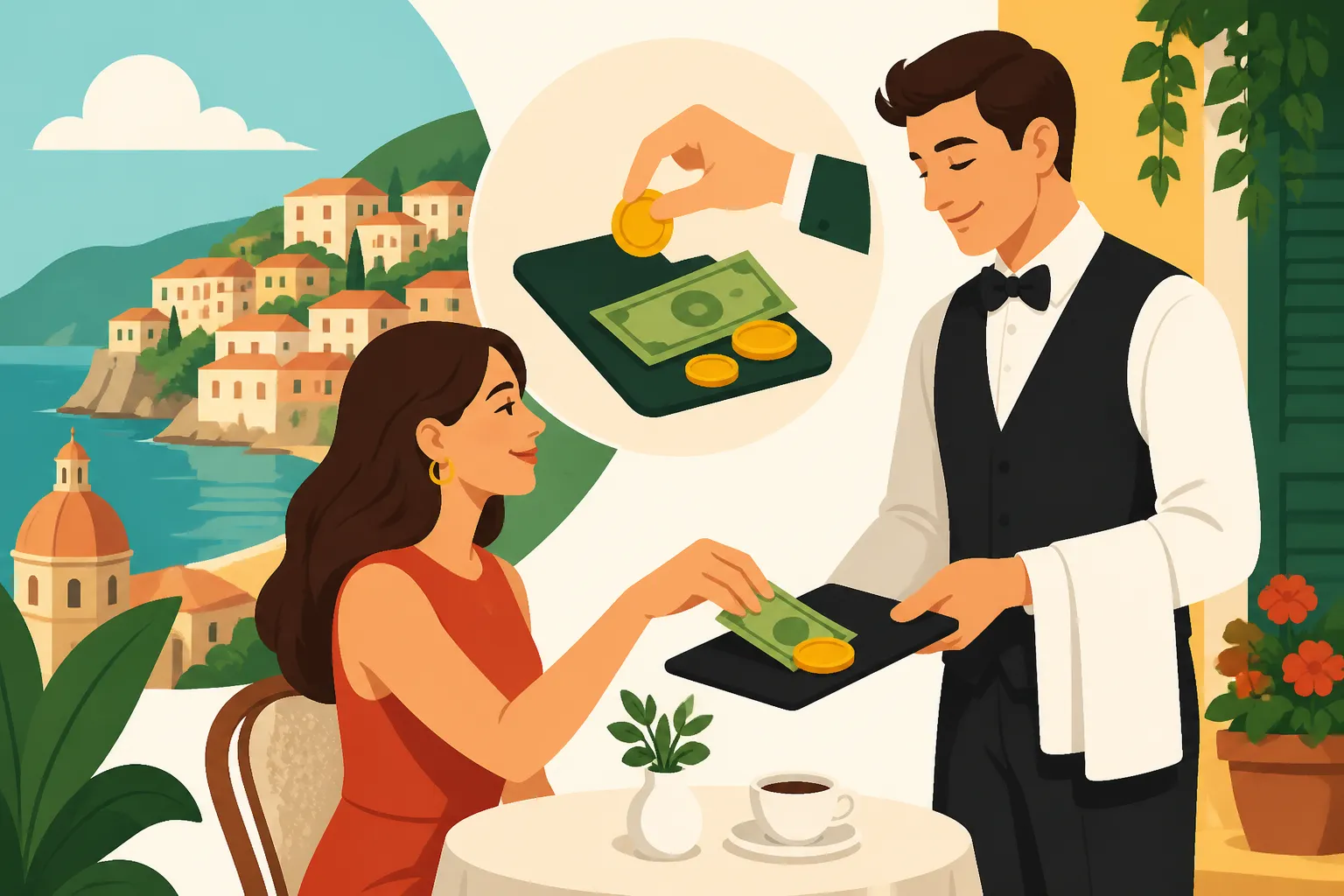
For restaurants and cafés, the most common way is to leave the cash on the table after paying the bill, as you're leaving. For hotel staff, a discreet handover or leaving it in an obvious spot (like on a pillow for housekeeping) works well. Always aim for small denominations – €1 or €2 coins, or €5 or €10 notes. Leaving a €50 note for a small tip is simply impractical and overkill. If you only have larger notes and receive change back, it's perfectly fine to pick out a few euros from the change to leave as a tip. Remember, Italians often don't carry a lot of small change, so it's a good idea for you to have some. Having cash on hand is also useful for many small transactions you'll encounter daily, from buying bus tickets to browsing local markets. Our guide on Money Matters in Italy: Banking and Finance for Expats can offer more insights into cash handling in Italy.
The Italian Perspective on Tipping: Why Less Is Often More
To truly grasp Italian tipping etiquette, it's essential to understand the local perspective. Italians view service as a professional duty, part of the job they are paid to do. Excellent service is expected as a matter of course, not as an extra that needs to be incentivized by a tip. This cultural value means that staff are generally well-trained and perform their roles diligently because it is their profession, not because they are hoping for a large tip.
Therefore, leaving a huge tip can sometimes be seen as slightly ostentatious or even suggest you believe their wages are inadequate, which can be unintentionally insulting. A small, thoughtful gesture is usually more appropriate and better understood. It’s about respect for their professionalism and acknowledging a job exceptionally well done, rather than making up for perceived low wages. It’s a subtle but significant difference that really helps you blend in and show you understand and respect the local customs.
Common Misconceptions and What Expats Learn
Moving to Italy or even just visiting means encountering a rich tapestry of cultural differences. Tipping is often one of the first and most confusing. Drawing on expat experiences, we can shed some light on common pitfalls and provide practical advice.
The American vs. Italian Mindset: Bridging the Cultural Divide
The most significant source of confusion often stems from the stark contrast between the American and Italian tipping cultures. In the United States, a 15-20% tip is often considered standard, a critical component of a service worker's income, and anything less can be seen as a strong indication of dissatisfaction. In Italy, as we've discussed, this simply isn't the case. Service workers earn a living wage, and tips are truly supplemental.
Expats quickly learn to shed the "percentage rule" and adopt a more fluid approach. The idea of adding an extra €2-€5 for a good meal, regardless of the total cost, becomes second nature. It’s a complete re-wiring of thought processes, moving from a quantitative calculation to a qualitative gesture. This bridging of mindsets is not just about saving a few euros; it’s about understanding and respecting the local socio-economic structure and valuing service professionals differently. It really makes a difference in how you interact and feel in public spaces.
Avoiding Awkward Moments: Our Expat Experiences
We've all had those moments. I once saw a tourist at a bar trying to force a €10 note on a barista after a €2 coffee, insisting "for you, for you!" The barista was clearly uncomfortable and just kept repeating "no, grazie," until the tourist reluctantly took it back. It was clear the tourist meant well, but the gesture was entirely out of place and caused an awkward scene.
To avoid such situations:
- Always check the bill first: Look for coperto and servizio. This is your first line of defense against overtipping or causing confusion.
- Keep small change handy: Having €1 and €2 coins and €5 notes makes discreet tipping much easier and more appropriate.
- Observe locals: When in doubt, take a quick peek at what the Italians around you are doing. While they might leave nothing, it gives you a baseline.
- Don't make a fuss: If you do leave a tip, do it subtly. Don't announce it, don't ask if it's "enough," just leave it and go.
These simple strategies will help you navigate tipping gracefully and confidently, ensuring your interactions remain pleasant and respectful. It's a small detail, but mastering it significantly enhances your experience of living in Italy.
Budgeting for Tips (or Lack Thereof) as a Tourist or New Resident
When you’re planning your budget for a trip to Italy or considering the Cost of Living in Italy 2026: Budgeting for Expats, tipping is one area where you can actually save quite a bit compared to other destinations. Since it’s not generally expected, you don't need to factor in an automatic 15-20% into every meal or service.
As a tourist, rather than allocating a large portion of your budget to tips, you might instead put that money towards experiencing more of Italy’s incredible culture, perhaps a gondola ride in Venice or a cooking class in Florence. For new residents, understanding that tipping isn't a fixed expense helps with long-term financial planning. You’ll find your budget stretches further when you’re not constantly calculating and adding gratuities. Consider your tipping budget more as a flexible "appreciation fund" for truly exceptional moments, rather than a mandatory cost of living. This allows you to prioritize other experiences, like using Omio to book train tickets for weekend trips, or exploring the cultural offerings available through GetYourGuide.
Here's a handy table to summarize the general tipping guidelines:
| Service Type | When to Tip | How Much (Suggested) | Important Notes |
|---|---|---|---|
| Cafés/Bars (Standing) | For exceptionally friendly barista, or if feeling generous. | 10-20 cents (leave on counter) | Not expected. Most Italians do not tip. |
| Cafés/Bars (Table Service) | If no coperto is charged, and service was good. | €1-€2 | Table service prices are often higher than counter prices. |
| Casual Restaurants/Pizzerias | If no servizio included, and service was good/friendly. | Round up to nearest euro, or €1-€2 | Check for coperto (cover charge) on the bill, which is common. |
| Formal Restaurants | For truly exceptional service, if no servizio included. | €5-€10 (for a party of 2) | Always check for coperto and servizio. If servizio is included, no additional tip is necessary. |
| Tour Guides | For an engaging, informative, and exceptional tour. | Half-day: €5-€10 per person; Full-day: €10-€20 per person | More common for small group or private tours than large bus tours. |
| Taxi Drivers | If helpful with luggage, efficient, or particularly friendly. | Round up to nearest euro, or €1-€2 | Not expected. Italians rarely tip taxis beyond rounding up. |
| Hotel Porters | For carrying luggage to your room. | €1-€2 per bag | Common and appreciated. |
| Hotel Housekeeping | For a consistently clean room, extra amenities without asking, etc. | €2-€5 per night | Leave on the pillow. Not widely practiced by Italians, but always appreciated by staff. |
| Concierge | For going above and beyond to secure bookings, provide expert advice. | €5-€10 | For truly exceptional service, not for standard inquiries. |
| Spa/Salon Services | For excellent service you are very pleased with. | 5-10% or round up to nearest €5-€10 | Not strictly expected, but a kind gesture for good service. |
| Delivery Services | For exceptionally quick, polite, or difficult delivery. | €1-€2 | Rare for Italians to tip for delivery; truly a gesture for above-and-beyond service. |
Understanding these nuances will not only save you money but also help you navigate interactions with locals more smoothly. So, go forth, enjoy the incredible food and service Italy has to offer, and remember: when in doubt, a small, genuine gesture of appreciation goes a long way, but never feel obligated to overtip! You’ll soon feel like a true locale.
Disclaimer
Please note that while this guide provides comprehensive information based on current practices and general consensus regarding tipping in Italy, customs can vary slightly by region, establishment, and individual interpretation. Tipping remains a discretionary act, and this information should be used as a guideline to help you make informed decisions, not as definitive legal or cultural requirements. Always check your bill for service charges, and remember that local staff are compensated through their wages.