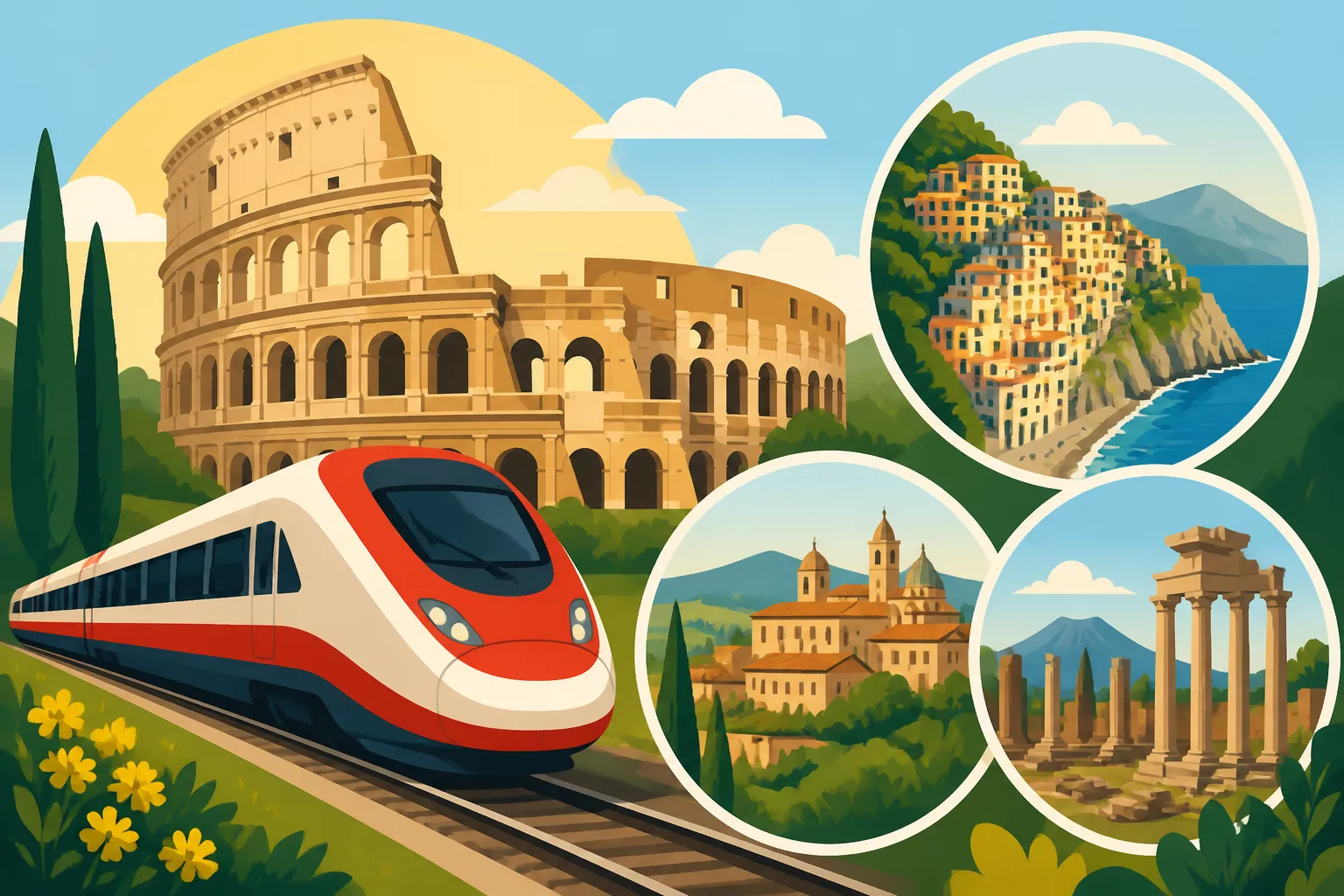
Best Day Trips From Rome by Train
Oh, the eternal dilemma of living in or visiting Rome! You arrive, you fall head over heels for the Eternal City's chaotic charm, its ancient ruins, and its unparalleled pasta, but soon enough, you start feeling that familiar itch to explore beyond the city walls. The thought of navigating unfamiliar bus routes or renting a car to face Italy's infamous ZTLs can be daunting, but fear not! This guide is your trusty companion to unlocking some of Italy's most captivating destinations, all easily accessible by train from Rome, making those day trip dreams a stress-free reality.
Disclosure: This post may contain affiliate links. We may earn a commission at no extra cost to you if you make a purchase through these links. Read full disclosure.
Planning Your Roman Escapade by Train
When you're based in Rome, the entire Italian peninsula feels within reach, but the logistics can sometimes feel like a puzzle. Trust me, after years of living here, I've learned that the train is often your best friend for hassle-free day trips.
Why Choose the Train for Day Trips from Rome?
Let's be real, driving in Italy can be an experience, shall we say, memorable for all the wrong reasons. From the sometimes aggressive driving styles to the dreaded ZTL zones (Limited Traffic Zones) in historic centers that can rack up unexpected fines, it’s enough to make even the most seasoned traveler break into a cold sweat. This is where Italy's excellent train network shines.
Firstly, it's efficient. Italy boasts a fantastic high-speed rail network connecting major cities, meaning you can be zipping from Rome to Florence or Naples in just over an hour. Secondly, it's relaxing. No need to worry about navigation, parking, or deciphering road signs written in rapid-fire Italian. You can sit back, enjoy the changing landscapes, sip on an espresso, and perhaps even catch up on some reading or planning for your destination. Lastly, it's environmentally friendlier, which is a nice bonus when you're enjoying the stunning natural beauty this country has to offer. It also drops you right in the heart of many city centers, eliminating the need for further transport upon arrival, unlike airports or sometimes even distant bus stations.
Navigating Italian Train Systems: Trenitalia and Italo
Italy primarily has two major train operators: Trenitalia and Italo. Think of them as competitors, much like airlines, both offering high-speed services (Frecce and Italo, respectively) that whisk you between big cities, as well as regional trains (Trenitalia's Regionale and Regionale Veloce) that serve smaller towns and local routes.
Trenitalia is the state-owned operator and has the most extensive network, reaching almost every corner of the country. Their high-speed Frecce trains (Frecciarossa, Frecciargento, Frecciabianca) are sleek, modern, and comfortable, offering various classes of service from Standard to Executive. For day trips to smaller towns like Orvieto or Tivoli, you'll often rely on their regional trains, which are slower, have more stops, and don't require seat reservations. Italo is a private company, focusing solely on high-speed routes between major cities like Rome, Florence, Venice, and Naples. Their trains are known for their modern design and competitive pricing, often a great alternative if their routes match your destination. Both offer a generally pleasant travel experience, though Italo tends to feel a bit more "boutique."
Essential Tips for Buying Train Tickets
Purchasing train tickets in Italy can feel a bit like cracking a code initially, but once you get the hang of it, it's straightforward. For high-speed trains, always book in advance, especially if you're traveling during peak season or on popular routes. Prices for high-speed tickets tend to increase significantly as the departure date approaches, much like airline tickets. Buying early can save you a pretty penny!
You can buy tickets directly from the Trenitalia or Italo websites, or through convenient third-party platforms. I've personally found using services like Omio incredibly helpful for comparing prices and schedules across both operators at a glance, making the booking process much smoother, especially when dealing with language barriers. It's truly a lifesaver when you're juggling multiple destinations! For regional trains, booking in advance isn't typically necessary, and prices are fixed. You can buy these at the station from ticket machines (which usually have an English option) or at the biglietteria (ticket office). Remember, if you buy a regional ticket at the station, you must validate it by stamping it in one of the small green or yellow machines located on the platform before you board. Forgetting to do so can result in a hefty fine! You can learn more about How to Buy Trenitalia and Italo Tickets and Save Money to become a pro at this.
Orvieto: A Medieval Hilltop Gem
Our first stop takes us north into Umbria, Italy's green heart. Orvieto is one of those places that steals your breath away even before you arrive. Perched dramatically atop a volcanic tuffa rock, this medieval hill town is a postcard come to life.
What to See and Do in Orvieto
Once you ascend to the town either by funicular or bus from the train station, you'll find yourself stepping back in time. The undeniable star of Orvieto is its magnificent Duomo, a Gothic masterpiece with a dazzling facade adorned with mosaics, sculptures, and intricate carvings that will leave you speechless. Take your time inside to admire the chapel of San Brizio, famous for its frescoes by Luca Signorelli, which are simply astounding.
Beyond the Duomo, Orvieto invites you to wander its charming cobblestone streets, browse artisan shops selling ceramics and local crafts, and discover hidden alleys. Don't miss the chance to explore Orvieto Underground, a fascinating network of caves, tunnels, and Etruscan wells carved deep into the tufa rock beneath the city. It's a unique glimpse into thousands of years of history. Another must-see is St. Patrick's Well (Pozzo di San Patrizio), a remarkable 16th-century engineering feat with a double-helix staircase that descends 62 meters into the earth. It's an incredible experience to walk down and imagine its original purpose. For lunch, treat yourself to some traditional Umbrian cuisine, perhaps a wild boar ragu or some truffle pasta, paired with the region's famous Orvieto Classico white wine.
Practical Train Travel to Orvieto
Getting to Orvieto by train from Rome is wonderfully straightforward. You'll depart from Rome Termini station and take a regional train directly to Orvieto. The journey typically takes about 1 hour and 15 minutes to 1 hour and 30 minutes.
These regional trains are frequent, and as mentioned, you don't need to book in advance. Just buy your ticket at the station, validate it, and hop on! Once you arrive at Orvieto station, the town center is perched high above. A funicular connects the station to the historic center in just a few minutes, offering picturesque views on the ascent. From the top of the funicular, local buses can take you further into the town, or you can enjoy a pleasant walk. This makes it an incredibly easy and rewarding day trip from the capital.
Florence: Renaissance Art and Tuscan Charm
Ah, Florence! The cradle of the Renaissance, a city of unparalleled beauty, art, and history. While it deserves much more than a single day, it's absolutely doable as a high-speed train day trip from Rome, offering a whirlwind tour of some of Italy's most iconic treasures.
Must-See Sights in a Day in Florence
With limited time, prioritize your Florence itinerary. Your first stop should undoubtedly be the Duomo complex, featuring Brunelleschi's magnificent Dome, Giotto's Bell Tower, and the Baptistery with its famous bronze doors. Climbing the Dome or Bell Tower offers breathtaking panoramic views of the city, but remember to book these well in advance to avoid disappointment. Next, immerse yourself in art at the Uffizi Gallery, home to masterpieces by Botticelli, Leonardo da Vinci, and Michelangelo. Again, pre-booking your ticket is absolutely crucial; standing in line for hours is a guaranteed way to waste precious time. You can often find skip-the-line tickets and guided tours through platforms like GetYourGuide, which can save you a lot of hassle.
Stroll across the Ponte Vecchio, Florence's iconic bridge lined with jewelry shops, and then head to Piazza della Signoria, an open-air sculpture museum featuring a replica of Michelangelo's David. For the original David, you'll need to visit the Accademia Gallery – another essential pre-booked ticket! Take a moment to enjoy a Florentine lunch, perhaps a lampredotto sandwich from a street vendor for a true local experience, or a hearty bistecca alla Fiorentina if you're feeling indulgent. Even in a day, you can get a taste of this incredible city, inspiring you to return for a longer stay. For more ideas on planning your visit, check out our guide on Florence for First-Time Visitors: What to See and Skip.
Getting to Florence by High-Speed Train
This is where Italy's high-speed rail truly shines. From Rome Termini, you can catch a Frecciarossa (Trenitalia) or Italo train directly to Firenze Santa Maria Novella (SMN) station. The journey is incredibly fast, typically taking just 1 hour and 36 minutes to 1 hour and 45 minutes.
Trains run very frequently throughout the day, often every 15-30 minutes, giving you flexibility. As advised earlier, booking these tickets in advance is highly recommended to secure the best prices and ensure your preferred travel times. Consider an early morning train to maximize your time in Florence and a late evening train back to Rome. The Santa Maria Novella station is conveniently located right in the city center, within easy walking distance of most major attractions. You'll quickly see why High-Speed Trains in Italy: Trenitalia, Italo, Routes, and Savings is so popular with expats and tourists alike.
Naples and Pompeii: A Dive into Ancient History and Vibrant City Life
For those craving a dose of ancient history combined with the raw energy of a bustling Italian city, a day trip to Naples and Pompeii is an unbeatable combination. It's a journey into both a vibrant present and a dramatically preserved past.
Exploring Pompeii's Ancient Ruins
Pompeii, the city frozen in time by the eruption of Mount Vesuvius in 79 AD, is an intensely moving and fascinating archaeological site. Walking through its ancient streets, past bakeries, homes, and public baths, you get an unparalleled sense of daily life in the Roman Empire. Allocate at least 3-4 hours to properly explore the main areas. Key highlights include the Forum, the Amphitheatre, the House of the Faun, and the chilling plaster casts of victims.
A local guide or an audio guide can significantly enhance your visit, bringing the ruins to life with stories and historical context. You can find excellent guided tours through platforms like GetYourGuide, which also often include transportation from Naples, simplifying the logistics of getting to the archaeological park itself. Remember to wear comfortable shoes, bring water, and be prepared for sun exposure, as there's not much shade within the ruins.
A Taste of Naples in a Day
After the solemnity of Pompeii, Naples provides a jolt of vibrant Italian life. This sprawling, somewhat chaotic city is the birthplace of pizza, so a visit isn't complete without sampling an authentic Neapolitan pizza. Head to a historic pizzeria like L'Antica Pizzeria da Michele for a taste of pure tradition – expect a queue, but it's part of the experience!
Beyond pizza, Naples offers a rich cultural tapestry. Explore the historic center, a UNESCO World Heritage site, with its narrow streets, Baroque churches, and lively atmosphere. Visit the Duomo di San Gennaro, or wander through the famous Spaccanapoli street. If you have time, the National Archaeological Museum houses many of the artifacts recovered from Pompeii and Herculaneum, offering crucial context to your earlier visit. It's a city that assaults your senses in the best possible way, as highlighted in our Naples City Guide: Food, History, and the Bay.
Train Connections to Naples and Pompeii
Getting to Naples from Rome is another excellent high-speed train journey. Depart from Rome Termini for Napoli Centrale, with Frecciarossa or Italo trains. The trip takes roughly 1 hour and 10 minutes to 1 hour and 20 minutes, making it incredibly quick.
Once you arrive at Napoli Centrale, you'll need to transfer to a local commuter train called the Circumvesuviana. This train departs from the lower level of Napoli Centrale (look for Garibaldi station signs) and goes directly to Pompeii Scavi – Villa dei Misteri station, right at one of the main entrances to the archaeological park. The Circumvesuviana journey takes about 35-45 minutes and can be quite crowded, especially during peak tourist season. Tickets are cheap and can be bought at the station. Be mindful of your belongings on these local trains.
Tivoli: Roman Villas and Gardens
Just a short hop from Rome lies Tivoli, a charming town nestled in the Sabine Hills, renowned for its magnificent UNESCO-listed villas and stunning gardens. It's the perfect escape from the Roman bustle, offering a tranquil retreat and a glimpse into opulent Roman history.
Villa d'Este and Hadrian's Villa
Tivoli boasts two extraordinary villas that are a must-see. Villa d'Este is a Renaissance masterpiece, famous for its breathtaking terraced gardens adorned with hundreds of fountains, nymphs, grottoes, and water features that create a symphony of sound and light. Walking through these gardens, you'll feel like you've stepped into a magical realm, a stark contrast to the historical weight of Rome. The sheer ingenuity of its hydraulic system, designed without pumps, is astounding even today.
A short bus ride from Villa d'Este takes you to Hadrian's Villa (Villa Adriana), the sprawling ruins of Emperor Hadrian's 2nd-century AD country retreat. This enormous complex was once larger than the city of Pompeii itself, a city within a city designed to recreate the emperor's favorite places and architectural wonders from across the Roman Empire. Explore its vast grounds, including the maritime theater, the Pecile, and the Canopus. It's a testament to ancient Roman luxury and engineering prowess.
Getting to Tivoli by Regional Train
Tivoli is incredibly accessible by regional train from Rome, making it an easy and affordable day trip. You'll need to depart from either Rome Tiburtina or Rome Termini station (check which is more convenient for your specific train). The journey to Tivoli station typically takes between 40 minutes to an hour on a regional train.
Like Orvieto, these are regional trains, so you don't need to book in advance. Simply purchase your ticket at the station and remember to validate it before boarding. Once you arrive at Tivoli station, the town center and Villa d'Este are within walking distance, or a short local bus ride away. Hadrian's Villa requires a separate local bus (usually the CAT bus service, line 4) from Tivoli's main square, Largo Garibaldi. It's a little bit of juggling, but nothing an experienced expat can't handle with a bit of planning!
Assisi: A Spiritual Journey to St. Francis' Town
For those seeking peace, spiritual reflection, or simply a deeply moving experience, a day trip to Assisi in Umbria is a profound choice. This beautiful hilltop town is the birthplace of St. Francis, one of Italy's most beloved saints, and exudes an aura of serenity and devotion.
Key Sites and Serenity in Assisi
The heart of Assisi is the magnificent Basilica of Saint Francis, a UNESCO World Heritage site and a pilgrimage destination for millions. This impressive complex consists of two churches (Upper and Lower Basilicas) built one atop the other, adorned with breathtaking frescoes by Giotto and Cimabue depicting the life of St. Francis. These artworks are not just religious icons but pivotal masterpieces in art history, making the Basilica a draw for art lovers and pilgrims alike. Spend time absorbing the atmosphere and admiring the intricate details.
Beyond the Basilica, explore the charming medieval streets of Assisi, which offer stunning views of the Umbrian valley below. Visit the Piazza del Comune, the town's main square, with its ancient Roman Temple of Minerva still largely intact. Pop into the Basilica of Santa Chiara, where St. Clare, a follower of St. Francis, is buried, and see the original crucifix that spoke to St. Francis. For those interested in the broader context of Italy's religious heritage, exploring Pilgrimage Routes in Italy: The Via Francigena and Cammini can offer deeper insights. Assisi offers a peaceful contrast to the bustling energy of Rome, a chance to slow down and reflect. Remember to dress respectfully, especially when visiting churches and religious sites; shoulders and knees should be covered, a key aspect of How to Dress for Churches and Religious Sites in Italy.
Traveling to Assisi by Train
Getting to Assisi by train from Rome involves a slightly longer journey, but it's still very manageable for a day trip. You'll typically depart from Rome Termini and take a direct regional train to Assisi station. The journey usually takes around 2 hours to 2 hours and 30 minutes.
While some regional trains might be direct, others may require a quick change in a larger hub like Foligno. Always check the Trenitalia website or Omio for the most up-to-date schedules and connections. Once you arrive at Assisi train station, the town center is uphill. Local buses (usually line C) connect the station to the historic center in about 15-20 minutes. It's a popular destination, so buses are frequent. While it's a longer day, the spiritual and historical rewards of Assisi are absolutely worth the travel time.
Maximizing Your Day Trip Experience
Embarking on a day trip from Rome is an exciting adventure, but a little planning goes a long way to ensure it’s enjoyable and not overly exhausting.
Pacing Yourself and Managing Time
One of the biggest mistakes people make on day trips is trying to cram too much in. Remember, you're on Italian time, which often means savoring moments rather than rushing through them. Pick one or two major attractions and leave ample time for wandering, enjoying a leisurely coffee or gelato, and simply soaking in the atmosphere. For destinations like Florence or Naples/Pompeii, which are particularly rich in sights, accept that you won't see everything. Prioritize what's most important to you and be flexible.
Factor in travel time, including getting to and from Rome Termini, any transfers at your destination (like the funicular in Orvieto or the Circumvesuviana in Naples), and buffer time for unexpected delays. Italian trains are generally punctual, especially the high-speed ones, but regional trains can sometimes run a few minutes late. Starting your day early with the first available train and planning to return on one of the last trains will give you the most daylight hours to explore. Don't forget that most museums close relatively early (often by 5 or 6 PM), so plan your major indoor visits for the morning.
Essential Packing and Local Etiquette
What you pack can make or break your day trip comfort. Comfortable walking shoes are non-negotiable – you'll be doing a lot of walking, often on cobblestones! A small backpack for essentials like water, snacks, a portable phone charger, and a light jacket (even in summer, evenings can be cooler) is perfect. Always carry a refillable water bottle; Italy has many public drinking fountains.
For visiting churches and religious sites (especially in places like Assisi or the Florence Duomo), women should carry a light scarf to cover shoulders, and both men and women should ensure knees are covered. This isn't just a rule; it's a sign of respect. Additionally, always keep an eye on your belongings, especially in crowded train stations and tourist areas. While Italy is generally safe, petty theft can occur. Learning a few basic Italian phrases like grazie (thank you), prego (you're welcome/please), and scusi (excuse me) can go a long way in navigating interactions and showing respect for the local culture. Our guide on What Are the Most Useful Italian Phrases for Tourists? can certainly help you there.
Remember to savor the journey as much as the destination. Each of these towns offers a unique flavor of Italy, a chance to step away from the grandeur of Rome and appreciate the country's diverse beauty and rich history.
Day Trip Destination Comparison from Rome by Train
Here's a quick overview to help you decide which day trip suits your mood!
| Destination | Main Attraction Focus | Avg. Train Time from Rome (one way) | Avg. High-Speed / Regional Ticket Cost (one way, varies) | Best For… |
|---|---|---|---|---|
| Orvieto | Duomo, Underground, Medieval Town | 1h 20m (Regionale) | €8-€12 | History buffs, charming small town feel, easy escape |
| Florence | Renaissance Art, Architecture, Shopping | 1h 40m (High-Speed) | €20-€60+ (book far in advance) | Art & culture lovers, first-timers in Tuscany |
| Naples | Vibrant City Life, Pizza, Archaeological Museum | 1h 15m (High-Speed) | €20-€50+ (book far in advance) | Foodies, city explorers, gateway to Pompeii |
| Pompeii | Ancient Roman Ruins, Mount Vesuvius | ~2h (High-Speed to Naples + Circumvesuviana) | €20-€50+ (High-Speed) + €3-€5 (Circumvesuviana) | Ancient history enthusiasts, dramatic sites |
| Tivoli | Villa d'Este (fountains), Hadrian's Villa | 45m (Regionale) | €3-€5 | Garden lovers, Roman history, tranquil escape |
| Assisi | Basilica of St. Francis, Medieval Streets | 2h 15m (Regionale) | €12-€18 | Spiritual seekers, art, peaceful reflection |
This table provides a snapshot, but remember that prices and times can fluctuate. Always double-check current schedules and fares before you travel, especially for high-speed routes where dynamic pricing applies.
Disclaimer
The information provided in this guide is for general informational purposes only and is based on typical travel experiences in Italy. Train schedules, ticket prices, and entry requirements for attractions can change without notice. Always verify the latest information with official sources (Trenitalia, Italo, museum websites, etc.) before making any travel plans. Travel insurance is always recommended for international trips.