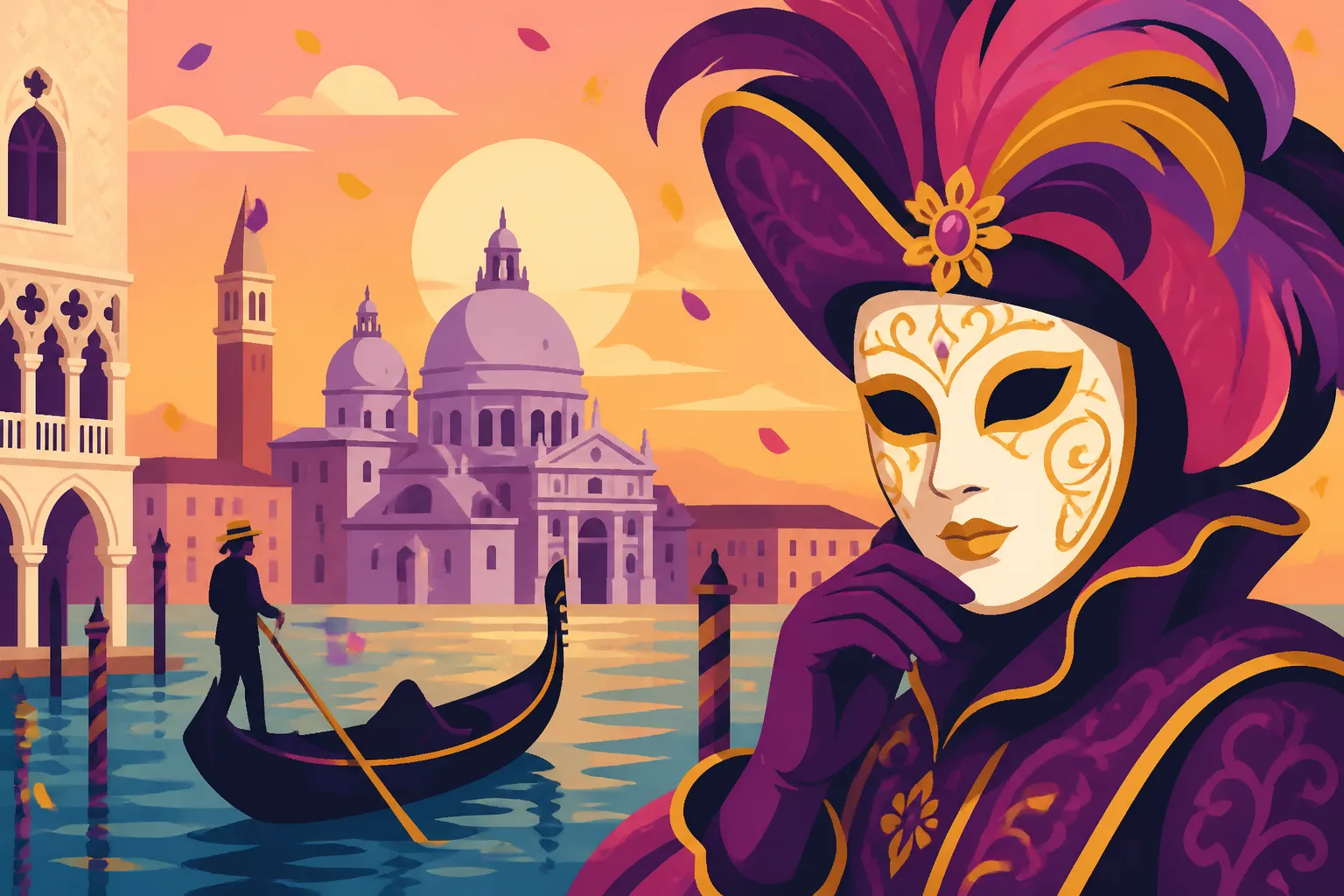
How to Experience Carnival in Venice as a Visitor
Most visitors arrive in Venice during Carnival expecting a scene from a Kubrick film, only to be met with shoulder-to-shoulder crowds, overpriced plastic masks, and a confusing schedule of events that seem to happen everywhere and nowhere at once. This guide cuts through the tourist traps to help you navigate the logistics, secure the best viewpoints, and experience the authentic, historical magic of the Serenissima during its most chaotic season.
Disclosure: This post may contain affiliate links. We may earn a commission at no extra cost to you if you make a purchase through these links. Read full disclosure.
Navigating the Logistics of a Carnival Arrival
Arriving in Venice during the two weeks of Carnival requires a level of tactical planning that usually goes beyond a standard weekend getaway. The city’s infrastructure is pushed to its absolute limit, and if you haven't sorted your transport and lodging months in advance, you’ll find yourself paying five times the normal rate for a room with a view of a brick wall. From an expat's perspective, the first hurdle is simply getting into the city without losing your luggage or your patience in the sea of people at Santa Lucia station.
Mastering the Art of the Entrance
The most common mistake is assuming you can wing it with regional transport. During the peak weekends of Carnival, trains are packed and the Vaporetto (water bus) lines at the station can stretch for an hour. I always recommend using Omio to compare the schedules between Trenitalia and Italo high-speed lines well before you land. If you are coming from Milan or Rome, booking a seat on a High-Speed Trains in Italy: Trenitalia, Italo, Routes, and Savings is essential to ensure you actually have a place to sit. Once you arrive at the station, don't immediately jump on the first Vaporetto you see. If you are staying in the Cannaregio or Santa Croce districts, it is often faster to walk through the backstreets than to wait for a boat that is already at 100% capacity.
Choosing Your Base of Operations
Where you stay will define your Carnival experience. Staying in San Marco puts you at the heart of the costume parades, but you will be trapped in a literal human traffic jam from 10:00 AM until sunset. I tell my friends to look for accommodation in the Castello or Dorsoduro districts using Booking.com, as these areas offer a slight reprieve from the madness while still being within a fifteen-minute walk of the main action. If the prices in the lagoon are truly astronomical, staying on the mainland in Mestre is a viable fallback, provided you are comfortable with the ten-minute train commute. However, remember that the true soul of Carnival reveals itself late at night when the day-trippers leave, something you’ll miss if you’re rushing back to a mainland hotel.
Transport Within the Floating City
Once you are in, the Vaporetto is your primary lifeline, but during Carnival, the standard routes like Line 1 and Line 2 become painfully slow. It is worth checking Getting Around Italian Cities: Metro, Tram, and Buses to understand how the public transport passes work. Buy a multi-day ACTV pass immediately; fumbling for single tickets at the kiosks while a crowd of a thousand people presses behind you is a recipe for a meltdown. Also, be aware that during the major water parades in Cannaregio, certain sections of the Grand Canal may be restricted, so always check the updated "Avvisi" at the boat stops.
The Carnival Calendar: Key Events You Cannot Miss
Venice Carnival isn't just one long party; it’s a series of highly specific historical reenactments and modern spectacles. If you show up on a random Tuesday, you might see some people in costumes, but you’ll miss the grand theatricality that makes this event world-famous. You need to align your visit with the "big" moments, specifically the opening water parade and the "Flight of the Angel."
The Festa Veneziana sull'Acqua
The real opening of the Carnival doesn't happen in a piazza; it happens on the water in the Rio di Cannaregio. This is a two-part event, usually held on the first Saturday and Sunday of the festival. Saturday night features a floating light show with elaborate barges and music, while Sunday morning is the "Pantegana" parade—a more local, satirical boat parade that ends with a massive communal feast of Venetian street food. This is the best time to experience the city's spirit before the heavy commercialism kicks in. To get a good view, you need to arrive at the canal banks at least two hours early. If you prefer a structured experience, you can find guided walking tours that explain the history of these districts through GetYourGuide, which often helps in finding those hidden "fondamenta" where the view is better.
The Volo dell'Angelo (Flight of the Angel)
This is arguably the most iconic moment of Carnival. A young woman, the winner of the previous year’s "Festa delle Marie," is lowered on a zip line from the top of St. Mark’s Campanile into the center of the square. It is breathtaking, but the logistics are a nightmare. St. Mark’s Square is frequently closed off once it reaches capacity. If you aren't in the square by 9:00 AM for a noon flight, you likely won't get in. Expect to be standing for hours in what can be biting February cold. For those who find the crowds too overwhelming, consider booking a small-group tour on GetYourGuide that includes access to a terrace or a nearby building where you can watch from above without the physical crush of the crowd.
The Festa delle Marie
Steeped in 12th-century history, this event commemorates the rescue of twelve Venetian brides who were kidnapped by pirates. Today, it involves a procession of twelve beautiful local women in traditional Renaissance costumes, carried on litters from San Pietro di Castello to San Marco. It is a fantastic opportunity for photographers to capture high-quality historical costumes in motion. To see this comfortably, skip the San Marco finish line and head to the wider Via Garibaldi in Castello. It’s one of the few places where the parade route is wide enough to actually breathe and see the details of the hand-stitched velvet and silk.
| Event Name | Location | Typical Time | Crowd Level | Pro Tip |
|---|---|---|---|---|
| Opening Water Show | Rio di Cannaregio | Saturday Night | High | Stand near the Tre Archi bridge for the best views. |
| Flight of the Angel | St. Mark's Square | Sunday Noon | Extreme | Arrive 3 hours early or book a balcony. |
| Festa delle Marie | Castello to San Marco | Saturday Afternoon | Medium | Watch from Via Garibaldi for better photos. |
| Mascheranda Ball | Various Palazzi | Late Night | Private | Requires a high-priced ticket and full costume. |
| Closing of Carnival | St. Mark's Square | Shrove Tuesday | High | Features the "Svolo del Leon" (Flying Lion flag). |
Dressing the Part: Masks, Costumes, and Etiquette
You don't have to wear a costume to enjoy Carnival, but you will feel like an outsider if you don't at least have a mask. However, there is a massive difference between the 5-Euro plastic masks sold at stalls near the Rialto Bridge and the handcrafted papier-mâché masterpieces created by local artisans.
The Art of the Venetian Mask
If you want a souvenir that won't fall apart before you get home, look for workshops like Ca' Macana or Kartaruga. These are the places that made the masks for films like "Eyes Wide Shut." Wearing an authentic mask changes how you interact with the city; it’s anonymity and theater rolled into one. While you’re exploring the shops, remember that Italian Customs, Etiquette, and Social Life apply even when you are behind a mask. It is polite to ask before taking a close-up photo of a costumed "maschera," though most are there specifically to be seen and will strike a pose for you.
Renting a Period Costume
For the ultimate experience, you can rent a full 18th-century "Settecento" costume. Be warned: this is not cheap. Rental for a single day can cost anywhere from 300 to 600 Euros. Ateliers like Nicolao Atelier or Pietro Longhi offer fittings that make you feel like Venetian nobility. If you go this route, you are effectively a performer for the day. You’ll find that tourists will follow you, asking for photos, and you’ll gain access to certain private parties or "Grand Balls." If you’re not ready to drop that kind of cash, a simple "Tabarro" (a traditional black cape) paired with a white "Bauta" mask is a historically accurate and much more affordable way to participate.
Photographing the Maschere
Venice during Carnival is a photographer's dream, but it requires a bit of social grace. The most elaborate costumes often gather in St. Mark’s Square at sunrise (around 6:30 or 7:00 AM) to take advantage of the soft light and empty space. This is the "secret" hour for serious hobbyists. By 10:00 AM, the square is a mosh pit. If you are looking for tips on how to interact with locals and performers, checking out Italian Greetings and Etiquette: Kissing on the Cheek can give you a baseline for how to approach people respectfully in a country that values "bella figura."
Survival Tips for the Discerning Visitor
Carnival is physically demanding. You will walk miles, stand for hours, and deal with damp, cold weather that can chill you to the bone. To survive with your sanity intact, you need a strategy for food, warmth, and "escape."
Culinary Traditions: Frittelle and Galani
Forget the sit-down tourist menus during Carnival; the real food is at the pastry shops. You must try "Frittelle," the official doughnut of the Venetian Carnival. They only appear during this season. Look for "Frittelle Veneziane," which are filled with pine nuts and raisins, or the ones filled with "crema" (pastry cream) or "zabaione." Another staple is "Galani," thin strips of fried dough covered in powdered sugar. Grab a bag of these and a stand-up espresso—it’s the fastest way to refuel without losing your spot in line. For more on the coffee ritual, see Coffee Culture in Italy: How to Order Like a Local.
Escaping the Crowd
When the pressure of the crowds in San Marco becomes too much, flee to the outer edges. The island of Giudecca remains relatively quiet even during the height of the festivities. Alternatively, take a boat to Burano. While it also has its own smaller Carnival celebrations, the bright colors of the houses and the open space provide a much-needed visual and mental break. If you’re worried about the cost of these side trips, review the Cost of Living in Italy 2026: Budgeting for Expats to see how to manage your daily "vaporetti" and meal expenses.
Dealing with "Acqua Alta"
February is prime time for flooding in Venice. If you hear the sirens wailing, it means the tide is rising. Don't panic; just buy a pair of the disposable over-boots sold at every corner store. They aren't fashionable, but they will keep your feet dry. Better yet, check your hotel’s tide forecast. Most people don't realize that Staying Safe in Italy: Common-Sense Tips for Travelers during Carnival often involves just watching where you step so you don't end up in a canal while trying to take a selfie.
Dining and Tipping Etiquette
Restaurants will be booked out weeks in advance. If you haven't made a reservation using an app or Booking.com's restaurant features, you’ll be eating overpriced pizza slices on the street. If you do snag a table, remember that Tipping in Italy: When, Where, and How Much isn't the same as in the US; a small gesture for exceptional service is appreciated, but not mandatory. Look for "Cicchetti" bars (Venetian tapas) in the San Polo district for a more authentic and cost-effective dining experience.
Finding the Authentic Spirit of the Masquerade
Beyond the staged events and the selfie-sticks, there is a version of Carnival that still belongs to the Venetians. It’s found in the small neighborhood "Sagre" (festivals) and the private home parties where the history of the city is still whispered.
The Hidden Neighborhood Celebrations
Every "Campo" (square) in Venice usually has its own small celebration. In Campo San Giacomo dall’Orio, you might find local musicians playing traditional folk songs or children playing "pentolaccia." These moments are far more evocative of the true spirit of the festival than the main stage in San Marco. If you want to dive deeper into the local lifestyle, it helps to understand Italian Social Customs: Greetings, Gestures, and Personal Space, as Venetians are much more open to conversation once you step away from the primary tourist thoroughfares.
The Magic of the Night
Venice at 2:00 AM during Carnival is hauntingly beautiful. The mist rolls off the canals, and you might see a lone figure in a heavy velvet cloak crossing a bridge in the moonlight. This is when the city feels like the 1700s again. If you have the budget, attending a private ball in a palace like Ca' Zenobio is a transformative experience, but even just walking the streets of the Jewish Ghetto at night offers a sense of the mystery that the festival was originally intended to evoke. To find these evening events, look for listings on GetYourGuide or local Venetian culture blogs.
Reflections on a Veteran Expat’s Experience
Having lived through multiple Carnivals, my best advice is to embrace the chaos but don't let it dictate your schedule. If a certain "Campo" is too full, turn down a side alley. Some of my best memories are of finding a tiny, unnamed bar in Castello, sharing a carafe of wine with a man dressed as a 16th-century plague doctor, and talking about the rising sea levels. That is the real Venice Carnival—the intersection of the absurd, the historical, and the deeply human. Before you set out, make sure you've handled the boring stuff like Obtaining a Codice Fiscale (Italian Tax Code) Step-by-Step if you’re planning a longer stay, or simply ensuring your data is sorted with Mobile Data and eSIMs for Travel in Italy.
Disclaimer
The information provided in this guide is based on current travel trends and historical event schedules in Italy. Local regulations, event dates, and pricing can change without notice. Always verify specific event details on the official Venice Carnival website before making travel arrangements. This guide is for informational purposes and does not constitute legal or professional travel advice.