What Is La Befana and When Is It Celebrated?
You’ve just survived the whirlwind of Christmas and New Year's Eve in Italy, only to walk past a shop window and see an old, soot-stained woman riding a broomstick. If you’re feeling confused by this sudden shift from the elegant decorations of December to a "witch" aesthetic in early January, you aren't alone. This guide explains the deep-rooted tradition of La Befana and helps you navigate the logistical hurdles of the January 6th national holiday.
Disclosure: This post may contain affiliate links. We may earn a commission at no extra cost to you if you make a purchase through these links. Read full disclosure.
The Legend of the Christmas Witch: Who Exactly Is La Befana
If you are new to Italy, the first thing you need to understand is that La Befana is not a Halloween witch. While she wears a shawl, carries a broom, and is often depicted with a hooked nose, she is a figure of benevolence and maternal care. My first year in Rome, I was startled to see these dolls hanging everywhere, but the locals view her with the same affection Americans or Brits view Santa Claus. She is the "Grandmother of Italy," a folk figure whose roots are tied to the very end of the holiday season.
The Biblical Origins and the Three Wise Men
The folklore surrounding La Befana is inextricably linked to the religious Feast of the Epiphany. According to the most popular version of the legend, the Three Wise Men (Magi) were on their way to bring gifts to the infant Jesus. They stopped at the home of an old woman—La Befana—to ask for directions. Being a meticulous housekeeper, she was too busy sweeping her floor to join them. After they left, she had a change of heart, packed a basket of sweets, and set out to find them.
Unfortunately, she never found the Magi or the manger. Since then, she has spent every year flying across Italy on the eve of the Epiphany, searching for the Christ Child. Because she hasn't found Him, she leaves treats for all the children she encounters instead, just in case one of them is the child she seeks. This story is central to Christmas and Epiphany (Befana) in Italy and explains why her arrival is the climax of the winter festivities.
Physical Appearance and Folklore Symbols
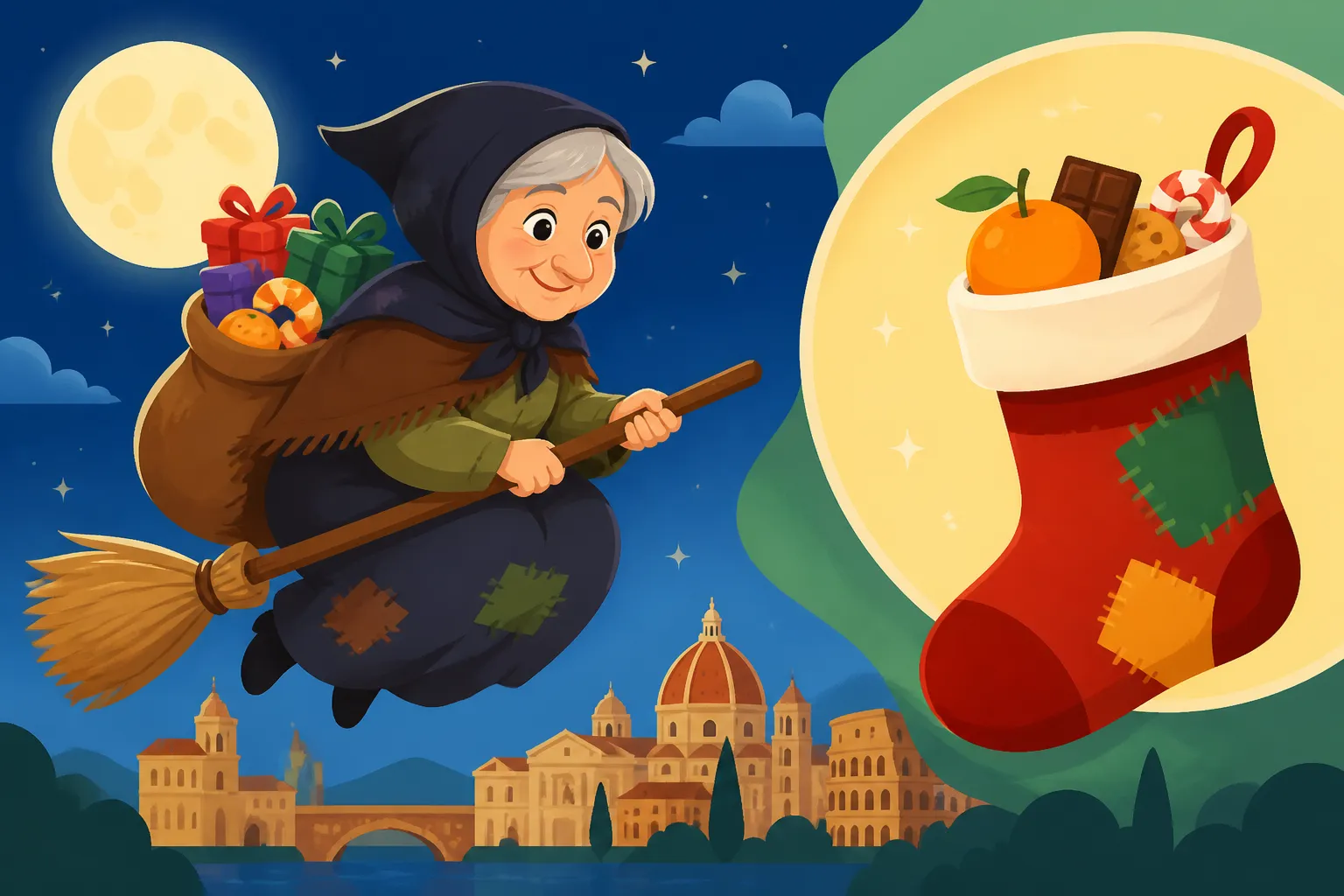
La Befana’s look is quite specific and carries a lot of cultural weight. She is typically dressed in a dark, patched skirt, a heavy apron, and a thick woolen shawl (usually a scialle). She wears a headscarf (the fazzoletto) tied under her chin, which is a classic look for rural Italian grandmothers of a certain era. Her broom isn't just for flying; it represents the sweeping away of the old year and the cleansing of the home for the new beginning.
The soot on her face comes from her method of entry. Much like Babbo Natale (Santa Claus), she enters homes through the chimney. This explains her ragged, slightly charred appearance. When you see her depicted in local markets, you’ll notice she is rarely "scary." Instead, she looks like a hardworking woman of the earth. Understanding these nuances is a key part of appreciating Italian Customs, Etiquette, and Social Life during the winter months.
When and How the Epiphany Is Celebrated Across Italy
The celebration is not a single-day event but a transition that begins on the evening of January 5th and concludes on January 6th. For expats, the most important thing to remember is that January 6th is a strict national holiday. This isn't a "suggested" bank holiday; it is a full-scale shutdown where government offices, schools, and many smaller businesses close their doors. If you are planning to move between cities during this time, I highly recommend using Omio to check for holiday train schedules, as regional lines often run on a reduced "festivo" timetable.
The Night of January 5th: Stockings and Soot
The "magic" happens on the night of January 5th. Italian children hang stockings (called calze) by the fireplace or near a window. Unlike the heavy, velvet stockings common in North America, these are often bright, store-bought stockings sold in supermarkets, pre-filled with chocolates. However, the traditional way involves the Befana filling them with a mix of nuts, fruit, and small candies.
The most famous part of the Befana's haul is the carbone (coal). Traditionally, if a child was naughty, they would receive a lump of coal. Today, this is almost always carbone dolce—a rock-hard, black sugar candy that looks exactly like coal but tastes like pure sugar. It is a staple of Italian Food Culture: Eating Well as a Visitor during January. Every parent I know buys a bit of both—sweets for the "good" parts of the child's year and a little sugar coal for the moments they weren't so perfect.
January 6th: National Holiday and Public Events
When the sun comes up on January 6th, the atmosphere shifts from the private home to the public square. This is the day of the "Epifania." In many towns, someone—often a local firefighter or a brave volunteer—will dress as La Befana and "fly" down from a bell tower or a high building using a zip line, tossing candy to the crowds below. It is a chaotic, loud, and joyful experience that marks the end of the school holidays.
You will often hear the rhyme: "La Befana vien di notte, con le scarpe tutte rotte…" (The Befana comes by night, with her shoes all broken…). It is a song every Italian child knows by heart. Because it is a public holiday, families use the day to have a final large lunch before the "back to school" and "back to work" reality sets in. If you are traveling, this is one of the more complex Festivals, Holidays, and Traditions in Italy to navigate because of the crowds in major piazzas.
| Feature | Babbo Natale (Santa Claus) | La Befana |
|---|---|---|
| Date of Arrival | Night of December 24th | Night of January 5th |
| Main Symbol | Red suit and sleigh | Broom and tattered shawl |
| Traditional Gift | Toys and large presents | Candy, fruit, and "coal" |
| Entry Method | Chimney | Chimney |
| Religious Link | St. Nicholas / Secular | The Epiphany / Three Wise Men |
| Ending of Season | Mid-point of the holidays | The final day of festivities |
Regional Variations: How Different Cities Honor the Tradition
While the general concept of the Befana is national, the way she is celebrated can vary wildly from the mountains of the North to the islands of the South. If you are staying in a major city, I suggest checking Booking.com for centrally located accommodation, as many of these events take place in historic centers where traffic is restricted on holidays.
Venice, Rome, and the Urban Festivities
In Venice, the celebration takes to the water. The Regata delle Befane features older men (traditionally members of the oldest rowing club in the city) dressed as the Befana, racing their boats along the Grand Canal toward the Rialto Bridge. It is a sight you won't find anywhere else in the world. For those in Rome, the epicenter is Piazza Navona. Historically, this square hosted a massive Befana market, and while it has changed in scale over the years, it remains the place to find handmade dolls and traditional sweets.
If you want to dive deeper into the history of these cities during the holiday, you can often find specialized walking tours on GetYourGuide that explain the pagan and Christian overlaps of the holiday. These tours are excellent for expats who want to understand the "why" behind the statues and street performances they see.
Northern vs. Southern Celebrations
In the North, particularly in the Friuli-Venezia Giulia region, the celebration often involves giant bonfires called pignarul. The direction the smoke blows is said to predict the quality of the upcoming harvest. It’s a very ancient, rural tradition that feels much older than the modern Befana. In the South, the religious aspect of the Epiphany—the arrival of the Magi—often takes center stage with elaborate "Presepe Vivente" (living nativities) where the Three Wise Men arrive on horseback.
One of the most famous places to be is Urbania, in the Marche region. They claim to be the official "Home of the Befana" and host a multi-day festival with thousands of stockings hanging from the windows. It’s a bit like visiting the North Pole for Santa fans. If you're planning a trip there, remember to look into Getting Around Italy: Trains, Buses, Flights, and Car Hire well in advance, as small towns can be tricky to reach during national holidays.
Practical Tips for Expats and Travelers During the Epiphany
Navigating Italy on January 6th requires a bit of foresight. Many newcomers make the mistake of thinking it’s a "minor" holiday, but the phrase "L'Epifania tutte le feste porta via" (The Epiphany takes all the holidays away) means it is the last hurrah. Italians take this very seriously, and the transition from celebration back to the mundane work week can be jarring.
Managing Transport and Bookings
If you are moving between cities on the 5th or 6th, expect the trains to be packed. Students are returning to their university towns, and families are heading home after visiting relatives. I always use Omio to book my high-speed seats at least two weeks in advance. If you're traveling locally, be aware that many city buses run on the "festivo" (holiday) schedule, which means fewer runs and potentially long waits at the stop.
Knowing How to Buy Trenitalia and Italo Tickets and Save Money is particularly useful here, as last-minute prices during the Epiphany peak can be surprisingly high. Also, be mindful of the ZTL (Limited Traffic Zones) in city centers; on holidays, these zones are often active, and if you are driving a rental car, you might find yourself with a hefty fine if you aren't careful.
Grocery Shopping and Business Closures
The biggest frustration for expats is often the "Empty Fridge Syndrome." Because January 6th is a public holiday, almost all supermarkets—including the big chains—will either be closed or have very limited morning hours. If you haven't stocked up on essentials by the afternoon of the 5th, you might be out of luck until the 7th. This is one of the most important things to learn when researching What Closes During Italian Holidays and Ferragosto? and other major breaks.
Most restaurants will remain open, as they do a brisk business with the "Befana Lunch" crowd, but reservations are almost mandatory. If you’re a tourist, don’t expect to "wing it" for a nice meal on the 6th. Smaller boutiques and family-run shops will likely be shuttered. However, the 7th usually marks the beginning of the Saldi (the massive winter sales) in many regions, so while the 6th is for tradition, the 7th is for shopping. For more details on the calendar, check out How to Plan Travel Around Italian Public Holidays.
Disclaimer
The information provided in this guide is for educational and informational purposes only. Cultural traditions and public holiday regulations in Italy can vary by region and are subject to change by local or national authorities. While we strive to provide the most current logistical advice, always check local government websites or official transport apps for the most up-to-date schedules and closure notices during the holiday period.