How to Visit the Colosseum, Forum, and Palatine in One Day
Ah, Rome! The Eternal City, where history quite literally bursts out of the ground at every turn. You've landed here, probably starry-eyed, ready to soak in millennia of civilization, only to realize that navigating its ancient core – the Colosseum, the Roman Forum, and Palatine Hill – feels less like a historical stroll and more like preparing for a military campaign. The sheer scale, the crowds, the ticketing maze… it can be utterly overwhelming. But don't you worry, my friend. This guide is here to cut through the confusion and show you exactly how to conquer these iconic sites in one glorious, unforgettable day, without losing your sanity (or your sense of wonder).
Disclosure: This post may contain affiliate links. We may earn a commission at no extra cost to you if you make a purchase through these links. Read full disclosure.
Pre-Trip Essentials: The Unsung Heroes of a Smooth Visit
Let's be real, you can't just waltz up to the Colosseum and expect to get in seamlessly, especially if you're aiming to see all three major sites in one go. Rome demands a little planning, but trust me, a little forethought will save you hours of frustration and potentially missed opportunities. Think of it as your strategic briefing before entering the arena.
Securing Your Tickets: The Golden Rule
This is probably the single most important piece of advice I can give you: buy your tickets in advance. Seriously, engraving this into your brain will prevent so many headaches. The lines for same-day tickets can be astronomical, stretching for what feels like miles, and eating up precious hours of your day. You'll want the "Colosseum, Roman Forum, and Palatine Hill" combined ticket, which is valid for 24 hours from its first use.
There are several ways to get these:
- Official Website: The official Parco Archeologico del Colosseo website is your best bet for direct purchase. Prices are usually the standard rate, and you get direct access. However, these tickets can sell out weeks, if not months, in advance, especially for peak season. Don't be surprised if you check and see nothing available for your desired date – it happens!
- Authorized Resellers: This is where many expats and savvy tourists turn. Platforms like GetYourGuide offer a variety of options, including skip-the-line tickets and guided tours that bundle the three sites. While they might be slightly more expensive, the peace of mind of having a confirmed slot, often with an English-speaking guide who can navigate the entrance process, is priceless. They often release tickets further in advance or have allocations that the official site doesn't. Just make sure the reseller is reputable!
- Rome Pass/OMNIA Pass: If you're planning on visiting a lot of museums and using public transport, a city pass might be a good option. The Rome Pass typically includes free entry to one or two museums/sites (which you can designate as the Colosseum/Forum/Palatine combo) and discounted entry to others, plus public transport. The OMNIA Vatican & Rome Pass combines the Rome Pass benefits with access to Vatican City attractions. Do the math to see if it makes financial sense for your itinerary, but be aware that you often still need to pre-book a time slot for the Colosseum even with these passes. It's not a magic "walk straight in" card for the Colosseum itself.
Remember, the goal here is to avoid the ticket counter altogether. Your time in Rome is precious, and you don't want to spend it queuing under the hot Italian sun.
Timing is Everything: Beat the Crowds
Even with pre-booked tickets, you're not entirely immune to crowds. Rome is one of the most visited cities in the world! To maximize your experience and get those coveted photos without a thousand strangers in the background, consider these timing strategies:
- Early Bird Gets the Worm: Aim to be at the Colosseum right when it opens. Seriously, get there 15-30 minutes before opening. The first hour or two are significantly less crowded, allowing you to wander and soak it all in with a semblance of peace. This is especially true for the Roman Forum and Palatine Hill, which tend to fill up later in the morning.
- Late Afternoon Dash: Alternatively, consider visiting the Roman Forum and Palatine Hill in the late afternoon, about 2-3 hours before closing. Many of the tour groups have moved on, and the light for photography is absolutely gorgeous as the sun dips. However, this means you'd have to tackle the Colosseum mid-day, which is usually the busiest.
- Mid-Week Magic: If your itinerary allows, try to visit on a Tuesday, Wednesday, or Thursday. Weekends and Mondays (when many other museums are closed, pushing people towards the Colosseum) are almost always the busiest.
- Off-Season Advantage: This might be stating the obvious, but visiting in the shoulder seasons (April-May, September-October) or even the winter (November-March, excluding holidays) offers a much more relaxed experience with fewer crowds and often more comfortable temperatures. However, during these times, check opening hours, as they might be shorter.
I vividly remember one blistering August day, waiting in what felt like an endless queue with my kids despite having tickets, just wishing I’d gotten there earlier. Live and learn, right? So, learn from my sweat and tears!
The Grand Tour: Colosseum, Roman Forum, and Palatine Hill Unpacked
Okay, tickets are sorted, you've got your strategy. Now, let's talk about the actual experience of visiting these three interconnected marvels. This is where your planning pays off, allowing you to move efficiently and appreciate each site's unique history.
The Colosseum: Iconic Majesty First
You absolutely must start with the Colosseum. It's the most impactful and generally the busiest of the three, so getting it done early is key. Allocate at least 2-3 hours here, especially if you want to explore thoroughly.
- Entrance: Even with skip-the-line tickets, you'll still go through security. Have your tickets ready, either printed or on your phone. Find the entrance specifically designated for pre-booked tickets or guided tours, which is usually separate from the main ticket line.
- What to See: Once inside, take a moment. Breathe. Look up. This place is immense. Imagine the roar of 50,000 spectators, the gladiators, the wild beasts. Walk the main tiers, soak in the panoramic views of the arena and the surrounding Forum. Consider an audio guide (rentable on-site or via an app) or, better yet, a guided tour from a platform like GetYourGuide for a richer understanding. A good guide truly brings the stones to life, telling you about the engineering marvels, the brutal games, and the social hierarchy that played out within these walls. You can even book tours that include access to the underground (Hypogeum) or the upper tiers, offering different perspectives – just know these are separate, highly sought-after tickets that need to be booked far in advance.
- Accessibility: The Colosseum has elevators and ramps for accessibility to the main levels. However, exploring the full perimeter involves stairs.
- Connecting to the Forum/Palatine: Your combined ticket usually grants you access directly into the Roman Forum/Palatine Hill area from the Colosseum exit, though sometimes you might need to exit and walk a short distance to the main Forum entrance on Via dei Fori Imperiali. Follow the signs, or ask a staff member.
The Roman Forum: Walking Through History's Heart
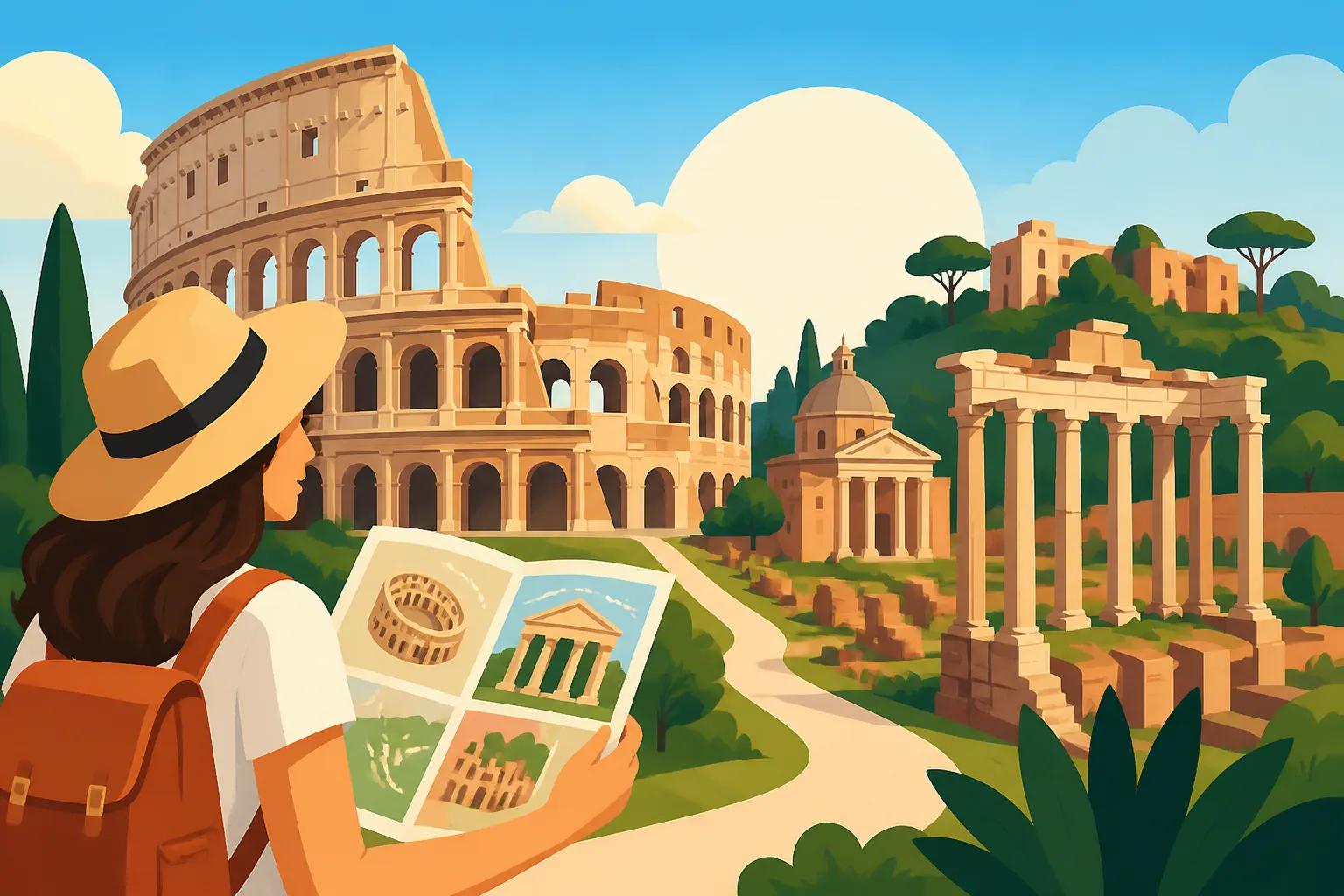
Once you exit the Colosseum, the Roman Forum awaits. This sprawling archaeological park was the center of daily life in ancient Rome: commerce, religious ceremonies, public speeches, and judicial proceedings all happened here. It’s a vast outdoor museum, and it can be a bit overwhelming without context. Allocate at least 2-3 hours.
- Approach: As you enter, you're stepping onto sacred ground. Unlike the Colosseum, which is relatively contained, the Forum is expansive, a labyrinth of ruins, arches, and temples. It’s easy to feel lost, or worse, to walk past incredible historical markers without realizing their significance.
- Key Sights: Don't try to see everything. Pick out a few key points of interest:
- Via Sacra: The main road that ran through the Forum.
- Temple of Antoninus and Faustina: A remarkably preserved temple now incorporated into a church.
- Basilica di Massenzio: The largest building in the Forum, once a massive civil basilica.
- House of the Vestal Virgins: Where the priestesses who tended Rome's sacred flame lived.
- Arch of Titus: Commemorating Titus's victory in Judea.
- Curia Julia: The ancient Senate House.
- Rostra: Where great orators addressed the Roman people.
- Navigation & Understanding: A map is essential. Pick one up at the entrance or use a reliable app. Again, a good guide (whether live or audio) is invaluable here. They can point out details you’d otherwise miss, like the remnants of original marble paving or the faint carvings on a triumphal arch. Without a narrative, it’s just a pile of old stones, however impressive. I remember going on my first trip and feeling utterly clueless until I invested in a decent audio guide, which truly brought it to life.
Palatine Hill: Where Rome Began and Emperors Lived
Connected directly to the Roman Forum, Palatine Hill is often overlooked but provides some of the best views of ancient Rome and is steeped in mythological significance. This is where Romulus supposedly founded Rome, and later, it became the exclusive residential area for emperors and the elite. Budget at least 1.5-2 hours.
- The Ascent: A gentle climb will take you to the top of Palatine Hill. It’s usually less crowded than the Forum itself, offering a bit of respite.
- Key Sights:
- Domus Flavia and Domus Augustana: The opulent palaces of Emperor Domitian and Augustus, respectively. Imagine grand halls, private apartments, and sprawling gardens.
- Farnese Gardens: A beautiful Renaissance garden built over the ruins of Tiberius's palace, offering stunning views.
- Romulus's Hut: The supposed site of Romulus's dwelling.
- Views: From the various viewpoints, you'll get unparalleled panoramic views of the Roman Forum below, the Colosseum, and Circus Maximus. This is where you truly grasp the scale of the ancient city. It’s also a fantastic spot for a quiet moment and some stunning photos, especially with the golden light of the afternoon.
- Exiting: You can exit the Palatine Hill directly onto Via San Gregorio, near the Circus Maximus, or retrace your steps through parts of the Forum.
Essential Tips for a Successful Day
Conquering these three sites in one day is totally doable, but it requires stamina and smart choices. Here are some seasoned expat tips to help you along.
What to Wear and Bring: Comfort is King
This isn't the day for fashion statements, my friends. This is the day for practicality and comfort.
- Comfortable Shoes: You will be walking a lot and on uneven surfaces (cobblestones, ancient dirt paths, broken marble). Leave the stylish sandals or heels at home. Sneakers or sturdy walking shoes are your best friend.
- Hydration: Rome gets hot, especially from late spring to early autumn. Carry a reusable water bottle. There are nasoni (public drinking fountains) throughout the city, including within the Forum/Palatine area, where you can refill for free with fresh, cold water. Dehydration is no joke!
- Sun Protection: A wide-brimmed hat, sunglasses, and high-SPF sunscreen are non-negotiable. There's very little shade in the Forum or Palatine Hill.
- Small Backpack: Keep your hands free. A small backpack for your water, snacks, camera, and other essentials is ideal.
- Snacks: While there are vendors, they can be pricey. Pack a few energy bars or some fruit to keep you going between meals. You’ll thank yourself when you’re flagging in the middle of the Forum.
- Power Bank: Your phone will be working overtime with maps, photos, and possibly audio guides. A portable power bank is a lifesaver.
- Light Layers: Even on a warm day, a light scarf or jacket can be useful in the shade or for entering a cool church nearby.
Guided Tours vs. Self-Exploration: Which is Right for You?
This is a big decision, and it depends entirely on your travel style and budget.
- Guided Tours (Highly Recommended for First-Timers): If this is your first time in Rome, or if you love history but aren't an expert, a guided tour is absolutely worth the investment. Knowledgeable guides (often booked through sites like GetYourGuide) can contextualize the ruins, share fascinating anecdotes, and navigate you efficiently through the sprawling sites. They handle the logistics, often including skip-the-line access, allowing you to focus on the history. This is particularly true for the Roman Forum, which is otherwise just a field of ruins without an explanation. Look for tours specifically designed for the "Colosseum, Roman Forum, and Palatine Hill" to cover all three.
- Self-Exploration with Audio Guides: If you prefer to go at your own pace but still want rich information, consider downloading a reputable audio guide app for your phone (or renting one at the Colosseum). Many offer detailed explanations of key points of interest. Just be prepared to do a bit of map-reading yourself. This approach gives you flexibility and is often more budget-friendly.
- Pure Self-Exploration (for the Brave/Knowledgeable): If you're an avid history buff with extensive pre-reading or someone who simply enjoys the ambiance without needing every detail, then just a map might suffice. But for most, this risks feeling overwhelmed and missing critical historical context.
Consider how you learn best and what would enhance your experience the most. For complex sites like these, I usually lean towards a guided tour or at least a very good audio guide. Otherwise, it's easy to feel like you're just looking at old stones without understanding their story.
Breaking Up the Day: Food and Rest
Even the most enthusiastic history buff needs to refuel. Tackling these three sites is physically demanding.
- Lunch Strategy: There are no proper restaurants within the sites. You'll find snack bars or small cafes near the Colosseum, but they are often overpriced and basic. I recommend eating a substantial breakfast, having snacks on hand, and planning a late lunch after you've completed all three sites.
- Nearby Restaurants: Once you're done, venture a little further from the immediate Colosseum area to find better food options. The Monti neighborhood, just a short walk up from the Colosseum, has charming trattorias and pizzerias that cater more to locals. If you're heading towards Piazza Venezia, there are more tourist-focused eateries but also some hidden gems. This is a great time to refuel and reflect on what you've seen.
- Strategic Breaks: Don't underestimate the need for breaks. Find a bench on Palatine Hill with a view, or a shaded spot in the Forum, and simply sit for 15-20 minutes. Drink water, eat a snack, and let your brain process the sheer amount of history you’re absorbing.
- Accommodation: For convenience, consider staying in a hotel that is well-connected to the Colosseum area. Booking.com offers a wide range of options, from budget hostels to luxury hotels, allowing you to find something that fits your style and budget, making early morning starts less painful. Being able to walk to the sites or take a very short metro ride (Colosseo station is right there) can make a huge difference in your energy levels.
Here's a quick comparison of popular ticket options:
| Ticket Type | Best For | Price Range (Approx.) | Key Features | Booking Method |
|---|---|---|---|---|
| Standard 24-hr Combo Ticket | Budget-conscious, self-guided explorers | €16 (plus booking fee) | Access to Colosseum, Forum, Palatine (one entry each site) | Official website |
| Skip-the-Line Entry + Audio Guide | Independent explorers wanting efficiency | €25-€35 | Guaranteed entry, audio explanations, bypass ticket lines | Reseller sites (e.g., GetYourGuide) |
| Small Group Guided Tour | Those seeking in-depth history, context | €50-€75+ | Expert guide, skip-the-line, cohesive narrative across all sites | Reseller sites (e.g., GetYourGuide) |
| Colosseum Underground/Arena Tour | Enthusiasts wanting exclusive access | €90-€150+ | Access to restricted areas (Hypogeum/Arena Floor), guided | Official site, select resellers |
| Rome Pass / OMNIA Pass | Extensive sightseeing, public transport use | €35-€129 | Free entry to 1-2 sites (incl. Colosseum), discounts, transport | Official Pass websites |
After the Ancients: Evening in Rome
You've done it! You've traversed the heart of ancient Rome. Now what? Your evening should be about relaxation, a good meal, and perhaps soaking in a different side of the city.
- Passeggiata: Take a leisurely evening stroll. Rome truly comes alive at night, and many of the ancient monuments are beautifully illuminated. A walk around the Colosseum, Forum, and even up to the Campidoglio designed by Michelangelo, offers entirely new perspectives in the evening light.
- Dinner: Treat yourself to a proper Roman meal. Explore areas like Trastevere for a lively atmosphere and traditional trattorias, or head back towards Monti for a more local vibe. Remember, Italians eat dinner late, usually starting after 8 PM.
- Public Transport: Rome's public transport system, while sometimes a bit chaotic, is your friend after a long day of walking. The Metro Line B has a "Colosseo" stop right outside the Colosseum, connecting you to Termini station and other key areas. Buses are also plentiful. For planning your routes, Google Maps is usually reliable. And if you’re venturing further afield by train, perhaps a day trip from Rome to Florence or Naples another day, remember you can easily book tickets through platforms like Omio. Knowing how to Get Around Italian Cities: Metro, Tram, and Buses will serve you well.
- Consider Your Next Adventure: You've just scratched the surface of Rome's incredible history. Perhaps tomorrow you'll want to explore the Renaissance Art in Italy: Where to See the Masterpieces at the Borghese Gallery or the Vatican Museums, or perhaps delve into Ancient Rome: Sites and Ruins to Visit beyond the core three. Or maybe you're done with ancient history for a bit and want to experience the Italian Food Culture: Eating Well as a Visitor in a food tour. The options are endless!
Visiting the Colosseum, Roman Forum, and Palatine Hill in one day is a truly monumental undertaking, but with proper planning, it’s not only possible but incredibly rewarding. You’ll leave with a deep appreciation for the ingenuity and grandeur of the Roman Empire, and a sense of accomplishment that you truly walked in the footsteps of emperors. Enjoy every single moment of it!
Disclaimer
The information provided in this guide is intended for general informational purposes only and may not always be the most current or complete. Entry requirements, ticket prices, opening hours, and regulations for historical sites in Italy can change frequently. It is highly recommended to check the official websites of the Parco Archeologico del Colosseo, your chosen ticket reseller, and local tourism authorities for the most up-to-date information before planning your visit. While we strive to provide accurate and helpful advice, we cannot be held responsible for any inaccuracies or changes that may impact your travel experience. Always verify details with official sources.