Italy’s Regions: A Traveler’s Overview
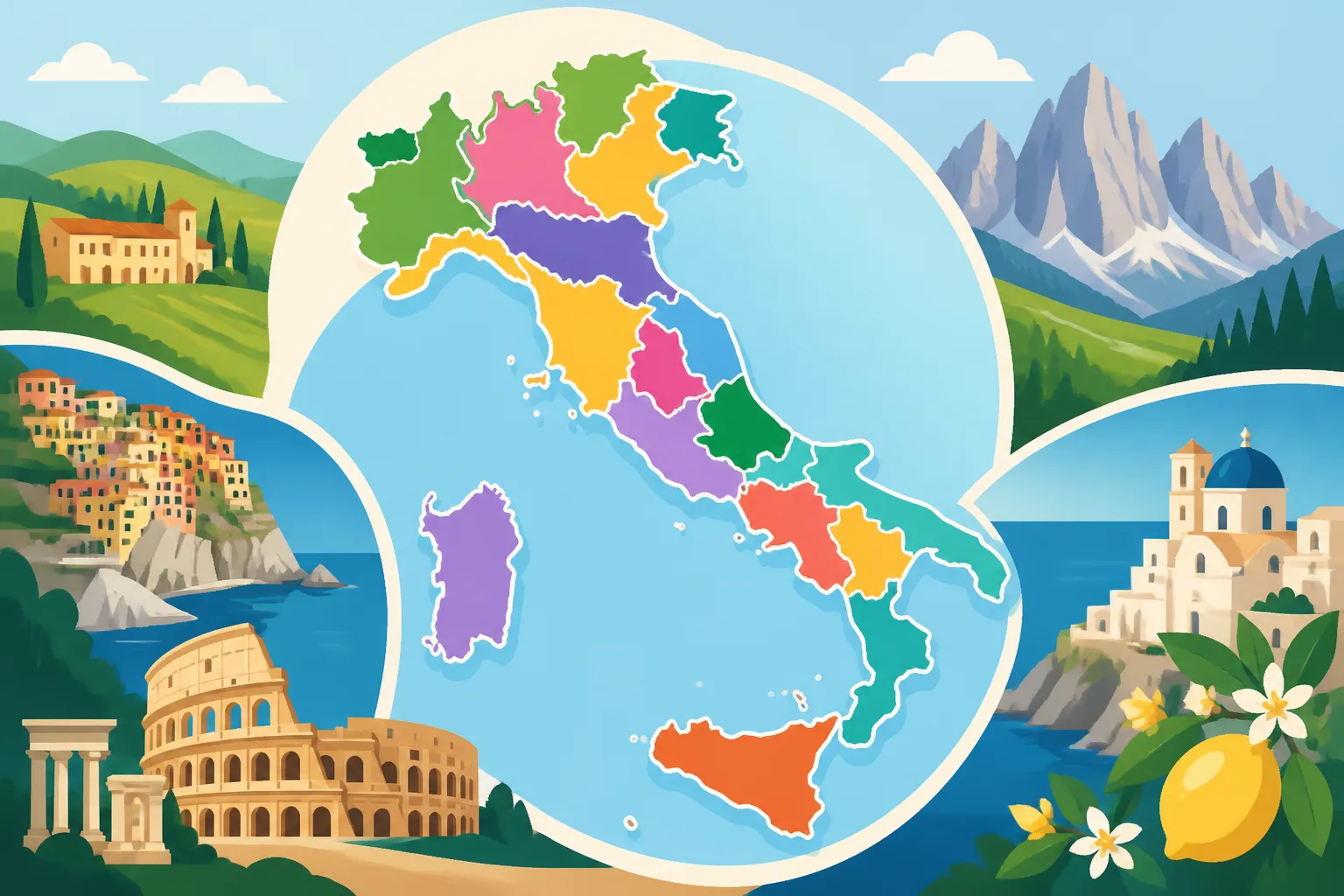
Trying to navigate Italy’s twenty distinct regions for the first time feels like being handed a thousand-piece puzzle without the box lid to show you the final picture. I remember standing in a chaotic train station a decade ago, completely overwhelmed by the sheer diversity of dialects, climates, and administrative quirks that define this peninsula. This guide simplifies that complexity, helping you master the regional nuances of Italy.
Disclosure: This post may contain affiliate links. We may earn a commission at no extra cost to you if you make a purchase through these links. Read full disclosure.
Northern Italy: The Alpine Heartland and Industrial Elegance
The North is often where expats first land, drawn by the robust economy and the proximity to the rest of Europe. But beyond the skyscrapers of Milan and the factories of Turin lies a landscape defined by dramatic mountain ranges and sophisticated lakeside retreats. Life here moves faster than in the South, but it retains a refined sense of "bella figura" that dictates everything from how you dress for a walk in the park to how you order your morning espresso.
Lombardy: More Than Just Milanese Fashion
Lombardy is the engine room of Italy, a region that feels undeniably modern while clutching tightly to its historical roots. Milan, the capital, is a metropolis that requires a bit of time to love. When I first moved here, I was struck by how different it felt from the postcard version of Italy. It is a city of hidden courtyards and world-class museums, but the real magic of Lombardy often lies an hour’s train ride away.
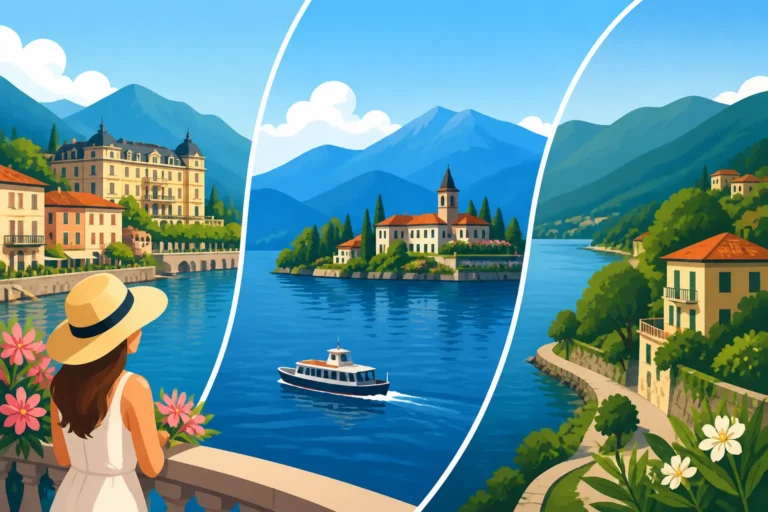
The Great Lakes—Como, Garda, and Maggiore—offer a lifestyle that feels suspended in time. If you are planning a trip to these northern waters, I highly recommend using Omio to compare train schedules from Milano Centrale, as regional connections can be surprisingly frequent. Staying in a small town like Varenna or Menaggio gives you a glimpse into a quieter, more aristocratic version of Italian life. You can find incredible boutique hotels on Booking.com that overlook the water, providing a sanctuary away from the city's frantic pace.
Culturally, Lombardy is a powerhouse. From the Duomo to the Santa Maria delle Grazie, the art is world-tier. You can use GetYourGuide to secure tickets for the Last Supper, which is notoriously difficult to book last minute. For those living here, Lombardy offers the most reliable infrastructure in the country, making it an ideal base for Milan City Guide: Fashion, Art, and the Duomo.
Veneto: Beyond the Canals of Venice
Veneto is a region of incredible contrasts, spanning from the floating palaces of Venice to the jagged peaks of the Dolomites. Most travelers spend their entire time in Venice, which is a mistake I made during my first year. While the Serenissima is incomparable, the mainland cities like Verona, Padua, and Vicenza offer a much more authentic "Veneto" experience without the crushing weight of over-tourism.
Verona, in particular, is a gem for those who love Roman history and opera. The Arena di Verona hosts world-famous performances every summer, and the city’s marble-paved streets feel like an outdoor museum. When traveling between Venice and Verona, High-Speed Trains in Italy: Trenitalia, Italo, Routes, and Savings are your best bet for efficiency, as they cut travel time down to just over an hour.
The Dolomites, located in the northern part of the region, provide some of the best hiking and skiing in the world. This area feels culturally distinct, with Ladin and German influences reflected in the local architecture and cuisine. If you are heading into the mountains, use Booking.com to find mountain "rifugi" or chalets in Cortina d'Ampezzo. For guided tours of the hidden corners of the Venetian lagoon or a historical walk through Verona, GetYourGuide has some excellent local-led options that provide depth beyond the standard tourist script.
Piedmont: Truffles, Wine, and the Fiat Legacy
Piedmont, or Piemonte, literally means "at the foot of the mountains." This region is the birthplace of the Italian unification and remains a bastion of elegance and gastronomic excellence. Turin, the capital, is often called "Little Paris" because of its wide boulevards and historic cafes. I spent many rainy afternoons in Turin’s wood-paneled cafes, sipping Bicerin—a local drink of chocolate, coffee, and cream—and realized that Piedmont is perhaps Italy’s most underrated region.
The Langhe and Monferrato wine districts are the heart of Piedmont’s culinary identity. This is the land of Barolo and Barbaresco wines, and in the autumn, the hills are blanketed in fog, signaling the start of the white truffle season. If you are a foodie, this region is non-negotiable. You can find wonderful agriturismi on Booking.com that allow you to stay right in the middle of a vineyard.
Logistically, Piedmont is well-connected. You can use Omio to book high-speed trains from Turin to Milan or even directly to Paris. For those who want to dive deep into the truffle hunting culture or tour the historic royal palaces around Turin, GetYourGuide offers curated experiences that often include private tastings. Piedmont represents a slower, more dignified pace of life that focuses on quality over quantity.
Central Italy: The Renaissance Soul and Rolling Hills
Central Italy is what most people visualize when they think of the "Italian Dream." It is a land of cypress-lined roads, medieval hilltop towns, and some of the most influential art in human history. The pace of life here is governed by the seasons and the land, creating a rhythm that is both soothing and profoundly culturally rich.
Tuscany: The Art of Living Slowly
Tuscany needs little introduction, but it does require careful navigation to avoid the "Disney-fied" version of itself. Florence is the undisputed heart of the region, but the true soul of Tuscany is found in the Val d'Orcia or the Maremma. When I lived in a small village near Siena, I learned that the best way to see Tuscany is by getting lost on backroads where the GPS signal occasionally fails.
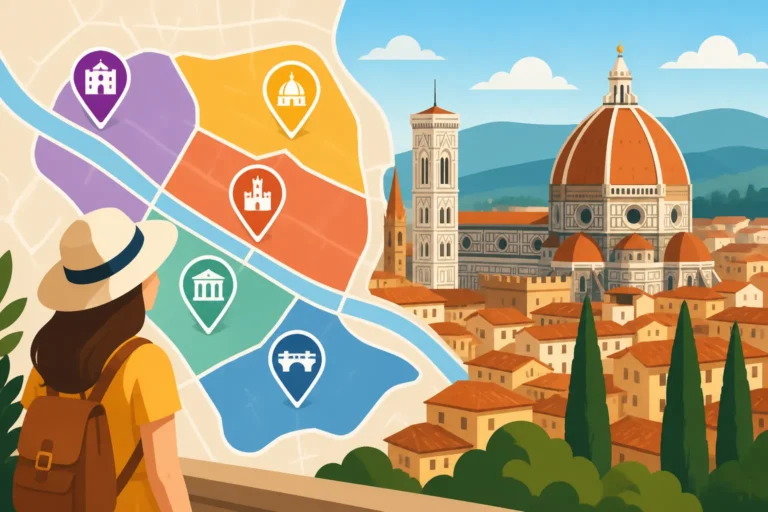
Florence can be overwhelming, so it is essential to plan ahead. Use GetYourGuide to bypass the massive lines for the Uffizi Gallery or the Accademia. Once you’ve had your fill of the Renaissance, head south. Cities like Siena, Lucca, and Cortona offer a more grounded experience. Finding a renovated farmhouse on Booking.com in the Tuscan countryside is the ultimate way to decompress.
Driving in Tuscany can be a challenge due to the ZTL (Limited Traffic Zones) in almost every town. I’ve received my fair share of fines, so believe me when I say you should park outside the city walls. For those who prefer public transport, Regional Trains in Italy: How to Use Them and Save can get you between the major towns like Pisa, Lucca, and Florence quite cheaply. For a deeper dive into the region's diverse sub-zones, check out Tuscany for Travelers: Cities, Hills, and Coast.
Lazio: The Eternal Pull of Rome
Lazio is a region dominated by its capital, but it would be a mistake to ignore the surrounding provinces. Rome is a glorious, chaotic mess of history and modern life. It is a city where you can see a Roman temple next to a 1950s apartment block, and that layer-cake history is what makes it so magnetic. Living in Rome taught me patience—the buses might not arrive on time, but the sunset over the Tiber always does.
Beyond Rome, Lazio offers the hauntingly beautiful Etruscan ruins of Cerveteri and the volcanic lakes of Bracciano and Bolsena. If you want a break from the Roman heat in the summer, the Castelli Romani—a group of towns in the Alban Hills—offer cooler air and fantastic white wine. You can use Omio to find regional train tickets from Roma Termini to these outlying areas for just a few euros.
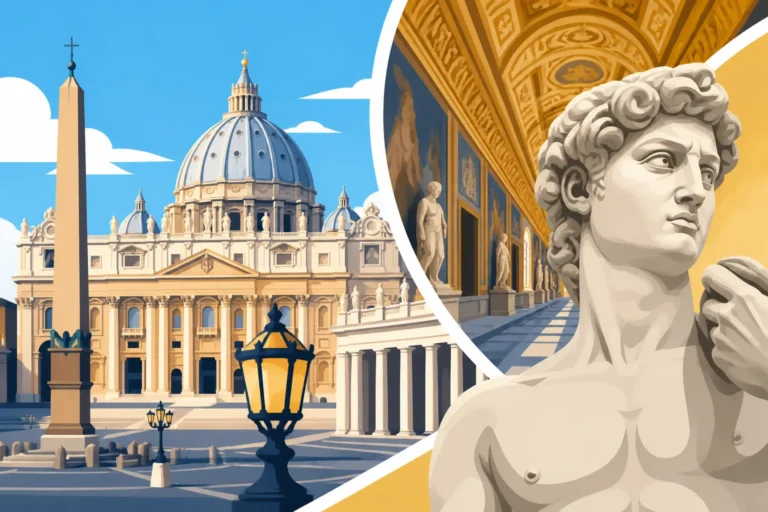
When visiting Rome, choosing the right neighborhood is vital for your sanity. Booking.com has a wide range of apartments in Trastevere for a bohemian vibe or near Monti for something more trendy. To make sense of the vastness of the Vatican or the Forum, GetYourGuide provides expert-led tours that can help contextualize 2,000 years of history. Rome is a city that demands your energy, so make sure to balance your time with the quieter corners of Rome for First-Time Visitors: Neighborhoods and Highlights.
Emilia-Romagna: Italy's Food Heartland
If you ask an Italian where the best food in the country is, they will likely point you toward Emilia-Romagna. This region is the home of Parmigiano Reggiano, Prosciutto di Parma, and traditional balsamic vinegar from Modena. Bologna, the capital, is known as "La Grassa" (The Fat) for good reason. It is a city of porticoes and students, with a vibrant, welcoming atmosphere that feels less like a museum and more like a living room.
Emilia-Romagna is also "Motor Valley," the birthplace of Ferrari, Lamborghini, and Maserati. For car enthusiasts, a visit to the museums in Maranello or Sant'Agata Bolognese is essential. You can easily book these factory tours through GetYourGuide. The region is also incredibly flat, making it perfect for cycling through the countryside between food stops.
Connecting through the region is a breeze because it sits on the main rail artery of Italy. You can use Omio to hop between Parma, Modena, Bologna, and the coastal city of Rimini. If you’re staying in Bologna, I suggest finding a place in the historic center via Booking.com to be within walking distance of the famous "Quadrilatero" market. For more culinary inspiration, refer to Emilia-Romagna: Italy's Food Heartland.
Southern Italy: Sun-Drenched Coasts and Ancient Ruins
The South, or the Mezzogiorno, is where the rules start to feel more like suggestions. It is a region of intense sun, ancient history, and a hospitality that can feel almost overwhelming. This is Italy at its most raw and passionate, where the coffee is stronger, the voices are louder, and the traditions are deeply ingrained.
Campania: Pizza, Pompeii, and Positano
Campania is home to Naples, the Amalfi Coast, and some of the most significant archaeological sites on earth. Naples is a city of contradictions—gritty, beautiful, and fiercely proud. I’ll never forget my first Neapolitan pizza; it ruined all other pizzas for me forever. The city is a sensory overload, but it is the gateway to the stunning islands of Capri, Ischia, and Procida.
The Amalfi Coast is the region’s glamorous face, with towns like Positano and Amalfi clinging to the cliffs. It is expensive and crowded, but undeniably beautiful. To navigate this area without losing your mind, use GetYourGuide to book boat tours, which are often more pleasant than braving the winding, congested coastal roads. Finding accommodation can be tricky; Booking.com often has better luck with smaller B&Bs in less famous towns like Minori or Praiano.
For history buffs, Pompeii and Herculaneum are essential. These sites are massive, so a guided tour is highly recommended to see the highlights. You can use Omio to check the Circumvesuviana train times from Naples, though be prepared for a very "local" experience on those trains. For a full breakdown of this vibrant region, see Campania: Naples, the Amalfi Coast, and the Bay.
Puglia: The Land of Trulli and Olive Groves
Puglia, the "heel" of the boot, has seen a massive surge in popularity lately, but it still maintains its rustic charm. This is a land of ancient olive trees, white-washed towns, and the unique "trulli"—stone huts with conical roofs found in Alberobello. The coastline here is some of the best in Italy, especially in the Salento region south of Lecce.
Lecce is often called the "Florence of the South" due to its incredible Baroque architecture. Unlike the North, life in Puglia revolves around the "pausa"—the long afternoon break where everything closes. You have to adapt to this rhythm or you’ll find yourself hungry and alone on a beautiful piazza at 3:00 PM. I learned this the hard way during my first road trip through the region.
To get around Puglia, renting a car is almost mandatory as public transport can be sparse. However, you can use Omio to get to major hubs like Bari or Brindisi. Once there, find a "masseria" (a fortified farmhouse) on Booking.com for a truly local stay. For specialized tours of the Sassi di Matera (which is technically in Basilicata but often visited from Puglia) or olive oil tastings, GetYourGuide is a great resource. Dive deeper into the details here: Puglia: Trulli, Beaches, and Whitewashed Towns.
Calabria: The Rugged Toe of the Boot
Calabria is one of Italy’s least explored regions by international tourists, which is exactly why you should go. It is a land of rugged mountains and pristine coastlines like the "Costa degli Dei" (Coast of the Gods). Tropea, perched on a cliff above a turquoise sea, is one of the most stunning towns in the country.
The food in Calabria is famous for its heat, thanks to the Peperoncino (chili pepper). If you like spicy food, you must try 'nduja, a spicy, spreadable pork sausage. Life here is simple and deeply tied to the sea and the mountains. It is a place where you can still find beaches that are empty even in July.
Logistically, Calabria is a bit of a trek. You can fly into Lamezia Terme or take a long-haul train. Use Omio to compare the prices of the Frecciarossa (high-speed) versus the Intercity trains, as the price difference can be significant. For accommodation in Tropea or Scilla, Booking.com offers everything from simple seaside apartments to luxury villas. Calabria is for the traveler who wants to see Italy without the filter.
The Italian Islands: Sicily and Sardinia
Italy’s two largest islands are almost like separate countries. They have their own languages, their own culinary traditions, and a fierce sense of identity that sets them apart from the mainland.
Sicily: A Cultural Crossroads in the Mediterranean
Sicily is a layer-cake of civilizations—Greeks, Romans, Arabs, Normans, and Spaniards have all left their mark here. This is evident in everything from the architecture of the Palermo Cathedral to the couscous found on menus in San Vito Lo Capo. I find Sicily to be the most intellectually stimulating region of Italy; every corner tells a story of conquest and creativity.
The Valley of the Temples in Agrigento and the Roman mosaics at Villa Romana del Casale are world-class historical sites. For those who prefer nature, Mount Etna offers a lunar landscape that is perfect for hiking. You can use GetYourGuide to find guided volcano treks that are safe and informative.
Sicily is large, and getting around takes time. The trains are notoriously slow, so many expats and travelers prefer to use buses or rent a car. You can use Omio to book long-distance buses which are often more reliable than the rail network here. For stays in Syracuse’s Ortigia island or the hilltop town of Taormina, Booking.com has the best selection. Explore more in our guide: Sicily for Travelers: Cities, Coast, and Volcanoes.
Sardinia: Wild Landscapes and Emerald Waters
Sardinia is a world unto itself. While it is famous for the glitzy Costa Smeralda, where the world’s elite dock their yachts, the interior of the island is rugged, mountainous, and home to one of the world’s "Blue Zones," where people live exceptionally long lives. The landscape is dotted with "nuraghi"—ancient stone fortresses that date back to the Bronze Age.
The beaches in Sardinia, particularly in the Gulf of Orosei or the Maddalena Archipelago, look more like the Caribbean than the Mediterranean. The water is startlingly clear. If you want to explore the hidden coves, GetYourGuide offers boat excursions that are the only way to reach some of the most beautiful beaches.
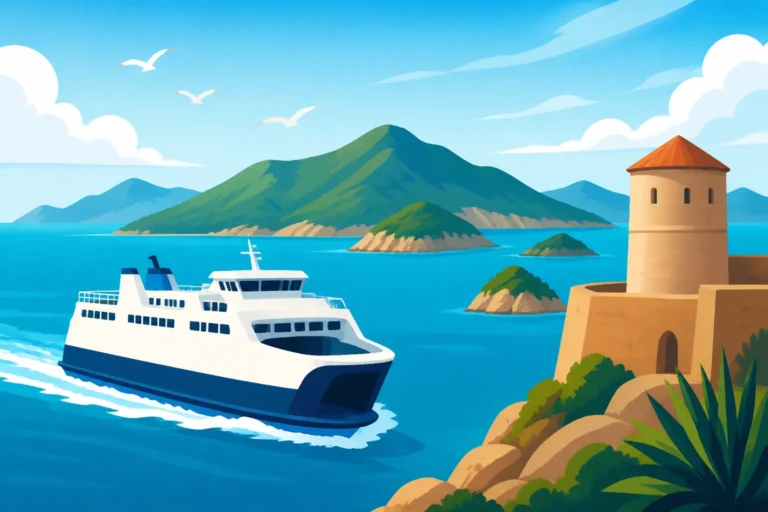
Traveling to Sardinia usually involves a flight to Olbia, Alghero, or Cagliari, or a ferry from the mainland. Use Omio to compare ferry prices from Civitavecchia or Livorno. For accommodation, Sardinia offers everything from high-end resorts to "stazzi" (traditional rural houses) on Booking.com. It is an island for those who love the outdoors and raw, natural beauty. See more at Sardinia for Travelers: Beaches and the Interior.
Lesser-Known Gems: Abruzzo, Molise, and Basilicata
If you want to escape the crowds entirely, these three regions offer a glimpse into an Italy that remains largely untouched by mass tourism. They are rugged, traditional, and immensely rewarding for the curious traveler.
Abruzzo and Molise: The Rugged Frontier
Abruzzo is known as the "Greenest Region in Europe" because one-third of its territory is set aside as national parks. It is a paradise for hikers and wildlife lovers, where you can still find Apennine wolves and Marsican brown bears. The hilltop villages like Santo Stefano di Sessanio feel like they have been frozen in the 15th century.
Molise is Italy’s newest and smallest region, and there is a running joke in Italy that "Molise doesn't exist" because it is so quiet. But for the traveler who wants absolute peace, it is a treasure trove of Roman ruins like Saepinum and ancient Samnite trails. You won’t find many high-speed trains here, so use Omio to find the regional bus networks that connect these mountain towns.
Basilicata: Matera’s Stone Secrets
Basilicata is home to Matera, the city of the "Sassi"—ancient cave dwellings carved into the limestone. Matera was once considered the "shame of Italy" due to its poverty, but it is now a UNESCO World Heritage site and a European Capital of Culture. Staying in a cave hotel booked through Booking.com is one of the most unique experiences you can have in Italy.
The region also offers the "Dolomiti Lucane," where you can do the "Flight of the Angel"—a high-speed zip line between two mountain peaks. This is a region for the adventurous. You can find these experiences and more on GetYourGuide. Basilicata is a reminder that Italy still has secrets left to discover.
Regional Comparison Table
| Region | Vibe | Signature Dish | Best For |
|---|---|---|---|
| Lombardy | Fast-paced, Chic | Risotto alla Milanese | Business, Fashion, Lakes |
| Tuscany | Artistic, Pastoral | Bistecca alla Fiorentina | Art, Wine, Countryside |
| Campania | Chaotic, Soulful | Neapolitan Pizza | History, Coastline, Food |
| Emilia-Romagna | Welcoming, Culinary | Tagliatelle al Ragù | Foodies, Cars, Bicycles |
| Sicily | Ancient, Diverse | Arancini / Cannoli | Culture, History, Volcanoes |
| Puglia | Rustic, Sunny | Orecchiette alle Cime di Rapa | Beaches, Slow Living |
| Veneto | Romantic, Varied | Risotto al Nero di Seppia | Romance, Architecture, Mountains |
Practical Regional Logistics: Navigating the Map
Understanding the regional layout is only half the battle; you also need to know how to move between them without losing your sanity. Italy’s infrastructure varies wildly from the North to the South. In the North, you can rely on a dense network of trains. In the South, you will need to become familiar with the bus schedules and the art of the Italian road trip.
Transportation Networks: Trains vs. Cars
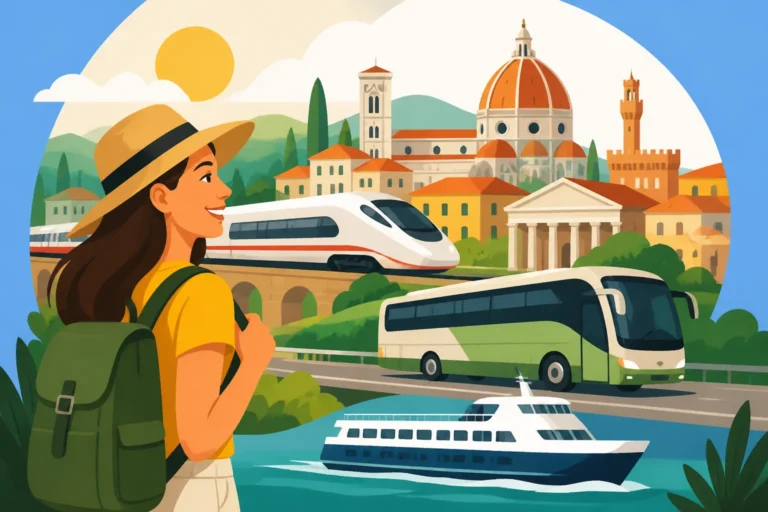
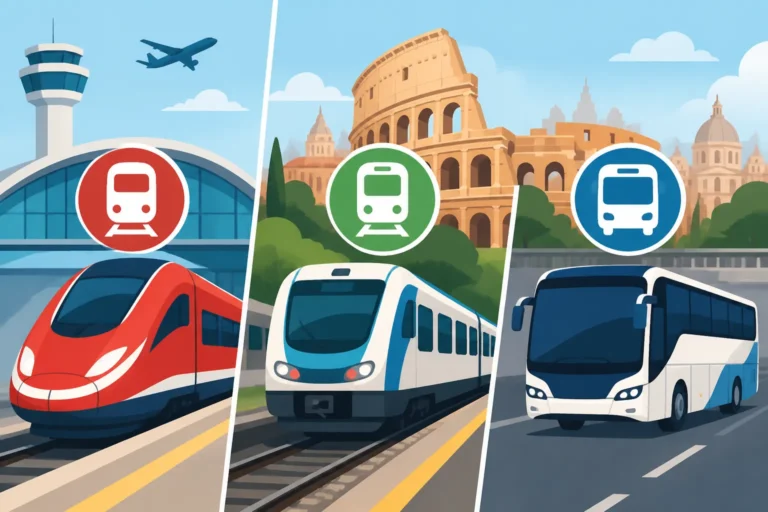
The high-speed rail network connects the major cities—Turin, Milan, Venice, Bologna, Florence, Rome, and Naples—with incredible efficiency. For these routes, booking in advance on Omio is essential to get the best prices. However, if you want to explore the "borghi" (historic villages) of Umbria or the mountains of Abruzzo, a car is non-negotiable.
When renting a car, always check for the ZTL signs. These are white circles with a red border that indicate restricted areas. Fines are automated and will find you even after you’ve returned home. For those who don’t want to drive, GetYourGuide often offers day trips from major cities that include transportation to these harder-to-reach spots.
Regional Seasons: When to Visit Where
Timing is everything in Italy. The North is beautiful in the late spring and early autumn. The South can be punishingly hot in July and August—I’ve seen temperatures in Sicily hit 45°C (113°F). If you are heading to the islands or the Southern coast, June and September are the sweet spots.
The mountains—the Alps and the Dolomites—are dual-season destinations, offering world-class skiing in the winter and emerald-green hiking trails in the summer. Conversely, many coastal resorts in places like Puglia or Calabria completely shut down from November to March. Always check Booking.com for seasonal availability before you plan a mid-winter beach getaway that might end up being a ghost town tour.
Disclaimer
The information provided in this guide is for informational purposes only. While every effort has been made to ensure accuracy, regional regulations, transportation schedules, and travel conditions in Italy can change without notice. Always verify local laws, visa requirements, and safety guidelines before traveling. The author and publisher are not responsible for any inconveniences or financial losses incurred while following this advice.