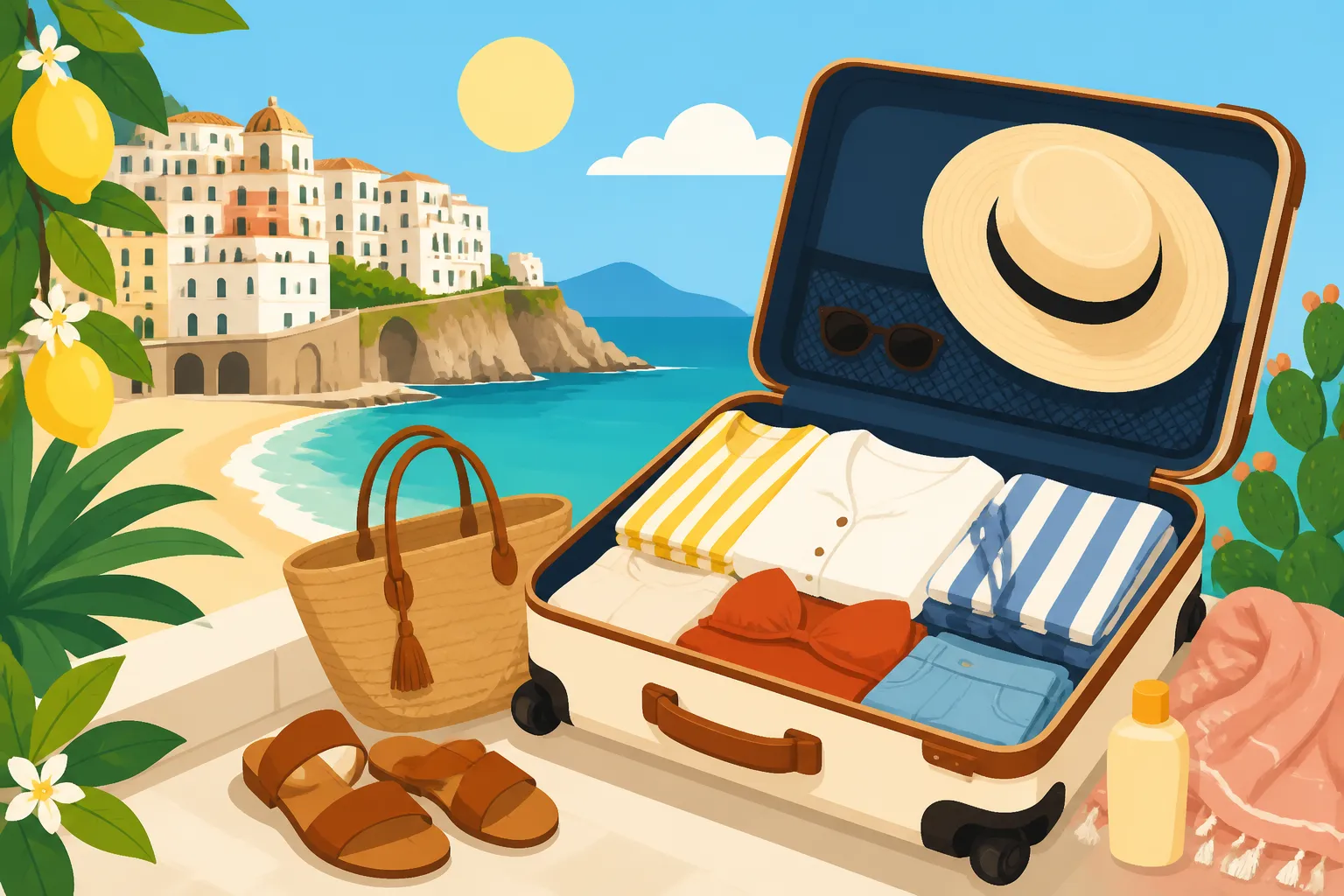
What to Pack for a Beach Trip in Southern Italy
Packing for a trip to Southern Italy often results in a frantic tug-of-war between wanting to look like a cinematic icon and the brutal reality of 40-degree Celsius heat and jagged limestone cliffs. Many travelers arrive with suitcases full of heavy denim and stiletto heels, only to realize that navigating the vertical streets of Positano or the rocky coves of Puglia requires a much more strategic approach. This guide provides an exhaustive blueprint for what to bring so you can blend in with the locals, stay comfortable in the scorching Mediterranean sun, and avoid the common pitfalls of under-preparing for the rugged Southern terrain.
Disclosure: This post may contain affiliate links. We may earn a commission at no extra cost to you if you make a purchase through these links. Read full disclosure.
The Reality of the Southern Italian Climate and Terrain
When we talk about the Mezzogiorno—the southern regions of Italy—we are talking about a land where the sun is not just a weather condition, but a primary character in your daily life. From June through September, the humidity can be thick, and the sun is intense enough to melt the pavement in cities like Palermo or Bari. If you are planning your transit between these sun-drenched hubs, using a platform like Omio can help you coordinate regional trains and buses that offer much-needed air conditioning during the peak heat of the afternoon.
The terrain is equally demanding. Unlike the wide, flat sandy stretches you might find in parts of the Adriatic, much of the South is defined by rocky coastlines. If you are heading to the Amalfi Coast or the Cilento, you will likely be spending time on pebbled beaches or concrete platforms jutting out into the turquoise water. Understanding this geography is the first step toward packing effectively. You are not just packing for a beach; you are packing for a volcanic landscape that meets the sea.
Navigating the Scirocco and High Humidity
One thing most guidebooks won't tell you about is the Scirocco. This is a hot, dusty wind that blows in from the Sahara, bringing intense humidity and a fine layer of red dust. When the Scirocco hits, your standard cotton t-shirts will feel like lead. This is why material choice is the most critical part of your packing list. You need fabrics that breathe and dry quickly.
The humidity also means that things don't dry overnight as easily as you’d think. If you wash a swimsuit in the sink of your hotel, it might still be damp by morning. Having a rotation of at least three swimsuits is not a luxury; it is a necessity for anyone who plans on being in the water daily. You should also consider Acclimating to Italian Climate: Heat, Humidity, and Health to understand how to manage your energy levels when the temperature spikes.
The Verticality of Southern Towns
Whether you are staying in a cliffside villa found on Booking.com or a boutique hotel in a historic center, you will be walking. A lot. Southern Italian towns are built vertically. This means your "beach trip" involves a significant amount of urban hiking before you ever touch the sand. Your packing choices must reflect the need for mobility. A heavy, overstuffed suitcase is your enemy when you are faced with sixty stone steps to reach your front door.
Essential Footwear for Rugged Coasts and Cobblestones
If there is one area where expats see tourists fail most often, it is footwear. A pair of flimsy flip-flops might work for a five-minute walk from a parking lot to a sandy shore, but they are a recipe for a twisted ankle in the South. The streets are often made of ancient, polished cobblestones that become incredibly slippery when wet or even just dusty.
The Non-Negotiable Scarpette da Scoglio
In the North, you might get away with bare feet, but in the South, you need "scarpette da scoglio"—rock shoes. Places like the Grotta della Poesia in Puglia or the rocky coves of Maratea are stunning, but the rocks are sharp and covered in sea urchins. Locals wear specialized rubber-soled shoes that allow them to climb in and out of the water with ease. You can buy these at local markets, but bringing a high-quality, breathable pair will save you from painful cuts and the embarrassment of slipping in front of a crowd of sunbathing Italians.
Transitioning from Beach to Passeggiata
The "passeggiata" is the evening stroll where everyone in town comes out to see and be seen. You cannot show up to a seaside bar for an aperitivo in your rock shoes. However, you also don't need formal shoes. A high-quality pair of leather sandals with a rubber grip is the gold standard. They are sturdy enough for the hills but elegant enough to meet the local standards of Dress Codes and Bella Figura in Italy. For men, a pair of lightweight espadrilles or loafers works perfectly. Avoid heavy sneakers unless you are planning on serious hiking in the Pollino National Park; they are simply too hot for the coast.
Clothing Strategy: Balancing Beachwear with Bella Figura
Italians have a remarkable ability to look polished even when it is 38 degrees outside. The secret is almost always linen. If your suitcase isn't at least 50% linen, you will likely find yourself shopping for it within forty-eight hours of arrival. Linen allows for maximum airflow and, interestingly, the locals don't mind the wrinkles—it's seen as a sign of high-quality, natural fabric.
The Daytime Uniform: Linen and Light Gauze
For women, oversized linen button-downs or gauze kaftans are the ultimate beach cover-ups. They provide sun protection while keeping you cool. For men, linen shirts paired with tailored swim shorts are the standard. In the South, swim trunks often double as walking shorts. Look for brands that offer "quick-dry" fabrics that look like chino shorts. This allows you to transition from a swim to a long lunch without looking like you just crawled out of the surf. This is particularly important because How to Eat Like a Local in Italy: Meal Structure and Timing suggests that lunch is a ritual that demands a certain level of decorum, even near the water.
Evening Wear: Simple but Deliberate
When the sun goes down, the temperature rarely drops significantly, but the style quotient goes up. You don't need a three-piece suit or a ballgown. Instead, think of "simple elegance." A midi-length sundress in a breathable fabric or a pair of high-waisted linen trousers with a silk camisole is perfect for women. Men should stick to linen trousers and short-sleeved button-downs. Avoid anything with heavy branding or "touristy" graphics if you want to avoid being targeted by high prices at restaurants.
The Technical Beach Bag: Beyond the Towel
Your beach bag needs to be a workhorse. In the South, you will encounter two types of beach experiences: the "Spiaggia Libera" (free beach) and the "Lido" (private beach club). If you are heading to a lido, they provide umbrellas and chairs, but if you are going to a free beach, you are on your own. This significantly impacts your packing.
Towel Selection: Microfiber vs. Peshtemal
Traditional terry cloth towels are a nightmare in Southern Italy. They are heavy, they take forever to dry in the humidity, and they trap sand like a magnet. Instead, pack a large Peshtemal (Turkish-style thin cotton towel) or a high-quality microfiber towel. They fold down to the size of a book and dry in minutes under the Mediterranean sun. If you are planning a boat excursion—which you can easily book through GetYourGuide to explore hidden sea caves—these thin towels are much easier to manage on a crowded deck.
The Importance of a Dry Bag
Even if you aren't planning on kayaking, a small 5-liter dry bag is a lifesaver. When you are on a rocky coast, the "beach" might just be a flat rock inches from the water. A passing ferry can create a wake that washes over your belongings. Keeping your phone, wallet, and Mobile Data and eSIMs for Travel in Italy resources inside a dry bag ensures that a rogue wave doesn't ruin your trip.
Protection and Wellness: The Pharmacist is Your Friend
The sun in Sicily or Calabria is not a joke. It is much stronger than what many northern travelers are used to. While you can find everything you need in an Italian "farmacia," prices for sunscreen are notoriously high in tourist areas. Packing your own high-SPF, reef-safe sunscreen is both a financial and environmental win.
Sun Protection Staples
- Wide-Brimmed Hat: Not a baseball cap—you need something that covers your neck and ears. Look for "packable" straw hats that won't lose their shape in your luggage.
- Polarized Sunglasses: The glare off the Tyrrhenian and Ionian seas is intense. Polarized lenses are essential for seeing through the water when you are looking for those pesky sea urchins.
- Thermal Water Spray: A small can of Evian or Avene thermal water is an expat secret. A quick spritz on the face while sitting on a hot train or waiting for a bus can prevent heat exhaustion and keep your skin hydrated.
First Aid for the Coast
Beyond the usual band-aids, you should pack a small bottle of vinegar or a dedicated "jellyfish sting" gel. While not a constant threat, jellyfish (meduse) do appear in the warmer waters of the South. Having your own treatment means you don't have to go hunting for Italian Pharmacies: Prescription, Over-the-Counter, and Supplies while in pain. Additionally, a small bottle of antiseptic is vital for those inevitable scrapes from the limestone rocks.
Logistics, Tech, and Finding Your Base
Southern Italy is a region best explored with a mix of spontaneity and solid planning. You might use Booking.com to find a converted "Trullo" in Puglia or a seaside apartment in Cefalù, but once you arrive, your digital needs will shift. You will need offline maps (the signal can be spotty in deep valleys and ancient stone towns) and a high-capacity power bank.
Staying Connected in Remote Coves
If you are spending the day at a remote beach like those found in Southern Italy and the Islands: Sicily, Sardinia, and Beyond, your phone will be working hard to find a signal, which drains the battery quickly. A power bank is essential, especially if you are using your phone to navigate the winding roads of the interior in a rental car. Remember that Getting Around Italy: Trains, Buses, Flights, and Car Hire often involves using digital tickets, so a dead phone can result in a hefty fine on a regional train.
Packing Checklist: Spiaggia Libera vs. Lido
To help you visualize your suitcase, here is a comparison of what you need depending on how you plan to spend your beach days.
| Item | Spiaggia Libera (Free Beach) | Lido (Private Club) |
|---|---|---|
| Towel | Large Peshtemal (to sit on) | Small Microfiber (for drying) |
| Footwear | Rock Shoes (Mandatory) | Leather Sandals |
| Hydration | 2L Insulated Water Bottle | Credit Card (for the bar) |
| Sun Cover | Portable Beach Umbrella (buy locally) | Not needed (provided) |
| Entertainment | Book or Kindle | Waterproof Phone Pouch |
| Security | Dry Bag (for valuables) | Locker or Bag Hook |
| Food | Insulated Bag with Panini | Reservation for the Club Restaurant |
Final Thoughts on Overpacking
The most common mistake people make when heading to the South is bringing "options." You don't need five pairs of jeans. In fact, you won't wear jeans once. You don't need a different outfit for every single night. The South is casual, but it is deliberately casual. Focus on quality fabrics, the right shoes for the rocks, and a mindset that embraces the heat rather than fighting it.
If you find yourself missing something, don't panic. The local "mercatino" (weekly market) is a treasure trove of cheap linen, Italian-made sandals, and hats. Some of my favorite pieces of clothing were bought for ten euros in a dusty piazza in Calabria. Packing for Southern Italy is about preparing for the elements so you can spend less time worrying about your gear and more time deciding which flavor of granita to have for breakfast. Whether you are navigating the complexities of Are Italy's Beaches Free, or Do You Pay for a Lido? or simply trying to survive the climb back up to your apartment, the right gear makes all the difference.
Disclaimer
The information provided in this guide is for informational purposes only and is based on personal experience and current travel trends in Italy. Travel conditions, local regulations regarding beach access, and weather patterns can change. Always check official local sources and weather reports before your trip. The mention of specific brands is intended to provide helpful resources for planning but does not constitute a legal endorsement. We recommend purchasing comprehensive travel insurance to cover any unforeseen medical or logistical issues during your stay in Southern Italy.