How Many Days Do You Need in Sicily?
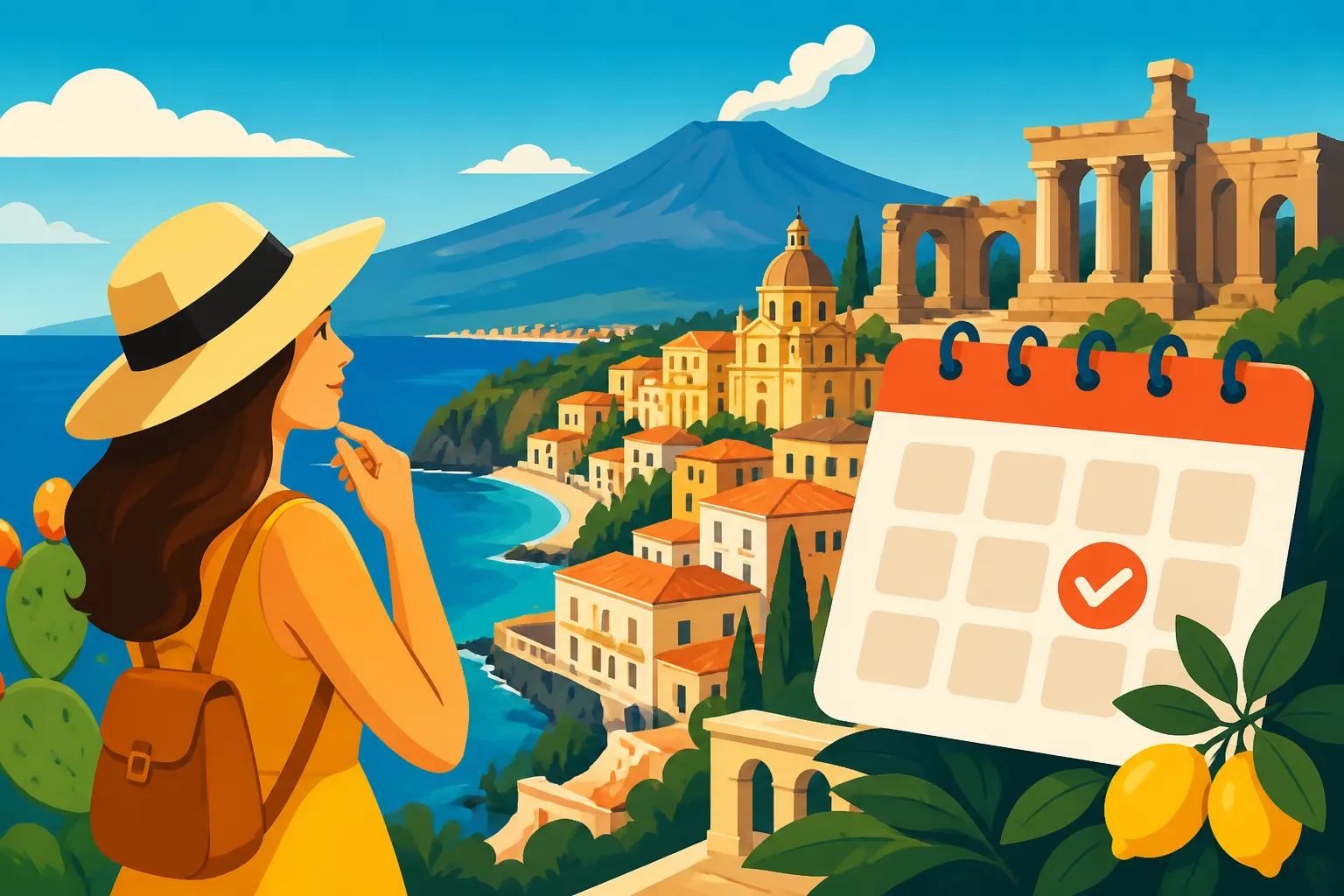
Many travelers treat Sicily like a small stopover on a broader Italian tour, only to realize the island is a continent in its own right once they land. This guide solves the dilemma of time management by breaking down exactly how many days you need to explore Sicily without burning out or spending your entire holiday behind a steering wheel.
Disclosure: This post may contain affiliate links. We may earn a commission at no extra cost to you if you make a purchase through these links. Read full disclosure.
Understanding Sicily’s Scale: Why One Week Isn’t Enough
When I first moved to Italy, I made the classic mistake of thinking I could "see" Sicily in five days. I planned a route that started in Palermo and ended in Syracuse, thinking it was a simple afternoon drive. I was wrong. Sicily is the largest island in the Mediterranean, covering over 25,000 square kilometers. Its geography is rugged, dominated by mountains in the north and the towering presence of Mount Etna in the east. Navigating this terrain takes significantly more time than a quick glance at a map suggests.
The internal road network often consists of winding, two-lane roads that climb through ancient hills. While the coastal motorways are efficient, getting to the "real" Sicily—the hilltop villages and hidden vineyards—requires patience. If you try to cram the entire island into a single week, you will likely spend more time staring at your GPS than at the Baroque cathedrals or crystal-clear waters. You have to account for the "Sicilian pace," which includes long lunch breaks where shops close, and the inevitable reality that some roads might be undergoing maintenance that adds an hour to your trip.
The Geography Trap
The primary reason travelers struggle with their timeline is the triangular shape of the island, known as the Trinacria. Each corner of this triangle offers a completely different cultural and historical experience. The west is heavily influenced by North African and Arab-Norman history, seen in the architecture of Palermo and the couscous of Trapani. The east is defined by Greek ruins and the dramatic volcanic landscapes of Etna. The south is a treasure trove of Roman mosaics and late Baroque architecture.
When you try to bridge these regions in a single trip, you aren't just moving between cities; you are moving between historical eras. Most veterans of the island will tell you that it is better to see one-third of the island deeply than to see the whole thing from a car window. If you are wondering How to Get Around Sicily Without a Car, you need even more time, as regional bus and train schedules require careful coordination and often take longer than driving.
Transportation Realities
Public transport in Sicily is a mixed bag. The main rail lines connecting Messina, Catania, and Palermo are relatively reliable, but the secondary lines can be frustratingly slow. I often recommend travelers check platforms like Omio to compare bus versus train times, as the bus is frequently the faster and more direct option between major hubs like Agrigento and Palermo.
Even with a car, parking in historic centers (Centro Storico) is a nightmare for the uninitiated. You’ll often find yourself parking on the outskirts and walking in, or navigating the dreaded ZTL zones. If you are planning to drive, make sure you understand the nuances of Renting a Car in Italy: ZTLs, Insurance, and Driving Tips to avoid heavy fines that arrive in your mailbox months after you’ve returned home. This logistical friction is a major factor in why a 10-day trip feels like a 5-day trip.
Breaking Down Itineraries: From Quick Hits to Deep Dives
Determining your stay depends entirely on whether you want a highlight reel or an immersion. For those with limited time, a "regional focus" is the only way to maintain your sanity. For those with two weeks or more, a full loop becomes possible, though it still requires disciplined planning. Sicily isn't just a place you visit; it's a place you feel, and you can't feel much if you're rushing to check out of a new hotel every morning.
I always suggest staying in "hubs" for at least three nights each. This allows you to unpack, find a favorite local cafe for your morning granita, and understand the rhythm of the town. Moving every night is the fastest way to turn a dream vacation into an administrative chore. Using a site like Booking.com to find centrally located apartments or traditional Agriturismi can help you feel more at home while you navigate these hubs.
The 7-Day Express: Pick a Coast
If you only have seven days, do not try to do the whole island. You must choose between the East and the West. An Eastern itinerary usually starts in Catania and includes Taormina, Mount Etna, and the Val di Noto (Syracuse, Noto, Ragusa). This region is incredibly dense with UNESCO World Heritage sites and offers a great mix of beaches and history. You can easily spend two days just exploring the ruins of Neapolis in Syracuse and the island of Ortygia.
On the other hand, a Western itinerary would focus on Palermo, Cefalù, and the Salt Pans of Marsala. Palermo alone requires at least three days to truly appreciate its grit and glory. Between the street food markets and the Palatine Chapel, the city is an assault on the senses in the best way possible. From here, you can take day trips to Monreale or the temple at Segesta. This approach ensures you experience the Italian Food Culture: Eating Well as a Visitor without the stress of a 400-kilometer drive every other day.
The 10-14 Day Grand Tour: A Balanced Loop
With two weeks, the island begins to open up. You can start in Palermo, head west to the Egadi Islands, move south to the Valley of the Temples in Agrigento, and then finish in the East. This timeframe allows for the "slow" moments that make Sicily special—a long afternoon at a winery on the slopes of Etna or a boat trip to the sea caves near Taormina.
This is also the ideal duration to explore Italy's Regions: A Traveler's Overview as it applies to Sicily’s internal diversity. You’ll notice the transition from the rugged interior, where wheat fields stretch to the horizon, to the lush, citrus-scented coastal plains. You’ll have time to experience the Aperitivo in Italy: The Pre-Dinner Ritual Explained in different settings, from a chic bar in Taormina to a rustic piazza in a mountain village like Enna.
21 Days or More: Living the Slow Life
If you are fortunate enough to have three weeks or more, you can finally include the smaller islands. The Aeolian Islands (Lipari, Salina, Stromboli) are worth at least five days on their own. Each island has a distinct personality, from the chic vibes of Panarea to the raw, volcanic energy of Stromboli.
With this much time, you can also venture into the Madonie or Nebrodi mountains. These areas are rarely visited by short-term tourists but offer some of the most authentic experiences on the island. You can hike between medieval villages, watch shepherds make fresh ricotta, and escape the coastal heat. This is the version of Sicily that stays with you forever—the one where you aren't a tourist, but a temporary resident. This depth is what we discuss in our guide to Southern Italy and the Islands: Sicily, Sardinia, and Beyond.
Regional Highlights to Help You Decide Your Stay
To help you decide how many days you need, you should look at the "weight" of the attractions in each region. Some areas are high-intensity (Palermo, Catania), while others are for relaxation (Cefalù, San Vito Lo Capo). Balancing these is the key to a successful trip. I recommend using GetYourGuide to look up specific tours—like a 4×4 Etna excursion or a street food tour in Palermo—to see how much time those activities actually take.
| Region | Primary Hubs | Recommended Days | Best For |
|---|---|---|---|
| Eastern Coast | Catania, Taormina, Syracuse | 5-7 Days | Ancient Ruins, Volcanoes, Luxury |
| South-East (Baroque) | Noto, Ragusa, Modica | 3-4 Days | Architecture, Chocolate, Quiet Piazzas |
| Western Sicily | Palermo, Trapani, Marsala | 5-7 Days | Street Food, Arab-Norman History, Salt Pans |
| Central Interior | Piazza Armerina, Enna | 1-2 Days | Roman Mosaics, Mountain Views |
| The Islands | Aeolian or Egadi Islands | 4-6 Days | Boat Trips, Hiking, Volcanoes |
Western Sicily: History and Salt Marshes
The West is often where the most profound cultural shocks happen. Palermo is a city of layers, where a Phoenician foundation supports a Roman wall, which in turn supports an Arab-Norman palace. You cannot rush this. Outside the city, the Zingaro Nature Reserve offers some of the best hiking and swimming in Italy, but it requires a full day.
Then there is the history. The Valley of the Temples in Agrigento is one of the most significant archaeological sites in the world. While you can see it in a few hours, staying overnight allows you to see the temples illuminated at night, which is a transformative experience. If you are interested in Italian Regional Cuisine: How Food Changes Across Italy, the West is where you’ll find the unique North African influence, particularly the famous fish couscous of Trapani.
Eastern Sicily: Volcanoes and Baroque Beauty
The East is often more polished and "tourist-friendly" than the West, but no less spectacular. Mount Etna is the dominant force here. Depending on your interest, you might just want a quick photo, or you might want a full-day summit trek. Syracuse is the crown jewel of the coast, with its white limestone buildings and deep Greek history.
The South-East, specifically the Val di Noto, was rebuilt after a devastating earthquake in 1693, resulting in a cohesive and stunning Late Baroque style. Towns like Ragusa Ibla and Modica are built into steep ravines. Walking these towns is a workout for your legs but a feast for your eyes. This area is also a culinary powerhouse; don't leave without trying the ancient Aztec-style chocolate in Modica or the cherry tomatoes in Pachino.
Practical Planning Tips for Your Sicily Duration
No matter how many days you choose, your efficiency will depend on your logistics. I have seen countless travelers lose days to poor planning. One major tip: try to fly into one airport (like Palermo) and out of another (like Catania). This "open-jaw" flight path saves you an entire day of backtracking across the island.
Also, consider the season. In July and August, the heat can be oppressive, reaching over 40 degrees Celsius. During these months, your physical stamina will be lower, and you'll need more days to accomplish the same tasks because you'll likely be retreating to the shade or the sea during the mid-afternoon. If you are coming for the culture and history, late spring (May/June) or early autumn (September/October) are the "sweet spots" where the weather is perfect for exploring.
Logistics and Transport Options
If you are coming from the mainland, you might take the train that literally boards a ferry to cross the Strait of Messina. It’s a slow, fascinating process that is part of the adventure. For more on the rail network, see High-Speed Trains in Italy: Trenitalia, Italo, Routes, and Savings, though keep in mind that high-speed "Frecciarossa" trains do not yet operate within Sicily itself.
When booking your accommodations, look for places that offer "Parcheggio Incluso" (Parking Included). This will save you hours of circling narrow streets. If you are staying in the heart of Palermo or Catania, consider not picking up your rental car until the day you are ready to leave the city. Most major sites within the cities are walkable or accessible by local taxi, and having a car in the city center is more of a liability than an asset.
Seasonal Considerations
The time of year also dictates the "vibe" of your stay. During the winter, many coastal resorts and island ferries shut down or run on very limited schedules. However, this is the best time to see the museums and cathedrals without the crowds. In the spring, the interior of the island is a vibrant green, covered in wildflowers, making it the best time for hikers and nature lovers.
In the summer, Sicily becomes a playground for the sea. If your goal is to lounge on the beaches of San Vito Lo Capo or Mondello, you’ll want to build in "buffer days" where no sightseeing is planned at all. Sicily is a place that demands a bit of "dolce far niente"—the sweetness of doing nothing. If you schedule every minute, you’ll miss the very thing that makes the island magical: the spontaneous invitation to taste a local wine or the chance to watch a sunset over the Mediterranean with a cold drink in hand.
Disclaimer
The information provided in this guide is based on personal experience and current travel conditions as of 2026. Travel regulations, transportation schedules, and local laws in Italy can change frequently. Always verify specific details with official sources or local authorities before making final travel arrangements. This guide is intended for informational purposes only and does not constitute professional legal or travel advice.