How to Visit the Vatican Museums and Sistine Chapel
Visiting the Vatican Museums and the Sistine Chapel can feel like preparing for a military operation, especially when you hear the tales of endless queues and shoulder-to-shoulder crowds. As someone who’s navigated those very halls multiple times – sometimes gracefully, sometimes less so – I know just how overwhelming the prospect can be. This guide is here to cut through the confusion and equip you with real, actionable strategies to make your encounter with these unparalleled masterpieces as smooth and memorable as possible, rather than a frustrating battle against bureaucracy and crowds.
Disclosure: This post may contain affiliate links. We may earn a commission at no extra cost to you if you make a purchase through these links. Read full disclosure.
Planning Your Vatican Visit: Timing and Tickets
Let's face it, the Vatican Museums are one of the most popular attractions on Earth, and managing your visit without a solid plan is like trying to swim against a strong current. The key to a less stressful experience lies in meticulous planning, starting with when you go and how you secure your entry.
The Best and Worst Times to Go
You might think any time is a good time to see such incredible art, but trust me, your sanity will thank you for being strategic. The Vatican is always busy, but there are degrees of "busy."
Weekends, especially Saturdays, and public holidays in Italy (and even other European countries, as many take long weekends) are absolute madhouses. Forget trying to enjoy the intricate details of a fresco when you're being herded along like cattle. Sundays, unless it's the last Sunday of the month when entry is free (a trap I’ll warn you about later!), are usually closed. When they are open for free, it's a scene of utter chaos – avoid it like a plague unless you thrive on sardine-can levels of human proximity.
During peak travel seasons like summer (June-August), Easter week, and Christmas/New Year, the crowds swell to epic proportions. If your trip falls within these times, you absolutely must book everything far in advance and brace yourself for the throngs.
So, when is "best"? Your best bet for a slightly less suffocating experience is generally early mornings (right at opening time) or late afternoons (the last two to three hours before closing) on Tuesdays, Wednesdays, or Thursdays. If you can swing an early morning, aim to be at the gates at least 30-45 minutes before opening, even with a pre-booked ticket. That initial rush can get you a head start, particularly through the early galleries. Late afternoon can also work wonders, as tour groups begin to clear out, and those on a tighter schedule start heading for the exits. You might feel rushed, but you'll get some breathing room.
Another critical factor is avoiding the general audience during Papal events. If the Pope is holding a General Audience in St. Peter's Square on a Wednesday morning, the area and surrounding attractions will be even more congested than usual. Keep an eye on the Vatican's official schedule when planning your dates.
Essential Ticket Information: Booking and Types
This is where many people stumble, and it leads to hours of wasted time in lines under the Roman sun. Never, ever show up without a pre-booked ticket. I repeat, never. The queues for people buying tickets on the day can stretch for hundreds of meters, winding around the Vatican walls. It’s a rookie mistake that will cost you precious sightseeing time and energy.
You have a few primary ways to secure your entry:
- Official Vatican Museums Website: This is always your safest and often cheapest bet. You're buying directly from the source, guaranteeing authenticity. The site can be a bit clunky, and popular slots disappear fast, so be persistent and book several weeks, if not months, in advance for peak season. You'll choose a specific date and time slot.
- Early Access Tickets: These are a game-changer if your budget allows. Many tour operators, like those found through GetYourGuide, offer "early access" tours that get you into the museums up to an hour or more before the general public. Imagine seeing the Raphael Rooms or even the Sistine Chapel with only a handful of other people. It’s a truly sublime experience and well worth the extra cost if you value peace and quiet. These often come with a guided tour, which adds context to the masterpieces you're seeing.
- Guided Tours (Official Vatican or Third-Party):
- Official Vatican Tours: The Vatican offers its own guided tours. These are often excellent value and provide deep insights from official Vatican guides. They usually allow you to skip the main ticket queue.
- Third-Party Tour Operators: Numerous reputable companies offer a range of tours, from small group experiences to private, bespoke tours. These can include skip-the-line access, specialized themes (e.g., focusing on specific artists or periods), and even direct access from the Sistine Chapel to St. Peter's Basilica, saving you another huge queue. Brands like Booking.com experiences or GetYourGuide are good places to compare options and read reviews. Just be sure to pick a highly-rated tour to ensure a good experience.
- Combo Tickets: Sometimes you can purchase tickets that combine the Vatican Museums with other Rome attractions or transportation, though these are less common for the museums themselves. For city transit to the Vatican area, you might look into passes available through general travel sites or even local transport options, which you can learn more about in a guide on Getting Around Italian Cities: Metro, Tram, and Buses.
When booking, ensure you understand exactly what your ticket includes (e.g., just entry, guided tour, early access) and where you need to pick it up or meet your guide. Print your confirmation or have it readily available on your phone.
Here’s a quick comparison of common ticket options:
| Ticket Type | Booking Method | Pros | Cons | Ideal For |
|---|---|---|---|---|
| Standard Entry | Official Vatican Website | Most affordable; direct booking; guaranteed entry. | Can be crowded; no guide; long lines if not booked well ahead. | Budget-conscious, independent explorers. |
| Early Access | Third-Party Tour Operators | Significant reduction in crowds; more serene experience. | More expensive; often includes a mandatory guide. | Those who prioritize a peaceful, exclusive experience. |
| Guided Tour | Official or Third-Party | Expert insights; skip ticket lines; often includes direct Basilica exit. | Can be more expensive; fixed schedule; pace dictated by group. | First-timers, history buffs, those wanting deeper understanding. |
Remember, the goal is to secure your entry in a way that minimizes stress and maximizes your enjoyment of these incredible treasures. Planning ahead will save you from that all-too-common expat lament: "If only I'd known!"
Navigating the Vatican Museums: What to Expect
Once you’ve successfully secured your tickets, the next challenge is actually getting through the Vatican Museums. It's not just a collection of rooms; it's a labyrinth, a journey through millennia of art and history, and if you don't know what you're doing, you can easily get lost, overwhelmed, or miss something truly spectacular.
Entry Process and Security Checks
This is where the pre-booking pays off. Even with a skip-the-line ticket, you'll still have a line for security, which is mandatory for everyone. This isn't a quick airport pat-down; it can take a good 15-30 minutes, sometimes more, depending on the crowd.
When you arrive, look for the designated "pre-booked ticket" or "guided tour" entrance. Present your ticket (printed or on your phone) and a valid ID. Once past the initial check, you'll proceed to the security scanners, similar to an airport. Be prepared to put bags, coats, and anything metallic through the X-ray. Large backpacks, bulky items, and umbrellas are often not allowed and must be checked into the cloakroom – adding another step to your entry and exit. My advice? Travel light. The less you have to check, the smoother your experience. You'll be doing a lot of walking, so heavy bags are a definite no-go.
Must-See Highlights Before the Sistine Chapel
The Vatican Museums are enormous, boasting 20,000 works of art displayed across 54 galleries. Trying to see everything in one go is a fool's errand. Even as a veteran expat, I still find new corners to explore, but for a first-timer, focus is key. The flow of the museum is generally designed to lead you towards the Sistine Chapel, so follow the crowd but keep an eye out for these unmissable stops:
- Pio Clementino Museum: This is where you'll find some of the most famous classical sculptures, including the Laocoön Group and the Belvedere Torso. These ancient masterpieces had a profound influence on Michelangelo and other Renaissance artists, so they’re essential viewing. Take a moment to appreciate the sheer power and emotion carved into the marble.
- The Raphael Rooms (Stanze di Raffaello): These four rooms, once part of the Papal Apartments, are adorned with frescoes by Raphael and his workshop. The School of Athens is probably the most famous, depicting an assembly of ancient Greek philosophers. The detail, the perspective, the vibrant colors – it's breathtaking. This is a spot where you can often linger a bit longer, taking in the narrative and artistic genius.
- Gallery of Maps (Galleria delle Carte Geografiche): This 120-meter long corridor is a feast for the eyes, lined with 40 massive frescoes depicting maps of Italy. The intricate details and vivid colors are stunning, and it’s a wonderful (and surprisingly cool) passageway leading you closer to the Sistine Chapel. You'll often find people gazing up, marveling at the artistry.
- Gallery of Tapestries (Galleria degli Arazzi): Next to the Gallery of Maps, this gallery showcases a series of tapestries, many based on designs by Raphael, depicting scenes from the life of Christ. The three-dimensional effect achieved through weaving is truly remarkable.
Pacing yourself is crucial. It’s easy to get "museum fatigue." Don't feel obliged to stop at every single exhibit if you're feeling overwhelmed. Allow yourself to move on and save your energy for the main event. Remember, many visitors combine this with a visit to St. Peter's Basilica and the Vatican Museums, so managing your time here is important.
Dress Code and Conduct
This is non-negotiable, and they are very strict. The Vatican is a sovereign state and the spiritual heart of the Catholic Church, so respectful attire is a must.
- Shoulders and Knees Must Be Covered: This applies to everyone, men and women. No sleeveless tops, tank tops, short shorts, or skirts above the knee. I’ve seen countless hopeful tourists turned away at the entrance for this very reason, even after waiting in line for ages. Carry a light scarf or shawl to cover shoulders if you're wearing a tank top, and wear longer shorts or trousers. If you're visiting in warmer weather, plan your outfit carefully. This is similar to what you’d expect when learning How to Dress for Churches and Religious Sites in Italy generally.
- Hats Off: Men should remove hats inside the museums and especially inside the Sistine Chapel and St. Peter's Basilica.
- Photography: Photography without flash is generally allowed in most parts of the Vatican Museums. However, selfie sticks, tripods, and professional camera equipment may be restricted. Crucially, photography is strictly forbidden in the Sistine Chapel. You'll hear guards constantly (and loudly) reminding people of this.
- Silence and Respect: While the museums can be noisy, maintain a respectful demeanor. Inside the Sistine Chapel, silence is strictly enforced. It's a place of worship and contemplation, not a tourist attraction for loud chatter.
If you violate the dress code, you'll be denied entry, even with a valid ticket. Don't let a wardrobe malfunction ruin your once-in-a-lifetime visit. If you're planning on spending How Many Days Do You Need in Rome? then planning your outfits can be part of the fun!
The Sistine Chapel Experience
This is it. The culmination of your museum journey, the reason many people brave the crowds: the Sistine Chapel. It's an overwhelming experience, both artistically and emotionally, and preparing yourself for what to expect can enhance its impact.
Approaching and Entering the Chapel
As you move through the final galleries of the museums, the crowds tend to condense, all funneling towards the entrance of the Sistine Chapel. There's usually a short wait as guards manage the flow of people in and out. The anticipation builds, and often, you'll feel a palpable sense of reverence mixed with excitement from the people around you.
The transition from the bustling museum galleries to the Chapel itself is quite stark. You'll pass through a final doorway, and suddenly, the sheer scale and beauty of Michelangelo's work will engulf you. There are no grand fanfare announcements, just the quiet push of the crowd into a space unlike any other.
Inside the Sistine Chapel: Art and Atmosphere
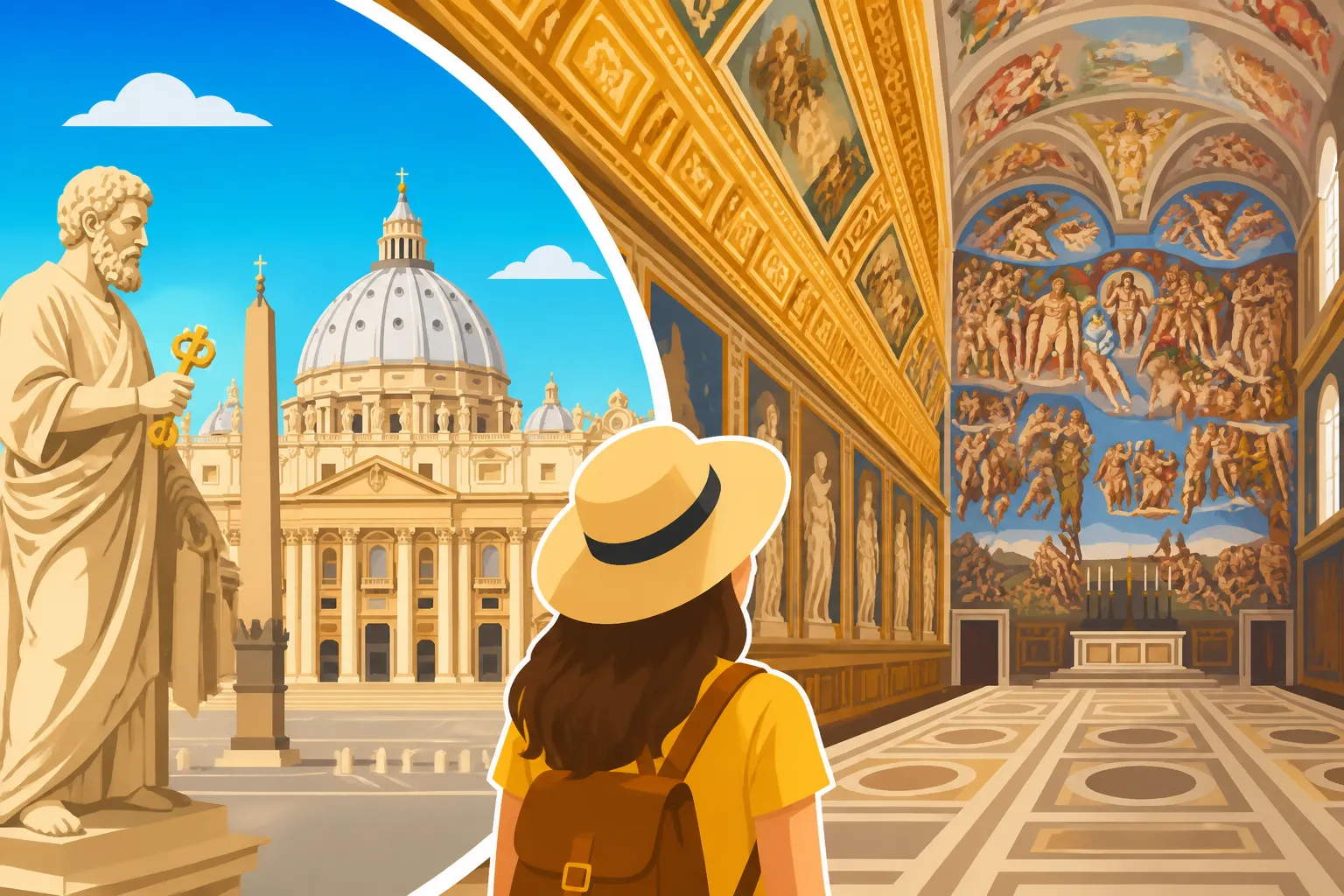
Stepping into the Sistine Chapel is truly awe-inspiring. No photograph or video can capture the intensity of Michelangelo's ceiling frescoes, depicting scenes from the Book of Genesis, culminating in The Creation of Adam. Then there's The Last Judgment on the altar wall, a dizzying, powerful depiction of Christ's return. The colors, the movement, the sheer ambition of the work – it's profound. Take your time to look around, let your eyes adjust, and try to absorb the details.
The Chapel is rectangular, and the walls are also adorned with frescoes by other Renaissance masters like Botticelli, Perugino, and Ghirlandaio, depicting scenes from the lives of Moses and Christ. Don't forget to look at these often-overlooked masterpieces beneath Michelangelo's epic works.
Here's the critical part regarding conduct:
- No Photography or Video: I cannot stress this enough. Guards are everywhere, and they are constantly shouting "No photo! No video!" in multiple languages. They will not hesitate to escort you out if caught. Put your phone away, soak it in, and let your memory be the capture device.
- Silence: While absolute silence is difficult with hundreds of people, guards will enforce a hush. You'll hear constant "Shhh!" from the guards. Respect this; it's a sacred space, not just an art gallery.
- Benches: There are a few benches along the perimeter, mostly for those needing a rest, but they are often full. Don't count on finding a seat.
Despite the crowds, the atmosphere inside the Sistine Chapel is often one of quiet contemplation. People gaze upwards in wonder, many in silent reverence. It can feel like an incredibly intimate experience even amidst hundreds of strangers. This is the moment to really connect with the art and history surrounding you, a stark reminder of humanity's creative spirit.
Beyond the Sistine Chapel: St. Peter's Basilica Access
After the Sistine Chapel, many visitors want to continue to St. Peter's Basilica. This is another area where a bit of insider knowledge can save you a lot of time and hassle.
Direct Passageway vs. Re-entry
For many years, and still for some tours, there’s been a coveted "secret" passageway directly from the Sistine Chapel into St. Peter's Basilica. This shortcut bypasses the massive security lines in St. Peter's Square and is a huge time-saver.
- The Shortcut (if available): If you are on an official Vatican guided tour or certain approved third-party tours (like those you might find on GetYourGuide specifically advertising this feature), your guide might lead you through a door on the right-hand side of the Sistine Chapel (as you face The Last Judgment altar wall). This leads directly to a security checkpoint for St. Peter's Basilica. Confirm with your tour operator if this is included, as policies can change, and it's not always open to all groups. This shortcut is usually the fastest way to access the Basilica.
- Exiting and Re-entering: If you’re visiting independently or your tour doesn't include the direct passageway, you will exit the Sistine Chapel at the far end, through the main exit corridor of the Vatican Museums. This will lead you out onto the street, near the taxi stand and main entrance/exit of the museums. From there, you'll need to walk around the Vatican walls (a good 10-15 minute walk) to St. Peter's Square. Once in the Square, you'll join the general line for security to enter St. Peter's Basilica. This line can be very long, often snaking across the piazza, so factor in significant waiting time.
The distinction between these two routes is important, especially if you're trying to manage your energy and time effectively when visiting multiple major sites in Rome.
Exploring St. Peter's Basilica
St. Peter's Basilica is not just a church; it's a monumental work of art and a profoundly significant spiritual site. Unlike the Vatican Museums, entry to St. Peter's Basilica itself is free. However, you still have to go through airport-style security, which can lead to long queues as mentioned.
Once inside, prepare to be overwhelmed by its sheer size and grandeur. Here are some key highlights:
- Michelangelo's Pietà: Located just inside the entrance on the right, this stunning marble sculpture depicts Mary cradling the body of Jesus. It's protected by bulletproof glass due to a past attack, but its beauty and emotional power are still palpable.
- The Baldacchino: Dominating the central space under the dome, this massive bronze canopy by Bernini stands over the high altar, which is believed to be directly above St. Peter’s tomb. The scale is incredible, soaring 29 meters high.
- The Dome Climb: For an additional fee, you can climb to the top of Michelangelo's dome. There are two options:
- Elevator + Stairs: Take an elevator part of the way, then climb around 320 steps.
- Stairs Only: All 551 steps from the ground floor.
The views from the top are absolutely spectacular, offering panoramic vistas of Vatican City, St. Peter's Square, and the entirety of Rome. It’s a tight, winding climb near the top, not for the claustrophobic, but it's an unforgettable experience.
- Vatican Grottoes: These subterranean chambers beneath the Basilica contain the tombs of many popes, including St. Peter himself. Access is typically from within the Basilica, often near the Baldacchino. It's a solemn and reflective part of the visit.
The dress code (covered shoulders and knees) applies just as strictly to St. Peter's Basilica as it does to the museums. Guards will be at the entrance ensuring compliance. If you're on a tight schedule and worried about time, considering a combo tour that facilitates smooth transitions between these sites, perhaps even with tickets for the dome climb included, can really enhance your experience. While in Italy, make sure your mobile connectivity is solid for booking tickets or navigating with maps, as explained in Mobile Data and eSIMs for Travel in Italy.
When you’re done exploring the spiritual heart of Rome, you might feel a bit peckish. After all that walking and awe-inspiring art, you’ll definitely deserve a good meal. Rome has countless fantastic options, and finding How to Find Authentic Restaurants in Italy (Not Tourist Traps) will be a great next step.
Disclaimer
The information provided in this guide is for general informational purposes only and is subject to change. Vatican entry requirements, security procedures, opening hours, ticket prices, and tour availability can vary. Always check the official Vatican Museums website or your chosen tour operator's details for the most current and accurate information before planning your visit. While we strive to provide helpful and accurate advice, we cannot guarantee specific outcomes or be held responsible for changes outside of our control.