Mental Health Services in Italy: CSM and Private Therapy
Navigating a mental health crisis while trying to figure out which "bollo" goes on which form is enough to break even the most resilient expat. I spent my first six months in Milan feeling like a ghost, completely isolated and unable to find a therapist who understood my cultural context. This guide solves the mystery of Italy's public CSM centers and the private therapy landscape so you can find the support you deserve.
Disclosure: This post may contain affiliate links. We may earn a commission at no extra cost to you if you make a purchase through these links. Read full disclosure.
Understanding the Italian Public Mental Health System
The Italian National Health Service, or SSN, is globally praised for its accessibility, but when it relates to mental health, it operates through a very specific community-based model. Unlike some countries where mental health is siloed in massive psychiatric hospitals, Italy moved toward a decentralized system decades ago. This means your primary point of contact will be local, integrated into the community, and designed to treat you within your own environment. However, for a foreigner, the "local" feel can sometimes translate to "confusingly bureaucratic."
If you are just starting your journey, reading about Healthcare in Italy: An Expats' Guide can provide the foundational knowledge you need to understand how these specialized services fit into the broader system. The public system is designed to be a safety net, but it requires patience and a fair bit of Italian language skill—or a very helpful friend—to navigate the entry points.
The Role of the CSM Centro di Salute Mentale
The Centro di Salute Mentale, commonly known as the CSM, is the pulsating heart of the public mental health system in Italy. These are community-based clinics where a multidisciplinary team—including psychiatrists, psychologists, social workers, and psychiatric nurses—works together to provide care. Every district has one, and they are responsible for prevention, diagnosis, and treatment of psychiatric disorders. For an expat, the CSM is where you go for long-term management of conditions like bipolar disorder, clinical depression, or schizophrenia.
In a real-world scenario, you won't find a CSM in a grand hospital wing. It’s often tucked away in a non-descript building in a residential neighborhood. When I first walked into a CSM in Rome, I was struck by how "local" it felt; it wasn't a sterile environment, but a busy hub where people from the neighborhood were checking in. The care here is usually free or requires a very small co-payment, but you must be prepared for a "triage" style of care. The doctors are often overworked, and they prioritize severe, acute cases over general "talk therapy" for life transitions.
How to Access Public Services and the GP Referral
You cannot simply walk into a CSM and demand a psychologist; the Italian system is strictly gatekept by the general practitioner. Your first step is making an appointment with your Medico di Base. You will need to explain your situation, and they will issue what is called an "impegnativa"—a red or electronic prescription for a psychiatric consultation. For a deeper look at this specific step, you should check out the GP Referral Process for Specialized Care in Italy to understand the nuances of what to ask for.
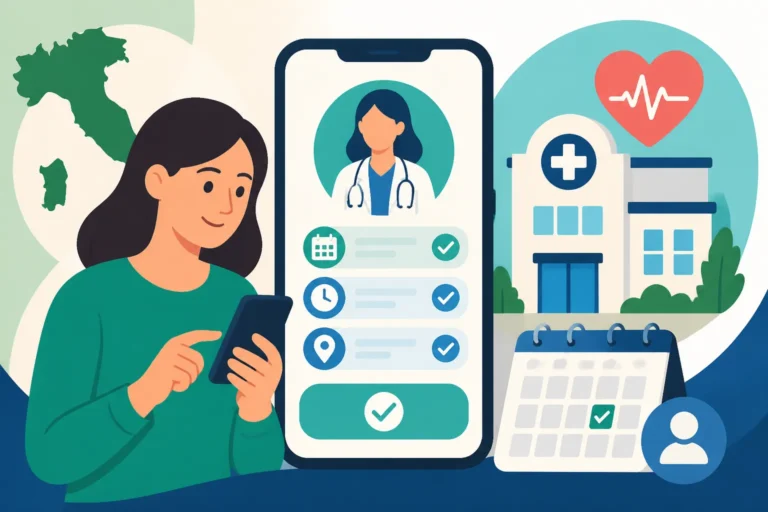
Once you have that slip of paper, you typically call the CUP (Centro Unico di Prenotazione) to book your first appointment at the CSM. Be prepared for a wait. Depending on your region—with the North generally having shorter queues than the South—you might wait anywhere from two weeks to three months for an initial intake. If your situation is urgent but not life-threatening, your GP can mark the referral as "urgente," which theoretically gets you seen within 72 hours. Dealing with this process requires a certain level of persistence that can be taxing when you are already feeling low, so having your documents ready is essential.
Limitations of the Public System for Expats
While the CSM is a fantastic resource for medication management and severe psychiatric needs, it often falls short for those seeking regular, weekly psychotherapy in English. Most public psychologists in the SSN only speak Italian, and their caseloads often limit them to seeing patients once every three or four weeks. This is a far cry from the weekly sessions many of us are used to in the US, UK, or Canada.
If your needs are primarily around "talk therapy" or navigating the emotional toll of relocation, the public system may feel frustratingly slow. This is where many foreigners find themselves transitioning toward private options. Even if you are registered with the SSN, understanding the Public vs Private Health Insurance in Italy can help you decide if the public route is actually the most efficient path for your specific mental health goals.
Navigating Private Therapy in Italy
For many expats, the private sector is the only realistic way to find a therapist who speaks fluent English and can meet for weekly sessions. The private mental health market in Italy is robust, featuring highly trained professionals who often have international experience. However, "private" means you are paying out of pocket, and without the right insurance, this can become a significant monthly expense.
When you choose the private route, you bypass the GP referral and the long wait times of the CSM. You can often find a therapist and have your first session within the same week. This immediacy is often worth the cost, especially when you are in the middle of a major life transition or a depressive episode that makes every day feel like a mountain.
Finding English Speaking Therapists
Finding a therapist who understands the specific cultural "third space" that expats live in is crucial. You aren't just dealing with standard anxiety; you are dealing with "expat anxiety," which involves language barriers, loneliness, and the loss of your support network. Many of us turn to online directories like Psychology Today or specialized platforms like Unobravo, which was actually founded in Italy and has a massive network of English-speaking therapists.
Another great way to find a provider is to look into Websites to Find Doctors Who Speak English in Italy. Many of these directories include psychologists and psychiatrists who cater specifically to the international community in cities like Milan, Rome, and Florence. When I was looking for someone, I made sure to ask for a "first call" or a "conoscenza" to see if our vibes matched. In Italy, the "terapeutico" relationship is taken very seriously, and it’s perfectly acceptable to interview a therapist before committing to a full course of treatment.
Costs and What to Expect from Private Sessions
The cost of private therapy in Italy is generally lower than in the United States but comparable to or slightly higher than in much of Northern Europe. On average, you can expect to pay between €60 and €120 per session. In major cities like Milan, prices tend to skew toward the higher end, while in smaller towns or through online platforms, you might find rates closer to €50 or €60.
Most private therapists in Italy will expect payment at the end of each session, usually via bank transfer or "Satispay," a popular mobile payment app. It is also important to note that many Italian therapists are registered with the "Albo degli Psicologi," which means their invoices can often be used for tax deductions in Italy if you are a tax resident. For those managing their own finances, Money Matters in Italy: Banking and Finance for Expats can offer guidance on how to handle these recurring professional payments.
Modalities and Specializations Available
Italy has a long and storied history with psychoanalysis, but today you will find a wide range of modalities. Cognitive Behavioral Therapy (CBT) is increasingly popular and widely available in English. You can also find therapists specializing in EMDR (for trauma), Gestalt therapy, and systemic family therapy.
If you are looking for a psychiatrist—someone who can prescribe medication—the cost will be higher, usually between €120 and €250 for an initial consultation. Many expats choose a "hybrid" model: they see a public psychiatrist at the CSM for their prescriptions (to keep costs low) and a private psychologist for their weekly talk therapy. This is a savvy way to navigate the system, though it requires you to be the "bridge" of communication between your two providers. For more on the specifics of these roles, see Accessing Mental Health Care: Therapists and Psychiatrists.
Emergency and Crisis Support Services
Sometimes, you can't wait for a scheduled appointment. Whether it’s a sudden panic attack that feels like a heart attack or a deep, dark episode where you don't feel safe, you need to know exactly where to go. The Italian emergency system is efficient, but it can be intimidating if you don't know the terminology.
In Italy, a mental health emergency is treated with the same urgency as a physical one. You have the right to care, regardless of your residency status or whether you have a health card. The system is designed to stabilize you first and ask questions about your paperwork later.
The SPDC and Acute Care
If you are in a situation where immediate psychiatric intervention is needed, the destination is the SPDC (Servizio Psichiatrico di Diagnosi e Cura). This is an acute psychiatric ward located within a general hospital. Access usually happens through the "Pronto Soccorso" (Emergency Room). When you arrive, you will go through triage, and it is vital to be clear about your symptoms. Using the phrase "urgenza psichiatrica" will help the staff direct you to the right specialists.
For a detailed breakdown of how to navigate the ER in general, including what to bring and how the color-coded triage system works, refer to Emergency Medical Services in Italy: 112 and Hospitals. Once you are admitted to the SPDC, the goal is stabilization. The stay is usually short—from a few days to two weeks—after which you are referred back to your local CSM for follow-up care. It’s a jarring experience, but it provides the intensive support needed during a true crisis.
Crisis Helplines and Immediate Assistance
If you aren't at the point of needing a hospital but need someone to talk to immediately, Italy has several helplines. The "Samaritans ONLUS" offers a listening service, though English availability can be hit-or-miss. For younger expats or students, "Telefono Azzurro" is an excellent resource.
Knowing the Emergency Medical Numbers in Italy (112, 118, 1500) is the first rule of expat life. 112 is the general European emergency number, and operators often speak English or can patch in an interpreter. If you are struggling with thoughts of self-harm, please reach out to these services. There is also a dedicated list of Mental Health Crisis Lines and Support Services that we recommend keeping on your fridge or saved in your phone contacts.
Mobile Crisis Units and Home Visits
In some regions, particularly in urban centers, there are "Guardia Medica" services that can assist after hours. While they are general practitioners, they can provide sedative medications or emergency referrals if you cannot make it to a hospital. Some private clinics also offer home visits for psychiatric emergencies, though these are expensive and not covered by the public system.
If you are worried about the cost of an emergency intervention, you should know that an ambulance ride for a legitimate emergency is generally free in Italy. However, the subsequent hospital stay might involve costs if you aren't registered with the SSN. This is where having a reliable insurance plan becomes a literal lifesaver.
Health Insurance and Mental Health Coverage
One of the biggest mistakes I made was assuming my basic travel insurance would cover a therapist. It didn't. Understanding how to fund your mental health care is as important as finding the right doctor. In Italy, you have three main avenues: the public SSN, local private insurance, and international expat insurance.
Each has its pros and cons, and your choice will likely depend on your visa type and how long you plan to stay. For instance, if you are here on a Student Health Insurance in Italy: What to Expect plan, your mental health benefits might be very limited compared to a professional corporate plan.
Public vs Private Insurance Benefits
The public SSN covers mental health, but as we’ve discussed, it’s mostly focused on psychiatry and crisis intervention. If you want the "luxury" of weekly private therapy, you will likely need to pay out of pocket or find a private policy that specifically includes "psicoterapia." Many local Italian private insurance plans have a "cap" on mental health—for example, they might only cover 10 sessions a year or have a high deductible.
If you are moving here for a shorter stint or digital nomad life, a plan like SafetyWing can provide that initial safety net for unexpected mental health crises. SafetyWing is particularly helpful if you’re traveling between regions before you’ve officially registered with the SSN, as it covers emergency medical evacuations and acute psychiatric stabilization. However, for those of us settling in long-term, Cigna Global offers much more robust coverage for ongoing psychological counseling, often allowing you to choose your own therapist and file for reimbursement.
International Expat Plans: Cigna Global and SafetyWing
When comparing international options, you need to look at the "fine print" regarding pre-existing conditions. Cigna Global is often preferred by expats who have a history of mental health needs because they offer modular plans where you can add "Mental Health and Wellbeing" as a specific benefit. This can cover everything from inpatient stays to outpatient CBT sessions. I’ve found that having a policy from Cigna Global really smooths over the fear of the €100-per-hour price tag, especially in expensive cities.
On the other hand, SafetyWing is excellent for the "in-between" phases of expat life. If you are waiting for your Permesso di Soggiorno and aren't yet eligible for the SSN, SafetyWing keeps you protected against the "big stuff." While it may not cover your weekly "venting session" about Italian bureaucracy, it will cover the costs if you end up in the ER with a severe panic attack. For a broader comparison of your options, check out Getting Health Insurance in Italy: Public and Private Options.
Filing Claims and Reimbursements
If you use a private therapist and have insurance like Cigna Global, you must ensure your therapist provides a formal invoice (fattura). This invoice must include their "Partita IVA" (tax ID) and a description of the service (e.g., "seduta di psicoterapia"). Most international insurers will require you to pay upfront and then submit the claim online.
It's a bit of a paperwork dance, but once you get the hang of it, it becomes routine. Just remember that many Italian therapists are not "in-network" with international companies, so the reimbursement model is standard. If you're confused about how these private entities differ from the state-run clinics, reading about the Differences between Public and Private Healthcare in Italy will clear up the confusion.
Cultural Nuances of Mental Health in Italy
You can't talk about therapy in Italy without talking about the culture. Italy is a country built on "Bella Figura"—the idea of presenting a beautiful, composed face to the world. For a long time, this made mental health a "taboo" subject, something discussed only behind closed doors. But things are changing fast, especially among the younger generation.
Understanding the cultural backdrop will help you manage your expectations. You might find that your Italian friends are incredibly open about their emotions but still hesitant to see a "strizzacervelli" (head-shrinker). Navigating this landscape requires a bit of cultural "translation" as much as linguistic translation.
Overcoming the Stigma
While Italy has made great strides, a certain level of stigma remains, particularly in rural areas or among the older generation. If you tell your Italian landlord you are staying home because you are "depressed," they might respond with "but the sun is shining, go for a walk!" This isn't necessarily cruelty; it’s a cultural gap in understanding clinical mental health versus "sadness."
However, in cities like Milan or Bologna, therapy is becoming quite trendy. You’ll find people discussing their analysts over an aperitivo. If you are struggling with the social aspect of your diagnosis, Overcoming Mental Health Stigma in Italy offers great insights into how to handle these conversations. Remember, your mental health is your business, and you don't owe anyone an explanation for your self-care.
Language Barriers and Cultural Sensitivity
Expressing your deepest fears in a second language is exhausting. Even if your Italian is "B2" level, you might find that you lack the emotional vocabulary to describe the nuance of your trauma. This is why most expats find a native-English therapist to be non-negotiable.
Furthermore, a therapist based in Italy will understand the "Italy-specific" stresses you face—like the frustration of the How to Get a Tessera Sanitaria as a New Resident in Italy process or the loneliness of the first few months. A therapist back in your home country might not understand why not being able to get a bank account is making you cry, but a local expat therapist will "get it" immediately.
The Importance of Community and Social Integration
In Italy, "health" is often viewed through a social lens. The CSM model itself is built on the idea that social isolation is a primary driver of mental illness. Therefore, part of your "treatment" in Italy might involve suggestions to join a local group, a gym, or a "circolo."
Don't dismiss these suggestions as "non-medical." Integrating into the local community is a powerful antidepressant. Whether it’s Joining a Gym or Fitness Club in Italy or finding a local hobby group, the more you weave yourself into the fabric of Italian life, the less "alien" and isolated you will feel.
Comparison Table: Public vs. Private Mental Health Care
| Feature | Public (CSM) | Private Therapy |
|---|---|---|
| Average Cost | Free or ~€30 "Ticket" | €60 – €150 per session |
| Wait Time | 2 weeks to 4 months | 1 to 7 days |
| Language | Primarily Italian | Many English speakers available |
| Referral | Required (via GP) | Not required |
| Consistency | May see different practitioners | Usually the same therapist |
| Best For | Chronic conditions, medication | Talk therapy, life transitions |
| Privacy | Records in SSN system | High (Private records) |
Disclaimer
This guide is for informational purposes only and does not constitute medical or legal advice. Mental health laws and the availability of services in Italy can change frequently based on regional regulations. Always consult with a qualified medical professional or the local ASL (Azienda Sanitaria Locale) for the most current information regarding your specific health needs and insurance coverage. If you are in immediate danger of self-harm or are experiencing a psychiatric emergency, please call 112 or go to the nearest Pronto Soccorso immediately.