Gelato in Italy: How to Spot the Real Thing
Ah, Italy. Just the name conjures images of ancient ruins, rolling vineyards, and, of course, that creamy, dreamy scoop of gelato. But let's be real, fellow expats and travelers: the promise of authentic Italian gelato can sometimes lead to crushing disappointment. You walk into a brightly lit shop, lured by towering mountains of vibrant colors, only to bite into something that tastes more like icy, artificial dessert than the velvety goodness you’ve been dreaming of. It's frustrating, isn't it? This guide is here to arm you with the insider knowledge, the battle-tested wisdom, to discern the truly artisanal from the imposters, ensuring your next gelato experience is nothing short of sublime.
What Makes Real Gelato “Real”? The Heart of the Matter
Before we dive into the detective work of spotting the good stuff, it’s crucial to understand what truly makes authentic Italian gelato so special. It's not just a fancy word for ice cream; it’s an entirely different beast, crafted with passion and precision. Many visitors, and even some residents, don't realize the fundamental distinctions that set genuine gelato apart. This isn't just about ingredients, but also the philosophy behind its creation – a philosophy deeply rooted in Italian culinary tradition. If you’re looking to truly embrace the local food scene, understanding this difference is a vital step in Italian Food Culture: Eating Well as a Visitor.
Disclosure: This post may contain affiliate links. We may earn a commission at no extra cost to you if you make a purchase through these links. Read full disclosure.
The Secret Sauce: Ingredients and Proportions
Real gelato starts with real ingredients. This might sound obvious, but you’d be surprised how many corners can be cut. Authentic gelato typically contains less fat than traditional ice cream because it uses more milk and less cream, and often no egg yolks (except in specific flavors like crema or zabaglione). This lower fat content allows the pure flavors of the main ingredients to shine through without being masked by richness.
Think about it: a truly exceptional pistachio gelato should taste intensely of pistachios, not just sugar or a generic "nut" flavor. A lemon sorbetto (which is essentially dairy-free gelato) should zing with the freshness of real lemons, not a chemical approximation. Artisanal gelaterias pride themselves on using high-quality, often locally sourced, raw materials. This means fresh fruit, premium nuts like Sicilian pistachios or Piedmont hazelnuts, real vanilla beans, and proper chocolate, not just powders or artificial flavorings. They aim for natural intensity, which is a hallmark of Italian Regional Cuisine: How Food Changes Across Italy. The proportion of air is also critical. Gelato is churned at a slower speed than ice cream, incorporating less air. This results in a denser, more intense product that melts slowly and delivers a more profound flavor experience. Industrial ice cream, on the other hand, often has a much higher percentage of air (up to 50% or more!), which makes it fluffier and cheaper to produce but dilutes its flavor and leaves it feeling icy.
Artisanal Craftsmanship: The Process Matters
The way gelato is made is just as important as what goes into it. Genuine artisanal gelato is crafted in small batches, often daily, by a gelatiere (gelato maker) who understands the delicate balance of ingredients and temperatures. This isn't a factory-line process; it's a craft, an art form passed down through generations. The churning process happens at a slightly warmer temperature than ice cream, which prevents it from freezing solid and developing large ice crystals. This specific temperature range is crucial for achieving that signature smooth, silky texture that melts on your tongue in a truly delightful way.
When you witness a gelatiere working with their machines, mixing fresh fruit or tempering chocolate, you're seeing a dedication to a culinary tradition. This hands-on approach means they can adjust recipes based on the ripeness of fruit or the quality of other ingredients, ensuring consistency in excellence. It’s a stark contrast to mass-produced varieties, where consistency is achieved through standardized formulas and artificial enhancers. The sheer difference in the care and attention given to each batch is what truly elevates real gelato into an experience worth savoring.
The Visual Clues: What to Look For (and Avoid)
Okay, so you’ve walked into a gelateria. Your eyes are scanning the display case, a kaleidoscope of colors. This is where your gelato detective skills come into play. While your taste buds are the ultimate judge, there are plenty of visual cues that can immediately tell you if you're looking at something special or something… well, less so. It’s all about subtle observations that reveal deeper truths about the product's origin and quality.
Natural Colors vs. Artificial Hues
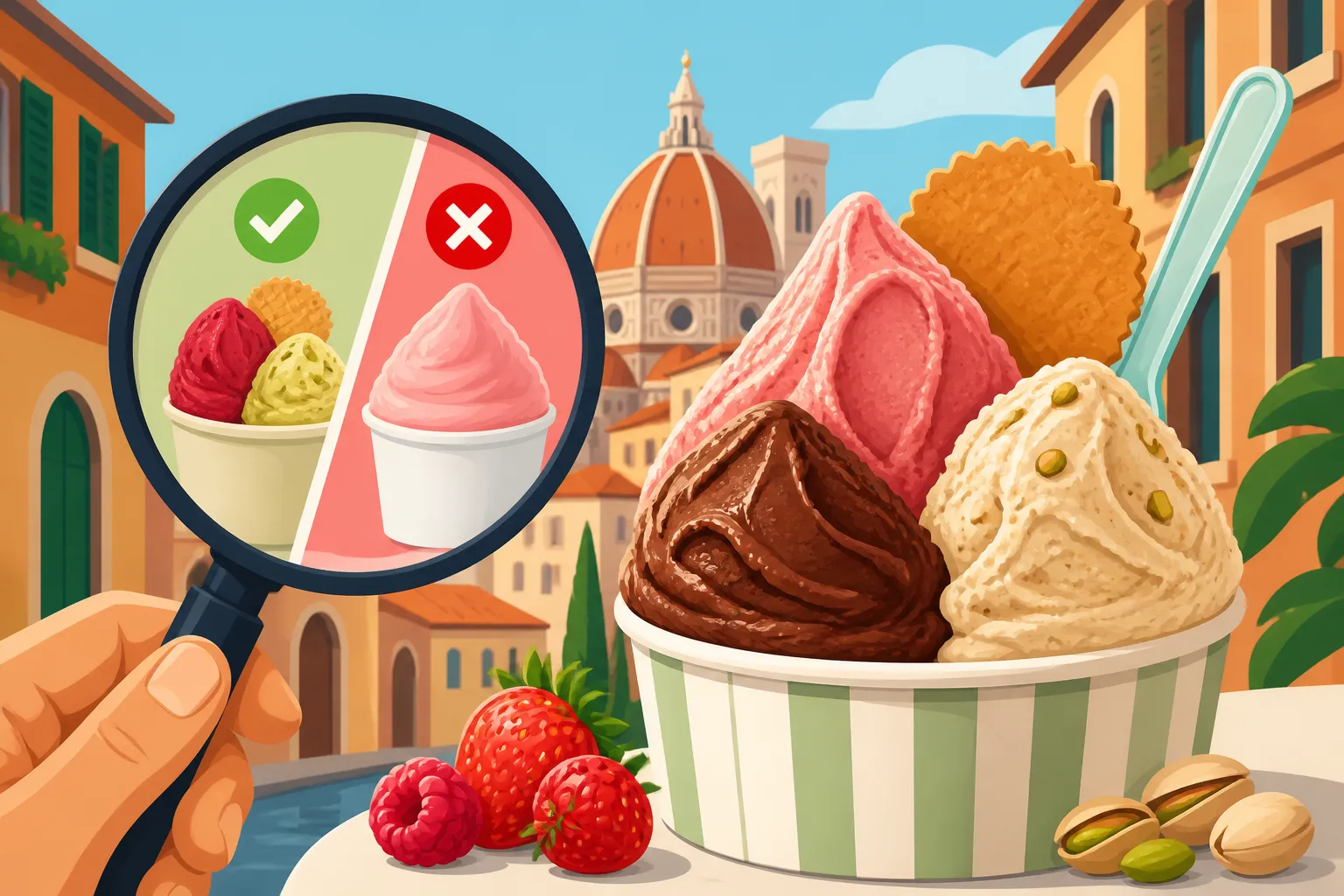
This is probably the most immediate giveaway. Real gelato embraces the natural colors of its ingredients. Think about a banana gelato – it should be a pale, almost off-white yellow, not a bright, cartoonish canary yellow. Pistachio? It should be a muted, earthy green, reflecting the natural hue of the nut, perhaps even a bit brownish if the pistachios are roasted, certainly not a vibrant emerald green that screams "food coloring!" Strawberry gelato will be a soft pinkish-red, not an electric fuchsia.
If you see intensely bright, unnatural colors in the display, especially in flavors like mint (which should be a very pale green, if green at all, or white if made with essential oils) or fruit flavors, it's a huge red flag. It usually indicates the presence of artificial colorings, which often go hand-in-hand with artificial flavorings and lower-quality ingredients. A truly artisanal gelatiere trusts the beauty of nature’s palette.
Low Piles vs. Mountainous Mounds
Here's a common trap for the unsuspecting: those towering, gravity-defying mounds of gelato. They look impressive, don't they? Like a sugary Everest beckoning you. But in reality, those sky-high piles are almost always a sign of industrial, inferior gelato. How do they stay so perfectly sculpted and tall? They’re usually loaded with vegetable fats and stabilizers, and often kept at much colder temperatures than true gelato should be. This excessive coldness also dulls the flavor, which is why those vibrant colors are often needed to compensate for the lack of natural taste.
Authentic gelato, with its lower fat and air content, and served at a slightly warmer temperature, simply doesn’t hold its shape in tall, rigid peaks. It will be much softer, with a more subdued, natural look. It might even sink slightly in the tray, looking a bit more "relaxed" or "melted" around the edges. This relaxed presentation is a sign of freshness and proper consistency. Don't be fooled by the spectacle; look for humility in height.
Covered Pozzetti vs. Open Tubs
This is perhaps the most definitive visual indicator of a serious gelateria. Many traditional, high-quality shops in Italy store their gelato in pozzetti – covered, often stainless steel, wells that are recessed into the counter. These lids protect the gelato from light, air, and external contaminants, which can degrade its delicate flavor and texture. It helps maintain the ideal serving temperature, which is crucial for optimal taste and creaminess.
When you see gelato displayed in large, open, uncovered tubs, especially if it’s piled high, it’s a strong indication that it's likely mass-produced. While some very reputable artisan shops might use glass display cases for certain flavors, especially those with visible inclusions like fruit or nuts, the pozzetti system is the gold standard for preserving quality. If you're in a shop that uses pozzetti, you're already one step closer to the real deal.
Taste and Texture: The Ultimate Test
You’ve navigated the visual minefield, chosen a promising gelateria, and now you hold that first spoonful. This is the moment of truth. The taste and texture of authentic gelato are unmistakable and provide the final, undeniable proof of its quality. It’s an experience that engages all your senses, far beyond just sweet. This immediate sensory feedback is something you can only truly appreciate when you How to Eat Like a Local in Italy: Meal Structure and Timing.
The Flavor Explosion: Intensity and Purity
Take that first small spoonful. Close your eyes. Does the flavor hit you immediately, clearly, and intensely? Is it a pure, unadulterated taste of the ingredient it claims to be? For instance, a stracciatella (chocolate chip) gelato should have a rich, genuine vanilla base with distinct, snappy shards of dark chocolate, not a bland sweet flavor with waxy chocolate bits. A hazelnut (nocciola) gelato should taste distinctly of roasted hazelnuts, not just a generic "nutty" or sugary profile.
Artificial gelato often has a cloyingly sweet taste that overpowers any other flavor. The flavors might be vague or even chemically. Real gelato, while sweet, has a balanced sweetness that enhances, rather than masks, the natural essence of its ingredients. You should be able to identify the primary flavor without hesitation. This purity is what truly defines an artisan product.
Smoothness and Density: A Delicate Balance
The texture of real gelato is one of its most defining characteristics. It should be incredibly smooth and dense, almost like a thick, luxurious cream, yet not heavy or sticky. As you move it around your mouth, it should melt evenly and slowly, coating your palate with its flavor. You shouldn't encounter any icy crystals or a granular sensation – that’s a clear sign of too much water, improper churning, or it being stored at too low a temperature.
Industrial gelato, because of its higher air content and colder serving temperature, often feels lighter, fluffier, and icier. It might melt too quickly, leaving a watery sensation, or linger with a waxy film in your mouth due to excessive fats and stabilizers. The density of true gelato comes from less air and a higher concentration of solids, delivering a more satisfying and lingering mouthfeel.
Meltdown and Aftertaste: The True Test
Observe how your gelato melts. Because it's served at a slightly warmer temperature and has lower fat, real gelato will start to soften and melt relatively quickly once it's in your cup or cone, particularly on a warm Italian day. It should melt into a smooth, liquid form, not a foamy or watery mess. This natural meltdown is a good sign; it means it hasn't been overly stabilized or frozen too hard.
Finally, consider the aftertaste. A truly good gelato will leave a clean, pleasant taste in your mouth that naturally fades, leaving you refreshed and satisfied, perhaps with a subtle echo of the flavor you just enjoyed. A poor-quality gelato might leave a sticky, overly sweet, or artificial aftertaste that makes you want to immediately drink water to cleanse your palate. The clean finish is indicative of high-quality ingredients and a balanced recipe.
Beyond the Basics: Other Indicators of Authenticity
While visual cues and the taste test are paramount, there are other subtle signals that can help you differentiate the genuine article from the mass-produced pretender. These factors often relate to the philosophy of the establishment and the dedication of its gelatieri. Looking for these extra signs can greatly improve your chances of finding that perfect scoop.
The Gelataio: Master of Their Craft
Pay attention to the person serving you. Are they knowledgeable about the flavors? Can they tell you about the ingredients, perhaps where the pistachios come from, or if a certain fruit is seasonal? A true gelatiere or a passionate staff member will often be proud of their product and eager to share details about its creation. They are the artisans, and their dedication reflects in the product.
In an artisanal gelateria, you might even see the gelatiere in action, making fresh batches. This transparency is a huge plus. It shows they have nothing to hide and are confident in their craft. If the staff seems disconnected from the product, merely scooping without enthusiasm or knowledge, it could be a sign that the gelato is not made on-site or with the artisanal care you're seeking.
Seasonal and Classic Flavors
A truly artisan gelateria will often feature seasonal fruit flavors. For instance, in summer you might find fresh peach (pesca), fig (fico), or melon (melone) gelato. In winter, perhaps citrus flavors like orange (arancia) or mandarin (mandarino) might make an appearance. This commitment to seasonality means they're using fresh, ripe fruit rather than frozen purees or artificial flavorings available year-round.
While you'll always find classic Italian flavors like nocciola (hazelnut), pistacchio, stracciatella, and limone (lemon), a rotating selection of seasonal offerings is a strong indicator of an authentic establishment. Be wary of shops offering an overwhelming number of obscure, overly sweet, or unusual "designer" flavors that don't seem to have a natural base. Sometimes, less is more when it comes to true quality.
Pricing and Transparency
While price isn't the sole determinant of quality, extremely cheap gelato should raise a red flag. Producing high-quality gelato with fresh, premium ingredients is more expensive than churning out industrial versions with cheaper fats, flavorings, and air. Expect to pay a little more for the real deal. A typical small cone or cup (a piccolo) might range from €2.50 to €4.00, depending on the city and the shop. If it's significantly cheaper than this, you might be getting what you pay for.
Many reputable gelaterias will also have a visible list of ingredients or allergens, often displayed clearly. This transparency about what goes into their product is another sign of an establishment that stands by its quality and cares about its customers' well-being. Look for signs that highlight "gelato artigianale" (artisanal gelato) or "produzione propria" (own production), though these claims aren't always legally binding, they often indicate a commitment to quality.
Where to Find the Good Stuff
Now that you're armed with the knowledge to spot authentic gelato, the burning question is: where do you actually find these magical places? They're everywhere, but also cleverly hidden in plain sight. It often takes a bit of deliberate searching and willingness to venture off the beaten path, sometimes even planning your route to incorporate a visit to a renowned spot. Using travel tools can help you organize these explorations; for instance, you can use Omio to find train or bus tickets to smaller towns known for their culinary delights or check GetYourGuide for food tours that might include a stop at a top-tier gelateria.
Artisan Gelaterias: Your Best Bet
The best place to start is by looking for dedicated gelaterias that pride themselves on being "artigianale." These are establishments whose primary business is making and selling gelato, not just a sideline to a coffee shop or a restaurant. Look for independent shops, often family-run, that have been around for a while. Local word-of-mouth is invaluable here, so don't be afraid to ask locals where they go for gelato.
Some cities have famous artisan gelaterias that have become institutions. In Rome, you might look for places like Gelateria Fatamorgana or Gelateria del Teatro. In Florence, Gelateria La Carraia or Vivoli are often cited, though many smaller, lesser-known gems exist. Don’t just gravitate to the first place you see near a major tourist attraction; often, the best places are a few blocks away, tucked down a side street.
Small Towns vs. Big Cities
While major Italian cities certainly have their share of exceptional gelaterias, don't underestimate the small towns. Often, the slower pace of life and stronger community ties in smaller borghi foster a greater appreciation for traditional craftsmanship. You might stumble upon an incredible, generations-old gelateria in a town that isn't on every tourist map. These places often have a fierce pride in local ingredients and time-honored techniques.
Exploring Italy beyond the usual tourist circuit, perhaps by following some routes suggested for Day Trips and Weekend Getaways Across Italy, can lead to unexpected culinary treasures. Using apps to find highly-rated local spots, even in tiny villages, can be a great strategy. If you're planning an overnight stay, Booking.com can help you find accommodations near these local gems, making it easier to enjoy multiple visits!
Avoiding the Tourist Traps: Red Flags and Savvy Choices
Italy is a hugely popular tourist destination, and with popularity comes the inevitable presence of tourist traps. These establishments are designed to lure unsuspecting visitors with flashy displays and convenience, often at the expense of quality. Knowing how to steer clear of them will save you money and, more importantly, save your palate from disappointment.
Recognizing Red Flags
We've already covered some of the major red flags: unnaturally bright colors, towering mounds of gelato, and open, uncovered tubs. But let’s summarize them for easy reference:
- Fluorescent Colors: Bright green pistachios, electric blue anything, radioactive yellow banana. These are almost always artificial.
- Massive Piles: Gelato that defies gravity and is piled high above the serving containers. This means lots of air, vegetable fats, and stabilizers, and it's kept too cold.
- Shiny, Glossy Appearance: While some fruit sorbettos might have a natural sheen, an overly glossy or wet look across all flavors often indicates high sugar content or artificial additives.
- Generic Tourist Location: A gelateria directly adjacent to a major monument or in a heavily trafficked tourist square without any other discernible signs of quality is often suspect. They prioritize volume over veracity.
- "Only English" Menu: While many places cater to tourists, a lack of Italian descriptions or an emphasis solely on English menus can sometimes indicate a less authentic approach, as they might not be targeting a discerning local clientele.
The "Bait and Switch" Tactics
Sometimes, a place might seem almost right. It might have a few pozzetti but also open, piled-high tubs. Or it might have some natural-looking flavors alongside others that scream "artificial." This can be a "bait and switch" tactic, where they offer some passable options to appear legitimate, but the bulk of their offerings are still mass-produced. Trust your gut and the strongest indicators of quality. If in doubt, it’s always better to walk a few extra blocks to a place that ticks all the boxes. Your taste buds will thank you.
Remember, finding truly excellent gelato is part of the joy of exploring Italy. It’s a delicious journey of discovery, much like navigating the complexities of Getting Around Italy: Trains, Buses, Flights, and Car Hire or understanding Italian Customs, Etiquette, and Social Life. Don't settle for mediocre when extraordinary is just around the corner.
Here's a quick comparison to keep in your mental toolkit:
| Feature | Real Artisanal Gelato | Industrial / Fake Gelato |
|---|---|---|
| Color | Muted, natural (e.g., pale banana, earthy pistachio) | Bright, vibrant, unnatural (e.g., neon green mint, electric blue) |
| Display Height | Low, settled, or slightly mounded in pozzetti | Tall, gravity-defying mounds |
| Tubs | Often in covered pozzetti or low-level, protected displays | Large, open, uncovered tubs |
| Texture | Dense, smooth, creamy, no ice crystals | Fluffy, icy, watery, sometimes granular |
| Flavor | Intense, pure, natural taste of ingredients, balanced sweetness | Overly sweet, artificial, vague, generic flavors |
| Meltdown | Melts relatively quickly and smoothly | Melts quickly into a foamy or watery consistency |
| Aftertaste | Clean, pleasant, lingering natural flavor | Sticky, cloying, artificial, or no distinct aftertaste |
| Air Content | Low (5-20%) | High (30-50%+) |
| Fat Content | Lower, primarily from milk | Higher, often from vegetable fats |
Happy gelato hunting, my friends! May your scoops be authentic and your taste buds forever delighted.
Disclaimer
Please remember that while this guide provides extensive information based on common practices and general advice, local regulations and specific business operations can vary. Always exercise your own judgment and, when in doubt, consider seeking local expert advice. Information, especially related to pricing or specific business names, is subject to change.