How to Order at a Bar in Italian Without Stress
Walking into a local Italian bar for the first time can feel like stepping onto a stage without a script. Between the rapid-fire Italian, the clinking of porcelain, and the unspoken rules of where to stand and when to pay, it is enough to make any newcomer retreat to the nearest international chain. This guide breaks down the chaotic etiquette of the Italian bar so you can order your morning caffeine and cornetto with the confidence of a seasoned local.
Disclosure: This post may contain affiliate links. We may earn a commission at no extra cost to you if you make a purchase through these links. Read full disclosure.
Understanding the Italian Bar Culture
In Italy, the "bar" is not where you go primarily for a pint of beer at 10:00 PM; it is the heartbeat of daily life, serving as a social hub from sunrise until long after dark. For an expat, understanding that the bar is an extension of the Italian living room is the first step toward feeling at home. Most Italians visit their favorite local spot multiple times a day—once for a quick espresso and a pastry in the morning, perhaps again for a mid-morning break, and later for a digestivo or an aperitivo.
It Is a Way of Life Not Just a Coffee Shop
The rhythm of the Italian bar is fast-paced, especially during the morning rush between 7:30 AM and 9:00 AM. You will see businessmen in bespoke suits standing shoulder-to-shoulder with construction workers, all unified by the need for a quick hit of caffeine. Unlike the lingering laptop culture found in North American or Northern European cafes, the Italian bar experience at the counter is designed for speed. You drink, you exchange a few words with the barista, and you move on.
If you are planning your trip and looking for a place to stay, using Booking.com can help you find accommodations in neighborhoods like Trastevere in Rome or Brera in Milan, where these local bars are most authentic. Staying in a residential area rather than a tourist center allows you to observe these rituals daily, which is the best way to learn the nuances of Coffee Culture in Italy: How to Order Like a Local.
The Counter vs. The Table Dilemma
One of the biggest shocks for visitors is the price difference between standing at the counter (al banco) and sitting at a table (al tavolo). In most bars, the price for a coffee at the counter is regulated by the local municipality and is remarkably cheap—usually around €1.10 to €1.30. However, the moment you sit down, you are paying for the "service" and the real estate. That same espresso could jump to €3.00, €5.00, or even more if you are sitting in a prime location like Piazza Navona.
Always decide before you order. If you are in a rush to catch a train you booked on Omio, stick to the counter. If you want to rest your legs and people-watch for an hour, head for a table, but be prepared for the "servizio" charge on your bill. Understanding this distinction is key to managing the How Much Should Coffee Cost at an Italian Bar? expectations.
The Step-by-Step Process of Ordering
The most common mistake foreigners make is walking straight to the bar and trying to order from the barista. In many busy city bars, there is a specific sequence you must follow to avoid being ignored or causing a bottleneck.
The Receipt First Rule
In many establishments, especially in larger cities or high-traffic areas, you must go to the cash register (la cassa) first. You tell the person behind the desk what you want—for example, "un caffè e un cornetto"—and you pay upfront. They will hand you a small paper receipt called a scontrino. This little slip of paper is your ticket to getting served. Without it, the barista might not even look your way.
Once you have your scontrino, move toward the bar. There is rarely a formal line; it is more of a polite scrum. When you find a gap at the counter, place your receipt down in front of the barista. A common "pro tip" among expats is to leave a small coin, like 10 or 20 cents, on top of the receipt as a tiny tip to get faster service, though this is becoming less common in modern bars. For more on this, check out Is It Rude Not to Tip in Italy? to see how customs vary by region.
Claiming Your Spot at the Banco
Once the barista takes your receipt, they might tear it slightly or mark it with a pen—this is their way of keeping track of what has been served. They will then ask you what you had, even if it is written on the slip. This is your moment to shine. Keep your request brief. If you want your espresso in a glass instead of a porcelain cup, say "un caffè in vetro." If you want it extra hot, say "un caffè molto caldo."
While you wait the thirty seconds it takes to pull a shot, you can reach for a sugar packet or a spoon. Once the coffee is placed in front of you, drink it while it is hot. It is perfectly acceptable to finish an espresso in two or three sips. If you have also ordered food, you can learn more about the varieties available in our guide on Italian Food Culture: Eating Well as a Visitor.
Essential Vocabulary for Every Occasion
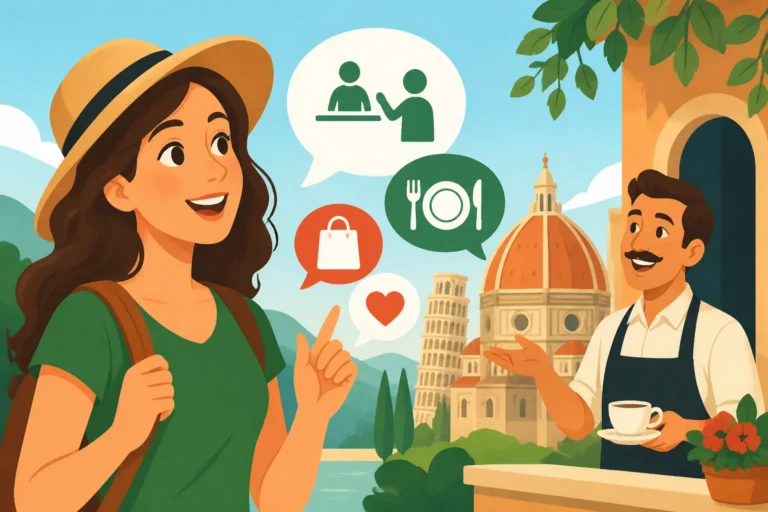
Language barriers are often the primary source of stress. However, bar Italian is functional and repetitive. You do not need to be fluent to be respected; you just need the right keywords.
Coffee Variations You Need to Know
In Italy, "un caffè" is an espresso by default. Do not ask for "un espresso" unless you want to sound like a tourist. If you want something else, use these specific terms:
- Caffè Macchiato: An espresso "stained" with a tiny bit of frothed milk.
- Caffè Lungo: An espresso with more water, but still served in a small cup.
- Caffè Corretto: An espresso "corrected" with a shot of liquor, usually grappa or sambuca.
- Cappuccino: Only ordered in the morning. If you order this after 11:00 AM, expect a raised eyebrow. For the cultural reasoning behind this, read Why You Shouldn't Order a Cappuccino After Lunch in Italy.
Using Italian Slang and Everyday Expressions for Visitors can also help soften the interaction. Instead of a blunt "Voglio" (I want), use the more polite "Vorrei" (I would like) or simply "Un caffè, per favore."
Ordering Pastries and Savory Snacks
The glass display case is usually filled with cornetti (Italian croissants). Unlike French croissants, these are often filled with crema (pastry cream), marmellata (jam), or cioccolato. In the afternoon, the bar shifts toward savory snacks like tramezzini (crustless triangular sandwiches) or pizzette.
When ordering these, you can simply point and say "Quello, per favore" if you don't know the name. If you are taking a food tour through GetYourGuide, your guide will likely explain the regional differences in these snacks, such as the veneziana in Milan or the sfogliatella in Naples.
Handling the Bill and Tipping Etiquette
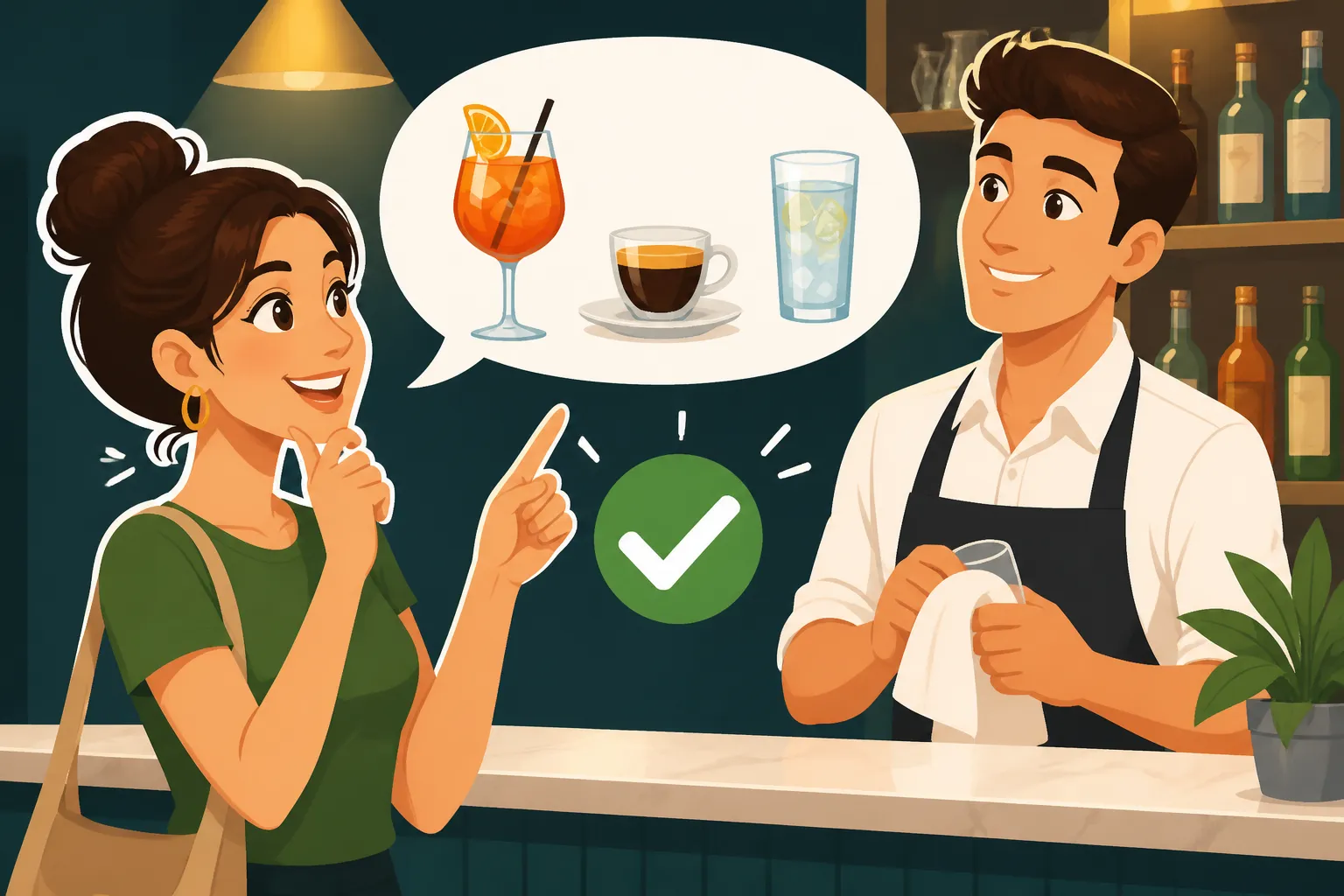
If you are at a smaller village bar where the "pay first" rule isn't enforced, you will order first, enjoy your drink, and then go to the cassa to pay. In this case, you tell the cashier what you consumed: "Un caffè e un’acqua minerale." They trust your word.
Tipping in Italy (Is It Rude?)
Tipping is not mandatory in Italy, and certainly not the 20% expected in the United States. At the bar, it is mostly a gesture of rounding up. If your coffee is €1.20 and you pay with a €1.50, leaving the 30 cents on the counter is seen as generous. If you are sitting at a table and a service charge is already included, no further tip is necessary. This is one of the many Italian Customs, Etiquette, and Social Life nuances that make living here a constant learning experience.
Paying With Card or Cash
While Italy has passed laws requiring businesses to accept cards for any amount, many small bar owners still grumble if you try to pay for a single €1.10 coffee with a credit card. It is always better to have small coins on hand for bar transactions. It speeds up the process and keeps the local "barista-client" relationship harmonious. If you find yourself in a situation where you only have cards, just ask "Posso pagare con carta?" before you order.
| Scenario | Where to Order | When to Pay | Relative Cost |
|---|---|---|---|
| Quick Morning Coffee | At the Cassa first | Before drinking | Low (€) |
| Relaxed Afternoon Break | At the Table | After drinking | Medium (€€) |
| Evening Aperitivo | At the Table | After drinking | High (€€€) |
| Village/Small Town Bar | At the Counter | After drinking | Low (€) |
Avoiding Common Tourist Traps
The "tourist trap" bar is usually easy to spot: it has menus in five languages, pictures of the food on boards outside, and is located directly in front of a major monument.
The Coperto and Hidden Service Fees
Always check if there is a coperto (cover charge) or servizio mentioned on the menu before sitting down. Legally, it must be listed. If you aren't sure, What Is the Coperto on an Italian Restaurant Bill? explains exactly what you are paying for—usually the bread, the tablecloth, and the privilege of the seat. If you see a bar where everyone is standing and the tables are empty, it is a sign that the table service fee is likely high.
Spotting a Quality Establishment
A good bar will have a clean counter, a steaming espresso machine that looks well-maintained, and a steady stream of locals. Look for the "Torrefazione" sign, which indicates they roast their own beans or take their coffee selection very seriously. If the pastries look like they were unwrapped from plastic, move on. A quality bar will have fresh pastries delivered or baked on-site every morning. For more tips on quality control, refer to How to Find Authentic Restaurants in Italy (Not Tourist Traps).
The transition from a nervous tourist to a confident local takes time. You will likely make mistakes—ordering a cappuccino at 4:00 PM or forgetting to pay before you head to the counter—but the beauty of Italian culture is the "pazienza." As long as you are polite and make an effort with a few words of Italian, you will find that the local bar is the most rewarding place to start your journey into the heart of Italy.
Disclaimer
This guide is intended for informational purposes only. Cultural norms and pricing regulations in Italy can change based on local municipal laws and individual establishment policies. Always check for posted price lists (usually found near the bar or entrance) to ensure you are aware of the current costs for service at the counter versus table service.